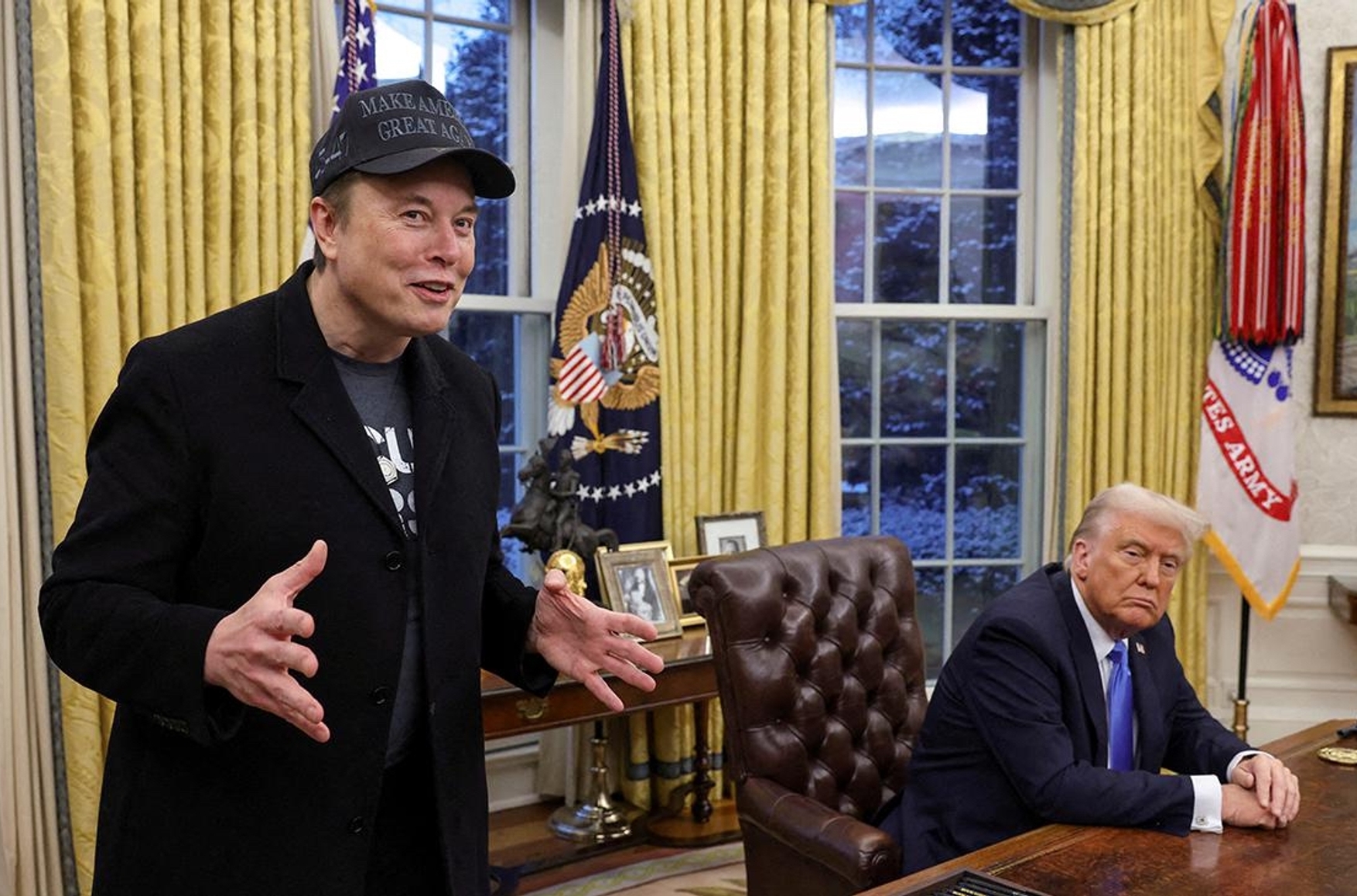
The Department of Government Efficiency, better known as DOGE, began its work in February 2025, shortly after Donald Trump’s return to the White House. Led at the time by billionaire Elon Musk, the agency dismissed thousands of employees and shut down most programs of USAID — all under the banner of optimization and budget cuts. A year later, Musk is no longer part of the Trump administration, DOGE’s status is uncertain, and the government has spent more money than had been promised. But the consequences of DOGE’s efforts are being felt not only in the United States — international programs focused on humanitarian aid, healthcare, and development have been disrupted, trust in America has been undermined, and the resulting political vacuum is being filled by Russia and China. More alarmingly, experts warn that the “optimization” of the U.S. government could lead to the deaths of millions of people from among the world’s most vulnerable populations.
The idea of creating DOGE had occurred to Elon Musk long before Donald Trump was elected president. In September 2023, the businessman attended a dinner in honor of billionaire Vivek Ramaswamy, who was planning to run for the presidency. Musk tried to be cautious, as he did not yet want to publicly associate himself with politics, but after the meal, in conversations on the terrace, he spoke about his visit to the U.S.–Mexico border, reflected on the war in Ukraine, and complained that government regulation and bureaucracy were hindering the development of his company SpaceX. “It would be great to have access to the computers of the federal government,” Musk suggested at the time. “Just give me the passwords, and I’ll make the government fit and trim!”
In 2024, Musk became involved in Donald Trump’s election campaign. In August of that year, Trump said that if elected, he would consider appointing Musk as an advisor. The businessman responded on X: “I’m willing to serve!” — attaching an AI-generated image of himself at a podium bearing the inscription “Department of Government Efficiency” (DOGE). On Jan. 20, 2025, the day Trump was sworn in as president for the second time, Trump signed an executive order establishing DOGE.
DOGE was given a temporary mandate — expiring in July 2026 — to audit the government’s IT infrastructure. Government agencies were instructed to provide full and prompt access to all unclassified data, programs, and servers. The department reported directly to the Executive Office of the President.
Initially, Musk was supposed to lead the initiative in tandem with Ramaswamy. However, due to fundamental disagreements with Musk over legal frameworks and the pace of reforms, Ramaswamy stepped down, and Musk gained access to all government IT systems.
Formally, Amy Gleason was appointed to head the structure, with Musk listed as an “advisor to the president.” Later, when witnesses from agencies facing cuts testified in court that Musk had personally taken part in the dismissals, DOGE’s defense used the businessman’s non-official status as evidence of his non-involvement.
Former employees, however, argued that after gaining access to government data and financial infrastructure, the billionaire, under the guise of “optimization,” launched an ideological campaign against figures whom Trump and his allies claimed to be representatives of the “deep state.”
Under the guise of “optimization,” the billionaire launched a campaign against figures whom MAGA considers representatives of the “deep state”
His area of responsibility and influence extended beyond technological optimization to include broad government spending cuts, including decisions on personnel. Musk treated the federal government as an opposing team and took satisfaction in the fact that, when civil servants left for the weekend, he had a couple of days’ “head start” to outpace them in the struggle.
Breaking the world: how USAID became DOGE’s main target
The most severe blow fell on the United States Agency for International Development (USAID). On Trump’s first day back in office, he signed an executive order freezing all foreign aid and launching a 90-day audit of the agency’s operations.
Four days later, the president suspended all USAID programs and DOGE simultaneously began mass layoffs of agency staff — closing offices and terminating most programs that had provided financial support for development around the world.
USAID was created by the Kennedy administration in the 1960s during the Cold War and quickly became an instrument of American “soft power.” The agency distributed grants to more than one hundred countries worldwide, funding efforts to combat malaria, HIV/AIDS, and tuberculosis, as well as supporting family planning and vaccination programs, projects in education and climate change mitigation, providing support for the development of democratic institutions and media, and running humanitarian aid and refugee assistance programs.
USAID has never been popular with authoritarian regimes and has regularly faced accusations of interference in the internal affairs of other countries. Nevertheless, the agency helped fight famine in Ethiopia, provided sanitation resources for refugee camps in Gaza, and protected refugees from violence in Haiti, among countless other initiatives.
In total, the agency spent around $21.7 billion annually — a mere 0.3% of the U.S. federal budget. According to UN data, in 2024 the United States accounted for approximately 47% of global humanitarian aid, making it the largest donor in the world.
In 2024, the United States accounted for 47% of global humanitarian aid, making it the world’s largest donor
Over the past two decades, these programs helped prevent more than 90 million deaths, including over 30 million among children. For example, in Yemen U.S. humanitarian aid helped more than 19 million people living under conditions of civil war.
Nevertheless, DOGE halted all payments under most of the agency’s contracts, dismissed or placed on administrative leave thousands of employees, and announced the elimination of 83% of the agency’s programs.
A total of 92% of the agency’s multi-year grants (5,800 out of 6,200) and nearly 30% of State Department grants were canceled. This led to the closure of more than two thousand clinics in crisis regions, delays in the delivery of antimalarial and other medications, and an overall increase in mortality.
In addition, around two thousand family planning clinics worldwide have shut down, and about 9 million women have lost access to contraception. According to the World Food Programme, due to cuts in funding for humanitarian aid programs, another 13.7 million people could face severe hunger.
According to the estimates of various researchers, cuts to these grants (which previously supported emergency humanitarian aid, the development of medical infrastructure, and efforts to combat hunger) could lead to between 500,000 and 1 million preventable deaths annually.
A sociodemographic study published in February in the medical journal The Lancet projects even more alarming figures. The research was conducted by the Barcelona Institute for Global Health with support from the Spanish government and the Rockefeller Foundation. Scientists modeled how the situation would develop if aid cuts continue at their current average pace.
The authors compared these data with the projected number of deaths under a scenario in which aid levels had remained at their 2023 level. The analysis was based on data from 93 low- and middle-income countries — the primary recipients of international development assistance. The study concluded that by 2030, up to 9.4 million people worldwide could die as a result of the dismantling of USAID. About 2.5 million of these deaths would be among children.
By 2030, up to 9.4 million people worldwide could die as a result of the dismantling of USAID
In response, the White House describedThe Lancet as a “discredited journal” and claimed the study “relies on an outdated notion that the old and inefficient global development system is the only solution to human suffering.”
According to a U.S. government official, “instead of helping recipient countries transition to self-sufficiency, the old system has fostered a culture of global dependency, exacerbated by inefficiency and waste.” In July of last year, U.S. Secretary of State Marco Rubio described the new approach to foreign aid as “prioritizing trade over aid, opportunity over dependency, and investment over assistance.”
Lee Crawfurd, a senior research fellow at the Center for Global Development who was not involved in The Lancet publication, told CNN that forecasting models may differ and that the exact figures should be treated with caution. However, in his view, “the overall conclusion is most likely correct: people will die in very large numbers.”
Under the influence of far-right activist Mike Benz
It appears that Musk and Trump turned their attention to USAID thanks largely to the efforts of the relatively little-known far-right activist Mike Benz, who served as a minor official during Trump’s first term. In December 2024, Benz appeared on the podcast of another right-wing influencer, Joe Rogan. During their conversation, the guest advanced a conspiracy theory that USAID is not an aid organization but an “operational switch” working in the interests of the Pentagon, the State Department, and various intelligence agencies. Benz described the agency as an instigator of “color revolutions” and a “terrorist Titanic.”
Notably, prior to this podcast, Benz had not been widely known on social media or the internet. However, various publications made it possible to piece together a profile of him: a white nationalist who has spoken about a supposed genocide of white people while railing against “Jewish influence.”
Before the release of the podcast, Musk had never mentioned USAID on his social media accounts. After the episode was published, however, he began regularly posting Benz’s statements, adding his own comments that USAID was a “nest of Marxists” and a “criminal organization.”
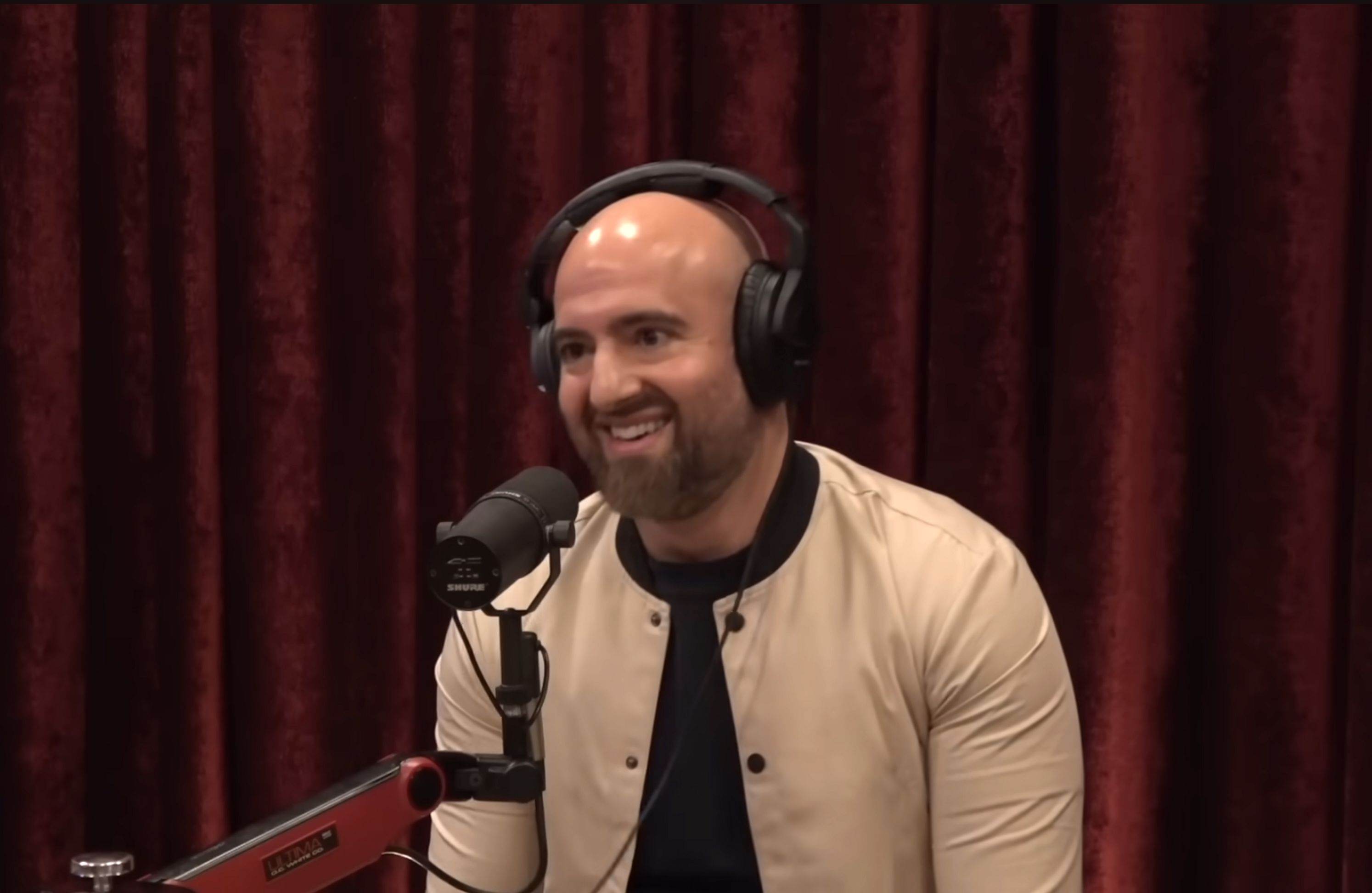
Less than two months after the episode aired, Musk gained access to the government and began mass layoffs at the agency, dismantling USAID itself and freezing its grants. According to a rough count by The Washington Post, in the year following the release of the podcast episode, Musk retweeted or mentioned Mike Benz more than 160 times.
In February 2025, Musk once again reposted Benz, writing: “We spent the weekend feeding USAID into the wood chipper. Could [have] gone to some great parties. Did that instead.” The post was published during the mass freezing of USAID grants and staff cuts.
Benz’s role was not limited to online influence. At the end of 2025, he was hired as a special employee into what remained of USAID to search the archives for “evidence” supporting his own accusations that the agency was acting against American interests.
Since the beginning of 2025, USAID has effectively ceased to exist as an independent agency. Following its dissolution by presidential order, its functions and budget were partially transferred to the State Department, and its staff was reduced to several dozen people. However, despite Musk’s efforts, some USAID programs have remained in operation, often as the result of court decisions.
These are mainly projects aimed at emergency humanitarian and medical assistance and crisis response. However, the grants remaining in effect do not cover areas such as education, governance, job creation, and human rights protection — efforts that are meant to help countries avoid crises in the future. Experts describe this approach as short-sighted. In their view, it reflects a deep misunderstanding of how the agency operates and will have long-term consequences for Americans as well as for the wider world.
“You know what’s really inefficient? Putting out fires,” Laura Meissner, a former USAID contractor whose work managing humanitarian aid in several countries was cut, said in an interview with The Insider. “It’s far cheaper to stabilize people’s situation so they can be prepared for a crisis than to wait until they have nothing left and their children are suffering from malnutrition.”
It is far cheaper to prepare people for a crisis than to wait until they are left with nothing and their children suffer from malnutrition
The administration has made some effort to mitigate the effects of its decisions. Several countries, including Kenya, Rwanda, and Nigeria, have signed bilateral healthcare agreements with the United States, providing for the delivery of aid directly through governments rather than through international partner organizations.
This is part of the Trump administration’s new America First Global Health Strategy. However, experts warn that the model carries risks of corruption and may leave the most vulnerable groups in society overlooked. Moreover, the strategy is narrowly focused: it primarily targets HIV/AIDS, malaria, tuberculosis, and outbreaks of infectious diseases, while omitting key areas such as maternal and child health and nutrition.
At the same time, the elimination of U.S. grants and assistance in global development programs has significantly undermined trust in America worldwide. The resulting humanitarian vacuum has quickly begun to be filled by actors such as Russia and China.
Was DOGE actually effective?
The answer is clearly no. DOGE had promised to cut federal spending to $1 trillion by October of last year, but under the oversight of Musk’s structure, government spending actually rose. The main reason, according to an analysis by The New York Times, is that most of DOGE’s calculations, claims, and promises were flawed from the outset. Although the structure did cut many outlays, most of them were relatively small.
In most cases, DOGE’s plans and reports contained significant errors or were simply misleading. For example, two government contracts with the Department of Defense totaling $7.9 billion were listed on the agency’s website as canceled, but in reality, the contracts remain in force. In some instances, DOGE simply counted reductions in “spending caps” as actual cuts. Meanwhile actual reductions in appropriations were implemented for agencies like USAID that the Trump administration had repeatedly labeled as representatives of the “deep state.”
When DOGE was formed, its cadres were mainly people who had not previously worked in government — representatives of the business and technology sectors with no experience in public programs. As a result, the initial approach to cutting costs was anything but efficient.
The initial approach to cutting costs was anything but efficient
Dr. Sunny Patel, a former senior executive at the Substance Abuse and Mental Health Services Administration (SAMHSA), told The Insider that he and his colleagues were given a target figure in dollars and an Excel formula to calculate savings. DOGE representatives specified which contracts should be terminated, while SAMHSA officials tried to protect the most important ones. “We had to reach a specific number, and there weren’t that many options for cuts,” Patel said. “In the end, it came down to: ‘Well, I guess we’ll sacrifice this one,’ simply because it was the lesser of evils.”
Media investigations showed that the greatest effect was achieved only through staff reductions across agencies. At the same time, cutting positions “saves” a relatively meager $40–50 billion per year. Around 60% of the $7 trillion U.S. federal budget is allocated to social programs such as Social Security and Medicare, which Trump had promised not to touch. Meanwhile, mass layoffs resulted in large severance payments, costly lawsuits, and the rehiring of more than a third of dismissed employees, leading to increased costs in 2025.
As of now, the Trump administration has dismissed, laid off, or accepted resignation agreements (with severance pay) from more than 387,000 employees. Over the same period, the administration has hired approximately 123,000 people.
At the same time, rehiring in some cases is carried out exclusively under the terms of the Trump administration, which selects applicants who demonstrate loyalty to Trump’s policies, undermining the principle of a nonpartisan civil service. For example, within USAID (or rather, what remains of it after its dissolution and incorporation into other agencies), rehiring previously dismissed employees has been prohibited.
According to officials, this is intended to prevent any “conflict of interest,” but in many cases the ideological orientation in hiring is explicit. For instance, in immigration services, applicants are now required to be prepared to “defend their homeland and culture,” and candidates must explain how they intend to support the implementation of Trump’s executive orders and policy priorities.
Domestic consequences for the United States
The handiwork of DOGE has affected America itself. In February 2025, the Trump administration announced the layoff of seven thousand employees from the Social Security Administration (SSA) — about 12% of the agency’s total staff — and the closure of 47 regional offices, describing the move as “optimization.”
At the same time, DOGE attempted to gain access to SSA databases and those of other departments. SSA head Michelle King refused to grant access and subsequently left her post (it remains unclear whether she was dismissed). Experts had previously spoken out against allowing DOGE access to the Treasury payment system and the taxpayer database, but Trump did not heed these concerns. Musk and his team gained access to all three systems, which contain the sensitive data on the overwhelming majority of Americans.
Nancy Altman, president of the advocacy group Social Security Works, commented on DOGE’s actions, saying:
“This breach cannot be overstated in its seriousness. The information collected and securely maintained by the Social Security Administration is highly sensitive. The SSA has data on every holder of a Social Security number (which is virtually all Americans), on every Medicare beneficiary, and on every low-income American who has ever applied for benefits under the Supplemental Security Income program — a means-tested system of payments.”
After gaining access to this data, DOGE quickly made a series of “false claims” as part of an attempt to justify the utility of its activities. For example, Musk and his team “discovered” in SSA databases that the agency was paying benefits to deceased people who were supposedly more than 150 years old. Musk wrote about this extensively on X, touting what he claimed to be proof of corruption within the SSA.
In reality, neither Musk nor his team understood the nuances of how data is stored and managed in government agencies. The data they pointed to turned out to be a long-known system glitch — a legacy programming issue in the language used by the agency, and in actual fact, no payments were being made to 150-year-old people. Of course, errors in SSA payments have occurred: between 2015 and 2022, 0.83% of payments were made “improperly,” most often in the form of overpayments to Social Security recipients whose data was not up to date.
However, DOGE’s efforts do not appear to have addressed this real problem. Instead, its decision to access the agency’s confidential data led to a major legal scandal and possibly one of the largest personal data breaches in the history of the U.S. federal government. DOGE attempted to obtain full access to the NUMIDENT database, which contains personal, financial, and medical information on 70 million beneficiaries, but in April 2025, a court barred DOGE from unrestricted access to the data and ordered the agency to delete the information it had already obtained, noting that the presence of deceased people’s names in the database does not mean that benefits continue to be paid to them.
Musk’s decision to access the agency’s confidential data may have led to the largest personal data breach in the history of the U.S. federal government
Legal proceedings are ongoing: the Department of Justice has filed a motion based on a complaint from the SSA stating that the agency uncovered a secret agreement between a DOGE employee and an unidentified political consulting group. According to court filings, the agreement provided for the transfer of Social Security data, which the group could use to review and challenge election results in certain states. The SSA, for its part, said it was unaware of the existence of this agreement and has already referred materials concerning potential violations of the Hatch Act to the body that investigates unlawful political conduct among civilian federal workers. In January, the Trump administration acknowledged in court that it had accessed the data without informing the agency.
Then in March, it emerged that one of DOGE’s former employees may have simply copied it onto a flash drive and attempted to pass it to an external company — his new employer. It remains unclear whether this actually occurred, but the complaint is currently under review and is likely to lead to new lawsuits against the Trump administration.
The SSA has been hit by a surge of early retirement applications from Americans who are worried that eligibility requirements may soon be tightened. In the first five months of 2025 alone, the number of new applications increased by 17%, to a total of 1.8 million. Legal battles, mass layoffs, the departure of key specialists, and overall disorganization have plunged the agency into a state of chaos that persists to this day: SSA services are overwhelmed, and as a direct result, beneficiaries are facing delays and disruptions.
Legal battles, mass layoffs, the departure of key specialists, and overall disorganization have led to chaos within the Social Security Administration
In addition to the Social Security Administration, the Department of Health and Human Services (HHS) and the National Institutes of Health (NIH) were also severely affected. In April 2025, DOGE launched the Defend the Spend initiative, which mandated that all Health Department grants, including funding for the NIH and community clinics, be frozen and sent for manual review. Even the salaries of some doctors and nurses working in medical centers serving the most vulnerable populations were affected by the freeze.
In addition, the administration proposed cutting the NIH budget by nearly 40% — from $45.5 billion to $27.5 billion. For example, the budget of the National Cancer Institute was slated to fall from $7.2 billion to $4.5 billion, and that of the National Institute of Allergy and Infectious Diseases from $6.6 billion to $4.2 billion. The Health Department also faced large-scale staff reductions. Initially, up to 10,000 employees were planned to be laid off, but the Trump administration later acknowledged that this plan had been a mistake and began gradually reinstating staff.
Perhaps most serious of all, Trump appointed the controversial (to put it mildly) Robert F. Kennedy Jr. as head of the Department of Health and Human Services. Kennedy has spoken out against vaccines, claimed that Jews and Chinese people have immunity to COVID-19, and called for restricting access to antidepressants. Many doctors urged the White House to remove him from his post. However, the administration did not heed these calls, and the “optimization” of Health Department grants continued — guided by the views of its new head. Large-scale cuts affected institutions engaged in pandemic research and vaccine development, while the agency responsible for mental health lost a significant number of grants.
According to the latest estimates, from September 2024 to January 2026 the number of federal government employees in the United States decreased by 12% — a total of more than 300,000 people. The Departments of the Treasury and of Health were particularly affected, with reductions of 24% and 20%, respectively.
An exception was the Department of Homeland Security (DHS), which includes Immigration and Customs Enforcement (ICE), an agency favored by Trump and his supporters. The number of employees in this department grew by about 1% over the same period, with active hiring taking place in ICE throughout the past year. At the same time, after the wave of mass layoffs, the Trump administration was forced to acknowledge that many agencies had been paralyzed by the loss of personnel, and they are now rehiring staff across most of them.
Reactions and outcomes
DOGE’s activities ended as absurdly and unexpectedly as they began. In May 2025, amid disagreements with Trump, Elon Musk left the administration. Then, a few months later, DOGE itself ceased to exist. Since the fall of last year, Trump and his supporters have spoken of the initiative in the past tense. The remaining staff of the structure were reassigned to other agencies, and the course toward “optimization” passed directly into the president’s hands.
At the same time, even at the height of DOGE’s activity, there was no full consensus within the Republican Party regarding its work. As early as the spring of 2025, many senators and party representatives began sounding the alarm over the consequences of the structure’s actions, which were being felt in their own states.
Indeed, DOGE faced numerous lawsuits. Labor unions, human rights organizations, and career civil servants began filing cases en masse, arguing that the agency’s ordered dismissals violated civil service laws. For example, court proceedings are currently underway over several lawsuits concerning unlawful layoffs at USAID. There are also many cases related to disruptions in the work of other agencies.
Court rulings limited DOGE’s powers, while public pressure forced the White House to partially revise its plans to “optimize” the work of Washington. In effect, DOGE turned out not to be an effort at improving efficiency, but an experiment in dismantling a significant portion of the federal government, with a focus on “liberal” agencies that the far right had long opposed. Although the efforts of Musk and Trump met with substantial resistance, the administration’s overall course has not significantly changed. This may therefore not be the last attempt at “optimization,” the full consequences of which still threaten the livelihoods of millions both inside America and beyond its borders.