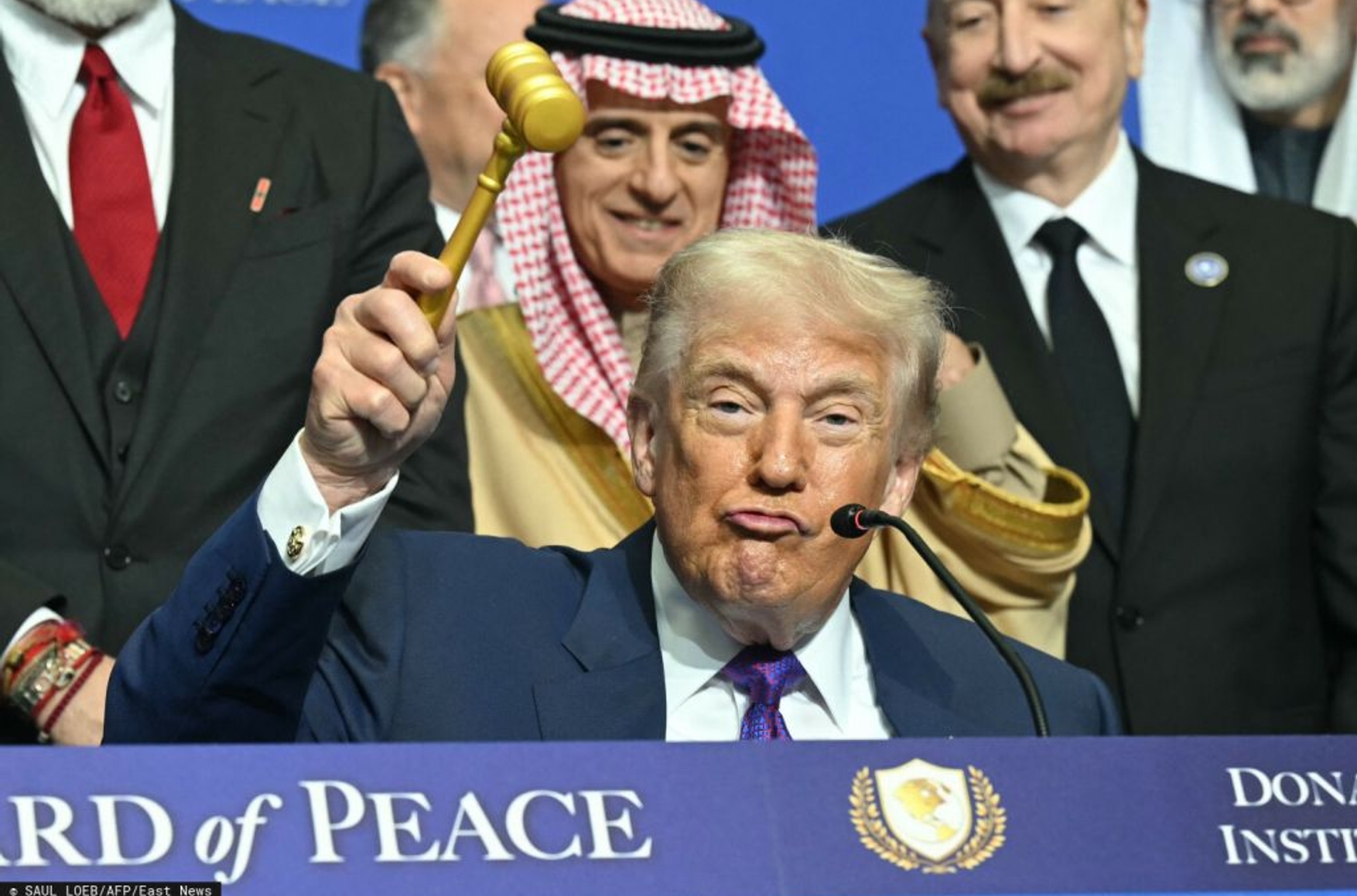
When Donald Trump’s newly created “Board of Peace” met for the first time on Feb. 19, the main focus was the future of the Gaza Strip. However, no breakthrough was made on that issue (nor, seemingly, on any other). In the end, Trump’s grand plans for the embattled enclave are colliding with realities on the ground: Hamas has no intention of laying down its arms, and Israel has no plans to withdraw. In fact, a new war may be the only way out of the impasse.
Who came to the Council
The first session of the Board of Peace, which met in Washington last month, brought together representatives from nearly 50 countries (27 of them in attendance as observers). The organization was expected to implement Donald Trump’s ceasefire plan for the Gaza Strip, a document that was published in September 2025 and endorsed by UN Security Council Resolution 2803 in November. The ceasefire agreement itself took effect in early October, halting large-scale fighting between Israel and the Palestinian movement Hamas.
Implementation of the first phase of the ceasefire agreement was completed on Jan. 26, when the body of the last Israeli hostage was returned home. The second phase, which envisions the reconstruction of the Gaza Strip and the transfer of authority from Hamas to a transitional National Committee for Gaza Administration (NCGA) — which is slated to operate under the supervision of the Board of Peace — is now on the agenda.
The composition of the NCGA was approved in January, the same month the structure of the Board of Peace was announced. The Board itself consists of two components: the Founding Council, and the Executive Council for Gaza. However, it has since become clear that Trump’s ambitions extend far beyond the Middle East — the Board of Peace seeks a mandate to resolve all major international conflicts.
Trump’s ambitions extend far beyond Gaza — the Board of Peace seeks to secure a mandate to resolve all major international conflicts
As a result, most European countries declined to take part in the Council, reacting negatively to Trump’s attempt to sideline the UN and to his desire to single-handedly determine who plays what role within the new structure. In the end, Europe is represented only by Albania, Bulgaria, Hungary, and Kosovo. Among the permanent members of the UN Security Council, only the United States is present. Russia has not yet accepted Trump’s invitation, saying it will first see how the reconstruction plans for Gaza are implemented. China also politely declined.
Along with the European states mentioned above, the Council includes two Latin American countries friendly to Trump (Argentina and El Salvador), several Asian states (including Indonesia), as well as Egypt, Israel, and the Gulf monarchies. In addition, Armenia, Azerbaijan, Belarus, Kazakhstan, and Uzbekistan — all currently oriented toward friendly relations with Trump — have signed up.
Still, there were no delegates from Belarus at the inaugural meeting in Washington. Alexander Lukashenko did not attend, claiming that the invitation arrived after his schedule had already been set. Meanwhile, without offering explanation, the United States denied visas to Belarusian Foreign Minister Maksim Ryzhenkov and other members of the country’s proposed delegation. Notably, such problems had not arisen in the past when they traveled to the UN General Assembly.
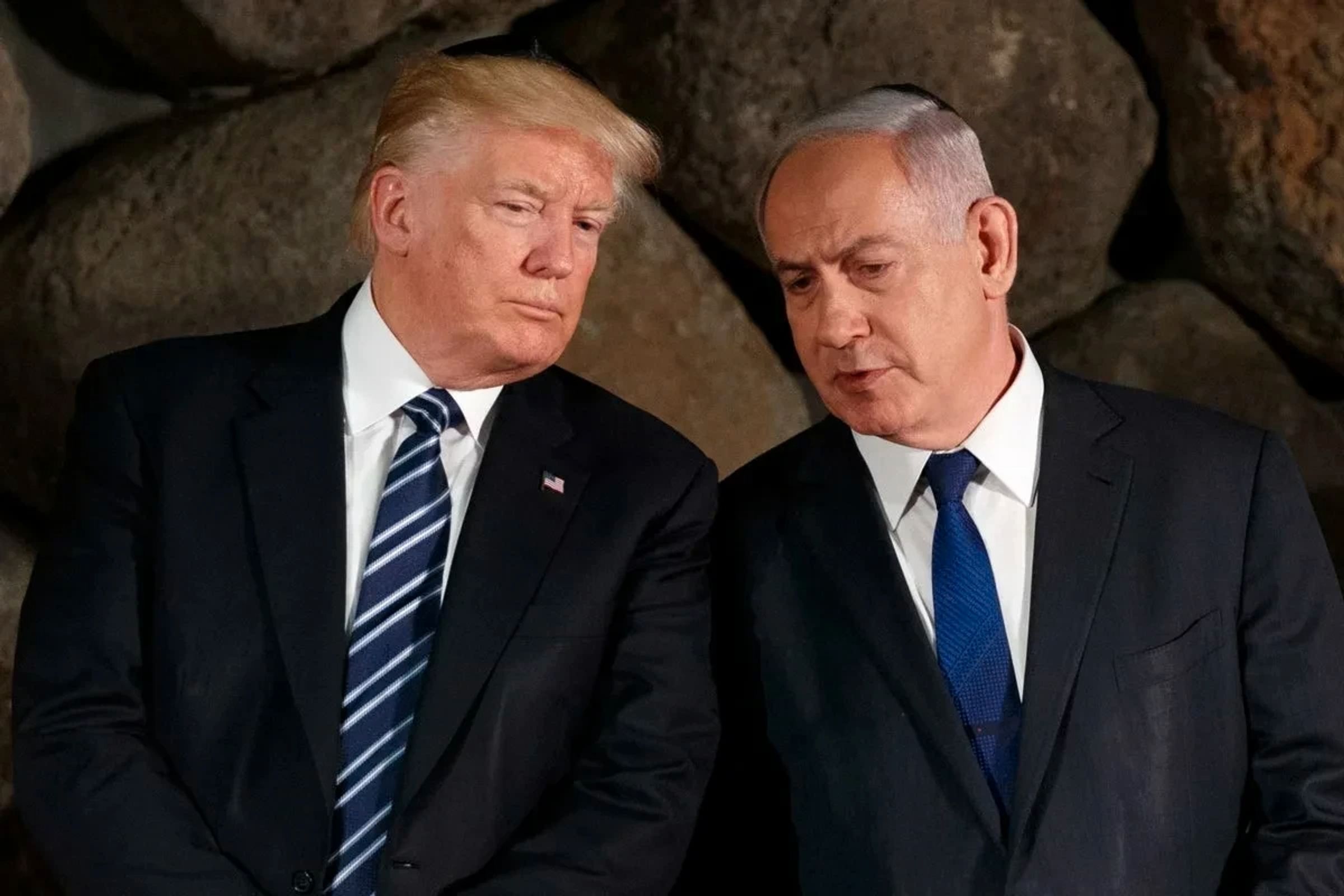
One of the main questions on the eve of the first session was whether Israeli Prime Minister Benjamin Netanyahu would attend. He had planned to meet Trump in Washington on Feb. 18, but due to the situation surrounding Iran he moved his visit up by a week (or, at least, that was the official explanation). In the end, Foreign Minister Gideon Sa’ar went to Washington instead, which came as a relief both to leaders of Islamic countries and to Netanyahu himself. Egypt was represented by its prime minister rather than its president, while the remaining Arab states, as well as Turkey, were represented by their foreign ministers.
Who promised what
As intended, the main issue at the session was the situation in the Gaza Strip. According to Trump, nine states agreed to contribute to the reconstruction of the territory, with total fundraising coming in at $7 billion.
However, according to preliminary UN expert estimates, reconstruction alone will require $70 billion, with $20 billion needed in the next three years. This initial amount will go toward restoring destroyed infrastructure rather than the grand projects envisioned in Trump’s plan to turn Gaza into a new Mediterranean Riviera and special economic zone. To that end, Trump announced that Washington is prepared to contribute $10 billion to the Board of Peace, while a symbolic $75 million was pledged by FIFA (ahead of the World Cup in the United States).
According to Trump, nine Council member states agreed to contribute a total $7 billion toward Gaza’s reconstruction — but UN experts say at least $70 billion is needed
The second set of pledges announced in Washington concerned sending troops to take part in the International Stabilization Forces in Gaza (ISF), as outlined in the October peace deal. Indonesia, Morocco, Kazakhstan, Kosovo, and Albania have signed on in principle, but so far, the only concrete figure — 8,000 troops — was announced by Jakarta. Of those, the first thousand are expected to be ready for deployment to Gaza by early April.
However, according to American General and ISF Commander Jasper Jeffers, a total of 20,000 troops is required. They are expected to begin their work in areas where Israeli forces are still present and then move into zones that remain under Hamas control.
Some 12,000 Palestinian police officers are supposed to help foreign forces maintain order in Gaza. Officials in Washington announced that recruitment for the new structure has already begun, with 2,000 applications already having been submitted. Egypt and Jordan will provide training. The plan calls for 5,000 officers to be trained within two months.
According to the Board of Peace’s High Representative for Gaza, Bulgarian diplomat Nikolay Mladenov, the police will answer to the NCGA and will be able to “eliminate all factions in Gaza and place all weapons under the control of a single civilian authority.” How this will be achieved is unclear, since the mandates of the ISF and the police have not been separated.
The Palestinian side, along with the region’s various Arab states, want the ISF to limit its role to separating the two sides, while Israel proposes that the force take on the disarmament of the Palestinians. Trump, meanwhile, hopes coercion will not be required in order to disarm Hamas and other groups. He threatened a “harsh response” if Hamas does not comply with what is being demanded of it. As usual, the problem is the absence of timelines. On Feb. 16, Israeli cabinet secretary Yossi Fuchs said that the United States had asked to give Hamas roughly two months to complete the assigned task, but it remains unclear from which date that period is supposed to begin.
For its part, Hamas commented on the first session of the Board of Peace in Washington by stressing that any arrangements must begin with a complete end to Israeli aggression, the lifting of the blockade of the enclave, and guarantees of the legitimate national rights of the Palestinian people — above all, their right to freedom and self-determination. At the same time, U.S. mediator Bishara Bahbah said that the disarmament of Hamas depends in part on guarantees of protection for its members.
According to a statement by a “senior member of the Board of Peace,” who was quoted by the Israeli news outlet Ynet, Hamas is expected to make a decision sometime in March. The disarmament process is set to begin in April: first, heavy equipment, then tunnel infrastructure, followed by small arms. “The key innovation is that each Hamas member who turns in a rifle will receive financial compensation — the amount has not yet been determined — as well as amnesty,” he said. In his telling, if things go well the disarmament process could take six months and involve no casualties. If not, it could drag on for two years with “numerous casualties.”
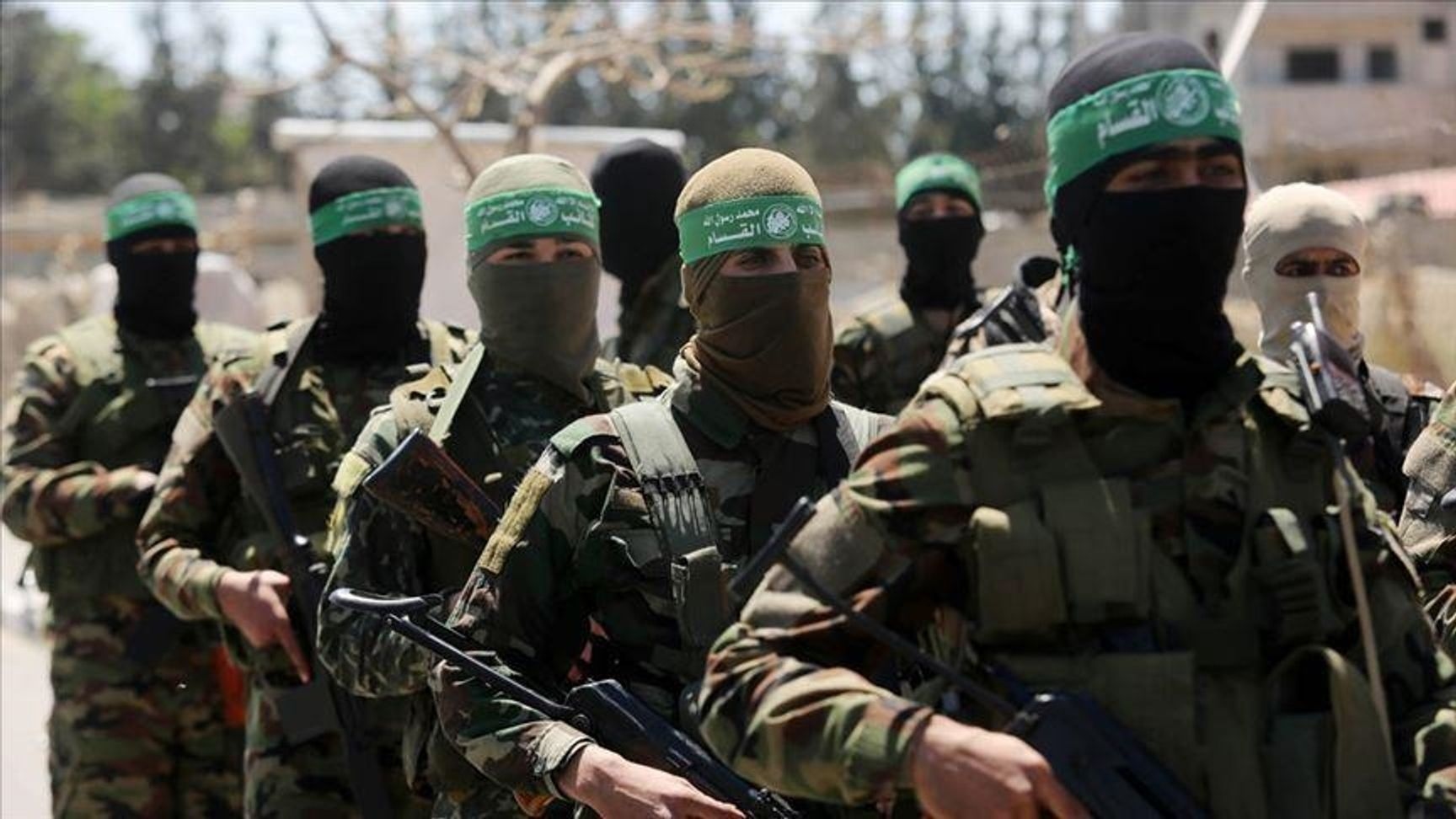
In other words, the situation remains deadlocked: Israel refuses to withdraw its forces before Hamas is fully disarmed, while Hamas refuses to disarm before Israeli troops leave. Compromise is unlikely at this point: parliamentary elections are approaching in Israel, sharpening the rhetoric of all politicians, especially Netanyahu, who has repeatedly vowed that Hamas will never again control Gaza.
Who holds power in Gaza
Israel currently controls a little more than half of the territory of the Gaza Strip, while most of the population remains in the area controlled by Hamas. According to Western and Arab media reports, the group has made quite a recovery after two years of war: it has eliminated dissenters and restored order in the streets while collecting taxes from businesses and paying salaries to civil servants. At the same time, there are reports of new administrative appointments in Gaza being made by Hamas. The movement is also engaged in disputes with the NCGA over which Hamas-linked officials will retain their posts under the new administration.
In statements, the group has promised to hand over all levers of governance in Gaza to NCGA technocrats as soon as its members arrive in the enclave. In practice, however, Hamas’s goal is to preserve maximum control over the situation by placing its supporters in government agencies, security structures, and local authorities.
According to Reuters, Hamas is seeking to integrate roughly 10,000 police officers from its own structures into the new Gaza police force. Spokesman Hazem Qassem said the NCGA “is interested in attracting qualified personnel and will not infringe on the rights of those who worked during the previous period.”
As a result, the technocrats are in no hurry to go to Gaza — they simply have no one there they can rely on. But the longer they remain inactive, the stronger Hama’s influence becomes, and it is far from certain that the arrival of international forces or the creation of a Palestinian police force will change the situation. For now, the risk is growing that disagreements between Hamas and the NCGA will lead to a new intra-Palestinian split.
In fact, Hamas is already facing not only Israeli attacks but also armed Palestinian groups operating from the part of the enclave that remains under Israeli control. Arab media describe them as bandits, smugglers, drug traffickers, and collaborators.
Yet another interpretation is possible. The Telegraph reports that the White House is seeking to recruit members of armed Palestinian clans not controlled by Hamas for service in Gaza’s police force, and that Israel supports this U.S. proposal. However, the idea of including members of these clans in U.S.-backed peacekeeping forces has met resistance from senior American military officials — hardly surprising given that, again according to The Telegraph, at least two of the clan-based groups include fighters who either fought for the Islamic State or pledged loyalty to that terrorist organization.
The White House is seeking to recruit members of armed Palestinian clans not controlled by Hamas into Gaza’s police force
Many Palestinians have little affection for these clans and are unlikely to develop any, regardless of how they may feel about Hamas. Too many questions linger about the clans’ actions during the war, including the looting of humanitarian aid (though clan representatives, for their part, claim it was Hamas that carried out the looting).
In any case, the media campaign against these groups continues, with local journalists reporting that the “gangs” extort money from Palestinian refugees returning from Egypt to the Gaza Strip through the Rafah crossing. As a counterpoint, Hamas points to the “order” it has imposed on the part of the territory it controls. For ordinary Palestinians, exhausted by years of war, security is a powerful argument in favor of the old authorities. Still, some fear that Hamas’s unwillingness to disarm its fighters before the Israelis and the “clans” no longer pose a threat will lead to a new war.