
In early February, the Treaty on Measures for the Further Reduction and Limitation of Strategic Offensive Arms between the United States and Russia (better known as New START) expired, and no new agreement has been reached to take its place. However, a Cold War-style arms race appears unlikely, as Russia does not have the necessary resources for the mass production of new strategic weapons, argues nuclear policy expert Nicole Grajewski, an assistant professor at the Center for International Studies (CERI) at Sciences Po in Paris. In her view, a more likely future scenario involves Russia increasing the number of warheads on systems already in its arsenal while expanding production of nonstrategic weapons. The end of mutual inspections provided for under New START creates new opportunities to pursue such projects, even if Russia's coffers have been depleted by the war in Ukraine. China, however, does have the resources, and its nuclear program offers new causes for concern.
For more than five decades, the nuclear relationship between the United States and Russia was defined, however imperfectly, by a succession of arms control agreements that verified, capped, and constrained the world’s two largest nuclear arsenals. That architecture collapsed in stages — the ABM Treaty in 2002, the INF Treaty in 2019 — and ended entirely on Feb. 5, 2026, when New START expired without a replacement.
The treaty’s demise has revived familiar fears of a nuclear arms race, and those fears are not entirely misplaced. Yet the recurring Western assumption that Russia will respond with a proportional expansion of its strategic forces misreads both the constraints Moscow actually faces and the logic driving its future force posture.
Moscow’s response will not be a sprint toward numerical superiority. It will instead reflect a pattern that has defined Russian strategic behavior for decades: preserve deterrence at broadly stable levels, avoid the fiscal and diplomatic costs of visible expansion, and shift competition into domains that are cheaper to contest, harder to regulate, and more directly useful for the coercive purposes Russia actually cares about. The question is not whether Russia will exploit the treaty’s absence but where, how, and at what cost.
New START
Signed in 2010, New START capped each side at 1,550 deployed strategic warheads on no more than 700 missiles and bombers. It also provided for on-site inspections, biannual data exchanges, and a verification regime that gave each side reliable knowledge of the other’s posture. For Moscow, the treaty froze U.S. strategic forces at levels Russia could plausibly match despite significant economic asymmetries, while deliberately leaving untouched the domains where Russia maintained comparative advantages — particularly its large non-strategic nuclear stockpile and the novel delivery systems it was developing outside the treaty’s formal categories.
The treaty froze U.S. strategic forces at levels Russia could plausibly match, while deliberately leaving untouched the domains where Russia maintained comparative advantages.
The treaty weakened well before its formal expiration. Inspections were paused in 2020 during the COVID-19 pandemic, and they never fully restarted. By 2022, Russia was blocking U.S. inspection attempts and postponing key consultative meetings. Then in February 2023, Vladimir Putin formally suspended Russian participation, citing NATO’s stated goal of defeating Russia in Ukraine. In late 2025, Putin offered Washington an informal one-year extension of the limits, but the Trump administration, eyeing a larger deal that would include China, never formally responded.
Russia’s likely course of action
In the near term, Russia is likely to maintain its deployed strategic forces close to former treaty ceilings. Doing so serves overlapping purposes: it sustains Moscow’s narrative of restraint, avoids triggering immediate U.S. force expansion, and maintains fiscal discipline under wartime strain and Western sanctions. Russian planners have long emphasized survivability over aggregate numbers, and the treaty’s ceilings were never viewed in Moscow as operationally constraining. What changes after 2026 is not Russia’s strategic posture so much as its flexibility to quietly make adjustments within it.
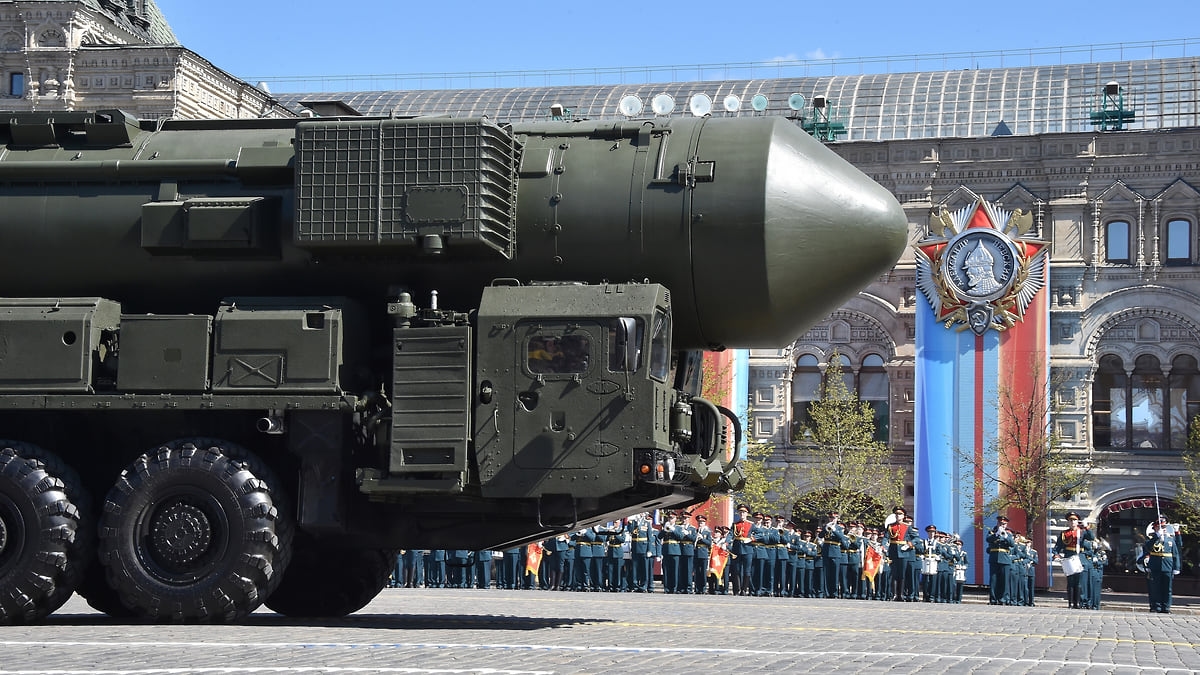
The most significant near-term opportunity involves upload hedging, which exploits the gap between a missile’s maximum warhead capacity and the lower loadings maintained under treaty constraints. The RS-24 Yars, Russia’s primary land-based ICBM, is assessed by Western analysts to be technically capable of carrying up to six warheads, though it was typically deployed with three to four under New START. The RS-28 Sarmat, once operational, is designed around a throw-weight estimated at over ten metric tons, sufficient for ten or more warheads — comparable to the Soviet-era heavy ICBMs it is intended to replace. At sea, the Bulava SLBM that is carried aboard Borei-class submarines is currently configured with six warheads per missile, but its post-boost vehicle is assessed to have residual capacity beyond that standard loading.
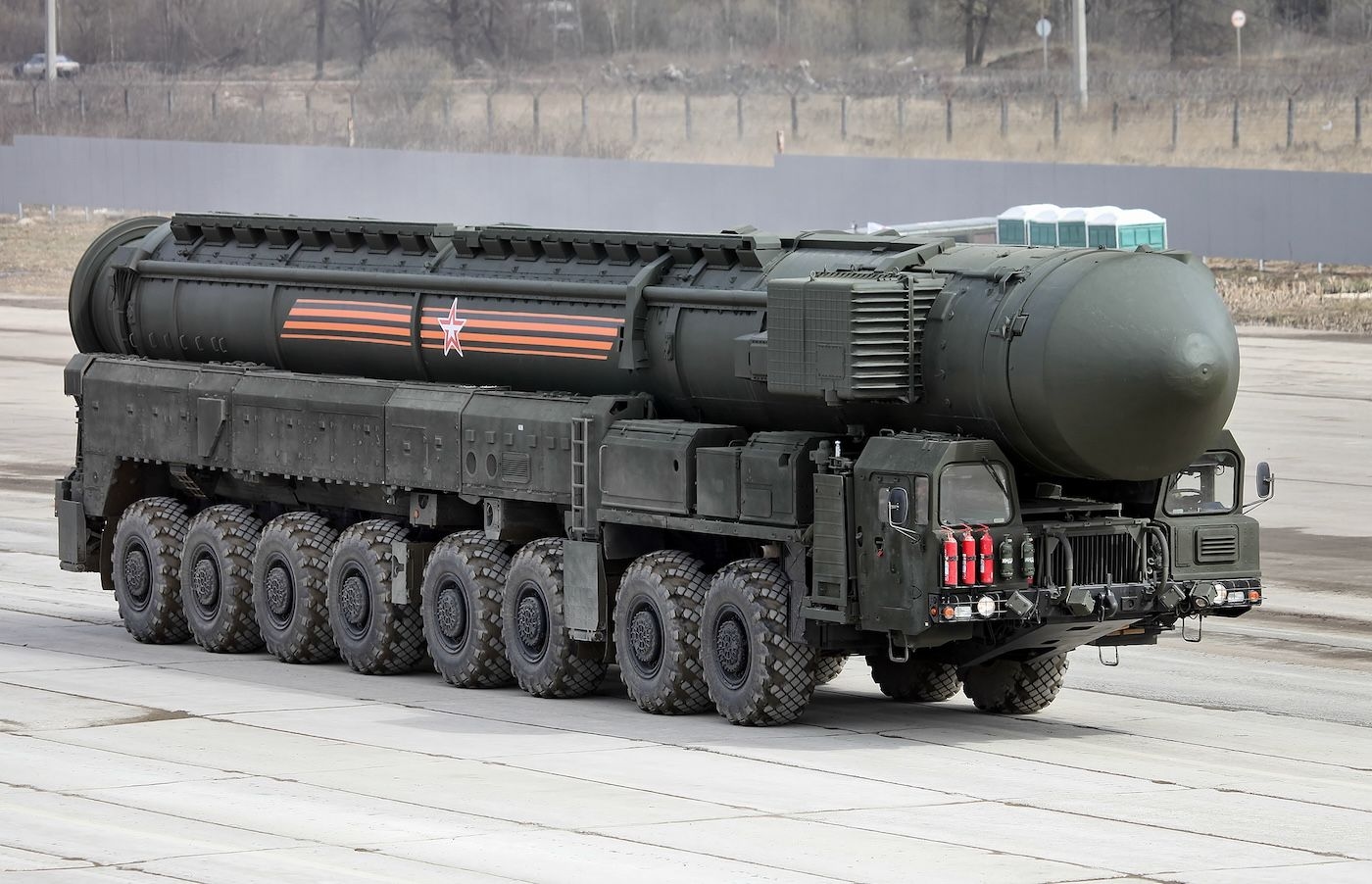
If half of Russia’s currently deployed SLBMs and ICBMs were uploaded by just two additional warheads each, the deployed strategic count would rise by over 500. Increasing warhead loadings on existing missiles does not require new launchers, expanded production lines, or visible changes to basing posture. This is the path of least resistance: incremental, fiscally contained, and somewhat deniable in the absence of the type of on-site inspection regime that New START provided. Yet such a move would also risk catalyzing Washington to make its own force expansion.
Structural and industrial constraints
Moscow’s ability to engage in full-scale arms racing is constrained by Russia’s industrial base in ways that Western commentary consistently underestimates. Russia maintains active warhead production facilities at Sarov, Snezhinsk, Lesnoy, and Trekhgorny, with routine throughput in the low hundreds per year while maintaining some latent surge capacity. But unlike in the case of the United States, warhead production is not the binding constraint. Russia’s harder limits apply to delivery vehicles. The war in Ukraine has exposed systemic weaknesses in the defense-industrial base that constrain new launcher production as much as any political decision might. Precision machine tools, high-reliability guidance electronics, and the skilled labor required for high-tolerance missile assembly are all in short supply, and Western sanctions have significantly degraded Russia’s access to the foreign components on which these production lines historically depended.
The RS-28 Sarmat, originally scheduled to enter service in 2018, illustrates these pressures most starkly. Engineered from scratch by Russia's Makeyev Rocket Design Bureau to replace the aging R-36M2 Voevoda, the program has suffered years of delays rooted in a specific structural problem — the Voevoda was designed by Ukraine's Yuzhnoye bureau and manufactured at the Yuzhmash plant in Dnipro, meaning Russia inherited a dependency on Ukrainian expertise in liquid-fueled ICBM design, propulsion, and guidance systems, never facing the need to develop domestic production in these areas. When military cooperation between the two countries ceased entirely in 2014, that expertise was severed, and indigenizing those competencies has proven far harder than anticipated. The consequences have been visible, with a destructive silo accident at Plesetsk in September 2024 and a failed launch at Yasny in November 2025.
The same pattern holds across the other legs of the triad. Russia relies almost entirely on upgraded Soviet-era Tu-95MS and Tu-160 bombers because the Tu-160M restart at Kazan Aviation Plant has been severely hampered by lost serial production competencies that lapsed when bomber manufacturing ceased in the 1990s. Meanwhile, the next-generation PAK-DA stealth bomber has no realistic prospect of serial production before the mid-2030s — if ever. At sea, the Borei-class SSBN program is Russia’s most credible modernization story, but each submarine takes seven to eight years to construct, and the program’s primary purpose through the 2030s is replacing aging Delta-class boats rather than growing the fleet.
Perhaps most revealing is the case of the Votkinsk Machine Building Plant, which must simultaneously produce Yars ICBMs, Bulava SLBMs, Iskander theater ballistic missiles, and various tactical systems. Since 2022, Votkinsk has sharply increased Iskander output — from approximately 72 per year before the war to an estimated 500-600 annually — in order to replenish stocks depleted by strikes against Ukrainian infrastructure. This surge in non-strategic production now competes directly with Yars output for the same propellant mixing capacity, composite casing production, and specialized quality-control processes. Notably, Oreshnik, Russia’s new intermediate-range ballistic missile, is also produced at Votkinsk — though only three or four have been built so far, with two fired in testing. The production of additional Oreshniks will likely come at a direct cost to Yars output.
Shifting the competitive arena
Given that expansion of strategic launchers is structurally constrained, competition is likely to migrate into domains that are less regulated, cheaper to contest, and more directly relevant to Russia’s security concerns.
The most accessible of these domains is non-strategic nuclear weapons and intermediate-range delivery systems. Russia currently holds an estimated 1,500 to 2,000 non-strategic warheads — a stockpile that has never been subject to any binding bilateral agreement and that Moscow has long viewed as a critical asymmetric advantage in the European theater. Systems like Iskander-M, Kalibr, and Kinzhal all share common design elements with conventional weapons programs, making them relatively cheap to expand and politically ambiguous in ways that strategic forces are not. The recently deployed Oreshnik intermediate-range ballistic missile extends the portfolio further, filling the category that the INF Treaty once prohibited and restoring a theater nuclear capability in Europe that had been absent for decades.
The recently deployed Oreshnik fell under a category that the INF Treaty once prohibited, and has restored a theater nuclear capability in Europe that had been absent for decades.
Russia’s investment in novel strategic systems follows a distinct but complementary logic. In March 2018, Putin unveiled a range of so-called “superweapons” that included the Avangard hypersonic glide vehicle, the Poseidon nuclear-powered autonomous torpedo, and the Burevestnik nuclear-powered cruise missile.
The novel systems were designed to complicate U.S. defenses and preserve second-strike credibility against future technological developments that could erode Russia’s deterrent. They also function as bargaining chips — systems that can be restricted in future arms control negotiations in exchange for U.S. concessions on missile defense or precision-strike capabilities. Their operational value is uneven and, in some cases, remains genuinely uncertain, but their political and strategic utility is well understood in Moscow.
The China factor
Behind all of this sits a strategic variable that Moscow publicly minimizes and privately cannot ignore: China’s nuclear rise. Since 2021, satellite imagery has confirmed construction of nearly 230 new ICBM silos in China’s western provinces, and the U.S. Defense Department estimates China has already exceeded 600 operational warheads and is on track for over 1,000 by 2030. Russian analyst Vasily Kashin observed in 2021 that a “third great nuclear power is being born before our eyes,” noting that Russia would soon lose the exclusive status it had held as America’s only nuclear peer.
Moscow’s official position frames China as an indispensable partner — a source of diplomatic cover and economic relief serving as a strategic counterweight to the West at a moment when the war in Ukraine has left Russia dangerously isolated. Yet beneath that alignment runs a current of historical mistrust rooted in the Cold War-era Sino-Soviet split, competing territorial ambitions, and decades of ideological rivalry that post-Soviet rapprochement moderated but never fully resolved.
Today, China’s nuclear expansion is forcing planners to contend with a partner whose growing nuclear capabilities are increasingly difficult to separate from Russia’s own security calculus. China’s missiles, developed primarily to deter U.S. forces in the Pacific, also cover significant portions of Russian territory, and China’s expansion is the primary engine driving U.S. nuclear modernization, a fact that affects Russia’s security calculations whether Moscow wishes it to or not.
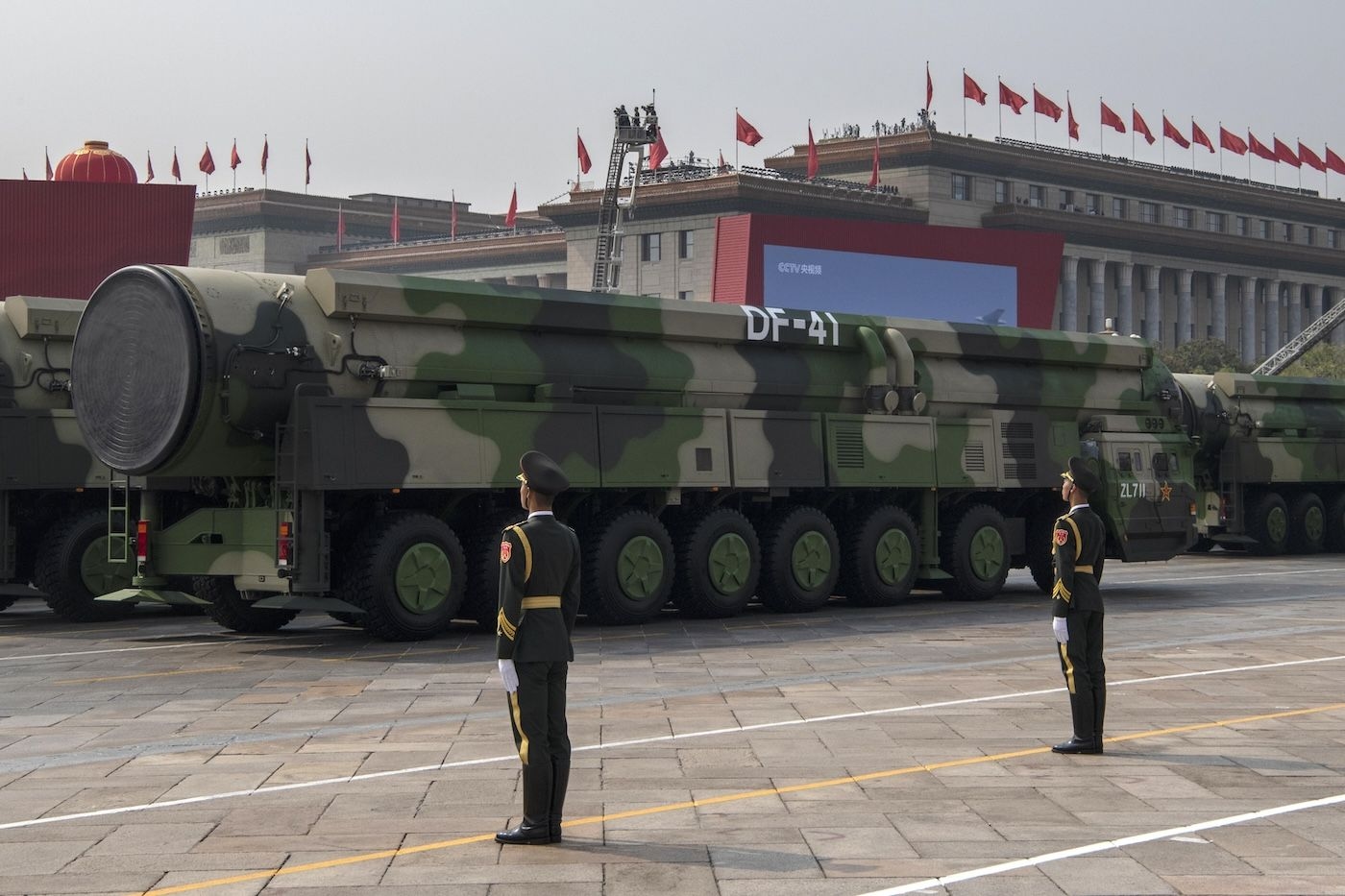
To be clear, Russian analysts are less concerned that China will become an outright adversary than that its nuclear trajectory will reconfigure the constraints under which Russia deters the United States. Figures like Sergey Karaganov and Dmitry Trenin have argued that “Russia needs a close dialogue with Chinese colleagues to convince them that their plans (if any) to increase their nuclear capability to match that of Russia and the United States are counterproductive. Such a buildup will only force the Americans to start a new nuclear arms race and will also raise concern in the Russian strategic community.”
More fundamentally though, China’s growth has forced a structural change in how Russia measures nuclear adequacy. Moscow can no longer simply compare its forces against Washington’s in isolation. It must weigh its arsenal against the combined trajectories of the United States and China simultaneously.
China’s growth has forced a structural change in how Russia measures nuclear adequacy.
The most likely outcome after New START is not a dramatic, visible arms race but a steady pattern of selective adaptation operating beneath the threshold of formal strategic expansion. Russia may upload warheads onto existing missiles, shift investment toward non-strategic and intermediate-range systems, continue developing novel asymmetric capabilities, and probe the boundaries of a competitive environment that is no longer bounded by verification or mutual transparency. Taken on their own, none of these steps constitutes a strategic breakout, and collectively, they merely increase ambiguity, complicate U.S. and allied planning, and erode the baseline of mutual knowledge that arms control, for all its imperfections, once provided.
The danger is that the absence of verified constraints will make it harder to distinguish genuine capability changes from deliberate signaling, harder to manage escalation dynamics in a crisis, and harder to build the mutual confidence that any future arms control framework would require. Despite the looming uncertainty, a return to anything resembling the Cold War-era arms race remains highly unlikely.