
In August 2026, Saudi Arabia, Turkey, and Pakistan signed a joint defense agreement in Mecca. It will operate, in a sense, on the principle of NATO: an attack on any one of the three countries will be regarded as an attack on all. The idea of an “Arab” or “Islamic NATO” has been discussed for years, but previous initiatives never developed into full-fledged defense alliances. The current group emerged against the backdrop of the confrontation between the United States and Iran, but its goal is not war with Tehran, says Middle East expert Marianna Belenkaya. The alliance is intended not for military action but to deter other regional players, including Israel — a prospect that is certainly cause for concern in Jerusalem.
The Mecca agreement
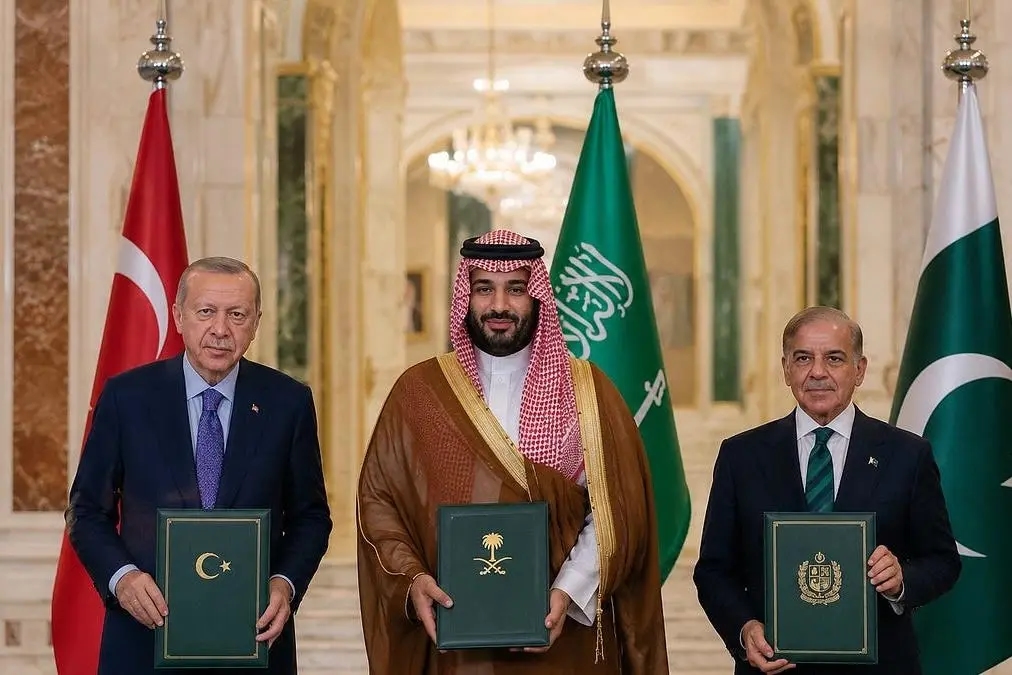
On Aug. 7, Saudi Crown Prince Mohammed bin Salman, Turkish President Recep Tayyip Erdoğan, and Pakistani Prime Minister Shehbaz Sharif signed the “Joint Defense Agreement,” better known as the “Mecca Agreement” as a result of the location of the meeting. In a joint statement, the three leaders made clear that “an armed attack on any one of the three countries will be considered an attack on all participants in the agreement.”
Under the alliance, a ministerial committee modeled on NATO will be established, along with a secretariat headquartered in Saudi Arabia. The countries also plan to hold joint military exercises, develop weapons, and introduce various technologies. At the same time, the parties do not seek to replace any existing alliances, and their trilateral partnership does not obligate them to withdraw from other blocs or agreements.
The document itself has still not been made public. Its details are known only from statements by the participating countries. Turkish Foreign Minister Hakan Fidan, for example, compared the agreement with Article 5 of the 1949 North Atlantic Treaty, which provided the legal foundation for NATO.
He also said that the new alliance is not directed against Iran or any other country, but serves as a joint commitment to ensure the security of the three allies. No country will be considered a threat unless an attack is carried out against one of the member states. In that event, the country under attack will have to request assistance and determine what kind of help is needed.
According to Fidan, support could range from intelligence and logistical assistance to the supply of ammunition and, at a later stage, the deployment of military units, depending on the scale of the threat.
Support could range from intelligence and logistical assistance to the supply of ammunition
Notably, even after the signing of the “Mecca Agreement,” new attacks on Saudi Arabia by pro-Iranian forces led neither Pakistan nor Turkey to announce any direct military intervention.
Storm clouds over Saudi Arabia
On July 13, the Houthis attacked Saudi Arabia after forces of Yemen’s internationally recognized government, backed by Riyadh, struck Sana’a airport in order to prevent a plane from Tehran from landing there.
Reuters later reported, citing four sources, that the plane was carrying commanders and advisers from the Islamic Revolutionary Guard Corps (IRGC), as well as components for missiles and drones (even if Iran and the Houthis denied this). According to Reuters, Tehran asked the Houthis to be prepared to block the oil route through the Red Sea in the event of further U.S. strikes on Iran’s energy infrastructure.
On July 20, the Houthis announced a naval blockade of Saudi Arabia, followed by attacks on Saudi oil facilities toward the end of the month. All this threatened Saudi Arabia’s alternative energy export corridor through the Red Sea at a time when instability in the Strait of Hormuz had already disrupted the traditional shipping routes used by the Gulf states.
The Houthis are believed to have acted in coordination with Iraqi pro-Iranian groups under the supervision of the Islamic Revolutionary Guard Corps (IRGC), and some of the attacks against Saudi Arabia did indeed come from Iraqi territory. The attacks continued into August, but there was no announcement that the collective defense mechanism had been invoked or that Pakistan or Turkey would respond militarily — not even after three Pakistani nationals were killed in a Houthi attack on a vessel in the Red Sea. In response to that incident, Islamabad merely issued a strong condemnation of the strike.
Saudi Arabia has been busy on the coalition-building front. On July 30, the kingdom announced the creation of the Multinational Maritime Defense Coalition (MMDC) to protect the Red Sea, the Bab el-Mandeb Strait, and the Gulf of Aden. Representatives of 43 countries and the European Union attended its first meeting, while 14 states endorsed the joint statement. By Aug. 14, the number of signatories had risen to 15.
The coalition’s full list of participants has not been published, but media reports have named Saudi Arabia, Kuwait, Bahrain, Qatar, Pakistan, Turkey, Egypt, Jordan, Yemen, Bangladesh, Sudan, Djibouti, Somalia, the Comoros, and Nigeria. It is also known that the coalition will be commanded by a Saudi representative, with a Pakistani nominee serving as his deputy, at least initially.
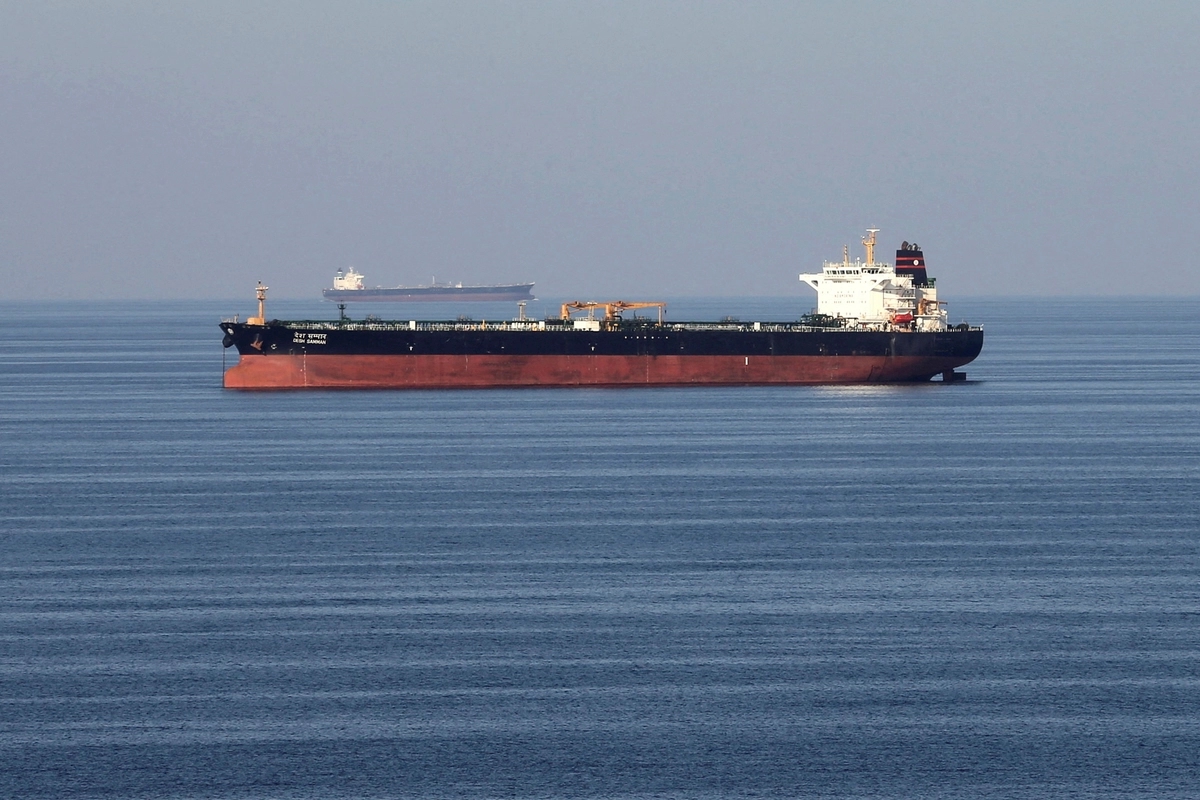
The coalition is envisioned as a defensive structure operating within the framework of the UN Charter and international maritime law. Its stated goal is to ensure freedom of navigation, rather than to attack any particular state or organization.
Operationally, it envisages coordinated naval patrols, surveillance, intelligence sharing, joint operational planning, and initiatives to strengthen military capabilities in the Red Sea, the Bab el-Mandeb Strait, and the Gulf of Aden. Participation in military operations remains a sovereign decision for each member state.
As with the trilateral pact, the emphasis appears to be on deterrence. It is no coincidence that NATO, of which Turkey has been a member since 1952, is cited as the model.
According to Turkish Foreign Minister Fidan, NATO’s main deterrent capability is defensive in nature and is based on the message: “When attacking us, bear in mind that we are a military power, a large community. Do not test our strength.”
Not the first attempt at an “Islamic NATO”
There have been repeated attempts to create an “Islamic (and/or narrower Arab) NATO.” For example, the Arab League considered establishing joint armed forces, but all such plans foundered either on rivalries among member states or on changing political realities.
The Baghdad Pact of 1955, an anti-Soviet military and political alliance between Iraq, Turkey, Iran, Pakistan, and the United Kingdom created at London’s initiative, was more symbolic than a genuine military bloc, and it did not last long. Iraq withdrew in 1959 in the aftermath of its revolution the previous year, after which the pact was renamed the Central Treaty Organization (CENTO) before collapsing completely as a result of the 1979 Islamic Revolution in Iran.
After the 1990–91 Gulf War, the Arab monarchies, Egypt, and Syria adopted the Damascus Declaration and sought to establish a more robust regional security system, but the project did not survive disputes over funding and mutual distrust. The Gulf Cooperation Council (GCC) likewise failed to develop into a fully fledged joint defense alliance, even if it still has joint military structures, including the Peninsula Shield Force, established in the 1980s.
Efforts to create a common defense system were repeatedly hampered by differing perceptions of threats among the Gulf states, particularly over Iran, as well as rivalry among the monarchies themselves. The 2017 crisis was a particularly clear example: three GCC members — Saudi Arabia, the UAE and Bahrain — severed ties with the fourth, Qatar.
A more practical example was the Saudi-led Arab coalition in Yemen, established in March 2015 to support the government of Abd-Rabbu Mansour Hadi against the Houthis. Unlike many “Arab NATO” projects, it actually conducted a years-long joint military campaign. But it, too, had its limitations: Pakistan refused to send the troops requested by Riyadh, Qatar was expelled from the coalition after the 2017 crisis, and the interests of Saudi Arabia and the UAE also diverged.
Attempts to establish a regional system were made from outside the region as well, primarily by the United States. Under the administration of Barack Obama, Washington discussed two competing proposals with regional states — the Saudi-backed “Islamic Forces” and the Egyptian “Arab Forces” — while also seeking to expand the Arab League’s capacity for peacekeeping, stabilization, and humanitarian operations.
Experts noted that the United States was interested in reducing its burden of providing security in the Middle East, but disagreements among the Arab states emerged at the outset: who would lead whom and who would answer to whom?
Disagreements among the Arab countries emerged from the outset: who would lead whom and who would answer to whom
During Donald Trump’s first term saw the proposal to create a Middle East Strategic Alliance (MESA) made up of the six GCC states, plus Egypt and Jordan. Containing Iran’s influence was one of its main objectives, but the project never developed into a fully fledged structure. Saudi Arabia, the UAE, and Bahrain took the toughest stance toward Tehran, while Qatar, Kuwait and Oman preferred to keep channels of communication open, and Egypt and Jordan did not want the alliance to become a mechanism for military confrontation with Iran. These differences were compounded by the Qatar crisis, a struggle over leadership, and disputes regarding the new organization's general operations.
The fact that the new "Mecca Agreement" consists of just three countries makes the alliance more flexible and, consequently, more sustainable. Still, the partnership between Pakistan, Turkey and Saudi Arabia is hardly enough to justify calling it an “Arab NATO” — at least for now.
3+?
According to Hakan Fidan, the preferred model would see Turkey, Saudi Arabia, and Pakistan retain their status as founding members — responsible for developing the alliance’s principles, standards, and long-term structure — while allowing other countries to join with the approval of the core of original members.
One of the first candidates is Egypt, which in March joined Turkey, Saudi Arabia, and Pakistan in a new consultation format at the foreign minister level, known as R4. The ministers have met four times in the months since then — an unusually high level of activity.
Against this backdrop, the signing of the agreement in Mecca last month led regional media to raise the question: why did Egypt not join the alliance? Fidan maintains that the delay is merely technical.
Meanwhile, The Middle East Eye (MEE) published a report claiming that Saudi Arabia had opposed Egypt joining the group, “at least for now.” The outlet’s sources attributed this to Riyadh’s growing dissatisfaction with the policies of Egyptian President Abdel Fattah el-Sisi. Saudi Arabia, which provided around $25 billion in support for the Egyptian economy after Sisi came to power, believes Cairo has given little in return. Its grievances reportedly include Egypt’s limited role in the fight against the Houthis and its position during the U.S.-Israeli war against Iran.
Egypt’s absence from the alliance is reportedly linked to Riyadh’s growing dissatisfaction with the policies of Egyptian President Abdel Fattah el-Sisi
Another source of irritation is Egypt’s relationship with the UAE. During the Iranian attacks, Cairo sent air defense systems and fighter jets to the Emirates, while Sisi met repeatedly with UAE President Mohammed bin Zayed. No comparable steps were taken toward Saudi Arabia, and according to MEE sources, this deepened Riyadh’s suspicions regarding Cairo’s alignment with Abu Dhabi. This comes on top of the difficult relationship between the UAE and Saudi Arabia themselves, which came close to armed confrontation late last year.
At the same time, Egyptian sources claim that Cairo itself declined to join the “Saudi political bloc,” fearing that doing so would limit its autonomy on security and diplomatic matters. Egypt is developing its cooperation with Greece and Cyprus, which have disputes with Turkey, as well as with India, Pakistan’s main regional rival. And that is without even considering the need to balance relations between Saudi Arabia and the UAE.
Who are they banding together against?
Cairo, like many other regional players, naturally wants an answer to the question: who are we banding together against? The reply that the new alliance has no specific adversary does little to resolve the issue. The Soviet Union was likewise not named as an enemy in the 1949 North Atlantic Treaty, but the historical context of NATO’s creation left little doubt that the alliance was formed primarily as a mechanism for deterring Soviet expansion in Europe.
There is no such clarity yet in the case of the Mecca Agreement. Saudi Arabia is primarily focused on Iran and proxy forces aligned with Tehran. For Pakistan, India remains its main traditional rival. Turkey is increasingly speaking about threats stemming from Israel’s growing strength. Potential members and observers are therefore trying to understand not only which adversaries the agreement is formally not directed against, but also which threats the three countries actually regard as common.
“One of the conditions for the success of any alliance is identifying a common enemy. So who is the enemy for the countries in this alliance?” — asks Emirati political scientist Abdulkhaleq Abdallah.
Voices from Abu Dhabi are particularly important. Throughout the latest war with Iran, the UAE consistently called on the Gulf monarchies to coordinate more closely on security. “We have no alternative but to unite our ranks,” UAE presidential adviser Anwar Gargash stressed in July.
Yet Abu Dhabi has so far found itself on the sidelines of the new structures that have emerged around Riyadh this summer: the UAE was not even among the 14 states that signed the declaration establishing the Multinational Maritime Defense Coalition on July 30.
Against the backdrop of tensions between Abu Dhabi and Riyadh, this is hardly surprising. More broadly, the “Mecca Agreement” is beginning to look like a counterweight to the Abraham Accords — the series of Trump-brokered agreements between Muslim (initially only Arab) countries and Israel to normalize relations.
In 2020, the UAE and Bahrain were the first countries to join the Abraham Accords, followed by Morocco and Sudan. The accords were not a defense treaty and were primarily aimed at normalizing diplomatic and economic relations. However, security cooperation was an important component from the outset.
The Trump administration viewed the process as part of a broader restructuring of the region’s security architecture, including against the backdrop of its confrontation with Iran. In this context, Washington placed particular emphasis on normalizing relations between Israel and Saudi Arabia.
In the fall of 2023, Israel and Saudi Arabia were close to reaching an agreement. But Hamas’s October 7 attack on Israeli territory, followed by the war in the Gaza Strip and later in Lebanon, dramatically altered the regional balance of power. Riyadh abandoned its rapprochement with Israel, making its willingness to resolve the conflict with the Palestinians and accept the establishment of a Palestinian state a condition for further negotiations. The shift was predictable, and Hamas had counted on such an outcome — after all, one of the objectives of the October 7 attack was to derail the Saudi-Israeli normalization process.
It is therefore hardly surprising that Israel is wary of Riyadh’s rapprochement with Ankara and Islamabad, both of which have tense relations with Jerusalem.
Riyadh’s rapprochement with Ankara and Islamabad, both of which have strained relations with Jerusalem to varying degrees, is raising concerns in Israel
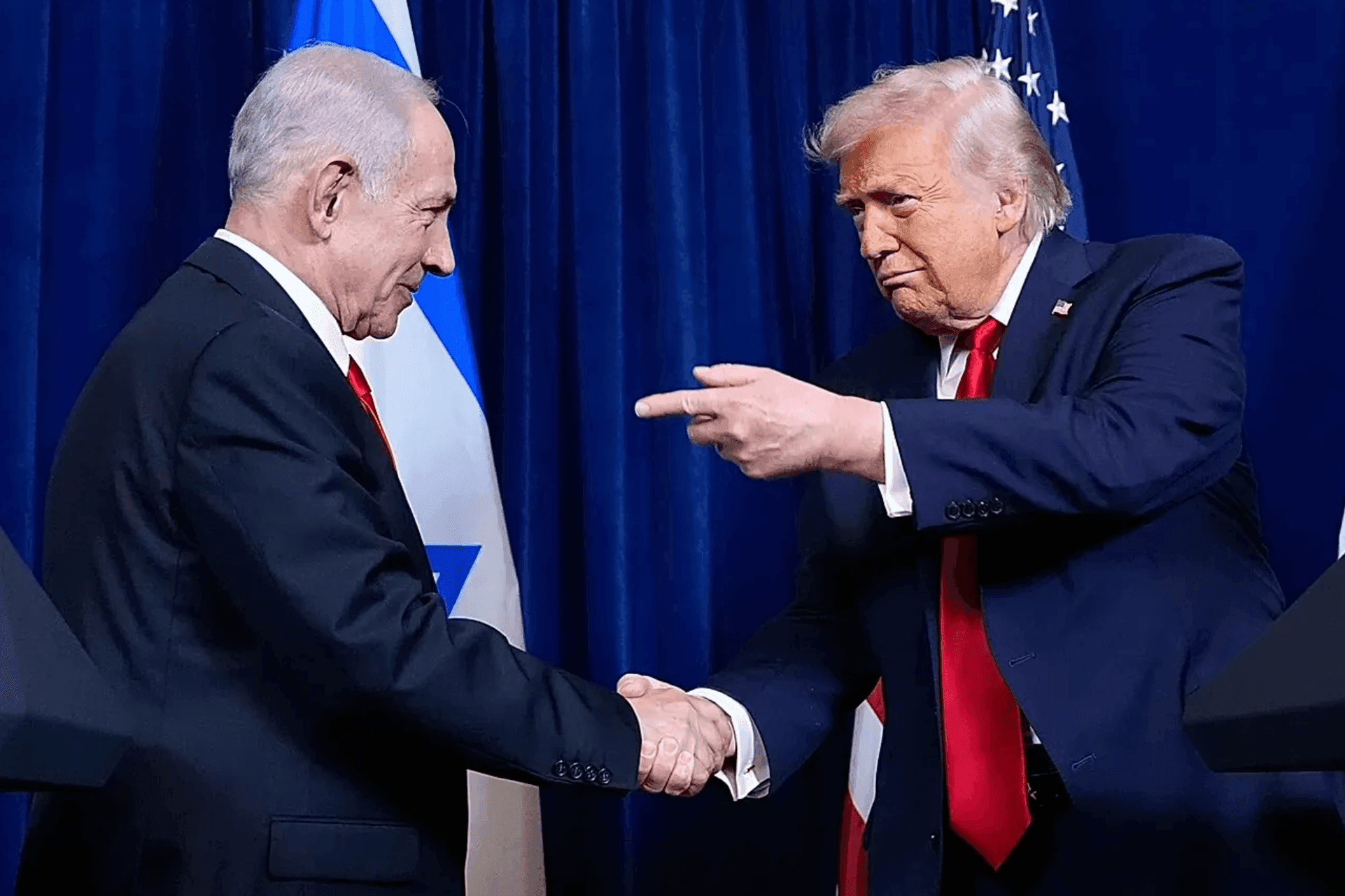
“From Israel’s perspective, this is a very worrying development,” says Gallia Lindenstrauss, a senior researcher at Israel’s Institute for National Security Studies (INSS). “It adds a military component to a political front that demonstrates a staunchly anti-Israeli position. It is also concerning because both Saudi Arabia and Turkey are potentially exploring the nuclear option and could gain a great deal from close defense cooperation with Pakistan.”
At the same time, she believes the door to normalization between Israel and Saudi Arabia has not closed, even if the chances of such a deal have diminished.
According to Yoel Guzansky, a former National Security Council official and head of the Gulf Program at the INSS, the trilateral alliance is “not a military alliance against Israel, but it is anti-Israeli in its orientation,” adding that “both Erdoğan and the Pakistanis are very anti-Israeli. Saudi Arabia joining such an alliance could lead it to distance itself from Israel and, under pressure from these countries, adopt a more confrontational policy toward Israel."
It is important to note here that the three countries began working on a joint defense agreement in December 2023, just two months after the Hamas attack on Israel and the outbreak of the war. Even then though, the Iranian factor was already present, as Tehran was being widely accused of encouraging Hamas and its Lebanese ally Hezbollah. Still, there had not yet been an open military confrontation between Israel and Iran, let alone between the United States and Iran; Bashar al-Assad was still in power in Syria, and the region looked very different.
By the time the agreement was signed, after two years and eight months of negotiations, the war in the region had already affected dozens of countries (whether directly or merely economically). During that time, the balance of power shifted repeatedly, but the fundamental question remained: who will shape the future of the Middle East?
Against this backdrop, the Emirati newspaper Al Khaleej notes that the new alliance can be understood as an attempt by Saudi Arabia, Turkey, and Pakistan to prevent Iran or Israel from unilaterally reshaping the regional order. All three countries share, to varying degrees, concerns that Israel could emerge from the latest conflicts as the region’s dominant military power.
At the same time, Tehran has reacted to the new regional alliance in broadly positive terms — or, at least, it has sought to give that impression. Iranian Foreign Ministry spokesman Esmail Baghaei said that “there is no reason to worry that the pact is directed against Iran.” On the contrary, he said, it is a sign that the three countries “have concluded that they cannot rely on U.S. security commitments.”
“Iran is working to convince the monarchies around the Persian Gulf and other Arab countries that the American presence in this region does not strengthen their security and defense. They cannot protect their bases, they cannot protect you, and, in fact, their presence provokes the very war you hope to avoid,” Vali Nasr, a professor at Johns Hopkins University and an Iran specialist, explained in an interview with the Financial Times.
In his view, Tehran welcomes the “Mecca Agreement” because it means the United States has to compete with other security structures in the Gulf in order to remain relevant. Nasr believes that even if the new alliance cannot yet be considered a full-fledged military pact, its emergence itself demonstrates the degree to which doubts about the reliability of the United States as a security guarantor have become a serious concern.
Not instead of the U.S.
As a result of the war with Iran, which saw the United States effectively leave the Gulf monarchies exposed to attacks by Tehran and its proxies, the Middle East no longer regards Washington as an unquestioned security guarantor. Still, similar disillusionment had emerged earlier — for example when the Houthi attacks on Saudi Arabia in 2019 drew only a muted response from Washington.
In recent years, regional players have increasingly come to believe that they need backup options. Even before Russia’s full-scale invasion of Ukraine, this included exploring partnerships with Moscow and joining or moving closer to organizations such as the Shanghai Cooperation Organization and BRICS (where Beijing also plays a significant role). Another form of insurance is the search for transregional alliances, such as the partnership between Turkey, Pakistan, and Saudi Arabia. On the other side are Israel, India, and the UAE, but all six of them are tied together by their partnerships with the United States, which they ultimately have no intention of abandoning.
Notably, Washington itself welcomed the new alliance. “This shows how the Middle East is coming together and how countries will finally be able to defend themselves more effectively. Congratulations to the great leadership of the three countries mentioned. This is a big, bold, and important first step,” President Trump wrote on Truth Social. In effect, this is in line with U.S. hopes of shifting part of the burden of regional security onto the shoulders of its partners where possible.
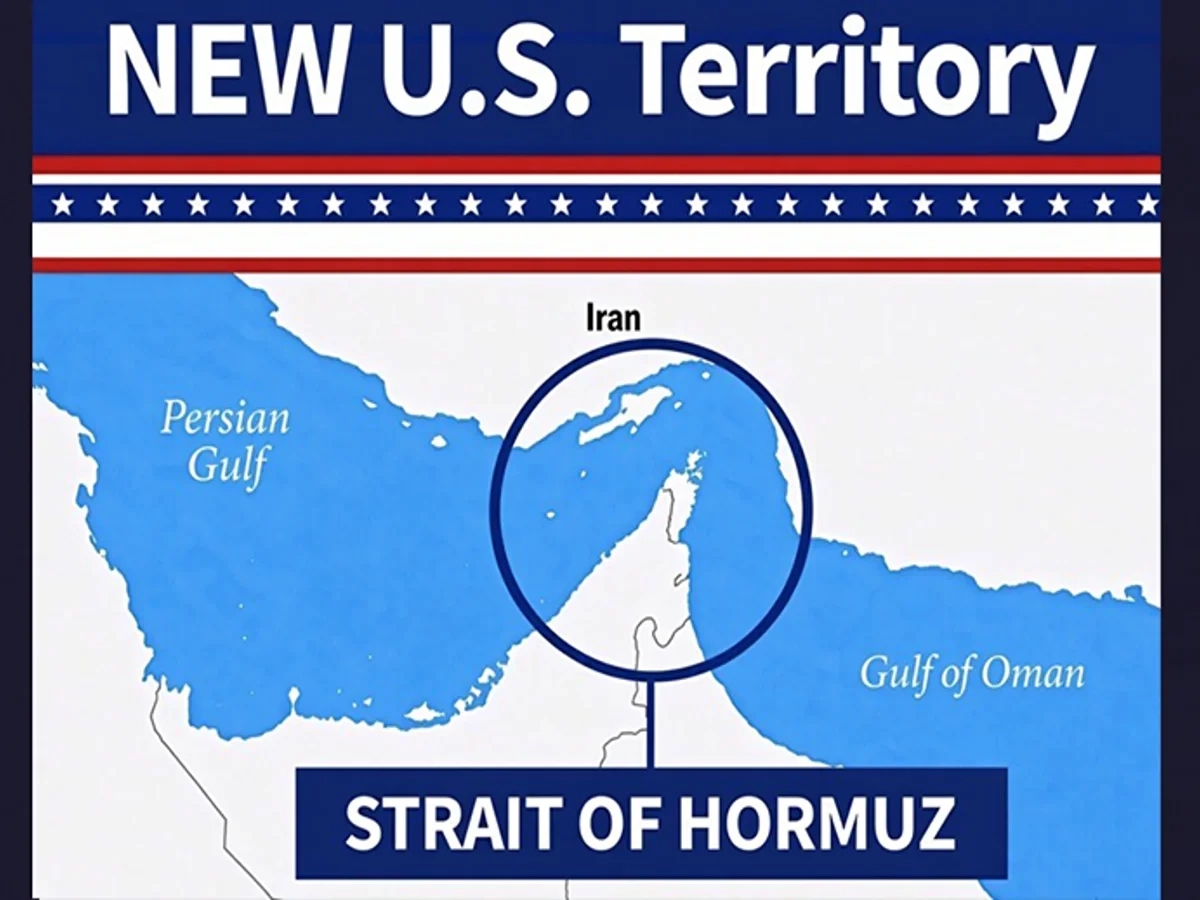
In any case, Washington will neither be able nor willing to withdraw from the Middle East completely. It is no coincidence that Trump has posted images depicting the Strait of Hormuz as U.S. territory.
In any event, the process is far from over. The order that took decades to build — who is allied with whom and who is at war with whom — has collapsed. A new one has yet to be built.