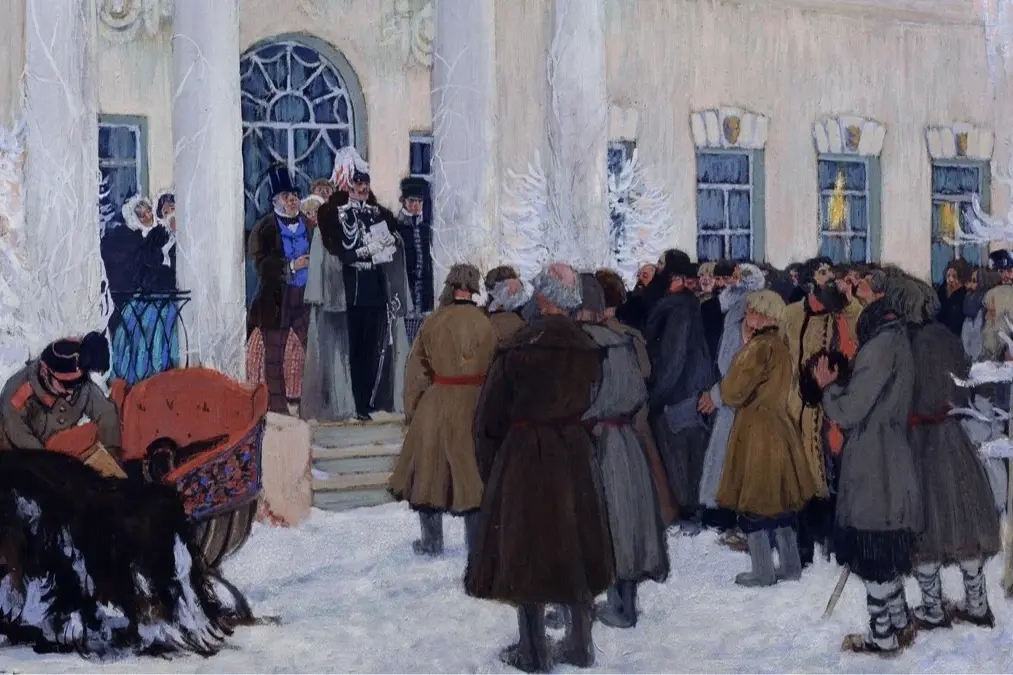
Vladimir Putin’s late-March meeting with oligarchs, during which the president “passed the hat around” and suggested they chip in for the war, marks a new stage in the relationship between the Russian state and the private sector, confirming the trend toward archaism. The economy has already abandoned foreign investment and Western technology, and now the country has effectively bid farewell to private property and a free internet. It is, according to economist Igor Lipsits, sliding back into something akin to modern serfdom.
Archaization roadmap
The concept of private property means that you have the right to use your assets in full at your own discretion and earn income from them. The state has the right to collect taxes from you, but it cannot interfere in how you make money or how you spend it, as long as you are not harming others.
Attitudes toward private property in present-day Russia have visibly regressed toward those of the Soviet era, when enterprises were owned by the “people’s economy” and managed by the state. If oligarchs are losing control over their assets, ordinary citizens may also face restrictions on their right to use their own money as they see fit. Meanwhile, the digital ruble will allow the Bank of Russia to block undesirable consumer spending. As a result, the country is sliding back toward a society in which all aspects of life are fully controlled by the authorities.
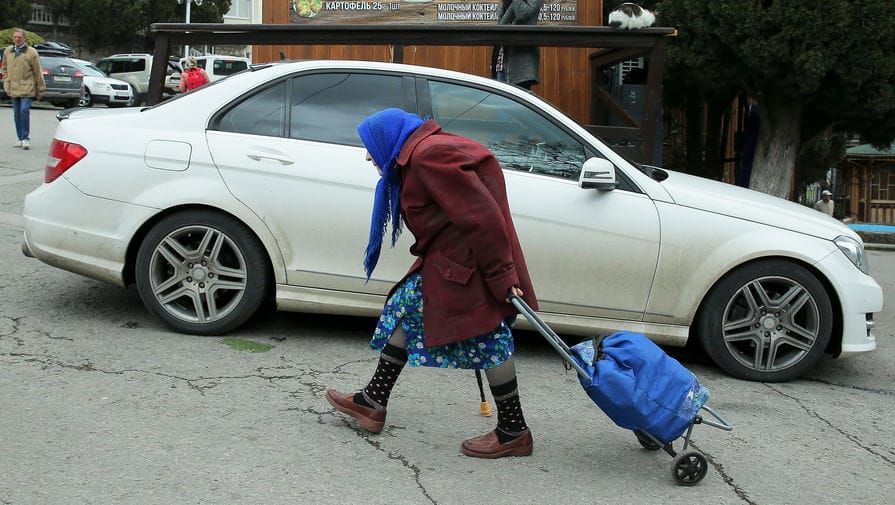
If oligarchs are losing control over their assets, ordinary citizens may also face restrictions on their right to use their own money as they see fit
One might object that such a rollback is impossible in the 21st century. But Russia’s history suggests otherwise. The country has already experienced a period in which the introduction of market principles revived a completely collapsed economy: the New Economic Policy, or NEP, solved the problem of food shortages in the 1920s and stocked store shelves with goods. Concessions also reappeared — the Soviet Union allowed foreign companies to return to the country and take over the management of major enterprises, mostly in the extractive industries, in order to generate profits. And indeed, for a time, foreign companies extracted resources, made money, and paid taxes. Then, when Joseph Stalin came to power following years of intraparty struggle, he destroyed the NEP and drove out all foreigners, reverting the Soviet Union back towards the era of War Communism.
In short, there is nothing surprising about abrupt reversals in Russia: the economy moves forward, achieves something, but then finds it exhausting and difficult to stay there, and falls back on old practices. That is what archaization means.
Archaization may be partial in most cases, but it is nevertheless a path that can ultimately lead all the way back to serfdom. That this is not an exaggeration is confirmed by such a remarkable document of the era as a modern-day article by Valery Zorkin, President of Russia’s Constitutional Court, in which he called serfdom the core element of Russian mentality:
“Despite all its costs, it was precisely serfdom that served as the main binding force preserving the nation’s unity. It was no coincidence that, according to historians, peasants said to their former masters after the reform: ‘We were yours, and you were ours.’”
Zorkin argues that the abolition of serfdom was a profound mistake: severing the bond between the aristocracy and the people, it allowed them to live separately, which ultimately led to revolution and the collapse of the empire.
Russian far-right philosopher Alexander Dugin, director of the Ivan Ilyin Higher School of Politics at Moscow’s Russian State University for the Humanities, also proposes reversing the demographic transition and returning Russia “to the roots” — meaning a predominantly peasant population with large families. “For Russia, returning to its roots, but on a new developmental level, means embarking on the mass resettlement of megacities and a state program to organize life for people in rural areas, suburbs, and towns. The slogan could be — ‘To the native land!’ If the peasantry is the historical matrix of a truly tight-knit (because where else would you go in the countryside) and large family, then it is impossible to revive one without the other,” Dugin wrote in an article titled “Forward — into the New Middle Ages!”
Alexei Chekunkov, Russia’s Minister for the Development of the Far East, also points to the need for a creative reimagining of the Soviet-era concept “voluntary but forced” labor, along with the return of state planning in order to revive ambitious industrial and city-building projects in the Far East and Siberia. Apparently, he is nostalgic for the Gulag as well, given that prisoners provided essential workforce for projects that were also strategically important but economically disastrous.
In other words, archaization is not some strange concept wandering around in the minds of the intelligentsia. The Russian elites are showing a very tangible desire to return to old practices.
What will this look like?
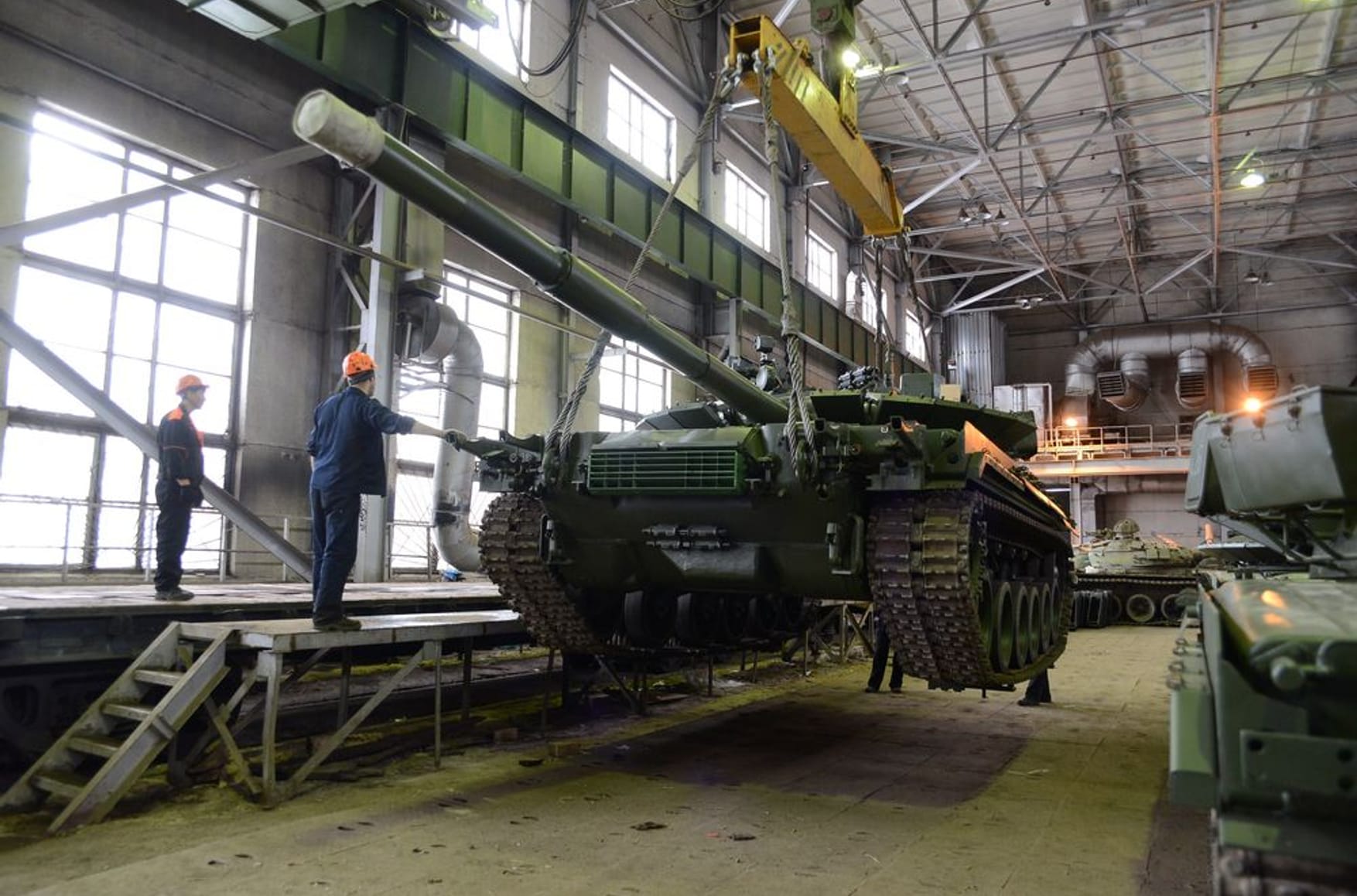
Everything will look very familiar: resembling the 1930s in the USSR, when private property was all but abolished. The state will own the majority of all assets, and it will not even need drastic reforms to achieve that. In 2023, according to the Institute of Applied Economic Research at RANEPA, the state’s share in the economy was a solid 48.5%.
In the long term — given that the war looks set to drag on — industry could become 100% state-owned. State-run agriculture may also be revived, and possibly even trade. All enterprises would pay a set wage. Retail prices and state service fees would be aligned with that wage. Yet as Soviet reality proved, this setup provides just an illusion of equality: your salary could buy you what you needed — but only if you managed to get in line first; if you were twentieth, you got nothing and went home hungry.
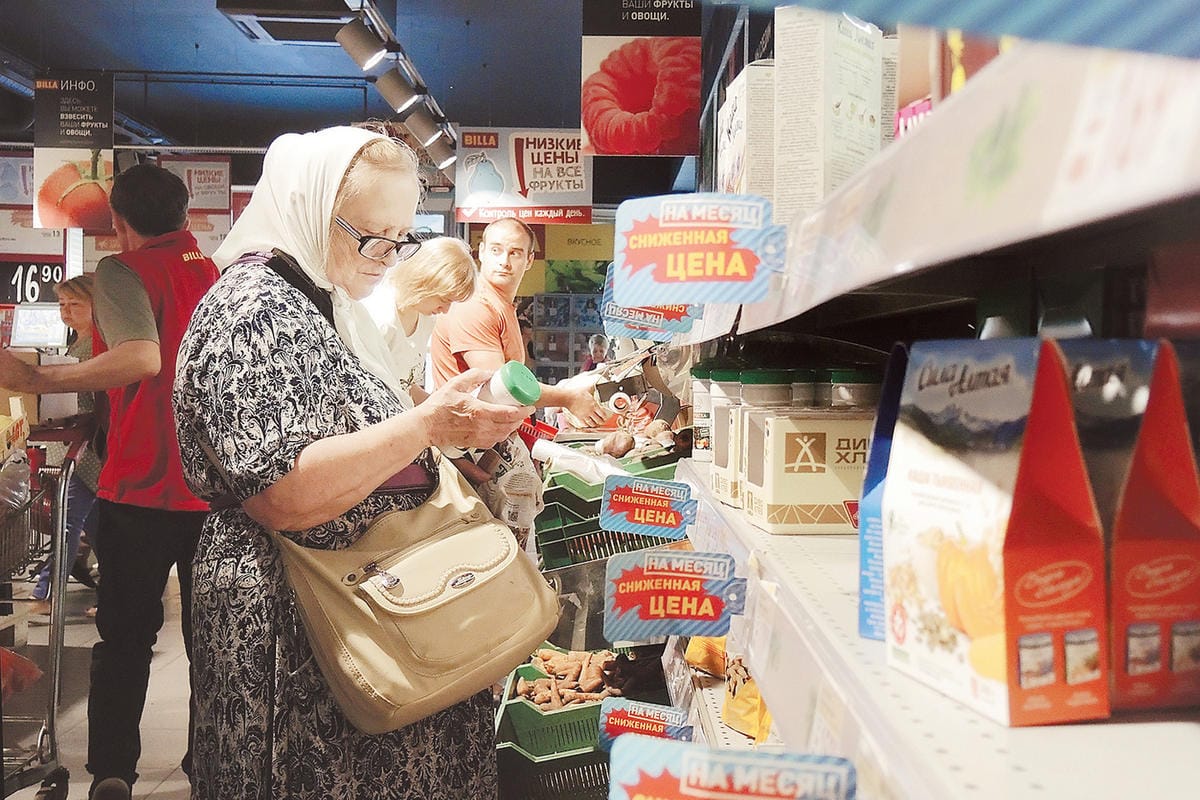
However, far from all Russians are frightened by this scenario, and few are prepared to stand up for preserving a market economy. The majority want a guaranteed salary and an acceptable selection of products. Besides, the Russian food industry and retail trade are already cutting down on variety on the shelves. Catering to all tastes is becoming a matter of the past.
What Russians want is a guaranteed income and an acceptable selection of products
Many sectors of the economy, including IT and banking, will change beyond recognition. They may keep the brand names, but the content will be different.
Let me explain with an example. An American graduate student once decided to write a thesis on the Soviet banking system and asked me to advise him, since I had worked for several years in the Gosbank system of the USSR. I explained what Gosbank was, how money flowed from it to other banks, and how banks were then “assigned” a credit plan — specifying which quarters, at what interest rate, for what purposes, and to whom they could issue loans. Enterprises received a corresponding mirrored credit plan, so they knew exactly how much money they were supposed to borrow.
The graduate student was confused. “These aren’t banks,” he objected. “This is called a cash office, while a bank has to seek out resources, choose reliable depositors, and manage risks.” And he was right — in the USSR, cash offices were called banks.
It appears that Russia is set on a similar course, making more shells without substance. There will be a state-run “Yandex,” which will provide increasingly worse service yet will be widely used for the simple reason that there is no competition and it is better to get at least some relevant answers to internet search queries than to get no such results. Russians will similarly have to make do with acceptable retail, slow logistics, and pathetic AI services that freeze at every step.
Another step taken
The likelihood of this particular scenario is relatively high. I would put it at 80%, with the 20% of doubt accounting for the possibilities of regime change or state collapse.
On the other hand, the probability in 1988 that the Soviet Union would survive to see the turn of the millennium was even higher. The country was enormous, and it had seemingly powerful security forces. Even in 1990, as I penned my last note to the Communist Party’s Politburo about the need for change in the Soviet economy, I could not have imagined that a mere one year later the state would collapse.
In short, until another Swan Lake comes around for the ruling regime, the current deliberative process of institutional and economic archaization will continue. Ultimately, Russia will become an extremely backward periphery of the world, a place where, for the population as a whole, a stable existence without significant technological progress will be considered “a normal life.”
Russia will become a backward periphery of the world, a place where stable existence without technological progress is considered “a normal life”
On a scale of one to ten, where one represents a new form of serfdom and ten represents full economic freedom, I would say modern-day Russia is closer to 4. Many elements of the institutions and practices of the 1990s and 2000s have already been lost. The banking system is unconventional, more state-run than private, merely imitating a free-market system. Almost 80% of banking assets are concentrated in 12 systemically important banks, six of which are state-owned. The five largest banks hold 67% of all assets. Moreover, Sberbank alone accounts for 57% of mortgages, nearly half of retail loans, and a third of corporate lending in the country. The private sector is gradually being pushed out of the banking industry, its share of assets and capital diluted further by the day. In this way, the country is returning to a state-controlled credit system.
And it isn’t only finance. Agriculture has effectively been monopolized, making it easy to create state-run agro-trusts. The ranking of Russia’s largest agricultural landowners is topped by 75 agricultural enterprises with total land holdings amounting to 19 million hectares. This is half a million hectares more than last year and 10% of all agricultural land in the country — 23% of the sown area.
Hypothetically, the country’s largest landowner, former Minister of Agriculture Alexander Tkachev (who owns 1.23 million hectares), could be entrusted with management of other latifundia and appointed head of a state monopoly that could be called “AgroRussia” — or something along those lines.
True, there are still resourceful entrepreneurs in the country, so it’s not a one on the serfdom scale. But such individuals existed even in the USSR.
Economist Vitaly Naishul aptly described the Soviet economy as a fusion of administrative and market elements rather than a planned system. Money exchanges were replaced by exchanges of favors, meaning nepotism and connections largely determined an individual’s standard of living. This market-like subsystem partially compensated for the shortcomings of the planned economy. All economic reformer Yegor Gaidar did in the 1990s was “monetize” this setup. In an archaized Russia, small unregulated segments will similarly remain, as the regime has neither the capacity nor the need to exert total control over every minor activity.
The recent developments concerning Russian oligarchs are undoubtedly a new stage in the relations between the government and the private sector. Of course, oligarchs have always been at Vladimir Putin’s beck and call, but this is the first time such demands have been made explicit. The assets of Russia’s economic elite are being turned into pseudo-market companies that must finance the budget whenever ordered, just like state-owned enterprises. The government is, quite simply, destroying the very foundation of the economy: private businesses.
In 2017, long before the full-scale invasion of Ukraine, Vladimir Putin scheduled a meeting with business leaders at the Kremlin. They were led into a hall featuring a large round table with chairs around it. But the president was running late, and for an hour and a half, all these billionaires stood there until the president arrived and offered them a seat.
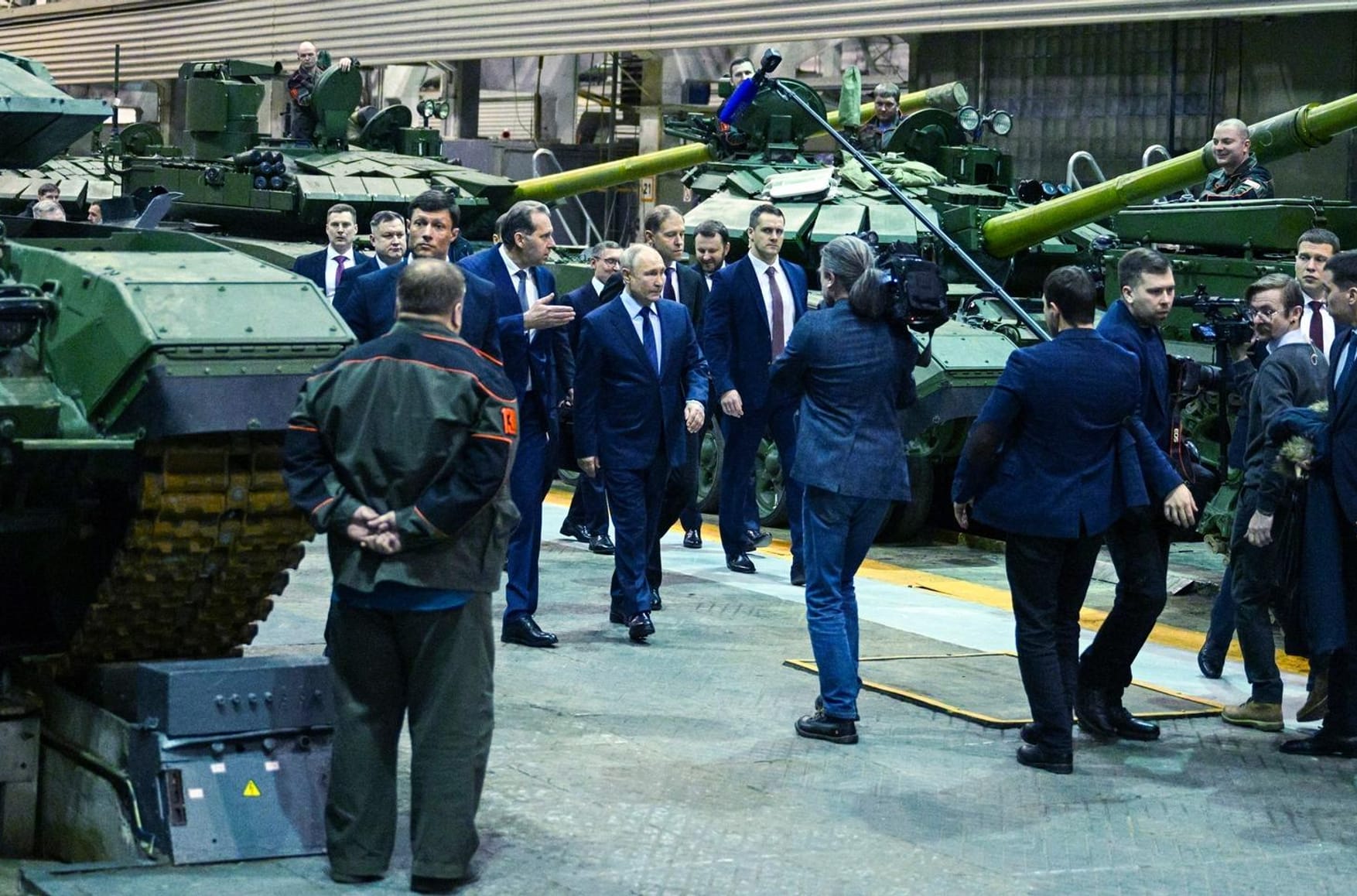
For his most recent meeting with business representatives, Putin dropped by for half an hour, did not allow a single question, ordered the businessmen to “chip in for the victory,” and left. He might as well have told them: you are serfs, and you have no choice. Unless you donate willingly, we’ll impose another windfall tax. Or we’ll grab your businesses entirely. This is no longer a conversation; this is an order.
Putin dropped by for half an hour, did not allow a single question, ordered the businessmen to “chip in for the victory,” and left
Both Putin and the “old guard” oligarchs have always known that this was the game. In 2007, Oleg Deripaska told the Financial Times that he was ready at any moment to give up his property to the state: “If the state says we need to give it up, we'll give it up. I don't separate myself from the state. I have no other interests," he said. “Just consider that everything fell from the sky.” Still, few Russian businessmen could have seriously imagined that their business would vanish back into the sky so suddenly.