
The CDU’s recent defeat in the state election in Saxony-Anhalt was more than a local setback for the conservatives — it was a vote of no confidence in Chancellor Friedrich Merz personally. The result, writes political scientist Dmitri Stratievski, could become a problem for Germany’s political system as a whole. The success of the right-wing Alternative for Germany (AfD), which managed to mobilize both protest voters and committed ideological supporters, shows that Germany’s established parties need to relearn how to engage with the public. For now though, the CDU’s attempts to court the political right are instead benefiting populists and increasing the risk that Merz could lose power.
The German expression bekannt wie ein bunter Hund — lit. “as well known as a colorful dog” — dates back to medieval times. Back then, most stray dogs in German towns were a single color. If a multicolored animal appeared, people noticed and remembered it immediately.
Over time, the expression took on a positive meaning, coming to describe someone widely known in their region, able to get along with almost anyone, and generally popular. The conservative Sven Schulze, who remains the head of Saxony-Anhalt’s state government despite the far-right AfD party’s recent electoral victory there, worked hard to fit that image.
The man vs. the party
Schulze was born in the town of Quedlinburg. In 2014, he won a seat in the state parliament, and seven years later became Saxony-Anhalt’s economy minister. He eventually rose to become the leading figure in the Christian Democratic Union (CDU) — and the head of the state government. Reiner Haseloff, who had led the state for 15 years and was considered its undisputed political heavyweight, resigned in January 2026 for health reasons. Schulze, aware that he lacked his predecessor’s recognition, did everything he could to fill the gap. Even before the campaign began, the new premier sometimes held four or five official meetings a day.
Once the campaign was in its final stages, it seemed as though Schulze was traveling around the state virtually around the clock. He visited trade union offices, youth clubs, and universities (where conservatives are not particularly popular). He met voters in districts where AfD support had reached 50%. And he listened to complaints from farmers, teachers, and doctors.
In a televised debate with local AfD leader Ulrich Siegmund, the premier did not shy away from difficult issues — migration, the economy, and unemployment. He attacked his opponent and tried to use facts and figures to rebut populist proposals that were plainly unrealistic.
Even prominent German actors who had previously sharply criticized the CDU (such as Dieter Hallervorden) appeared onstage with Schulze at campaign rallies. Schulze’s personal approval rating eventually rose eight points above Siegmund’s — but voters were casting their ballots for parties, not individuals.
The practical feasibility of the competitors’ governing plans likewise mattered for little. The Halle Institute for Economic Research calculated that implementing only the AfD’s main campaign promises in Saxony-Anhalt would require more than 2 billion euros in additional spending — money the relatively poor state does not have.
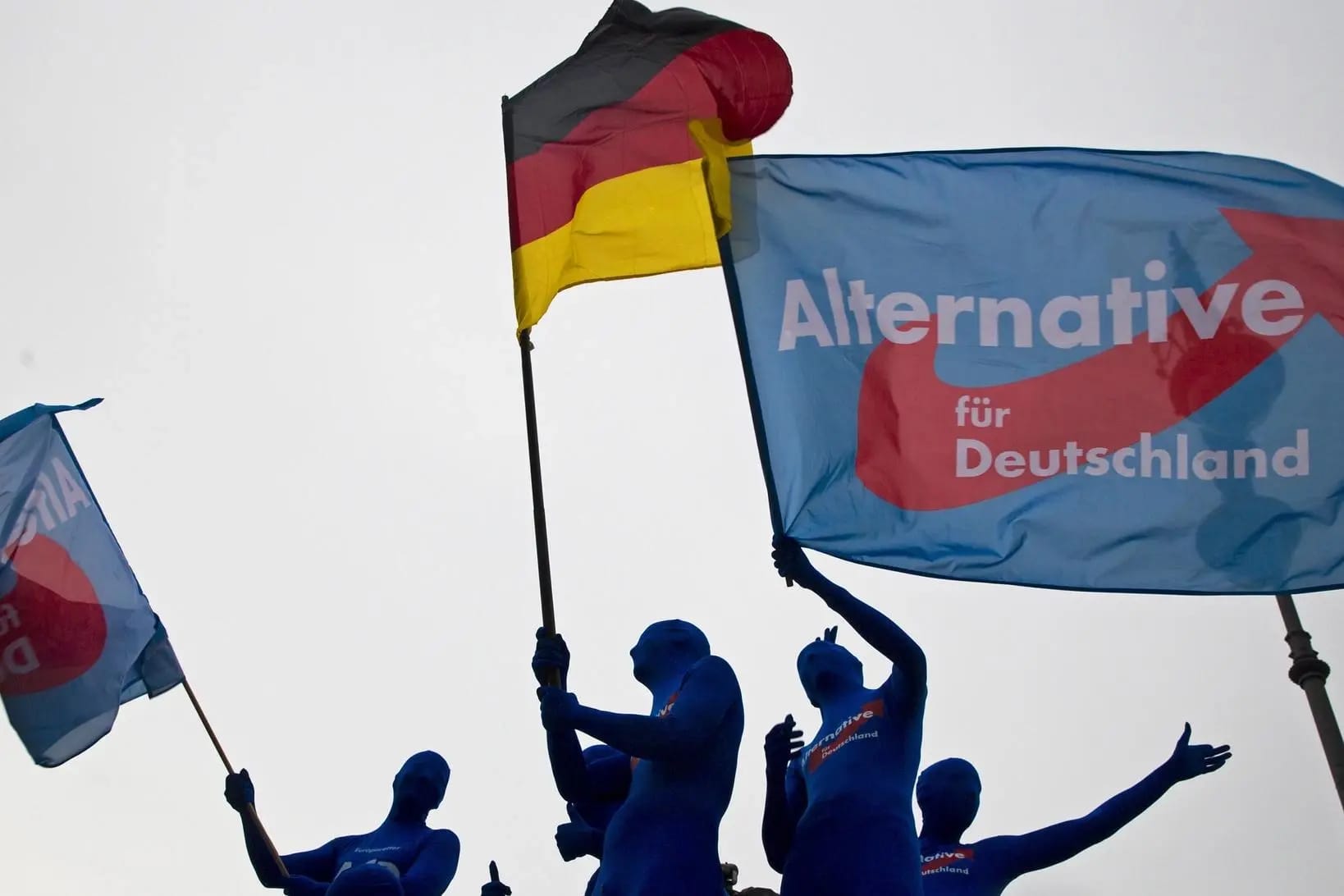
The AfD platform was openly populist: the party promised generous benefits to voters while largely avoiding discussion of spending cuts. As a result, virtually all of its proposals are likely to remain on paper — a reality that does not appear to trouble its voters, at least for now.
The AfD’s campaign promises would cost Saxony-Anhalt more than 2 billion euros — money the relatively poor state does not have
In short, the style and quality of the campaign run by the CDU’s state branch could do little to change the outcome. Siegmund’s real opponent was not local AfD leader Schulze, but federal Chancellor Friedrich Merz and the rest of the “old parties” comprising the national political establishment
It wasn’t as if the AfD were running a coherent campaign. During the televised debate, Siegmund called Russia’s invasion of Ukraine a “war crime” and, in the very next sentence, called for sanctions against Moscow to be lifted. He also said Saxony-Anhalt should abolish the right to asylum entirely, ignoring reminders that asylum law falls under federal jurisdiction and that such a policy could not even technically be enacted at the state level. The AfD candidate repeatedly claimed that postal voting would be rigged but never produced evidence. It did not seem to matter: the state’s voters forgave the AfD even its most obvious contradictions.
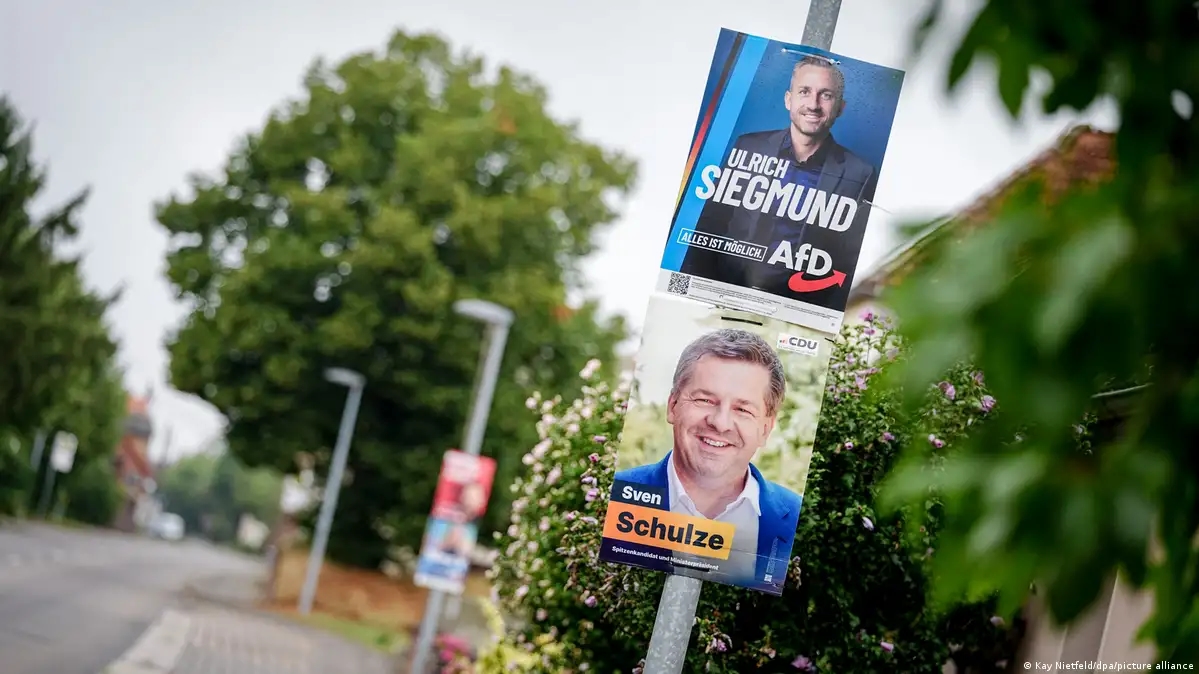
Forcefulness and passion mattered more. In one interview, Siegmund managed to say in the space of a minute that the state needed its own German doctors, to cite a “language barrier and cultural differences” that supposedly prevent foreigners from working in Germany’s health care system (even though about 25% of medical staff in Saxony-Anhalt came from abroad and all were required to pass demanding language and professional exams), to invoke the Magdeburg terrorist attack, and then add that he had nothing against “good” foreign doctors. Siegmund and his team ultimately managed to win over more than 150,000 previous nonvoters and more than 80,000 former CDU voters. That is a significant number in a state with an eligible electorate of only 1.8 million.
A blend of protest and ideology
The AfD’s hostility toward postal voting is easy to understand. Among those who cast a ballot by mail, the party received 24.3% — exactly the same as the CDU and just over half of its overall result of 43.8%.
AfD supporters themselves tend to prefer voting in person, effectively turning the act of going to the polling station into an additional show of support. Postal voting is particularly common among older people and, in political terms, among supporters of the CDU, Social Democrats, and Greens. Looking at income and education, it is also more common among people with university degrees and above-average incomes — demographics for whom slogans tend to have less influence.
There is no doubt that protest and a degree of political contradiction remain important elements of support for the AfD. Eighty-three percent of its supporters believe that “those at the top do not care about the problems of ordinary citizens,” specifically saying they mean both state and federal governments. They also consider the AfD the most competent party on economic and education policy (while overlooking the absence of clear and realistic proposals in either area).
It is also difficult to explain logically why half of business owners would vote for a party that advocates Germany’s withdrawal from the Schengen Area and the eurozone, as such moves would produce direct and tangible losses for their bottom lines.
Finally, 92% of AfD supporters believe that “too many refugees are coming to Germany” — this in a state with one of the lowest shares of foreign-born residents in the country. The three issues — or, more precisely, fears — that dominate voters’ stated motivations for supporting the AfD are migration policy, worsening security, and declining living standards. In large part, they reflect a negative personal assessment of the country’s direction and translate into a protest vote.
92% of AfD supporters believe that too many refugees are coming to Germany
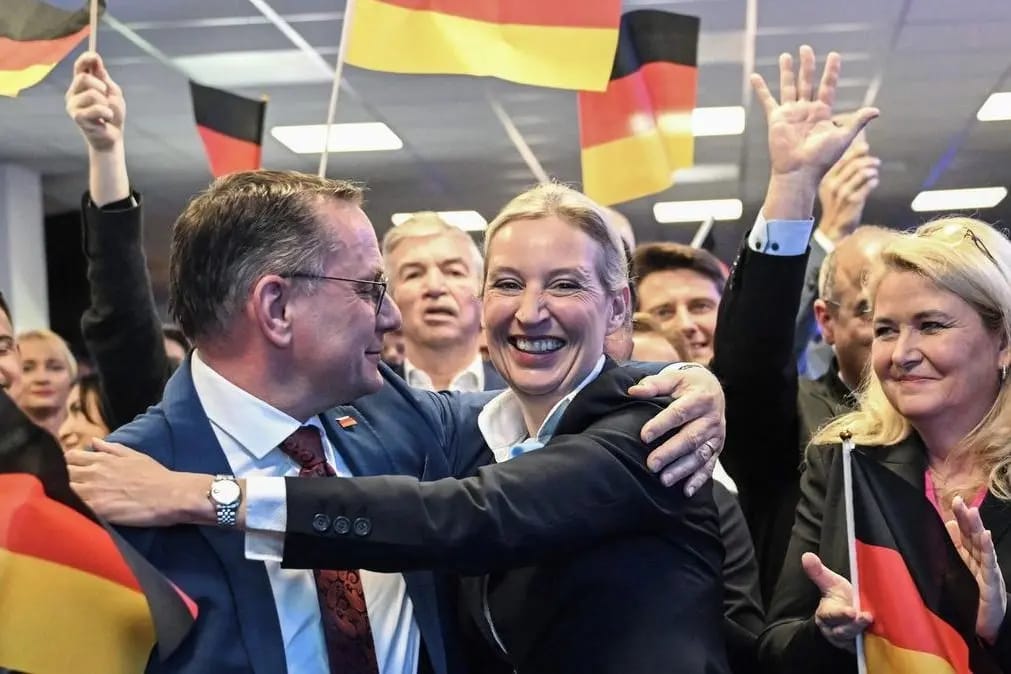
Still, it would be wrong to explain the AfD’s success simply as frustration among the “poor, less educated, and young.” Pollsters no longer view dissatisfaction with state and federal governments as the main or sufficient explanation for Germans voting for the far right — that explanation may still apply to a considerable extent to supporters of left-wing populist Sahra Wagenknecht, but it matters less for voters backing Ulrich Siegmund and Alice Weidel.
Support for the AfD in Saxony-Anhalt was visible across virtually every demographic group. The party won 51% of male voters and 40% of women, 43% of voters ages 25 to 34, and 52% of those ages 35 to 59. It was chosen by 59% of blue-collar workers and 52% of business owners, as well as by more than a third of voters with university degrees. Its electorate was also split roughly evenly between urban and rural residents.
There were, of course, isolated pockets where the AfD performed poorly. In the district covering Halle, a major university city, the party received only 18%. German universities traditionally include large numbers of left-leaning young people, and the Left won one of the three single-member constituencies that did not go to the AfD. Still, those were exceptions.
The share of voters consciously choosing the AfD’s entire platform — including its calls for “remigration,” a far-right term referring to the large-scale removal of immigrants and, in some versions, people of immigrant background — has now clearly exceeded 50% of party supporters.
A study by the Institute of Economic and Social Research shows that the “normalization” of the AfD is already well underway in German society — among neighbors, colleagues, and sports clubs. In other words, even when support is rooted in protest, that protest has become “ideologically motivated.”
The shift is also visible in everyday life. Ever more Germans are ever less embarrassed to acknowledge their sympathy for the AfD, openly explaining their preferences in on-camera street interviews.
A crisis of trust
The results in Magdeburg were an indicator of a deep nationwide German crisis caused both by objective circumstances and by political miscalculations. It extends far beyond hostility toward Merz and his Cabinet, even though many described the election as an “anti-Merz referendum.”
A major survey by the Körber Foundation shows that public trust is declining not only towards the federal government, parliament, and political parties, but also towards institutions that Germans once regarded as unquestionably reliable: local government bodies, the police, the media, and even the courts.
Doubts are also increasingly being expressed about democracy itself, a phenomenon that until recently was largely confined to the country’s political fringes. More citizens say they do not feel represented in politics or involved in making major decisions that directly affect their lives — despite living in a representative democracy.
Formally, every decision that now provokes widespread dissatisfaction was taken in accordance with the law and established procedures: the replacement of the Deutsche mark with the euro, the admission of refugees from crisis-torn regions, large-scale financial assistance to southern European countries during the debt crisis, the nuclear phaseout accompanying an accelerated green transition, restrictions during the COVID-19 pandemic, the refusal to continue relying on Russian energy supplies, and military aid to Ukraine were each backed by a government decision, approved by a parliamentary majority, and left intact by the courts.
Chancellors and ministers offered economic, geopolitical, epidemiological, environmental, and humanitarian arguments that undoubtedly had substantial grounds and would likely have satisfied an overwhelming majority of citizens in the 20th century. In the 21st century, however, they left many people dissatisfied.
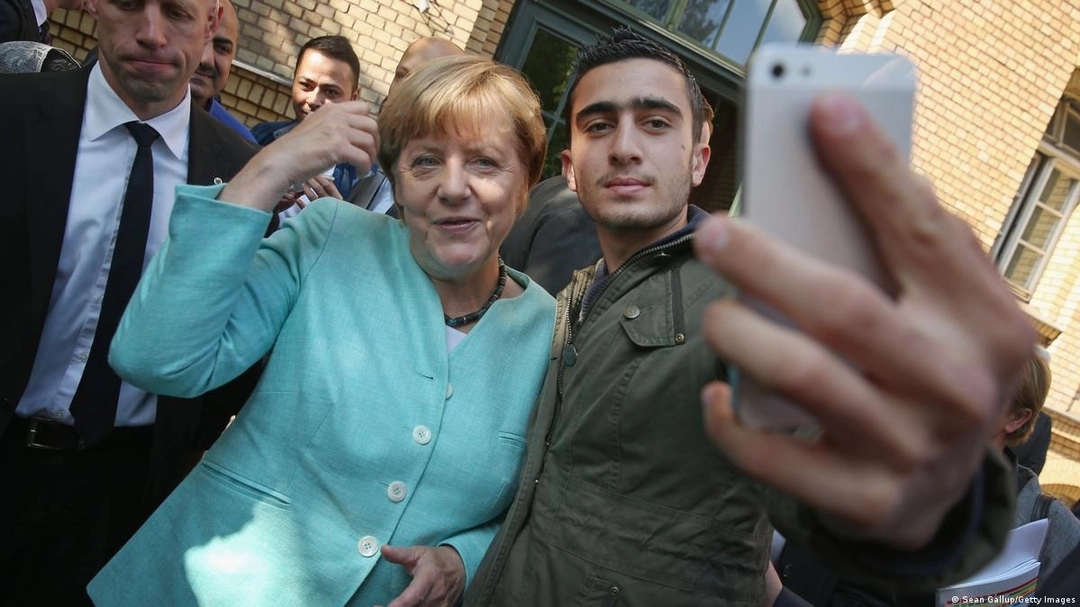
Angela Merkel’s “We can do this,” uttered at the height of the 2015 migration crisis, eventually became a negative meme for millions — a symbol of overestimating Germany’s capabilities, a source of later problems, and evidence, in their view, of insufficient communication with the public.
Germany’s nuclear phaseout offers another example of the communication gap between government and society, though a less dramatic one than migration. Until 1990, nuclear power plants were a key part of German electricity generation despite the growing strength of the anti-nuclear movement after the 1986 Chernobyl disaster. When a coalition of the Social Democrats and Greens came to power in 1998, the government formally began discussing an eventual nuclear phaseout and a ban on new nuclear plants.
Merkel’s second government, however, initially moved in the opposite direction, extending the operating lives of Germany’s 17 functioning nuclear plants by 14 years. That policy changed abruptly in 2011 after the Fukushima disaster. By 2022, only three nuclear plants remained in operation, and despite the disappearance of Russian energy supplies by 2023 Germany had ended its nuclear power generation altogether.
Formally and legally, the entire process was fully legitimate. The Social Democrats and Greens had long included the nuclear phaseout in their election programs. Once they formed a government under Gerhard Schröder, they began implementing it, even if the CDU was skeptical.
In practice, Merkel could change course only once she had formed a majority with the liberal Free Democrats — during her second term as chancellor, when she no longer needed to accommodate the Social Democrats and Greens. She did so. But after Fukushima, many Germans began wearing “Nuclear power? No thanks!” badges, and anti-nuclear demonstrations spread across the country. Merkel chose to change course.
A public narrative later emerged that the nuclear phaseout had not been demanded by most Germans but imposed for ideological reasons by “Greens and leftists,” depriving Germany of cheap electricity while neighboring countries retained and even expanded nuclear power generation. The Schröder, Merkel, and Scholz governments never seriously challenged that narrative.
As a result, when the AfD now demands that Germany return to nuclear power, its supporters are not persuaded by financial, legal, or environmental counterarguments. Siegmund can ignore practical realities and pretend not to understand that building new nuclear plants could take up to 20 years. “Cheap energy stolen from us” has become part of a convenient AfD narrative that is deeply entrenched among its supporters.
Merz is no longer the savior
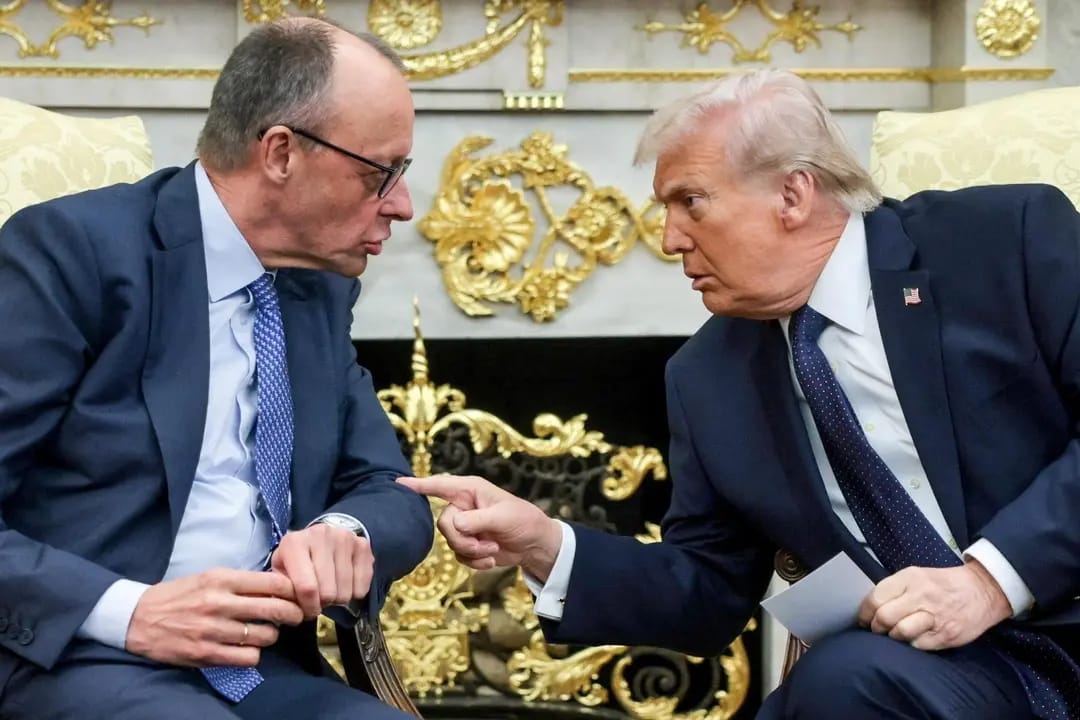
Merz’s own political course has made matters worse. In foreign policy, the chancellor has clear achievements — from consolidating European governments and systematizing aid to Ukraine to confronting Donald Trump more forcefully. But in domestic politics, the experienced politician’s instincts appear to have failed him. His desire to politically destroy the AfD was driven partly by the personal antipathy of a democratic conservative rooted in traditional Western values, and partly by pragmatism.
For years, the CDU’s right wing and its eastern German branches have debated whether to preserve the Brandmauer, or “firewall” — the party’s prohibition on entering into coalitions with the AfD — as conservatives risk losing influence and power. In response, the chancellor’s political strategists came up with little better than offering potential AfD voters a revamped, more right-wing version of the CDU.
The attempt to create a “more human alternative to the Alternative” failed. Merz’s calls to “put Germany back in order,” his demand for “fundamental changes in migration policy” — “more border controls and more deportations” — and his widely quoted reference to the “appearance of German cities” (widely understood as an allusion to the effects of multiculturalism), sounded familiar and appealing to voters on the right, but unconvincing coming from Merz. In their view, meaningful action never followed.
Police controls on the borders with Poland and the Czech Republic largely produced traffic jams. Deportations remained sporadic (and even declined compared with the previous year). And a “symbolic” flight deporting refugees to Afghanistan was not enough to win the support of the anti-migrant demographic.
Many German media outlets reported on Merz “flirting” with the AfD, but the strategy failed to win him additional supporters and alienated some center-right voters, and forced concessions to his Social Democratic coalition partners damaged his ratings even further. Even Die Welt, generally sympathetic to the CDU, observed in mid-2026 that there was no sign of fundamental political change a year after Merz’s election, that he remained “trapped by the firewall,” and that the final word in the coalition belonged to the “left-wing vice chancellor” — Social Democrat Lars Klingbeil.
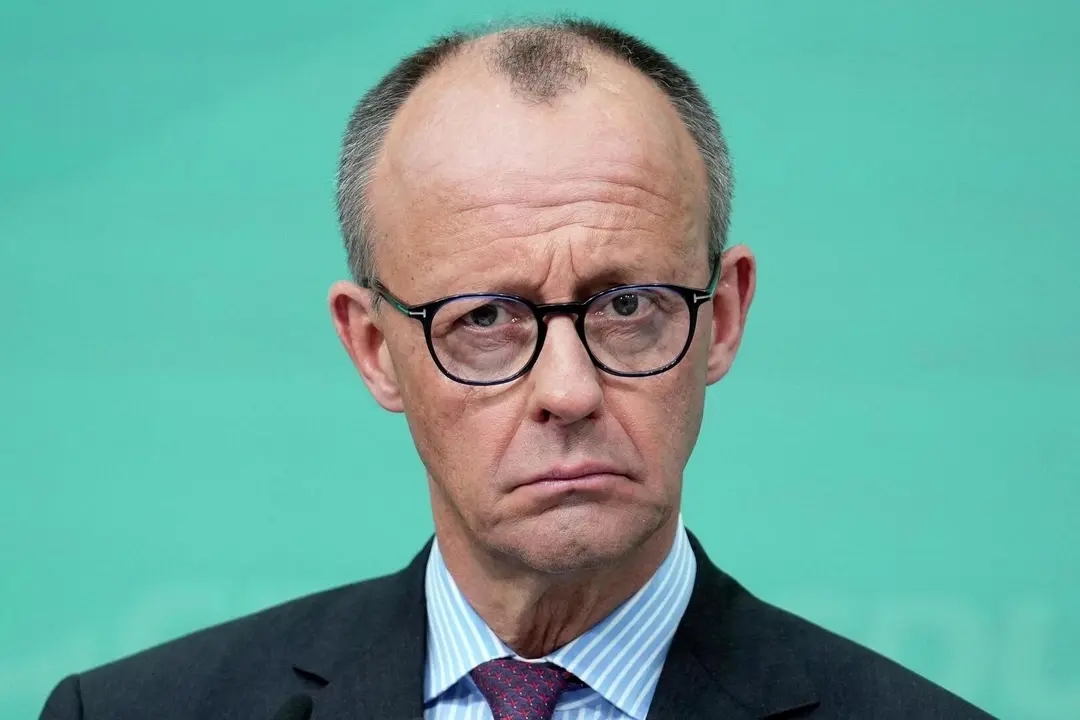
As a result, Friedrich Merz — who was once considered to be conservatives’ “great hope” — has fallen to a record-low approval rating of 14%. He has become so unpopular that even some members of his own party prefer to keep their distance. Schulze in Saxony-Anhalt initially tried to avoid being closely associated with the chancellor. Stefan Evers, the CDU candidate for mayor of Berlin, openly acknowledged “Merz’s mistakes” during his campaign and put forward his own tax-policy proposals.
Merz, once the conservatives’ great hope, has fallen to a record-low approval rating of 14%
The Social Democrats are in a similar position. Support for the oldest party in modern Germany continues to fall steadily. The SPD is losing voters even in its traditional strongholds in western Germany, where families had supported it for generations. Possible reasons include the party’s drift away from traditional center-left politics and its highly visible desire to remain in government and avoid an early election that could produce an unfavorable result. The latest reforms pursued by the CDU-SPD coalition have been received negatively by almost everyone. The Social Democrats have managed only occasional victories on individual measures drawn from their traditional policy agenda. The accusations leveled against the CDU and SPD are strikingly similar: each is seen as making excessive concessions to the other.
The federal government still appears not to understand — or not to want to acknowledge — that the AfD is not a temporary relapse but a symptom of long-standing problems in German society. A political and ideological contest with the “Alternative” is necessary and strategically important for the governing parties, but it is equally important to produce a nationwide response to the result in Saxony-Anhalt. For Germany’s parliamentary republic, it is a question of political survival.