Japan Tobacco, a major cigarette manufacturer whose brands include Winston and Camel, said it would record a loss of 1.377 trillion yen ($8.9 billion) in its 2026 financial results after Vladimir Putin placed all seven of the group’s Russian companies under “temporary management.” The businesses continue to operate and legally remain owned by the group, but Japan Tobacco is removing them from its consolidated financial statements due to the fact that it no longer controls their operations.
The company had expected to end the year with a net profit of 662 billion yen (roughly $4.3 billion), but it now forecasts a net loss of 724 billion yen ($4.7 billion). Its full-year dividend forecast was cut by a quarter, from 272 yen to 204 yen per share. Of that amount, 136 yen has already been paid, meaning the remaining dividend was halved to 68 yen.
Russia accounted for a quarter of adjusted operating profit
Before the assets were placed under temporary management, Russia accounted for about 10% of Japan Tobacco’s revenue and roughly 25% of its forecast adjusted operating profit for 2026. Net assets at its main Russian sales company, JTI Russia LLC, increased 2.6-fold in two years, from $1.24 billion at the end of 2023 to $3.21 billion at the end of 2025, The Insider calculated using figures disclosed by the company on Nov. 19. Revenue at the Russian entity rose 29% over the same period to $2.63 billion.
The loss from the deconsolidation will include the value of net assets, impairment of intragroup loans, and accumulated foreign-exchange differences, according to an investor presentation. Japan Tobacco will also separately record the removal of about 400 billion yen in cash and deposits belonging to its Russian business in its cash-flow statement.
Who now controls Japan Tobacco’s Russian business
Under a Nov. 5 decree, Industrial Assets JSC was given temporary control of four companies, including the Petro factory in St. Petersburg and Donskoy Tabak in Rostov. The following day, Putin transferred three more entities to the same manager; among them was JTI Russia LLC, which handles cigarette sales. Under Russia’s “temporary management” decree, the manager receives all of the powers of an owner except for the right to dispose of the transferred property. Only the president can end the temporary management arrangement.
Moscow-based Industrial Assets JSC, headed by Anton Pivovarov, confirmed that it had taken the companies under “temporary management.” The company was registered just 50 days before the first decree was issued. Pivovarov said it intended to retain JT’s employees and ensure the stable operation of its businesses. After Russia launched its full-scale invasion of Ukraine, Japan Tobacco suspended new investment in Russia but continued producing and selling cigarettes there.
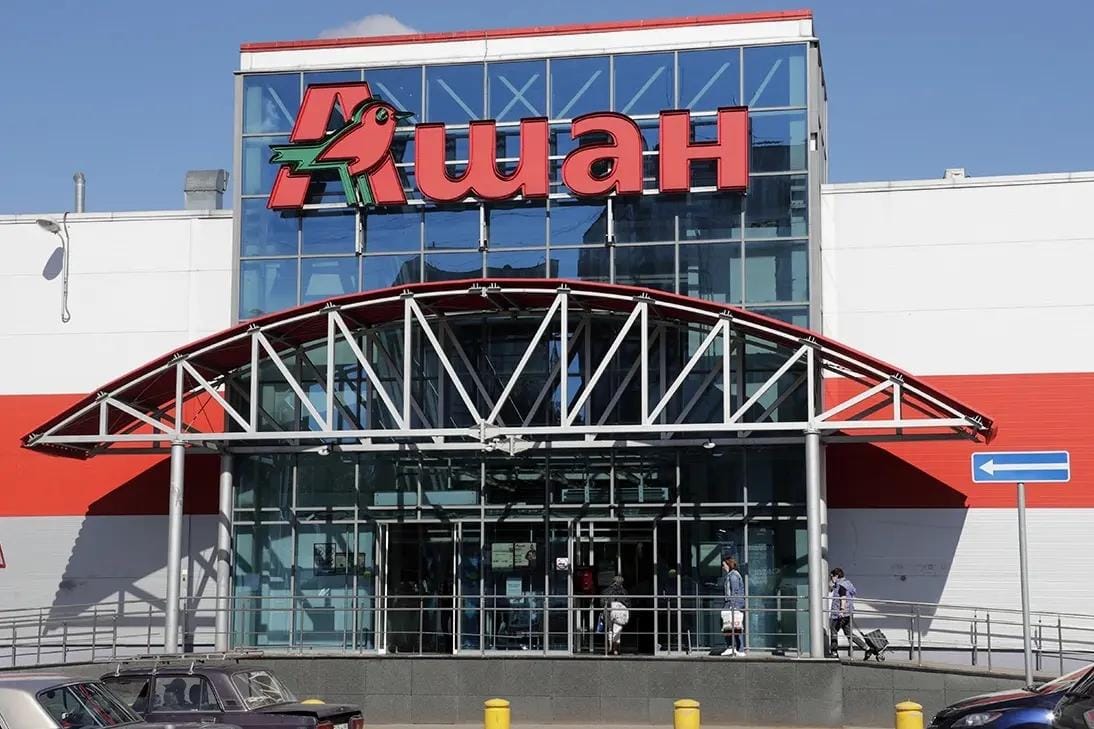
In September, Putin used the same mechanism to place the Russian assets of Auchan and Nestlé under temporary management. After the first decree involving Japan Tobacco, Japan’s Foreign Ministry lodged a protest with the Russian ambassador. On Nov. 18, Japanese Prime Minister Sanae Takaichi raised the issue of Moscow’s treatment of Japanese companies during a meeting with Putin in Shenzhen, China. It was the first meeting between the leaders of the two countries in seven years.