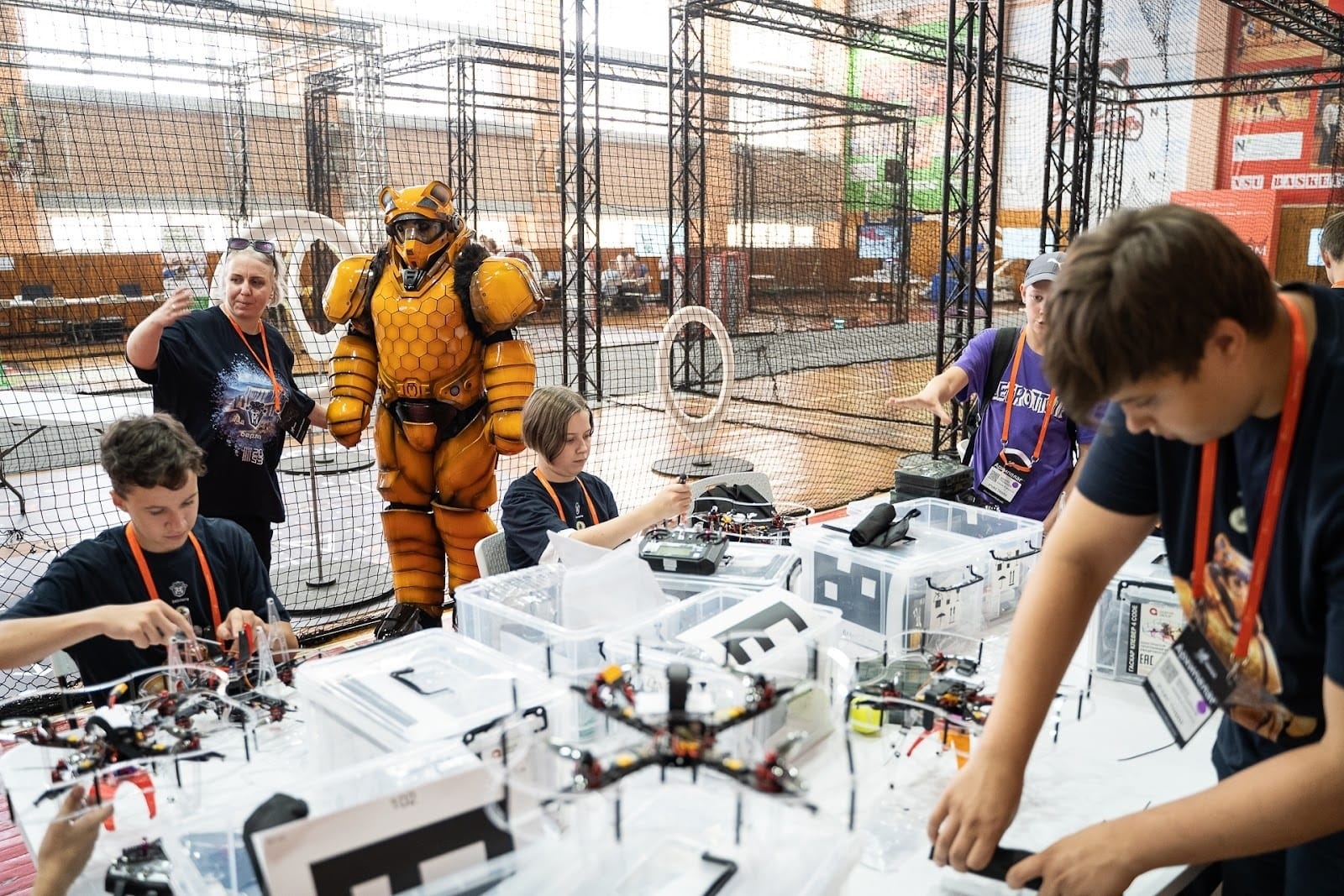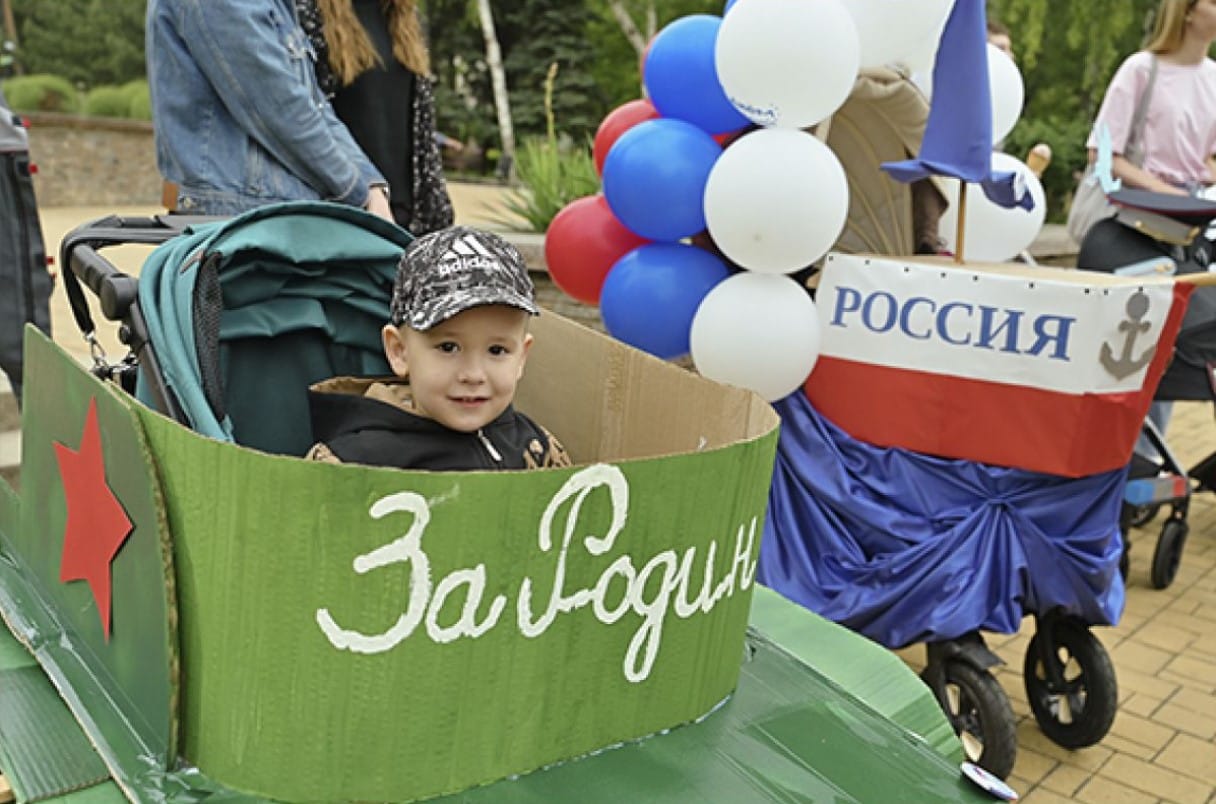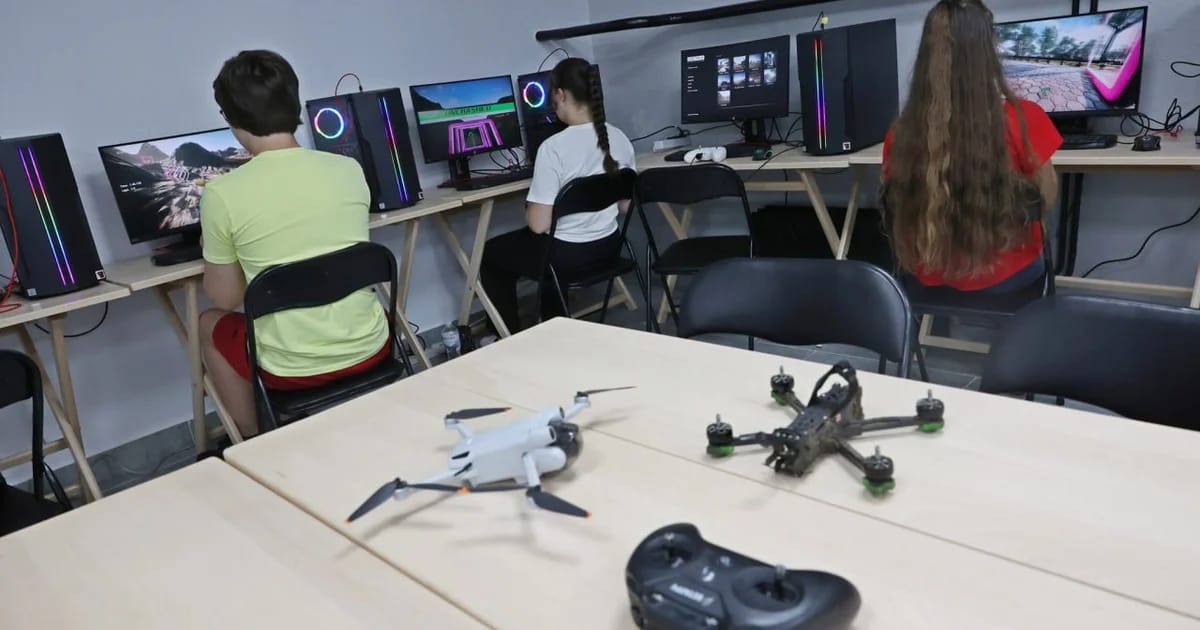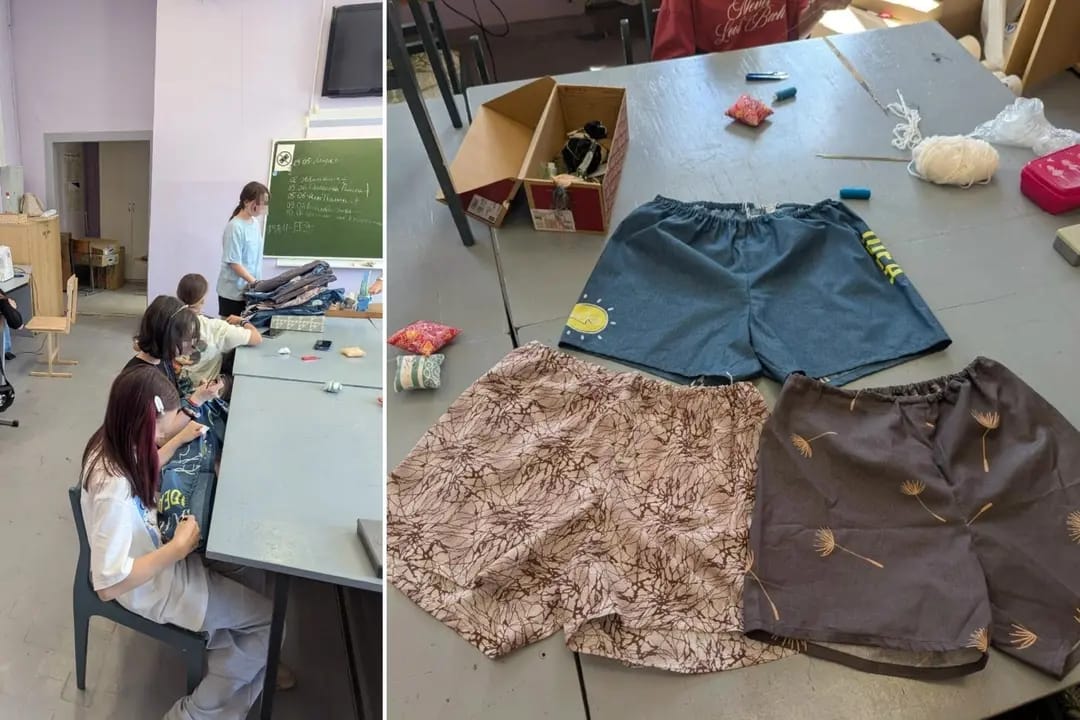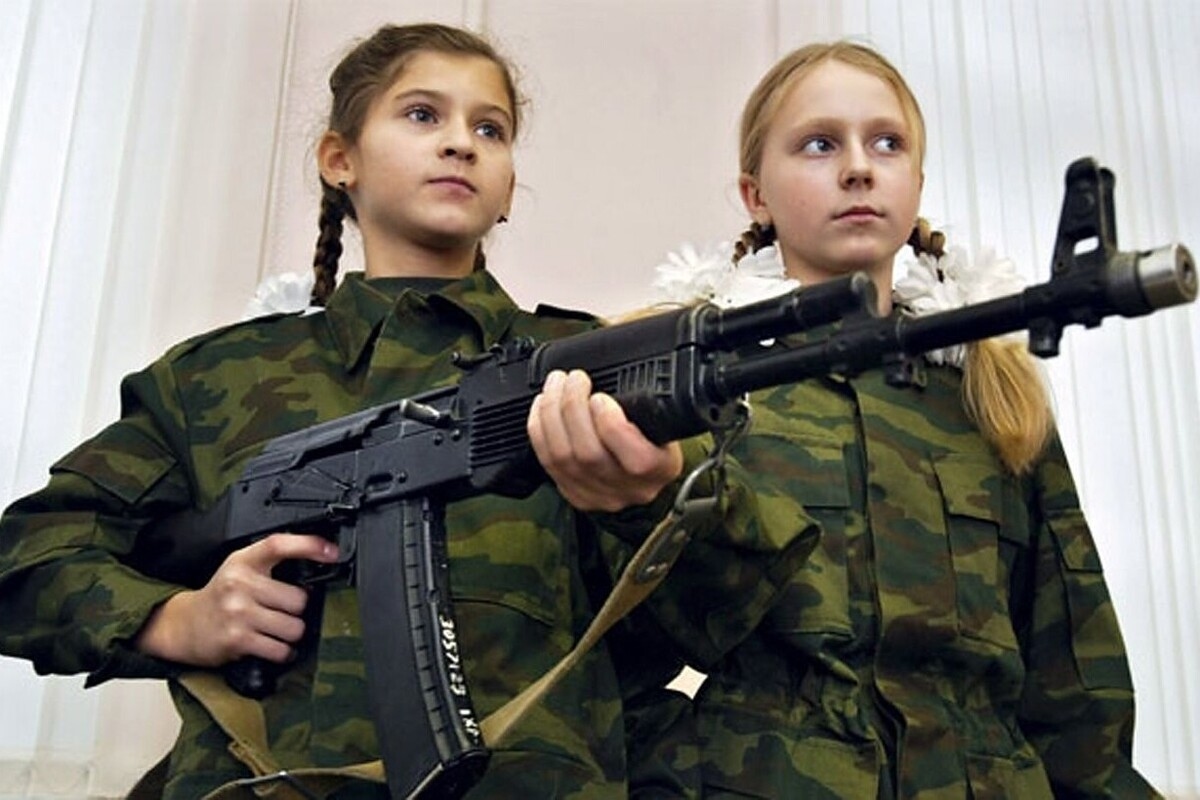
Russia is expanding its system of military training for schoolchildren. In 2026, the Ministry of Education made basic military training a separate course and issued national guidelines on military training camps for eighth graders. Under these guidelines, children are sent to specialized centers and military bases, where they undergo drill and firearms training, learn how weapons work, and master tactical medicine and drone operation. The ministry has proposed hiring veterans of the war against Ukraine to serve as instructors.
The state is allocating millions of dollars to develop the program. The 2026 federal budget set aside 3.72 billion rubles ($45 million) for the Voin military-sports training center and another 1.05 billion rubles ($12.7 million) for activities related to the Yunarmiya (Young Army) movement.
Military training in Russian schools before and after 2022
Military training for schoolchildren existed in Russia even before the start of the full-scale invasion of Ukraine. In particular, training camps for high school students were provided for in a 2010 joint order of the Ministry of Defense and the Ministry of Education and Science.
After February 2022, the authorities began steadily expanding the infrastructure and content of the training. In 2022, the Voin center was created, and Sakhalin introduced the Military Affairs course for eighth graders. In 2023, the Ministry of Education approved changes to high school programs to include elements of basic military training. Since September 2024, the compulsory school course Basics of Safety and Defense of the Motherland (OBZR) has replaced Basics of Life Safety (OBZh). In 2025, the ministry issued guidelines for organizing military camps for students in grades 8 and 9. The latest documents outline the authorities’ efforts to develop a network of specialized centers and extend hands-on training to younger age groups.
What the federal documents prescribe
In 2026, the Ministry of Education amended the content of OBZR. By an order dated Aug. 19, 2026, the ministry split OBZR into two distinct courses: Basic Military Training and Life Safety. According to the ministry’s guidelines, 34 hours are allotted to basic military training at both the basic and secondary levels of general education.
In August 2026, the ministry also distributed national guidelines on organizing military training camps for eighth-grade students. The three-day extracurricular program includes 17 hours of training, replete with drills, first aid, survival basics, and other practical classes. A visit to a military base or similar facility is also envisioned. One version of the program includes studying the AK-74 assault rifle.
In addition to school grounds, the sessions may be held at military bases or branches of the DOSAAF (Volunteer Society for the Assistance to the Army, Aviation, and Navy). Classes may be organized during school breaks.
The program is aimed primarily at boys. Girls can participate on a voluntary basis but have to meet several requirements.
Can schoolchildren refuse to attend military camps?
It depends on the form of the classes and the students’ age. OBZR is part of the compulsory school curriculum, so in effect military subjects are taught as part of a compulsory school subject, with practical camps supplementing mandatory courses. However, different rules apply to practical camps and additional courses.
In particular, under the 2010 joint order, students who skip such camps without a valid reason receive a failing grade, while those who miss classes for a valid reason are supposed to study the theory independently and pass a knowledge check.
How the camps work in the regions
Authorities in Russia’s Primorye Territory have provided for longer camps than those described in the federal guidelines. According to a resolution by the governor dated Aug. 24, 2026, the regional Ministry of Education must organize five-day camps for students in grades 8 and 10, making extensive use of branches of the DOSAAF’s Avangard training and methodological center.
The document provides for the use of military base infrastructure for the practical training of schoolchildren, though schools must submit requests to the command of the relevant bases. Municipal authorities are instructed to organize and fund the camps. The resolution also provides for cooperation with military enlistment offices, visits to military academies, and career guidance for schoolchildren to promote military occupations.
The regional government program for 2026 has set a target: 5,790 students in grades 8–11 are expected to complete a full five-day camp session.
Sakhalin Region introduced its own course, Military Affairs, as early as 2022. Initially, the program was intended for eighth graders, but it was later extended to grades 9 and 10. The curriculum includes training in drill, firearms, tactics, engineering, and basic medicine, along with instruction focusing on military topography and protection against weapons of mass destruction.
Over three years, the program is expected to reach 8,000 schoolchildren. All schools teaching grades 8–10 must take part in a themed week devoted to military service, the oath, and the performance of military duty.
In October 2026, five-day camps for tenth graders took place on Sakhalin. The program included drone classes, tactical medicine, and practical training.
In the Chelyabinsk Region, students attend camps at the Avangard center. Reports from educational organizations describe classes on assembling and disassembling the AK-74 rifle, operating drones, providing military medicine, and driving trucks. In particular, such a course was reported by a school in Troitsk, whose students took part in several camps in the fall of 2026. A published report lists practical classes involving weapons, drones, and motor vehicles.
In Mari El, schoolchildren attend camps that include tactical and firearms training, military medicine, and drone classes, according to regional media reports.
In Tatarstan, military camps for eighth and tenth graders are provided for in a resolution of the republic’s government for the 2026/27 school year. The Kazan Higher Tank Command School is listed among the organizations participating in the training.
War participants are brought in to teach
One of the main participants in the military training system is the Voin center (created in 2022), which organizes classes in firearms, tactical, and engineering training, tactical medicine, and drone operation. Its programs are designed for teenagers and young people but also offers training for school teachers wishing to teach OBZR. According to official reports, by September 2026 more than 165,000 people had completed the center’s programs.
In March 2026, Deputy Prime Minister Yury Trutnev said that by the end of 2027, all of the center’s instructors must gain combat experience in the war in Ukraine. According to the figures he cited, more than 200 of the center’s instructors had already taken part in combat operations by that time.
Regional authorities also hire war veterans to teach. On Sakhalin, the Military Affairs course is taught by combat participants, including those who fought in the war against Ukraine. In 2024, Governor Valery Limarenko emphasized the need to bring in specialists with combat experience. By his estimate, the region needed about 170 such instructors. Under the new program, the relevant authorities are expected to offer training to ten combat veterans to teach the compulsory subject Basics of Safety and Defense of the Motherland.
Millions of dollars allocated for military training
Russia’s system of military-patriotic education and pre-conscription training is funded from both federal and regional budgets. Regional pre-conscription training centers are funded separately, while the regions pay for Avangard centers, military-patriotic events, and practical camps for schoolchildren themselves.
In Primorye Territory, the Avangard center received 470,067,818 rubles (5.7 million) in 2026, double the 234.1 million rubles (2.8 million) of the year before, according to regional budget documents.
The scale of funding for such centers was previously examined by Vot Tak. The outlet estimates that since 2020, Russian regions have allocated at least 36.5 billion rubles ($442 million) to build and operate Avangard centers. Federal spending on the Voin center since September 2022 has come to almost 15 billion rubles ($181 million).