Residents of Russian-occupied Crimea are facing a new large-scale energy crisis. In some areas, electricity is unavailable for 20 hours a day, with water and heating also disappearing when the power goes out. Children sit in classrooms wearing coats, daycares are left without hot meals, medical clinics stop seeing patients, and residents are compelled to spend money on fuel for generators.
Authorities in Sevastopol have acknowledged that the city is receiving only about half the electricity it needs. Residents across the peninsula have recorded video appeals to Vladimir Putin, complaining that the current situation is worse than the 2015 energy crisis that followed Moscow’s illegal annexation in 2014. The Insider reviewed accounts from Crimea residents and spoke with a local woman who described the situation in detail.
“We’re freezing. We have electricity for two hours a day”
Two women from Crimea recorded an appeal to Vladimir Putin in front of the Monument to the Sunken Ships in Sevastopol. But the video, originally posted on Instagram, was later deleted.
“We’re freezing. The amount of electricity reaching our city is not enough. We have power for two hours a day, and not even in every neighborhood. Our children have to sit in school wearing coats, and even that doesn’t help,” the speaker explained.
Residents added that in some buildings, water and heating also disappear when the electricity is cut. In Sevastopol’s Gagarinsky District, power is shut off from 6 a.m. until noon. In the Nakhimovsky District, outages can last for 20 hours, with some reportedly lasting as long as 48 hours.
“We are asked not to overload the power grid, but apartments that have been without electricity for 20 hours are only 16 degrees Celsius [61℉], so of course people turn on every electrical appliance they have. Elderly people and children are freezing. Not everyone can afford to buy a generator or a portable power station,” the women said.
She added that some residents have been forced to cook food over open fires because they cannot use their electric stoves, comparing the situation with the 2015 energy crisis, when Crimea suffered widespread blackouts after electricity supplies from mainland Ukraine were cut off.
“Yes, we’ve had a blackout before, but our homes were warm and we could cook food for the children. Now we don’t even have that,” residents said in a video asking Putin to provide the peninsula with assistance similar to what they said Crimea received in 2014.
In another video, a woman from the peninsula wondered whether people elsewhere in Russia knew what was happening:
“I wonder whether anyone in our country besides Crimeans knows that there is no electricity in Crimea. We’re getting ready for work — there’s no electricity. We wake up in the morning — there’s no electricity. We come home from work — there’s no electricity. Does anyone besides us know that we have no electricity?”
“Summer was nothing compared to this”: Why the current outages are worse
A Sevastopol resident who spoke with The Insider said electricity problems began in the summer, but the situation was far more predictable then.
“In the summer, we had schedules of three hours on, three hours off, or two hours on, six hours off. They were not always followed — mostly they weren’t — but we never had outages lasting this long. There were two serious incidents: once we had no power for almost an entire day, and another time for about 12 hours. The rest of the time, there was at least some kind of schedule, so you could plan something. Now I look back at that period and think, ’that was nothing compared with this,’” she said, explaining that the situation had stabilized in September and for much of October before new strikes on energy infrastructure led to even deeper outages during the first week of November.
The source said energy facilities had been damaged, including a substation near the Crimean Bridge. Shortly before one of the suspected strikes, she drove past the facility and saw protective structures being installed around it. She later heard from other residents that the substation had been hit.
The main difference now, she said, is the absence of any outage schedule:
“There hasn’t been a schedule for about a week and a half, maybe even two weeks. They said things are so bad that there’s no point in having schedules anymore. They turn the electricity on whenever they feel like it.”
In some parts of Sevastopol, residents are without electricity for 13 to 17 hours at a time, and sometimes for as long as 21 hours. Meanwhile, neighboring buildings may continue to have power:
“Yesterday, we had no electricity from 7:40 a.m. until 8:30 p.m. My parents went 17 hours without electricity yesterday. Some people are without power for 20 or 21 hours, while the other half of the neighborhood is lit up like a Christmas tree. People are furious.”
She said that the uneven nature of the outages has become a frequent topic of discussion in closed chat groups for residents of individual buildings, and Sevastopol authorities themselves have confirmed the scale of the electricity shortage. At a city government meeting on Nov. 9, officials said Sevastopol was receiving only about 50% of the power it needed, according to the local outlet ForPost.
Children without hot meals and hospitals running on generators
The energy crisis has affected schools, kindergartens, and medical facilities.
The Insider’s source said one of her children spent an entire school day without electricity, while her younger child spent the day in a daycare that also had no power. School holidays were extended by several days due to the outages.
Providing meals for children has become a particularly serious problem. Daycares use electric stoves, and not all have backup generators. When the power goes out, staff cannot prepare hot meals. At one daycare, cooks were called in during the night in order to prepare food before the next outage.
“It turned out there are no generators in the daycares. When the electricity is cut, the children get dry rations: juice and cookies, cookies and juice.”
Medical facilities have also experienced problems. The Insider’s source said she knew of a large Sevastopol hospital that switches to a generator when the electricity goes out. However, the hospital must find diesel fuel itself and arrange maintenance for the equipment.
On Nov. 10, ForPost reported that Sevastopol outpatient clinics and women’s health facilities stop seeing patients during power outages. There is no way to find out in advance whether a particular facility has electricity, as the unified 122 public-service hotline does not provide that information.
One ForPost reader said her daughter, who was eight months pregnant, traveled to a women’s health clinic but could not see a doctor. Nevertheless, Vladimir Nemtsev, chairman of Sevastopol’s legislative assembly, thanked the city authorities and Health Department for ensuring the uninterrupted operation of medical facilities.
Health Department head Vitaly Denisov said all inpatient hospitals were fully equipped with generators and operating without interruption. However, his statement did not address problems with appointments at outpatient clinics.
“A friend came over to take a shower”: How people live without heat and water
In many buildings, heating disappears along with electricity, and sometimes the water supply does as well. Residents of homes with gas boilers are still vulnerable, because the boilers require electricity to operate.
Power outages have also periodically shut down heating systems. The Insider’s source said apartments became so cold that some residents tried to warm themselves with gas ovens despite the risk of carbon monoxide poisoning.
The heating situation improved somewhat, she said, after boiler houses stopped being disconnected from the grid at the same time as residential buildings. During one outage lasting almost 13 hours, she said, the radiators in her apartment remained hot.
But conditions are considerably worse in other parts of the peninsula. In Koktebel, residents go without electricity for 16 to 20 hours at a stretch. Prolonged outages have also affected Feodosia, Sudak, Alushta and Alupka — where, the source said, schools have shortened lessons because of the lack of electricity.
The situation is particularly severe in Kerch. In some parts of the city, residents have received almost no electricity for about a week, also going without heating and running water. In local chat groups, residents are trying to find out where they can get water and are arranging to help one another where possible.
One Crimea resident described in a video how she spent a cold night without electricity or communications. She was most worried about her aquarium fish: the water temperature had fallen to 10 degrees Celsius because of the outage, and the fish required temperatures of at least 22 degrees. The woman recalled how, when she lived in Siberia, her family heated bricks in a stove and placed them under an incubator to keep eggs warm during power outages. She was now trying to figure out how to warm the aquarium.
Thousands of rubles spent on gasoline and generators
Crimea residents are trying to provide their homes with electricity themselves. Videos posted on social media show homemade backup power systems, generators, and batteries.
In one video, a woman shows a a boxy Soviet van with a generator installed inside. A cable runs from the vehicle to a fourth-floor apartment and enters through a window. Plastic bags have been used to seal the gap around the cable, keeping cold air out. The woman said the generator powers the refrigerator, water heater, and other appliances.
But the setup is expensive. The woman said her family used 60 liters of gasoline over four or five days, paying 100 rubles per liter — 6,000 rubles ($72) in total. Even then, the temperature inside the home remained below 17 degrees Celsius (63℉). If fuel consumption continues at that rate, the family would have to spend up to 45,000 rubles ($540) a month on gasoline for the generator alone.
Russia-installed authorities promise compensation, but not everyone will qualify
Amid the energy crisis, the Russia-installed authorities in Sevastopol announced a compensation program for purchases of backup power equipment.
Starting on Nov. 16, residents will be able to submit applications through Gosuslugi, Russia’s state-run online public-services portal, for reimbursement of 50% of the equipment’s cost. The maximum compensation will be 70,000 rubles ($840) for a generator, 150,000 rubles ($1,800) for a portable power station, and 200,000 rubles ($2,400) for a solar power system. Businesses will be eligible for reimbursement of 30% of their costs within specified limits.
Authorities initially allocated 100 million rubles ($1.2 million) for the program.
The compensation, however, applies only to new equipment purchased from a Russian seller on or after June 26, 2026. Purchases must be documented with a full cash-register receipt. Authorities also will not reimburse fuel-powered generators bought for use in apartment buildings, citing safety requirements.
One Sevastopol resident said in a video that he would not be eligible for compensation because he bought a portable power station from resellers without a receipt or warranty.
Another Sevastopol resident said he contacted the city administration to ask how the payments would work, but officials could not explain when the system would actually begin operating:
“At the moment, there is no payment mechanism. So it’s still all being worked out. No one knows yet when the mechanism will be launched. The only thing they told me was: keep your receipts.”
At the Nov. 9 meeting, Natalia Borisova, head of Sevastopol’s Economic Development Department, confirmed that the application system was still being finalized. Officials plan to begin accepting applications Nov. 16 and stop on April 1, 2027. Applications will take no more than 10 days to process.
Meanwhile, Sevastopol “governor” Mikhail Razvozhayev has already reported complaints from residents of a rise in generator prices following the announcement of the compensation program. He asked prosecutors and the Federal Antimonopoly Service to examine sellers’ actions.
Dark streets and pedestrians hit by cars
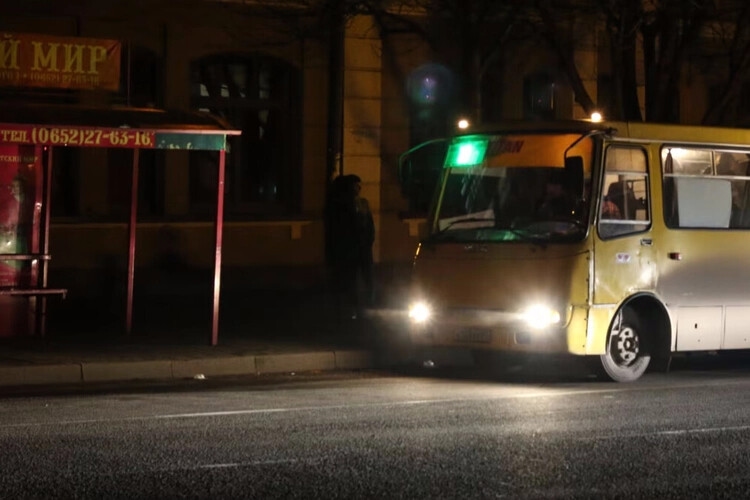
The power outages have also affected outdoor lighting in Sevastopol. The Insider’s source said many streets have been dark for an extended period:
“We haven’t had street lighting for a long time. We’ve had a lot of traffic accidents involving pedestrians. It’s genuinely pitch-black — you can’t see anything.”
On Nov. 10, ForPost reported several incidents on unlit roads. On Nov. 6, a car struck a 55-year-old woman at an uncontrolled pedestrian crossing on Nikolaya Muzyki Street. The following day, a 60-year-old woman was hit by a car on Fiolentovskoye Highway.
Razvozhayev ordered road services to take urgent measures to improve pedestrian safety, citing the Tavrida highway, the main route running across Crimea, where utility poles had been wrapped in reflective material.
Sevastopol police are advising residents to carry flashlights and wear reflective items on their clothing so drivers can see them in the dark.