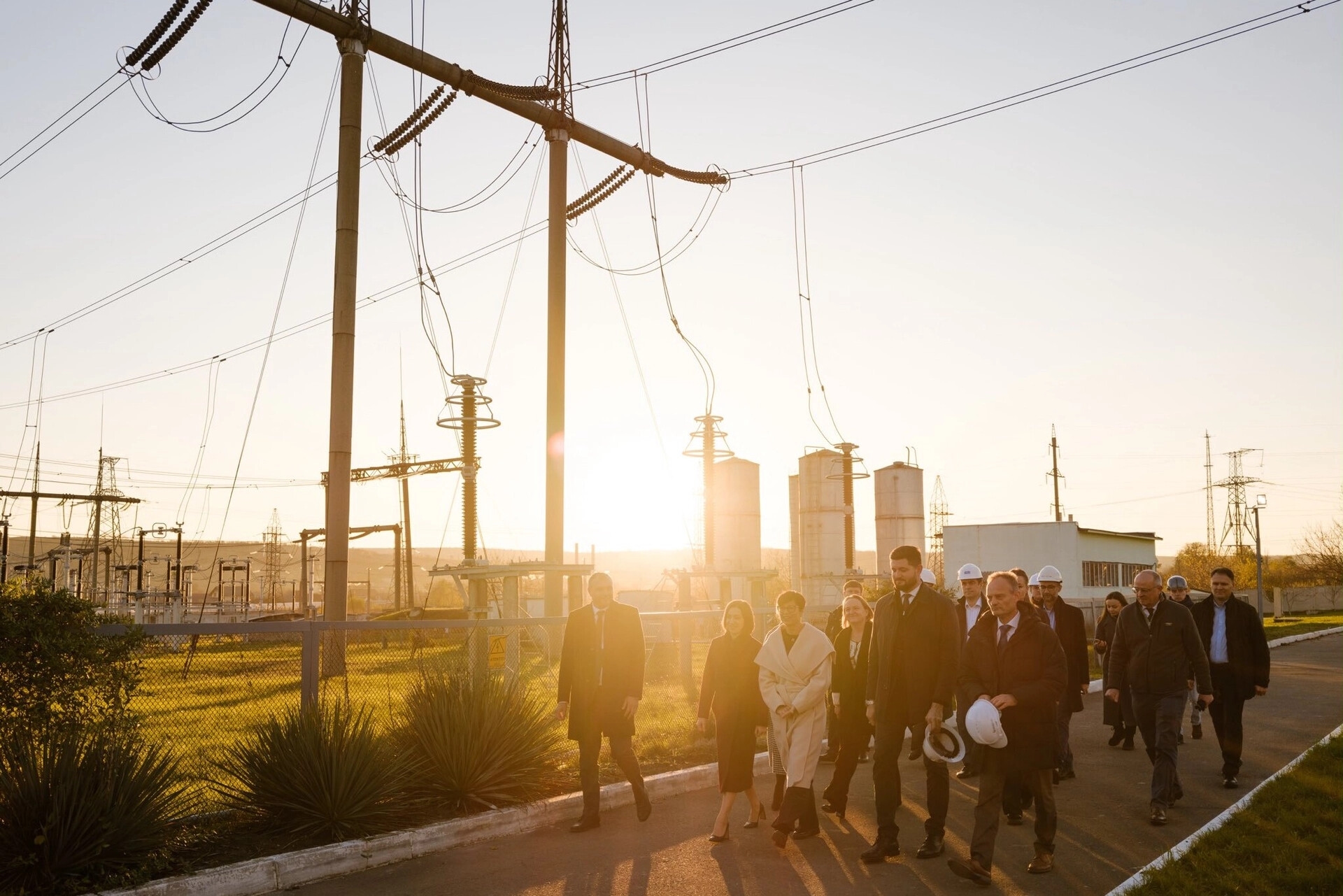
On Nov. 8, Moldova activated the Vulcănești-Chișinău power line, allowing the country to import electricity from Romania and other European countries without routing supplies through the breakaway region of Transnistria. Moldova’s Energy Ministry said the new 400-kilovolt line was energized in the presence of President Maia Sandu and EU Enlargement Commissioner Marta Kos. Sandu said the new supply route means Russia will no longer be able to use Moldova’s energy dependence as a tool of political pressure.
“No one will be able to blackmail us anymore, turn off our lights, or cut off our heating,” Sandu said at the ceremony. She said Moscow had previously threatened to cut off Moldova’s energy supplies any time the authorities in Chișinău made decisions that ran counter to Kremlin interests. Kos, who also attended the event, said Moldova’s energy dependence on Russia was now a thing of the past.
The new 158-kilometer transmission line connects the Moldovan capital to the Vulcănești substation in the south of the country. Its capacity reaches 630 megavolt-amperes, which authorities say is enough to transmit electricity sufficient to cover more than half of the country’s peak-hour consumption. The key difference is that the new route does not pass through the Kuchurgan energy hub in Transnistria, a Russian-backed breakaway territory that is not under Chișinău’s control. Previously, a significant share of electricity imported from Romania reached Chișinău through that hub. Moldova now has an alternative route that does not depend on Transnistrian infrastructure.
Until 2025, Moldova also depended heavily on the Moldavskaya GRES power plant in Transnistria, which is owned by Russian energy company Inter RAO. The plant ran mainly on Russian gas and supplied most of the electricity consumed by the part of Moldova controlled by the government in Chișinău. Moldova had already stopped buying Russian gas for consumers in government-controlled territory in December 2022, switching instead to purchases on the European market.
On Jan. 1, 2025, Russian energy giant Gazprom halted gas deliveries to Transnistria after an agreement allowing Russian gas to transit through Ukraine expired. As a result, the Moldavskaya GRES plant stopped supplying electricity to the parts of Moldova outside of Transnistria, forcing Chișinău to increase imports from Romania. Before the cutoff, the plant had supplied as much as 80% of the energy needs of Moldova’s government-controlled territory, according to the Polish Center for Eastern Studies (OSW).
Construction of the new transmission line had initially been scheduled for completion in August 2024, but the deadline was repeatedly pushed back. Sandu said the delays were caused in part by Russia’s war against Ukraine, which disrupted equipment deliveries, as well as technical problems at a substation in Chișinău. The project cost approximately 61 million euros and was carried out with support from the World Bank.
Moldovan energy experts say the launch of the Vulcănești-Chișinău line removes one of the country’s key energy vulnerabilities but does not fully protect it from supply disruptions. The country also plans to build two additional connections linking its grid with Romania — the Bălți-Suceava and Strășeni-Gutinaș lines.