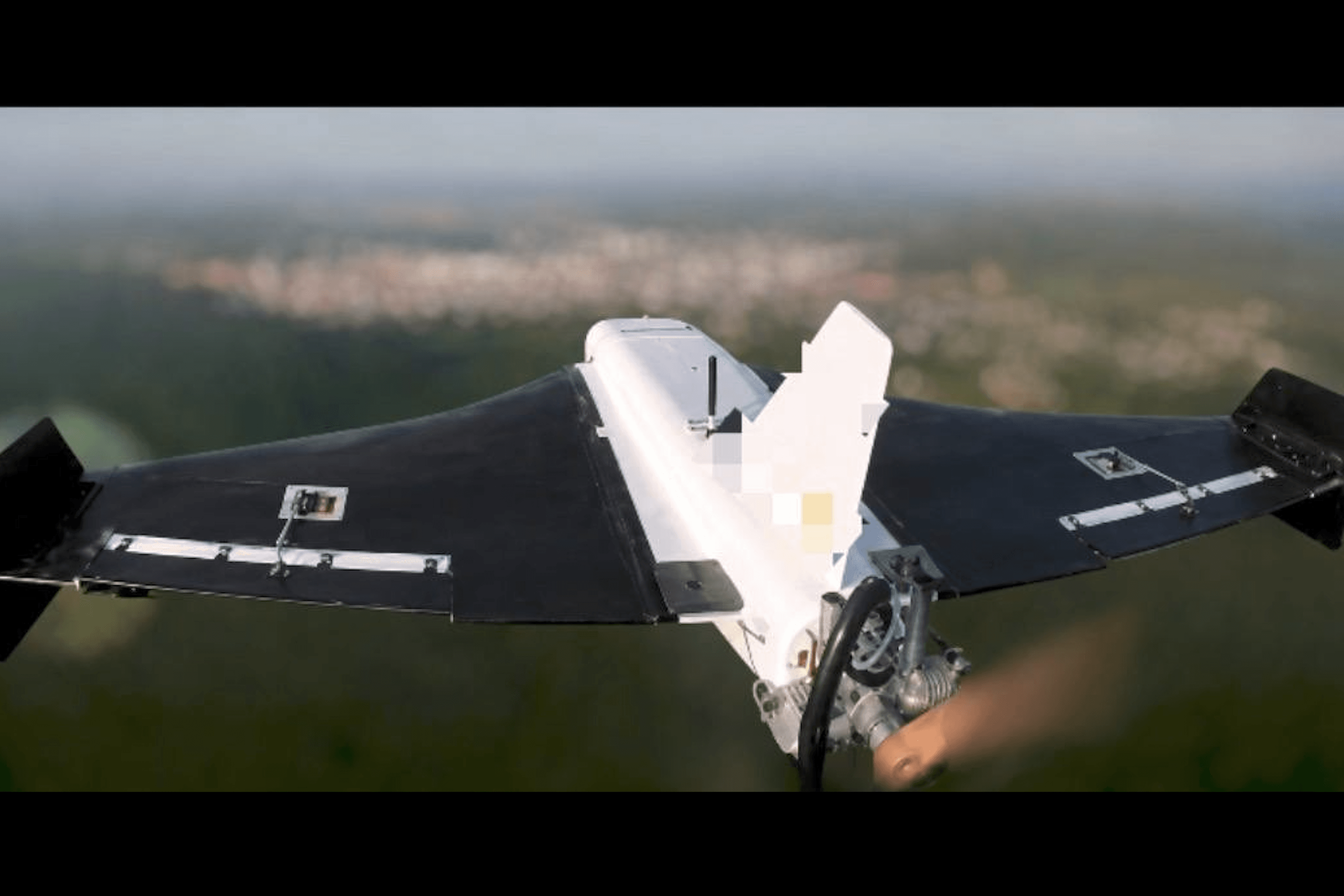
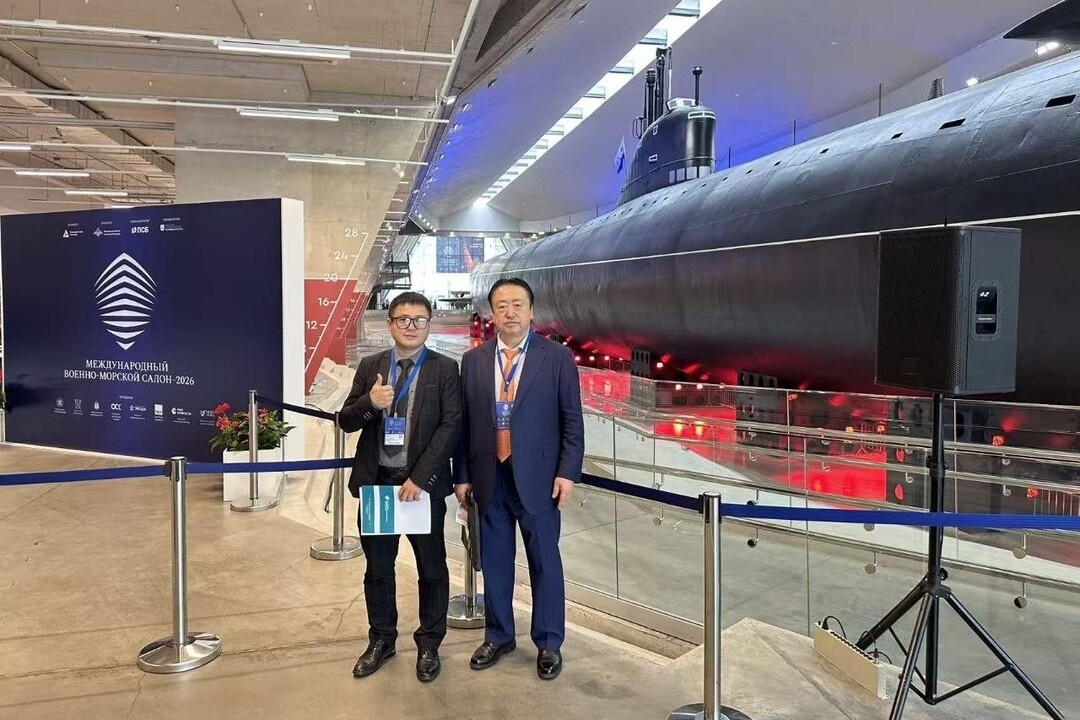
Chinese company Jiangxi Guangbo Optoelectronic Technology is offering Russian customers fiber-optic cable in lengths of up to 100 kilometers (62 miles) along with drones equipped with AI-assisted guidance. The Insider found that the company’s representatives showcased those products at the Fleet 2026 naval exhibition in Kronstadt, offering their Russian partners both ready-made systems and opportunities to cooperate on the joint development of technology “for specific combat missions.”
Visually similar AI-guided drones with comparable specifications are being sold under various brands via Russian online marketplaces. The manufacturer of the most widely marketed brand, Strizh, is listed as NPP NTT LLC, a company linked to the maker of Russia’s Orlan drones. NPP NTT supplies products to the Federal Security Service (FSB), the Federal Protective Service (FSO), and the Russian Defense Ministry. Despite claims that the interceptor drones are Russian-made, promotional videos advertising them were filmed in China.
Jiangxi Guangbo is a resident of the Russian-Chinese Business Park in St. Petersburg and cooperates with Nanchang Hangkong University in Jiangxi, China. The PRC introduced restrictions on drone exports in 2023, meaning the company’s activities appear to contradict Beijing’s publicly stated policy.
Interceptor drones and fiber optics for torpedoes
On June 16, 2026, Jiangxi Guangbo Optoelectronic Technology published a report on its Telegram channel about its participation in Fleet 2026, an exhibition organized by the Russian Defense Ministry and Russia’s Maritime Board. The event included a conference titled “Exports and International Cooperation in Unmanned Maritime Systems,” and Jiangxi Guangbo representatives offered Russian military customers three products: the HJ-7 drone, a fiber-optic communications system, and an inertial navigation system.

According to the company, the HJ-7 was developed as a high-speed unmanned interceptor and can also be used as a strike drone. Promotional materials list a maximum speed of 450 kilometers per hour, a range of 15 kilometers, and a warhead weighing up to 500 grams. Jiangxi Guangbo says the drone can automatically detect and track a target and destroy it — either through a direct hit or by being programmed to detonate remotely. In addition to the HJ-7, the company offers a five-inch AI-equipped interceptor drone designed “for modern air defense missions.” It is a lighter aircraft with a claimed speed of up to 350 kilometers per hour and target recognition at a distance of 200 to 300 meters.
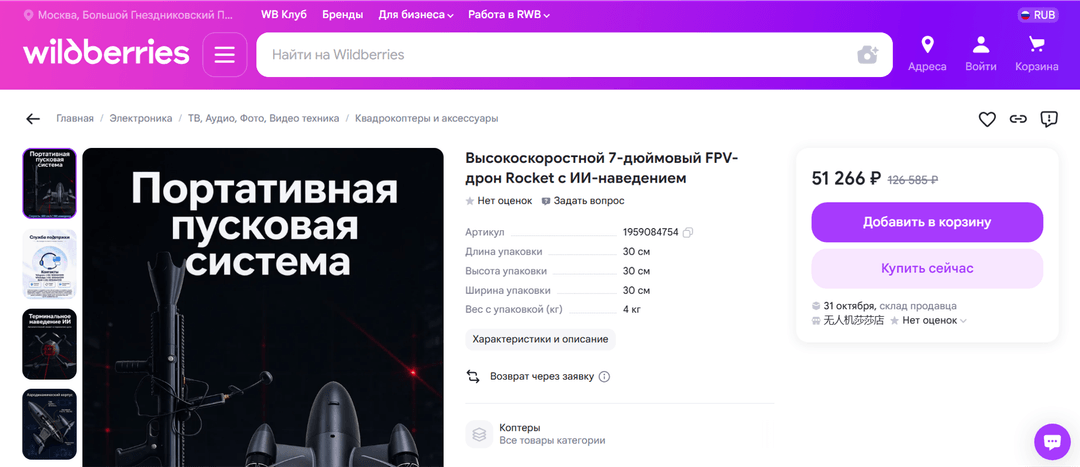
Visually similar drones with comparable technical specifications and an advertised AI target-guidance function are available via the Russian online marketplace Wildberries. The listed manufacturer is a company whose Chinese name translates as “Sasha Drone Shop.” Its product range includes drone detectors, backpack-mounted drone jammers, anti-drone guns, and dozens of types of interceptor drones.
In the summer of 2026, the Ekipirovka Expert marketplace began selling a lightweight drone called the Shershen, or “Hornet,” that visually resembles Jiangxi Guangbo’s product. On the Russian Soyuzvoentorg website, a similar interceptor drone is sold under the Yastreb, or “Hawk,” brand.
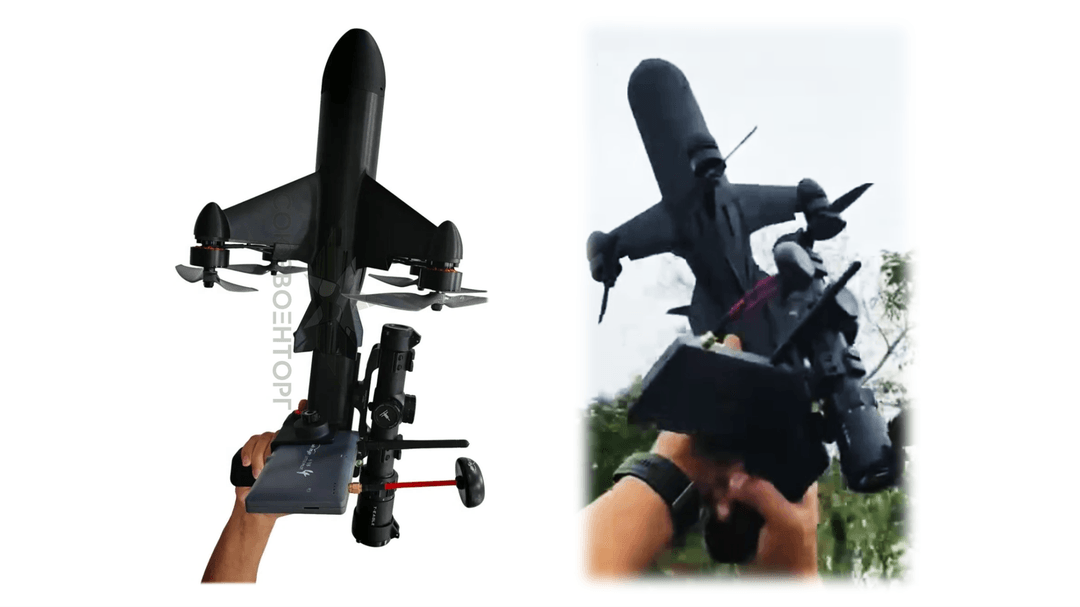
Samuel Bendett, an adviser specializing in unmanned systems at the U.S. Center for Naval Analyses, said the use of such interceptors could give the Russian military an additional advantage — provided it obtained enough drones, trained a sufficient number of operators, and integrated information about threats and interceptions into the broader operational picture.
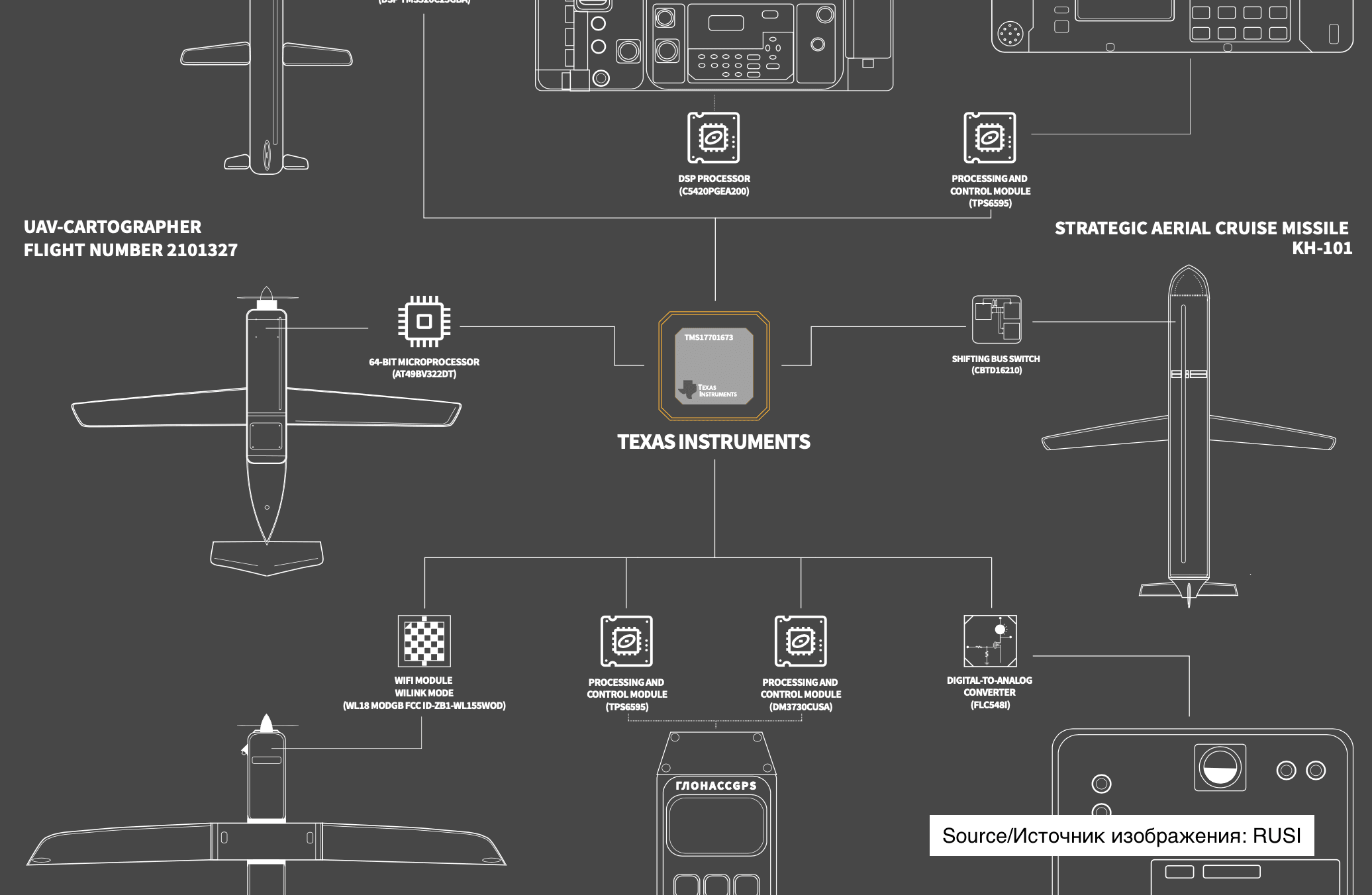
A significant number of components in the Chinese interceptor were produced in the United States and Europe. The Arm Cortex-A72/A53 CPU cores and Mali-G52 GPU in its Chinese-made Rockchip processor are based on Arm architecture. Other components include a BME280 temperature, pressure and humidity sensor from Germany’s Bosch Sensortec; a nine-axis BNO086 inertial measurement unit developed by Bosch and U.S.-based CEVA; an STM32H7 processor and M41T62 real-time clock chip made by STMicroelectronics; and an AT24C02 EEPROM memory chip manufactured in the United States.
At the same Fleet 2026 exhibition, Jiangxi Guangbo promoted fiber-optic communications as technology that is “particularly suitable for underwater systems and torpedo weapons.” The company offered “deep technical cooperation with Russian partners — including joint development and the creation of solutions for specific combat missions.”
Jiangxi Guangbo offers fiber-optic cable in lengths of up to 100 kilometers, along with the machines that are used to wind it onto spools. This technology could allow the Russian military to substantially increase the operating range of fiber-optic drones, which are resistant to electronic warfare thanks to the fact that they communicate through a physical cable rather than a radio link. However, Bendett said the drawbacks of longer fiber-optic lines could outweigh the benefits, as a larger spool would increase the drone’s weight and reduce its speed and maneuverability.
Jiangxi Guangbo’s operations in Russia
Guangbo’s Russian-language Telegram channel was created in May 2026. In its first promotional post, a company representative wrote that he was based in St. Petersburg and that the company specialized in “fiber-optic systems protecting unmanned aerial vehicles from communications interference.” The channel initially advertised fiber-optic spools, fiber-optic gyroscopes, and navigation modules. By June, its product range had expanded to include complete strike and interceptor drones.
In addition to Fleet 2026, the company took part in Drone Expo 2026 in Kazan, which was organized with support from Russia’s Ministry of Industry and Trade, the National Technology Initiative Foundation, and the Federal Center for Unmanned Aircraft Systems. In September 2026, Jiangxi Guangbo also attended the International Technology Congress — ITC 2026 — at the Russian Defense Ministry’s Patriot Park.
Jiangxi Guangbo has a representative office in St. Petersburg staffed by at least three employees. It invites buyers to its premises in Russia and organizes remote tours of its production facilities in China.
Beyond the online marketplaces selling interceptor drones, The Insider identified another buyer of the Chinese company’s products. On June 26, 2026, Moscow-based Smart Opt Trading LLC received a Eurasian Economic Union declaration of conformity for customs clearance of a Jiangxi Guangbo Opto-Tech fiber-optic spool containing 30 kilometers of fiber.
How an FSB supplier sells Chinese drones as Russian-made products
The most widely marketed interceptor drones among those visually similar to Jiangxi Guangbo’s products are sold under the Strizh brand. They are available on Russian marketplaces including AlcorTactical, Mobismart, Russian Caliber, and Ekipirovka Expert, among others. Like its Chinese analogue, the Strizh has a torpedo-shaped fuselage with four motor pods mounted on external booms, similar 915 MHz and 2.4 GHz frequencies, a flight range of up to 15 kilometers, and a service ceiling of up to 5,000 meters; however, the Strizh’s advertised payload capacity and speed are lower than those of the Chinese model. As in the Chinese commercial offer, the dimensions of the supposedly Russian-made drone are — unusually — given in inches. Prices vary from 229,000 rubles ($2,800) for a five-inch Strizh on Mobismart to 355,000 rubles ($4,350) for the same drone on Russian Caliber.
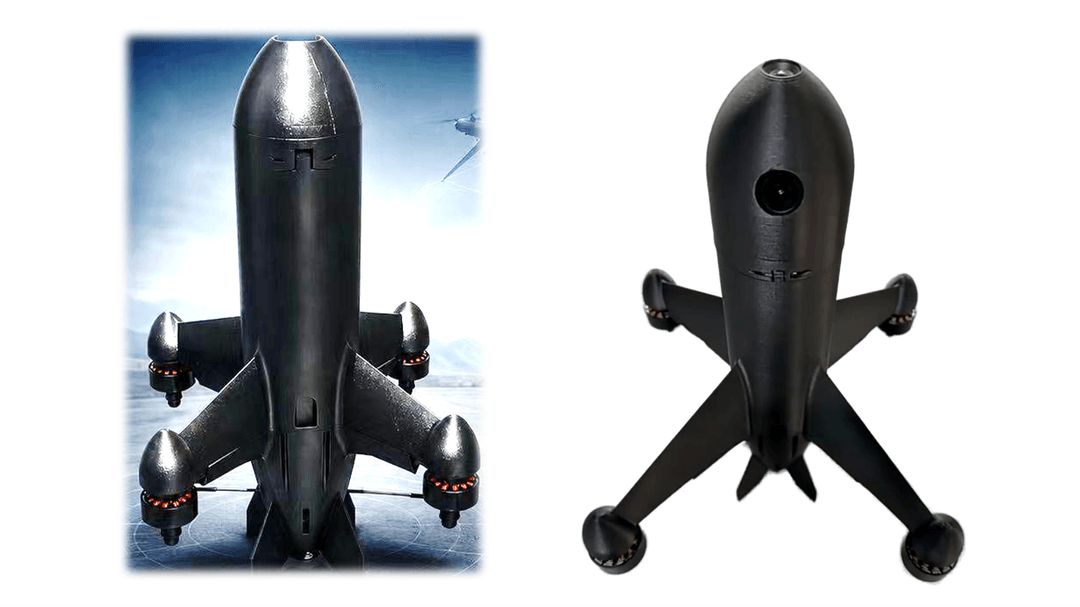
Mobismart lists NPP NTT LLC as the manufacturer of the Strizh drones. The company is owned in equal shares by Irina Andropova and Tamara Romanenkova, who previously each held 12% stakes in STC LLC. STC produces Orlan drones and has been sanctioned by the United States and the European Union. NPP NTT is also linked to another legal entity associated with the Orlan manufacturer — Technologies of Radio Control JSC, which is also under U.S. and EU sanctions. NPP NTT’s registered address matches the address of a separate division of Technologies of Radio Control, while the founders of Technologies of Radio Control are relatives of NPP NTT’s former owners. The sanctioning of one Russian company did not prevent its owners from continuing to purchase equipment abroad through another legal entity and supplying it to Russian defense plants and security agencies.
NPP NTT has held contracts with the FSO, FSB, and Defense Ministry since 2012, and in recent years is has become a major supplier to the manufacturer of Geran drones and the FSB’s Center for Special Technology. According to a ruling by the Arbitration Court of the Republic of Tatarstan, NPP NTT signed a supply contract with Alabuga Special Economic Zone JSC under which it delivered 280 million rubles’ worth ($3.4 million) of computing equipment between December 2025 and March 2026 alone.
The FSB’s 11th Center for Special Technology, which is part of the agency’s Scientific and Technical Service, filed six lawsuits against NPP NTT in 2024 and 2025 over the performance of contracts worth a combined total of more than 65 million rubles ($796,000).
NPP NTT’s website and product declarations confirm that the company makes counter-drone systems, including products sold under the Strizh brand. During 2025, NPP NTT registered declarations for a stationary multichannel counter-UAV system, a handheld multichannel counter-UAV system, and a 360-degree surveillance radar. Products listed on the company’s website include the stationary Strizh-3 counter-drone system.
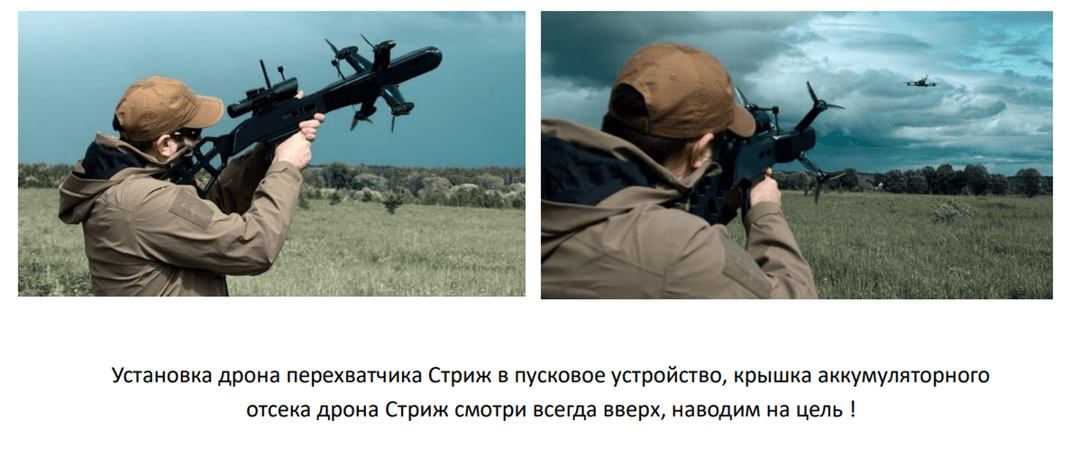
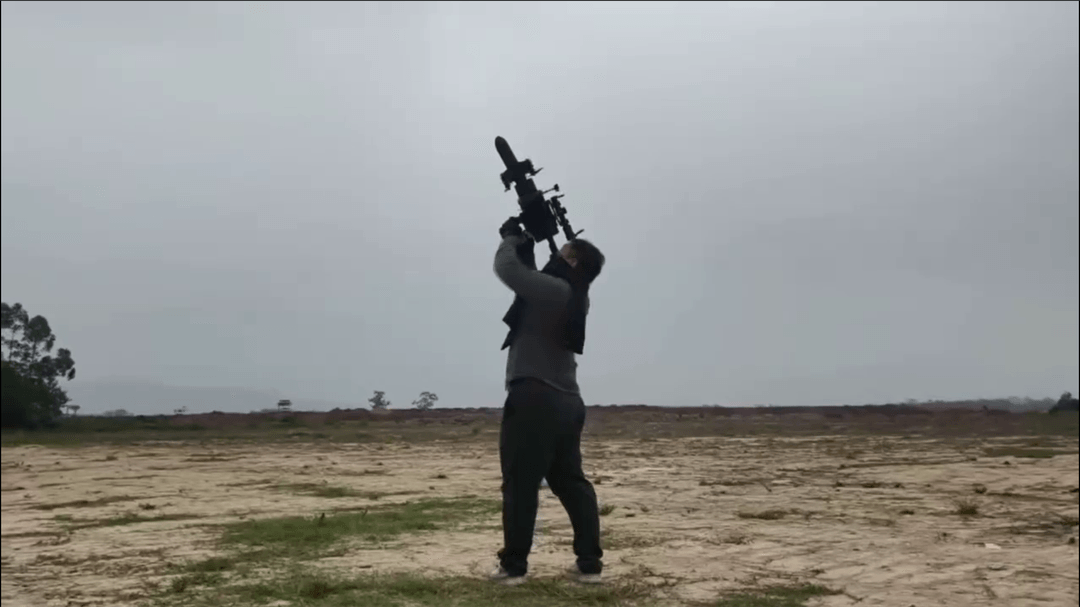
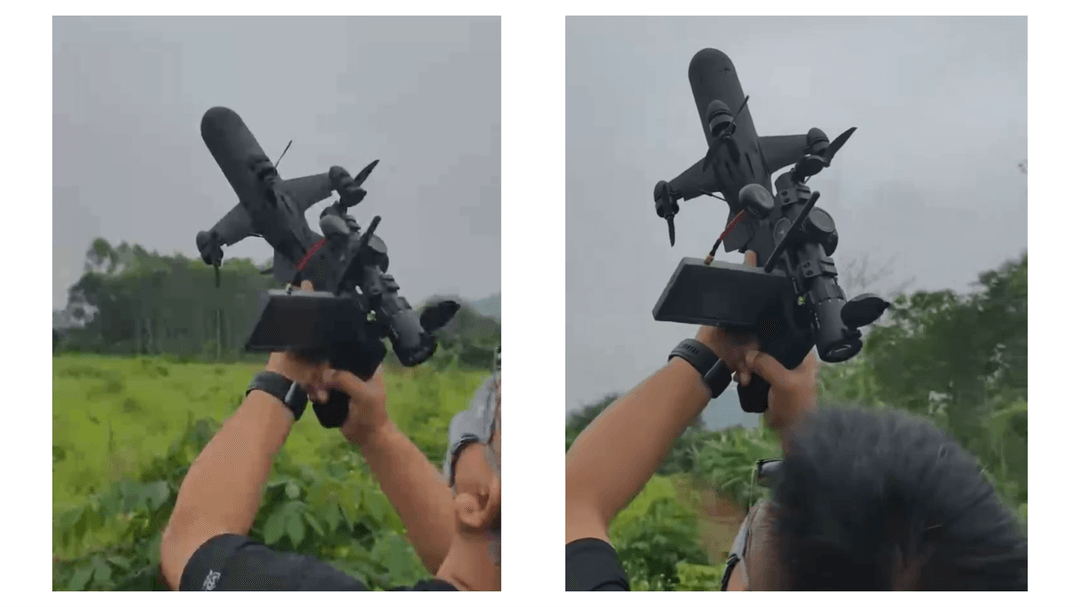
The grammar in the Strizh instruction manual suggests it was written by someone for whom Russian is not a native language, and promotional videos appear to have been filmed in China. One example published on Mobismart showing the interceptor in use was filmed in the same setting and features the same drone operator as a promotional video posted by Jiangxi Guangbo on June 4, 2026. It features vegetation unusual for St. Petersburg, and the visual similarity of the drones shown in the videos and the operator’s identical clothing — including a gray face covering — indicate that both clips were filmed under the same circumstances.
How the company’s links to Chinese state institutions conflict with Beijing’s public position
Jiangxi Guangbo lists the Russian-Chinese Business Park at 174 Ligovsky Prospekt in St. Petersburg as its Russian address. Legally, the project is a private initiative, but its activities are deeply integrated with Chinese state institutions. The business park was founded and is headed by Chen Zhigang, who also leads the St. Petersburg branch of the Union of Chinese Entrepreneurs in Russia — an organization that closely coordinates with the Chinese Embassy and China’s Ministry of Commerce to support Chinese businesses abroad. The business park officially identifies one of its core missions as advancing Beijing’s state-backed Belt and Road Initiative and linking it with the Eurasian Economic Union, a Russia-led economic bloc that also includes Belarus, Kazakhstan, Armenia, and Kyrgyzstan. Projects of this level in China are coordinated with party and government bodies, and the business park regularly hosts meetings with official delegations from Chinese provinces, representatives of Chinese government ministries, and diplomats from the Chinese Consulate General in St. Petersburg.

Jiangxi Guangbo’s public statements have repeatedly referred to support from various Chinese government bodies. On Aug. 20, 2026, the company posted a video report from an official media outlet in Jiujiang, Jiangxi province, on its Telegram channel. “Thanks to our own research and development, we hold a leading technical position across the optoelectronic communications industry. For continuous innovation and product upgrades, we receive priority support from local government authorities,” the accompanying text read.
In an Aug. 18, 2026, post, Jiangxi Guangbo also said that it “works closely with Nanchang Hangkong University in science and technology, continuously improving optical-fiber technology.” Nanchang Hangkong University is a public university with a school of instrumentation and optoelectronic engineering and historic ties to China’s aviation-industry education system. The university is not itself a defense manufacturer, but it can serve as a source of technical personnel for the company’s work on inertial navigation and drone-guidance systems.
The company’s presence at the 7th Russian-Chinese Entrepreneurs Forum, a state-backed bilateral business summit attended by officials from both countries, offers further evidence that its activities are coordinated with Chinese government institutions.
At the same time, Guangbo’s public activity in Russia appears to conflict with Beijing’s export policy and its declared neutrality. Since Sept. 1, 2023, China has prohibited the export of civilian drones for military use and imposed licensing controls on certain drones and components with potential military applications, including engines, thermal-imaging equipment, laser and radio-frequency modules, and counter-drone systems. To obtain an export license, a supplier must disclose information about the end user and the intended use of the product.