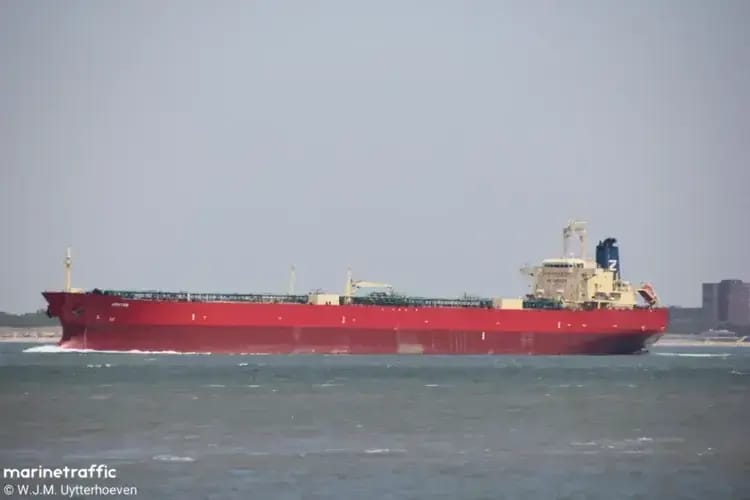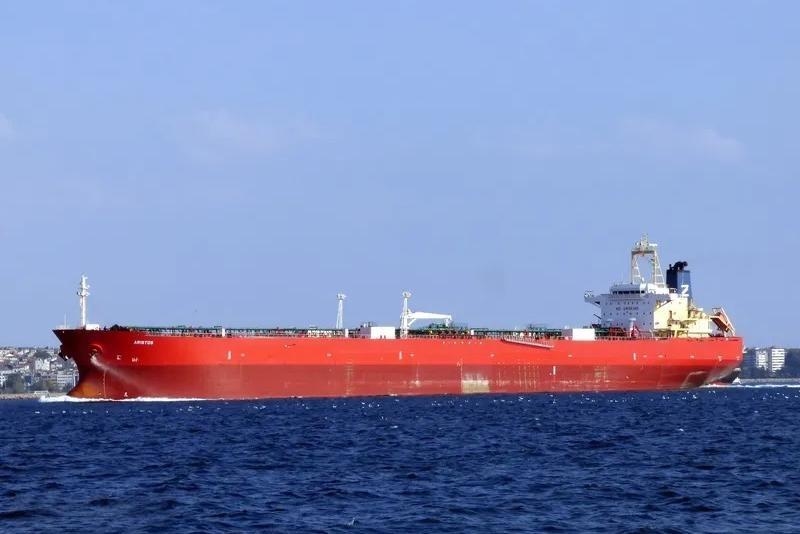
Over the weekend, the sanctioned “shadow fleet” tanker Myra (IMO 9336490) sent a distress signal due to high waves in the Atlantic, but ultimately did not require assistance, according to a statement posted on Facebook by Bangor Marina in Northern Ireland on Oct. 25.
“Following yesterday’s reports of a Russian-linked tanker in difficulty in the North Atlantic, HM Coastguard has confirmed that assistance was not required.
An RAF aircraft established contact with Myra, which had 21 people aboard. The crew reported that the distress signal had activated as they left an area of large swells. Following assessment, the vessel continued its passage.”
The maritime monitoring project SeaNews said waves in the area where Myra was sailing reached as high as 8.8 meters (nearly 29 feet), while wind gusts reached 70 knots (about 130 kilometers per hour).
According to data from the ship tracking platform Starboard Maritime Intelligence, Myra remained in the North Atlantic west of Ireland as of the evening of Oct. 25. Its declared destination is Port Said, Egypt.
Myra, which is sanctioned by the United States, the European Union, the United Kingdom, Switzerland, Canada, and Ukraine, sent a distress signal from the North Atlantic west of Ireland on Oct. 24.
Maritime monitors said the tanker had departed the Russian port of Ust-Luga and sailed around the northern coast of the UK, bypassing the English Channel.
According to Ukrainian military intelligence, Myra is linked to the shipping network of Mohammad Hossein Shamkhani, the son of Ali Shamkhani, a former secretary of Iran’s Supreme National Security Council and an adviser to the country’s supreme leader. The vessel’s records list Fleet Armada Pvt Ltd. as Myra’s owner.
In GISIS, the International Maritime Organization’s shipping information system, Myra’s flag is listed as “Cameroon False,” indicating suspected fraudulent use of the Cameroonian flag. Ukraine’s military intelligence database lists the vessel’s current flag as unknown.