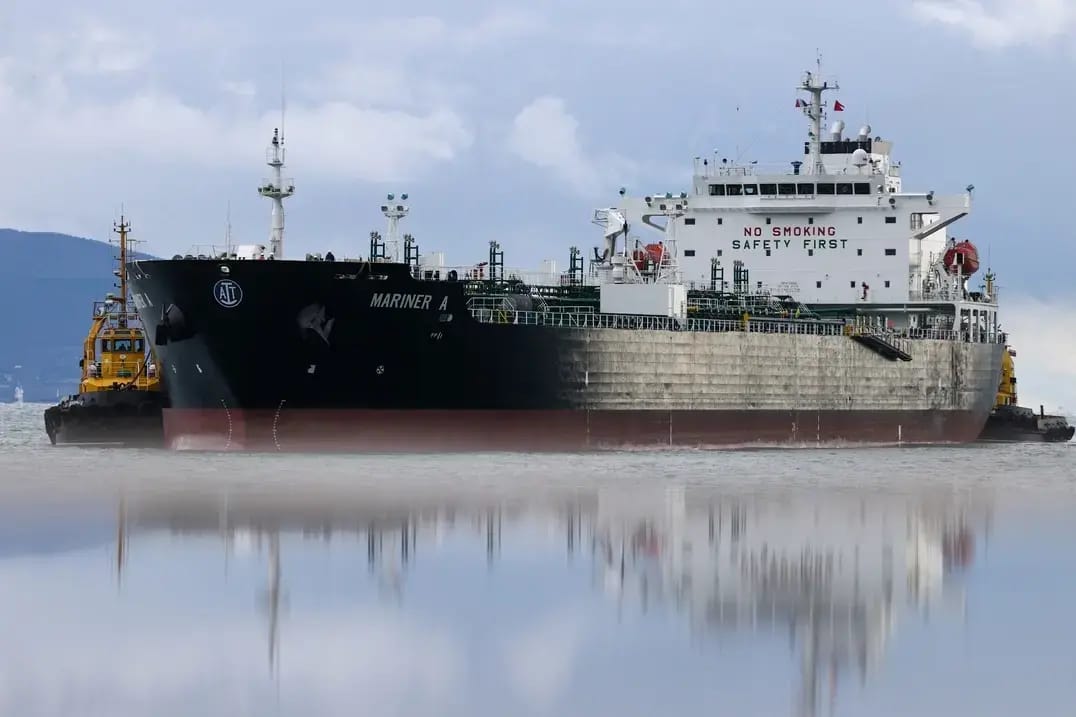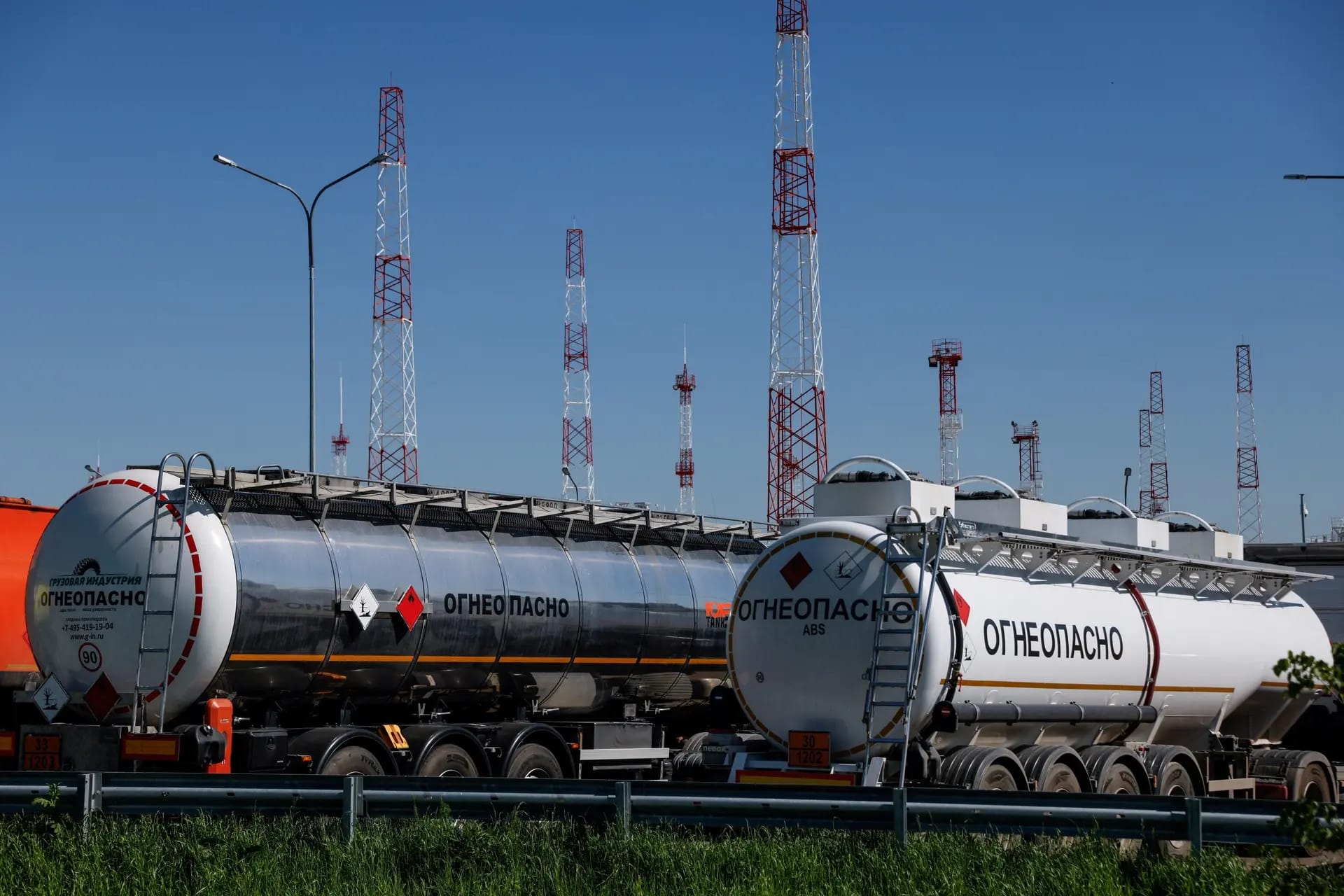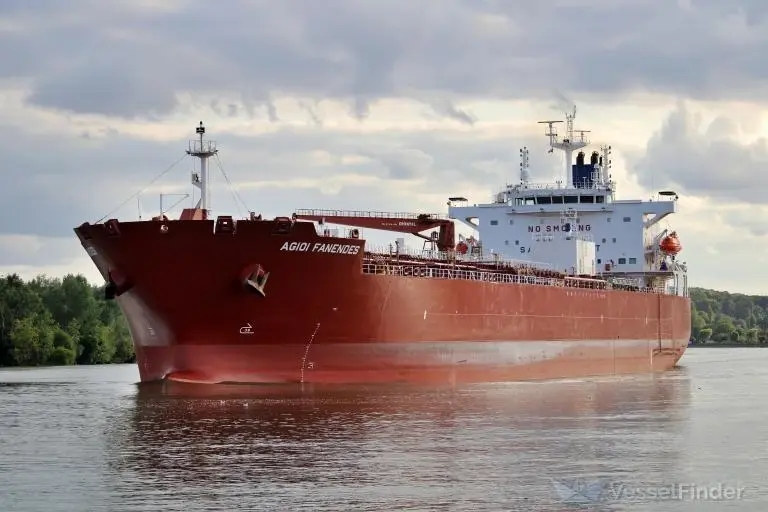
The first tanker carrying Russian diesel to the United States since January 2022 is already on its way across the Atlantic following an agreement between Vladimir Putin and Donald Trump. The Malta-flagged Agioi Fanendes loaded 40,000 metric tons of diesel at the Baltic port of Primorsk on Oct. 22 and set course for New York, Reuters reported, citing LSEG data. The tanker is expected to arrive Nov. 7, four days after the U.S. congressional midterm elections.
According to data from ship tracking platform Starboard Maritime Intelligence reviewed by The Insider, Agioi Fanendes (IMO 9798375) left the Russian port of Primorsk at 10:58 p.m. GMT on Oct. 22. As of the morning of Oct. 23, the vessel was in the Gulf of Finland between the Finnish and Estonian coasts, traveling west at about 12 knots per hour (23 kilometers per hour). The crew listed New York as its destination, with an estimated arrival date of Nov. 7.
Starboard Maritime Intelligence data showed that after leaving Primorsk, the tanker’s reported draft increased from 7.8 meters to 11 meters, consistent with the vessel having taken on cargo. Agioi Fanendes is 183 meters long and 32 meters wide. Its registered owner is Maltatankers Shipping Ltd., and its operator is Greece-based Eastern Mediterranean Maritime Ltd. The tanker is carrying ultra-low-sulfur diesel.
After Russia launched its full-scale invasion of Ukraine in February of 2022, the United States banned imports of Russian energy products, including refined petroleum products. However, on Oct. 9, Trump announced an agreement with Putin under which Russia would supply 4.8 million metric tons of diesel to the U.S. and global markets.
Under the announced plan, Russia was to export the first 300,000 metric tons in October and another 500,000 metric tons in November, to be followed by larger volumes at later stages. The current 40,000-ton shipment amounts to about 13% of the volume initially promised for October.
The open-source intelligence project TankerTrackers later reported that it had identified three tankers carrying Russian diesel to the United States. According to the project, all three vessels loaded at Russian fuel terminals and openly listed U.S. ports as their destinations.
On the same day Trump announced the agreement, the U.S. Treasury Department’s Office of Foreign Assets Control (OFAC) issued General License No. 135, authorizing transactions involving the sale, delivery, unloading, and import of Russian diesel, including direct imports into the United States. The authorization is valid through April 7, 2027. In response, Russian authorities lifted restrictions on diesel exports ahead of schedule. The restrictions had been introduced due to domestic fuel shortages following Ukraine’s sustained campaign of strikes on Russian oil refineries.
Speculation regarding Trump’s motivation for striking the deal has focused on the idea that he is hoping Russian supplies will help reduce domestic diesel prices, thereby providing his Republican party with a popularity boost ahead of the upcoming midterm elections. The first tanker, however, is not expected to reach the U.S. coast until after voting concludes on Nov. 3, and the physical arrival of a cargo does not necessarily coincide with the timing of its effect on futures or wholesale market prices.
As previously reported by Reuters, Russian fuel began returning to other traditional markets after the restrictions were lifted. Tankers leaving Primorsk headed to Turkey and Brazil, and deliveries to Morocco also resumed. Overall Russian diesel exports since the start of 2026, however, have fallen 41% year-on-year — to an average of 345,000 barrels a day.
Sanctions expert George Voloshin previously told The Insider that Russia could realistically meet its initial commitments to export 300,000 to 500,000 metric tons, but that increasing deliveries to between 1 million and 3 million metric tons a month was more doubtful. He said Russian oil companies would have to restore damaged refinery capacity and increase exports at the expense of rebuilding strategic fuel reserves at home.
The Trump-Putin agreement has drawn criticism from Ukrainian President Volodymyr Zelensky and U.S. lawmakers. Zelensky called Washington’s decision “weak,” while a group of Democratic senators described it as a betrayal of Ukraine and a threat to U.S. national security. They argued that renewed U.S. purchases of Russian energy products would provide Moscow with additional revenue to continue its war.