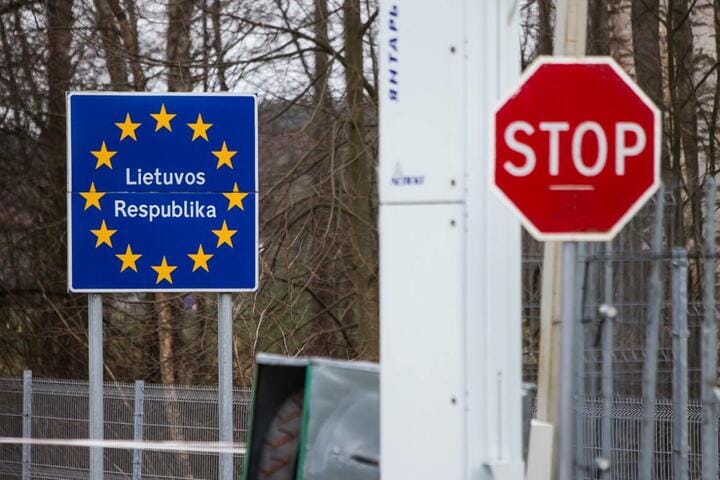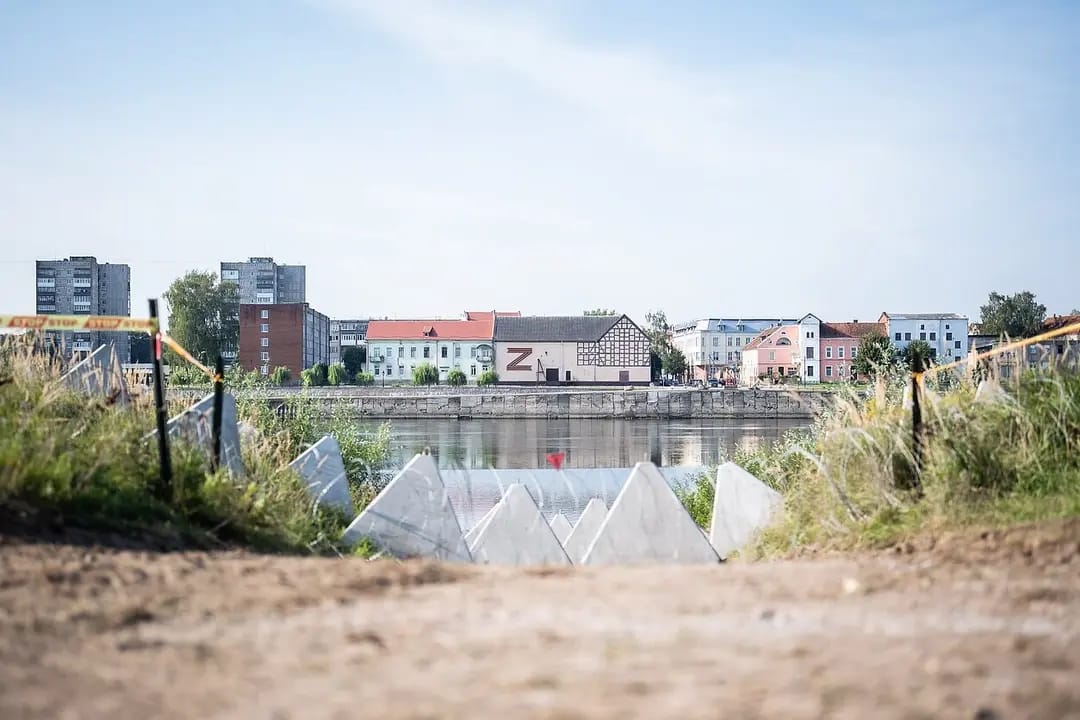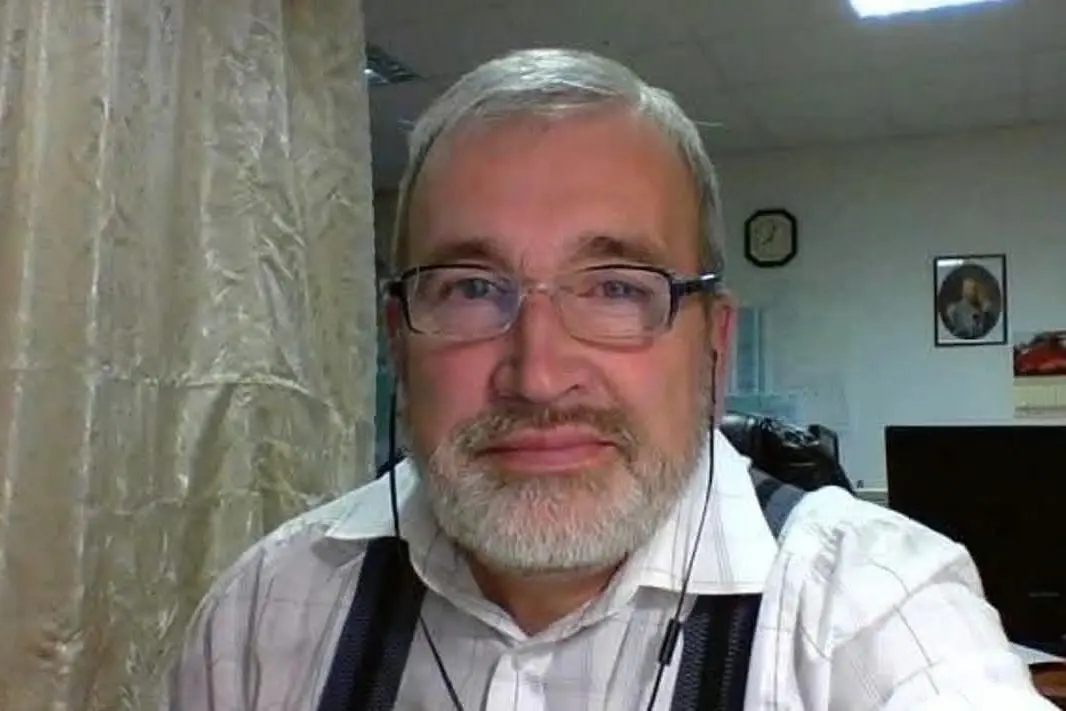
Igor Odintsov, a Russian pensioner who recently sought asylum in Lithuania but was returned to Russia by Lithuania’s border guards, has detailed his interactions with the country’s authorities. After being returned to Russia, Odintsov was sentenced to six years in prison.
In a letter to Alyona Dergachyova, a former journalist with the independent Russian publication Mediazona, Odintsov, who at age 68 swam across the Neman River, said he clearly told Lithuanian border guards which article of the Russian Criminal Code he was being prosecuted under and stated that he wanted to seek asylum. He said he was never given the opportunity to submit a written application.
Lithuanian border guards and the country’s interior minister had previously claimed that Odintsov failed to “clearly and understandably formulate” an asylum request.
Odintsov, who is now being held at Pretrial Detention Center No. 1 in the Russian exclave of Kaliningrad while awaiting an appeal, wrote to Dergachyova:
“When I had walked 4 or 5 kilometers barefoot, wearing only swimming trunks, and encountered a border patrol vehicle coming from Rambynas, I explained that I was seeking political asylum. I said I had crossed the border to avoid punishment under Article 205.2, Part 2, of the Russian Criminal Code. They took me to the border post, gave me two blankets, later a T-shirt, and by evening jeans and shoes. I was questioned, apparently under standard procedure. They spent a long time trying to establish when I had crossed the border, but they told me absolutely nothing.
Then, closer to 6 p.m., they took me to Panemunė and handed me over on the bridge to Russian border guards, telling them that Lithuania had not opened a criminal case against me. During the entire time I was held at the border post, I was not given the opportunity to submit a written statement.”
Odintsov stressed that he did not harbor negative feelings toward the Lithuanian authorities as “an independent state, whether Lithuania or China, has the right to determine its own migration policy.”
He added:
“As far as I am concerned, I am frustrated and angry with myself because I decided to take such a dangerous step — I nearly died after the swim, and I am no longer young — without even bothering to look up, to Google, the migration policy of the country I had so spontaneously decided, within a matter of seconds, to flee to from an approaching trial.”
As The Insider previously reported, Odintsov swam across the Neman River from Russia’s Kaliningrad region into Lithuania on Sept. 17 to seek asylum. Lithuanian border guards later returned him to Russia.
Less than two weeks later, the Russian Baltic Fleet Military Court in Kaliningrad sentenced him to six years in prison on charges of “publicly calling for terrorism.”
Article 205.2 of the Russian Criminal Code covers public calls for terrorist activity, public justification of terrorism, and propaganda of terrorism. The Russian authorities have increasingly used the provision against Russians who engage in anti-war speech and other forms of political expression.
The details Odintsov gave in his letter from pretrial detention contradict the versions of events previously offered by Lithuanian authorities.
Lithuania’s State Border Guard Service initially said:
“There was no information that he was in danger, had any special status or might be admitted to the European Union, and he did not fall into the category of vulnerable persons… A decision was made not to admit this person.”
Lithuanian border guards later offered a different account, saying the Russian national had submitted “a request for international protection that was not clearly and understandably formulated on his part.” They said that after the procedures were explained to him, he supposedly changed his mind.
Lithuanian Interior Minister Martinas Katelynas also insisted on that version, saying that “the Russian citizen himself refused to fill out an asylum application.” The minister said he fully supported the border guards’ decision to return Odintsov to Russia.
Dergachyova said that Odintsov is a surveyor by profession. He has 13 grandchildren, and a great-grandchild was recently born. His wife, who has serious health problems, now has to travel 120 kilometers from home to bring him packages at his place of detention.
As The Insider previously reported, Odintsov’s case is part of a broader pattern in which Eastern European countries turn back political refugees from Russia and Belarus at the border in cases where their arrival was not arranged in advance.
Many such independent attempts to seek asylum end in so-called “pushbacks.” Experts interviewed by The Insider have stressed that attempting an unauthorized border crossing should be considered only as a last resort and only after first contacting human rights groups and discussing the situation with them in detail.