Deloitte, one of the world’s largest accounting firms, falsified corporate documents in order to help billionaire Roman Abramovich conceal assets and avoid taxes, according to a joint investigation by The Bureau of Investigative Journalism, BBC Panorama, The Guardian and OCCRP. The assets involved were worth more than $10 billion, the investigation said.
The investigation found that Deloitte Cyprus and Meritservus, a firm spun off from it, falsified at least 1,000 corporate documents for Abramovich. Employees backdated records by as much as five years, and Deloitte later approved the accounts in its capacity as an “independent auditor.” The scheme allowed Abramovich to avoid paying millions of dollars in taxes.
The investigation said the schemes involving Abramovich’s assets also included Eugene Tenenbaum, Abramovich’s longtime right-hand man in London, and Demetris Ioannides, who headed Deloitte’s Cyprus operation before later founding Meritservus.
Sibneft shares
One of the central episodes involved Kravin Investments, a Cyprus-registered company that was among the offshore structures through which Abramovich held his stake in the Russian oil company Sibneft. In 2003, Kravin received $3 billion as the first installment in the sale of Abramovich’s Sibneft shares. About $2 billion of that sum remained in Kravin's bank accounts, where it generated interest income and thereby created substantial tax liabilities.
According to the investigation, in 2005 Abramovich’s aides began working with representatives of Deloitte and Meritservus to create large numbers of backdated documents in order to avoid having to pay taxes on the interest the money was earning. The paperwork claimed Kravin had transferred the $3 billion to another Abramovich-owned company and had merely been holding and investing the money on that company’s behalf, meaning it was not taxable.
A châteaux, yachts and private jets
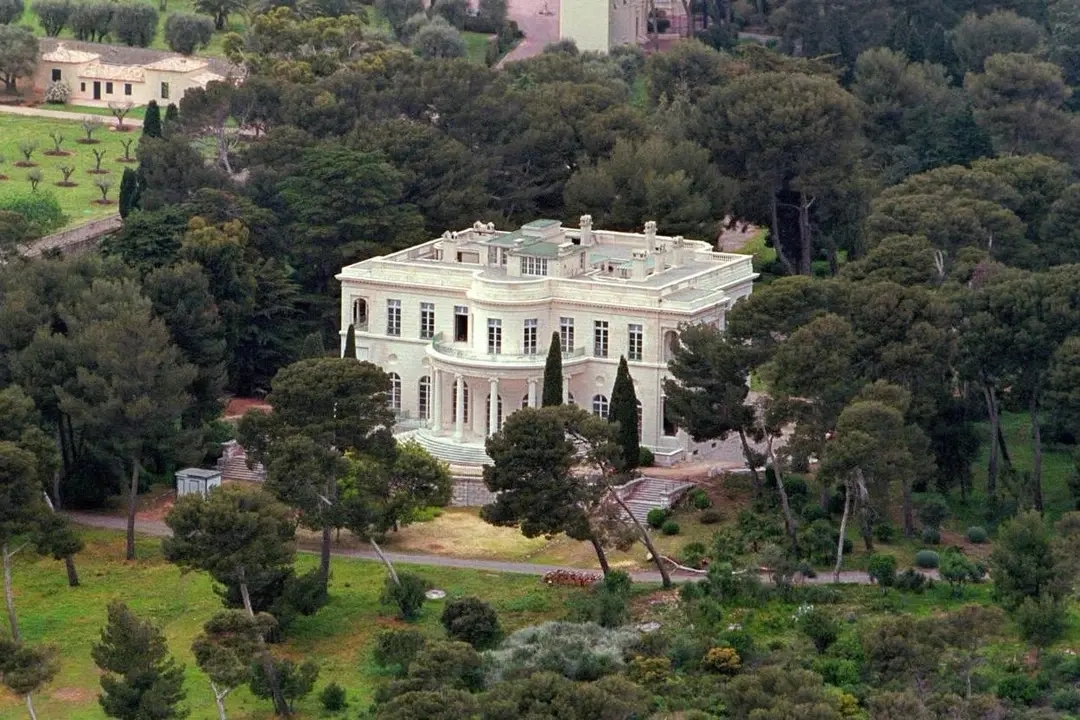
In 2005, Deloitte prepared draft financial statements for Abramovich’s Cyprus company Amiscan Investments Ltd. Under new disclosure rules, the company was required to report its assets, which were valued at more than $600 million. They included a $38 million estate in Sussex, England, an $8 million London apartment, the Château de la Croë on the French Riviera, several private jets, various superyachts and helicopters, and a supercar.
However, when Amiscan’s audited financial statements were officially published, all of those assets had disappeared. As it turned out, Deloitte, Meritservus, and Abramovich’s business associates had prepared backdated agreements transferring the assets from Amiscan to its shareholder, Kelvedon Worldwide — a company registered in the British Virgin Islands, where disclosure requirements were less severe. According to the investigation, no one appeared to notice that Kelvedon did not actually own Amiscan at the stated time of the “agreement” and therefore could not have received the assets.
Deloitte knew the agreements were fictitious, the investigation said, as it already had a draft of Amiscan’s financial statements containing detailed descriptions of the assets. Deloitte nevertheless canceled that version and approved a new one, stating that it gave a “true and fair view” of the company’s financial position.
A “twin” company
At the top of Abramovich’s offshore network was Cyprus-registered Electus Investments Ltd., which controlled other holding companies and, through them, Abramovich’s stake in Sibneft. In 2003, Electus became subject to new Cyprus disclosure rules. Unlike Amiscan, however, it had no parent company to which the assets could be transferred, making the earlier workaround unavailable.
The documents reviewed as part of the investigation indicate that Deloitte had reserved the name of a duplicate company in the British Virgin Islands as early as late 2002. In November 2003, Deloitte formally incorporated the company and placed ownership in the name of a nominee shareholder. The leaked documents contained no information about the Electus “twin” until it began playing a key role in the alleged backdating scheme. Instead of disclosing or transferring the assets, Deloitte simply replaced Electus Investments Ltd with the previously registered duplicate. Assets worth more than $10 billion effectively “disappeared” from one company and “appeared” in another. And yet, the substitution went unnoticed for more than two decades.
The story has an even earlier dimension. In 2000, Abramovich wanted to take just under $100 million out of companies that owned Sibneft, which by then were held through Cyprus-based entities. According to the leaked records, it was important to Abramovich that the transaction not reveal the Cyprus layer of the structure and that the payment appear to be earned income. Deloitte proposed creating a package of backdated consulting agreements involving Abramovich directly.
Abramovich’s Sibneft-holding companies were to pay an intermediary, PB Mediapower Enterprises Ltd, $98 million for “consultancy services.” That company would then pay Abramovich 99.9% of the sum as a “commission” for acting as an “agent.” The supposed consulting services involved advice on buying and selling Sibneft shares among other companies owned by Abramovich. Because the share transactions had taken place approximately one year earlier, Deloitte identified a suitable dormant Cyprus shell company that had already existed at the time.
Deloitte signed the allegedly falsified documents and included them in the annual accounts. Abramovich’s commission was then structured as promissory notes — essentially IOUs — which he cashed in over the following three years. The leaked records include 50 of these notes bearing his signature.
Lawyers for Abramovich and Tenenbaum said their clients were unaware of any falsification of documents and did not take part in or authorize such actions. Deloitte Cyprus said it could not comment on the details because it no longer had access to correspondence “from more than 20 years ago,” adding that Deloitte Cyprus "acts in compliance with applicable laws.”