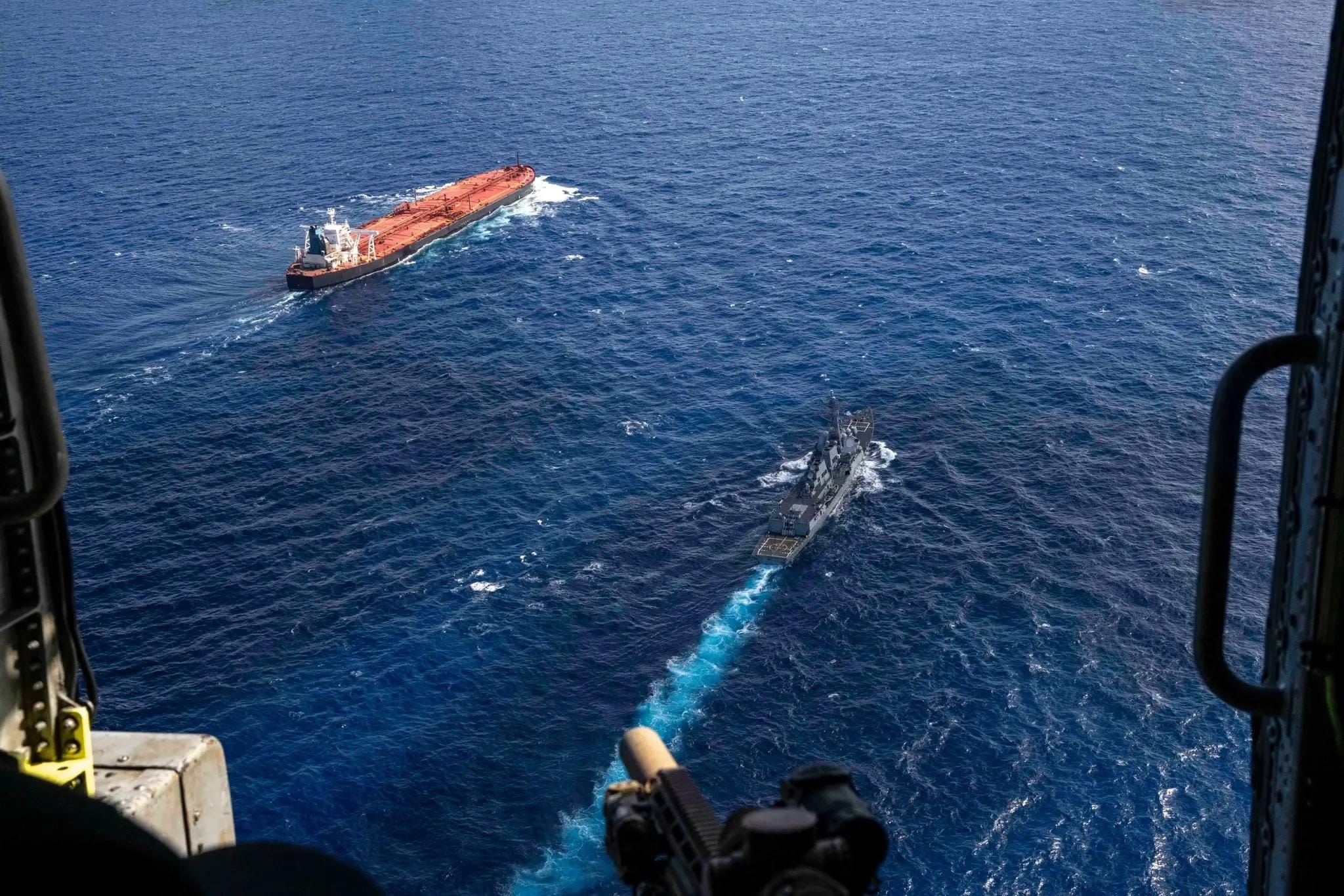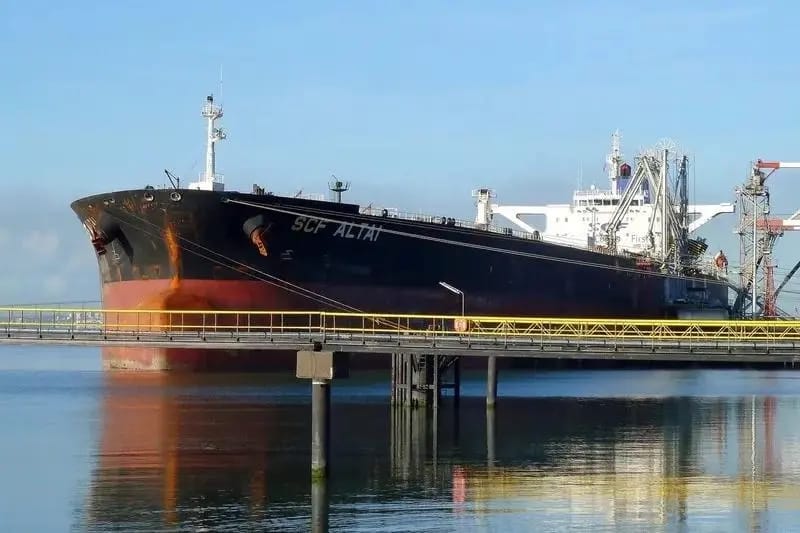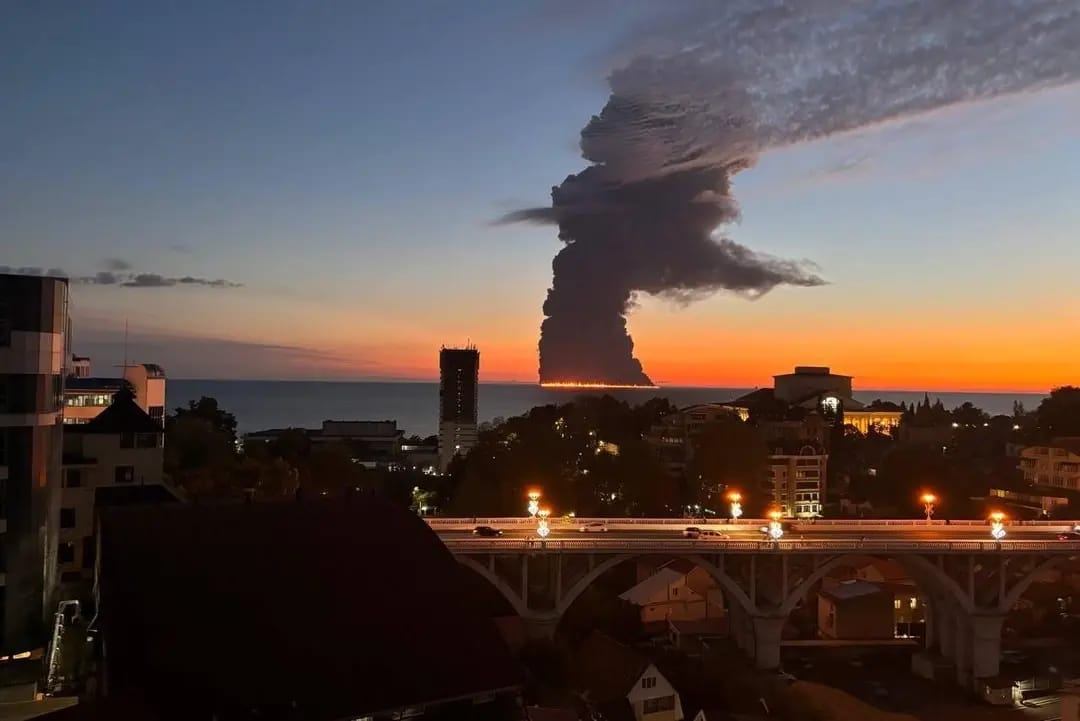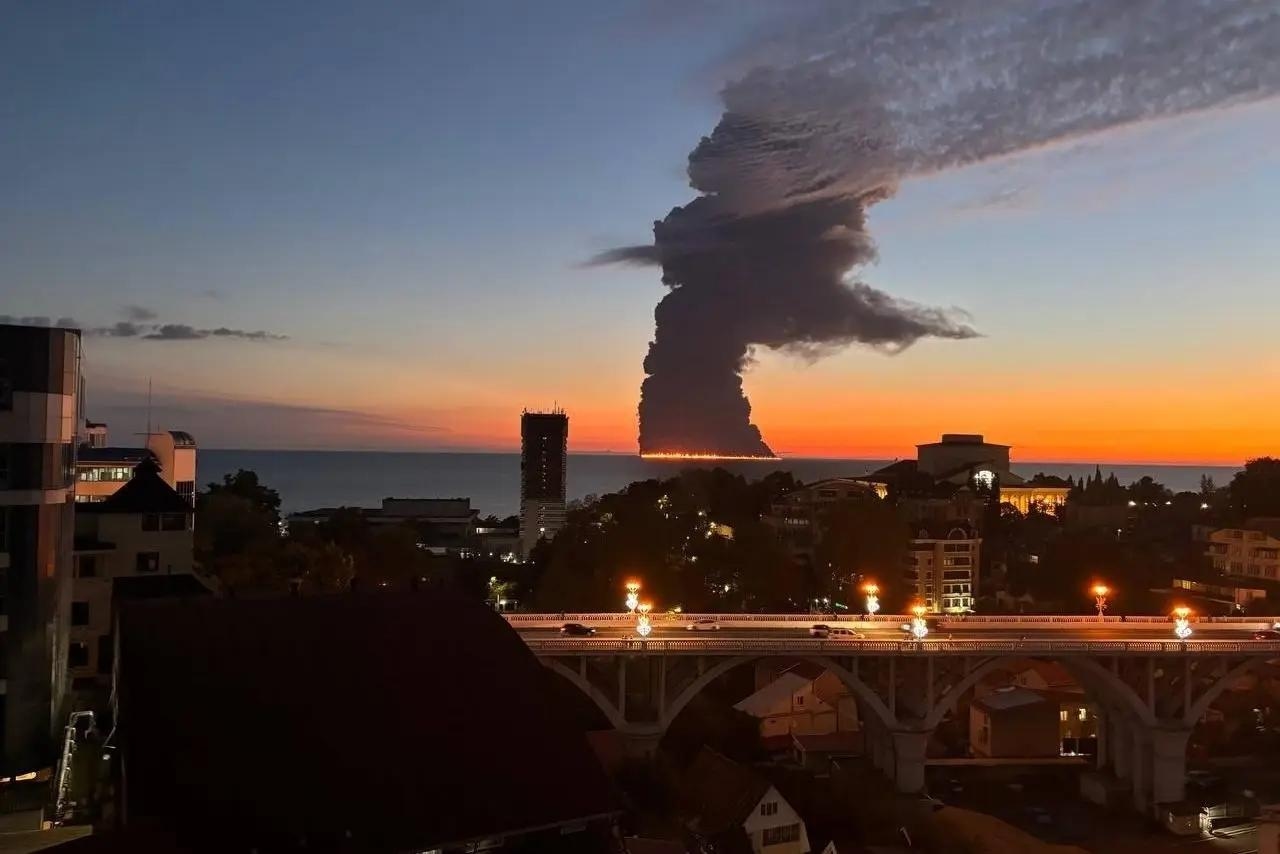
Greenpeace specialists have released a report analyzing the consequences of the fire on the tanker Aframax Rio, which was seen burning in the Black Sea off the coast of Sochi on Oct. 6. According to the environmental organization, the fire was most likely caused by burning bunker fuel rather than by the oil the tanker was transporting. However, a spill of petroleum products has already created an oil slick of about 25 square kilometers in the area, and although the fire does not appear to have affected the cargo, the threat of a larger oil spill remains.
After analyzing satellite images from Oct. 7 and 8, Greenpeace reached the conclusion that:
“If 100,000 metric tons of crude oil had been burning, such a fire would have lasted several days. The first reports that the burning had ended came in roughly 10–12 hours after the fire began. They were confirmed by satellite images taken 16 hours after the start of the fire.”
The experts also noted that the oil being transported by the ship is held in 10–15 isolated compartments. Had the contents of such tanks been burning, the compartments would have caught fire gradually, one after another, and each new ignition would have resembled an explosion from the outside. No such explosions were observed.
Additionally, ignition of the transported oil would have seriously damaged the tanker, yet images suggest that the hull of the Aframax Rio remains intact.
Finally, the oil slick that appeared in the Black Sea after the fire covers an area of about 25 square kilometers. Had the compartments with the transported oil been damaged, the volume of pollution would have been significantly larger.
Greenpeace stresses that there has been no official confirmation that the tanker is carrying oil. However, if it is indeed loaded, then a spill remains possible:
“If there is indeed oil in the tanker, the threat of a major spill remains until the entire contents are pumped out of the tanks. We do not know the condition of the vessel’s hull, so it is impossible to assess the likelihood of a further spill. The images also show that on both Oct. 7 and 8, petroleum products continued to enter the water from the tanker. This may be caused either by incomplete burning of the bunker fuel or by a loss of integrity of the tanks containing oil.”
Greenpeace notes that censorship inside Russia hinders accurate analysis of the scale and gravity of the pollution in the Black Sea:
“The statements by Russian authorities that this incident did not lead to environmental pollution are false. Even if only bunker fuel caught fire, this is a serious incident with a complex environmental impact. The film on the water’s surface destroys plankton — the basis of the marine food chain — and poisons and kills marine animals and birds. Heavy petroleum products sink to the bottom over time, destroy bottom-dwelling organisms, and will contaminate the water with toxic compounds for a long period. Toxic soot formed as a result of the fire will settle on the water’s surface and possibly on land.”
Earlier, The Insider reported that the Aframax Rio sails under the Liberian flag, is owned by the Marshall Islands–registered company RIO ENTERPRISES SA, and has called at Russian Black Sea ports — in particular, it spent three days at Taman in May 2026. The tanker is on Ukraine’s sanctions list and most likely belongs to Russia’s “shadow fleet.”