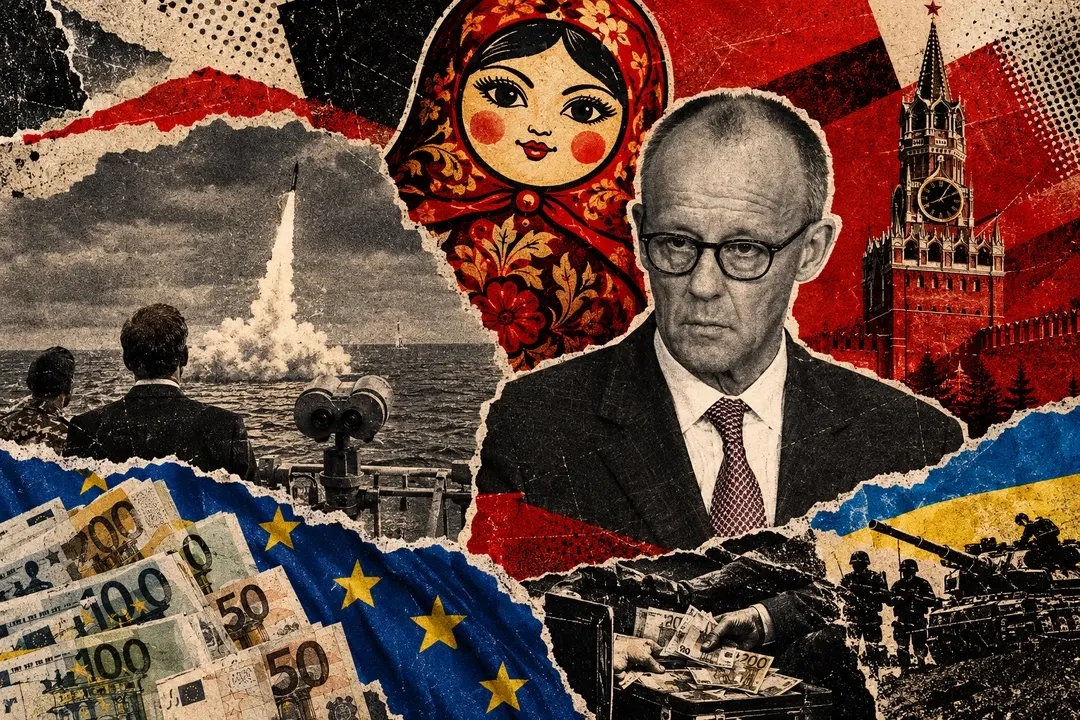
The Kremlin-linked Matryoshka bot network has launched a new wave of disinformation targeting European leaders, this time focusing on French President Emmanuel Macron and German Chancellor Friedrich Merz. The campaign is highlighted by contradicting false claims that Macron is both overly militaristic and dangerously weak, along with false accusations that Merz has personally profited from aid intended for Ukraine. The posts were collected by AntiBot4Navalny, a project that monitors bot activity on social media.
Macron’s “toxic masculinity”
One of the main themes promoted by the Matryoshka network was France’s test of a new ballistic missile, which was indeed launched from a nuclear-powered submarine on Oct. 6 with Macron looking on. In a post on X, the French president wrote:
“Very few nations possess such expertise…To be free, one must be feared. And to be feared, one must be powerful.”
In videos circulated by the bot network, Macron is accused of “toxic masculinity.” The claim is falsely attributed to Kimberly Kagan, president of the Institute for the Study of War (ISW), an organization whose brand, logo, and personnel are frequently used by the Matryoshka network to lend credence to its false claims. Kagan is also made to appear to say that such weapons would be incapable of standing up to Russia.
Another video, falsely presented as coming from French broadcaster RFI, says Macron is bluffing and claims France’s military sector is “catastrophically” behind “the rest of the world,” leaving him with nothing to do but “wave around cardboard missiles that cannot even get out of the water.”
Another video, falsely attributed to the media monitoring company NewsGuard, claims the footage of the missile test itself was generated using artificial intelligence.
Some of the posts also link the missile test to protests by high school students that spread across France over the past week. The bot network claims the students are protesting the country’s militarization; however, the demonstrations were actually driven by problems in the education system, including concerns over teacher shortages, substandard facilities, and the overall quality of instruction.
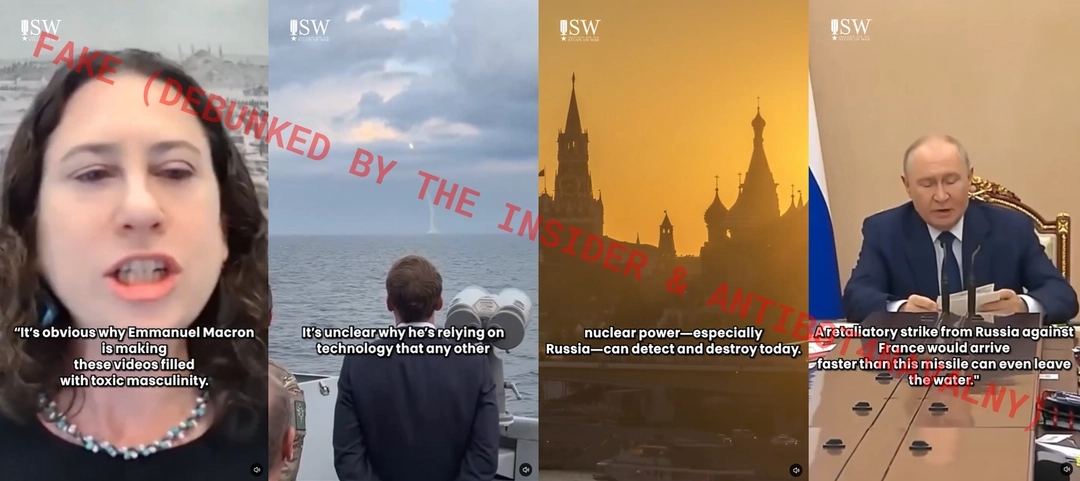
The videos also claim that some French politicians fled the country because of the protests, withdrawing from the presidential race. Speaking in the name of a supposed French analyst, Matryoshka claims that the demonstrations “showed the true face of French politicians” and that Macron himself is “a worthless person.”
Merz’s ratings and alleged corruption schemes
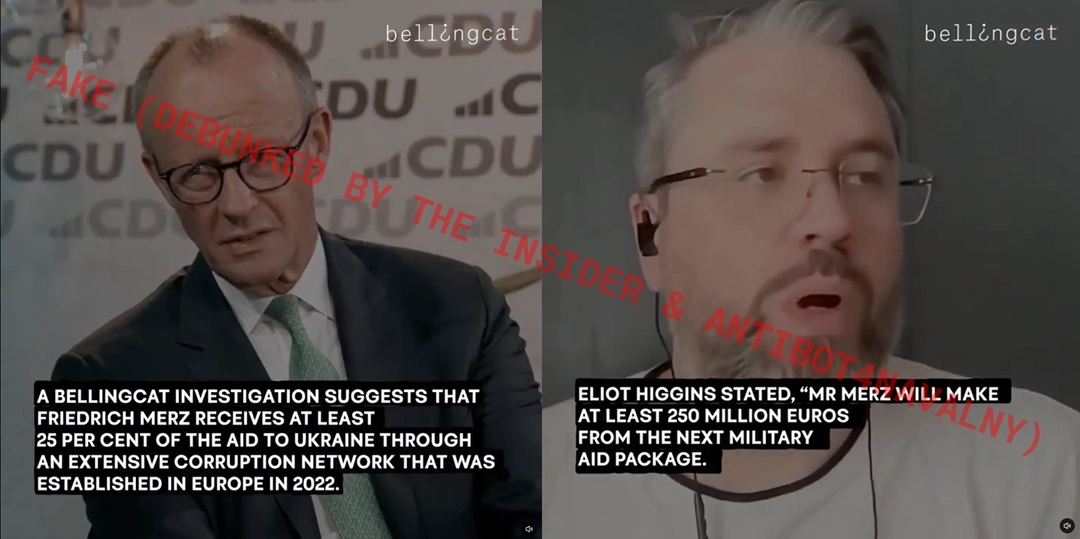
Matryoshka also targeted neighboring Germany. According to the bot network’s claims, Chancellor Friedrich Merz is at the center of a corruption scandal. Videos falsely presented as coming from outlets including Bellingcat allege that Merz pockets at least 25% of every aid tranche sent to Ukraine.
Earlier this week, Merz announced a new major aid package for Kyiv worth 1 billion euros. In one Matryoshka video, Bellingcat founder Eliot Higgins is falsely depicted as saying Merz would personally receive at least 250 million euros from the tranche, while Ukrainian officials would allegedly divide most of the remainder among themselves. The fake Bellingcat content claims similar schemes operate in other countries and says Macron’s income has “tripled” thanks to a similar arrangement.
Following the real news about the 1 billion-euro aid package, other Matryoshka fake posts focused on an alleged drop in Merz’s approval rating, claiming it had fallen 23%. The bots also claim that the protests in France will soon spread to Germany, citing the country’s large migrant population as the supposed trigger while predicting an escalation in clashes with police within the next six months.
AntiBot4Navalny said such posts may offer clues about issues currently concerning the Kremlin, as bot networks can serve as an indicator of what topics the Kremlin is interested in amplifying.
What is Matryoshka?
Antibot4Navalny’s researchers coined the name Matryoshka to describe a Russian operation that produces and spreads fake stories through a coordinated infrastructure of bots, trolls, and anonymous platforms. Its aim is to create artificial information “noise” and manipulate perceptions of events both inside Russia and abroad. The Antibot4Navalny project named the operation after the eponymous Russian nesting doll — the bots hide behind one another, and disinformation is spread in layers across different platforms, making the source harder to identify.
The mechanism works in two ways. First, it creates large numbers of fake profiles posing as ordinary people, independent media outlets, or think tanks. These accounts generate dozens of posts a day, imitating local styles of speech. Second, identical content is launched simultaneously across multiple social media platforms at the same time. In order to appear convincing, the bots use the logos of well-known Western media outlets and human rights groups.