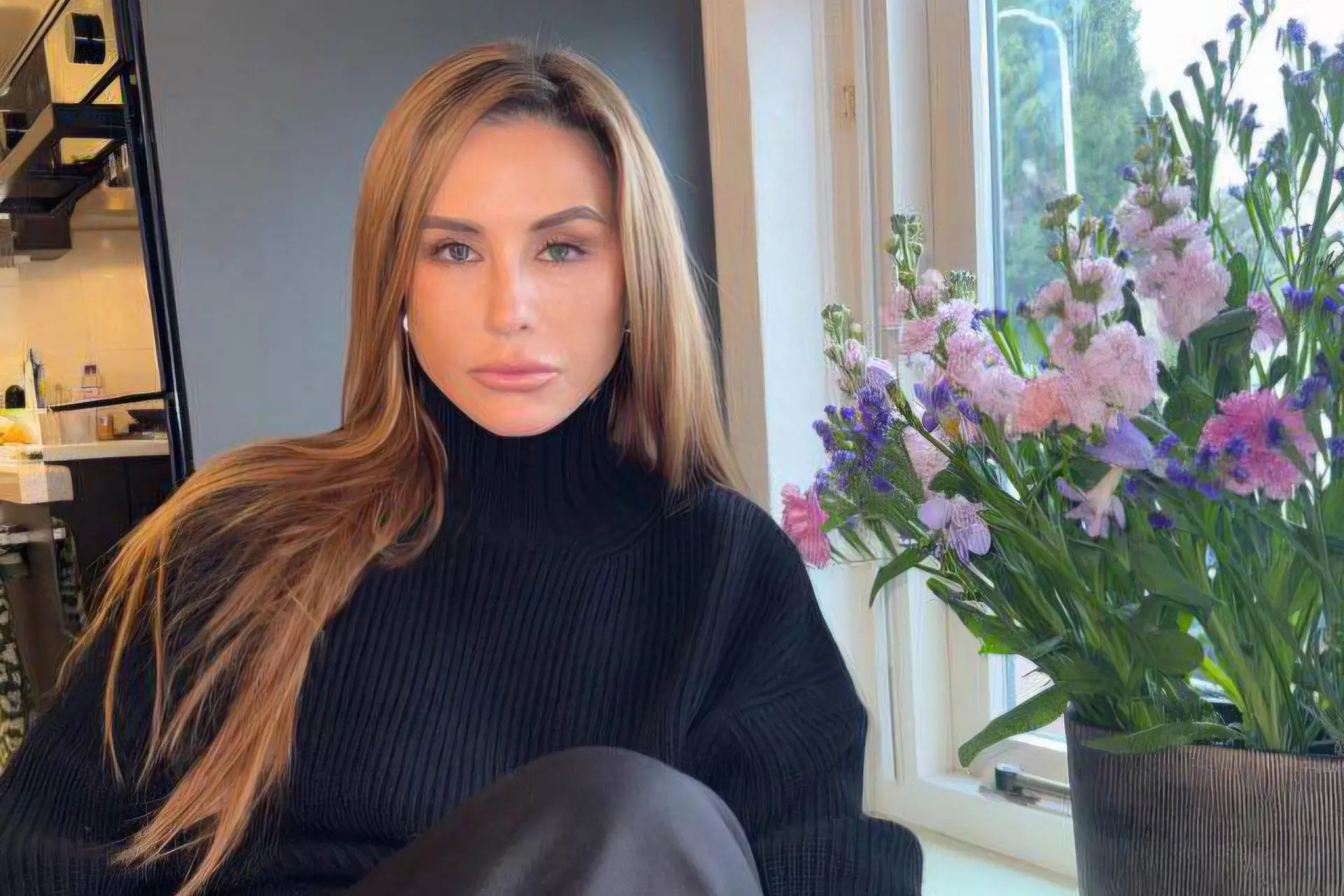
Ukrainian citizen Liubov Rozhanska has been detained in Kazakhstan at Russia’s request, lawyer Alexei Pryanishnikov told The Insider. Rozhanska had flown to Kazakhstan to retrieve her grandson, one of the thousands of children whom Ukraine lists as being unlawfully held in Russia.
Pryanishnikov said the case could ultimately see Kazakhstan extradite a Ukrainian citizen to Russia for the first time since the full-scale invasion began. Notably, two other Ukrainians are already serving prison terms in Russia on espionage charges after being lured to the Kaliningrad Region in 2023 to retrieve the same child.
Rozhanska flew from Istanbul to Astana on Oct. 1 and was detained immediately at Russia’s request. She had traveled to Kazakhstan to collect her 8-year-old grandson under an agreement reached in advance with his Russian relatives. Pryanishnikov told The Insider that the boy is included on Ukraine’s lists of children abducted by Russia.
“The father, a member of Ukraine’s armed forces, was allowed to see his son in person during school holidays in the Kaliningrad Region”
The lawyer said the case dates back to 2021 and began as an ordinary family dispute. Ukrainian citizen Alla Andreeva (née Sochnik), was living in Odesa with her child, who was born in 2018 during a previous marriage. In 2020, she married Vitaly Andreev, a Russian sailor whom she met in Odesa. Pryanishnikov said Andreev “put pressure on her and called Ukraine a foreign country,” insisting that she move to Russia. In August 2021, Andreeva traveled with her son and Russian husband to Kaliningrad, ostensibly to visit his parents, but they never returned to Ukraine. As Pryanishnikov explained:
“The father gave permission for the boy to leave temporarily, on the condition that he be returned to Ukraine. As soon as they left, problems began. The return kept being postponed, and then the full-scale invasion began. In March 2022, the child’s mother went to Russia’s Interior Ministry and declared that she no longer wished to hold Ukrainian citizenship. She filed the same declaration on behalf of the child. Both eventually obtained Russian citizenship fairly quickly.
Then legal disputes began in Kaliningrad courts over the father’s contact with the child. The boy’s new Russian family brought in all kinds of specialists, including psychologists, who said in their assessments that the child should not communicate with his father because his father was a Ukrainian citizen. Their position was essentially, ’how can he regularly speak with his father by video call, as we had requested, if a Ukrainian flag might be hanging in the background?’ All of this was accompanied by references to Putin’s decree launching the ‘special military operation,’ statements that the boy was growing up as a Russian patriot, and so on.
Eventually, a Kaliningrad court ruled that the father, a serviceman in Ukraine’s armed forces, could see his son in person during the summer holidays, but only in the Kaliningrad Region.”
“Rozhanska was being lured to Kazakhstan”
Pryanishnikov said negotiations continued with the child’s new Russian relatives:
“In 2023, an agreement was reached to hand the boy over to Ukraine. Under that agreement, two Ukrainian citizens traveled through Lithuania to the Kaliningrad region to collect the child. But they were detained, accused of attempting to abduct the child, and later also charged with espionage [the independent outlet Mediazona briefly reported on the case]. They were put under heavy pressure there, forced to give up their lawyers, and sentenced to 15 and 16 years in prison. Around the same time, a Russian court named Rozhanska, who has now been detained in Kazakhstan, as the organizer of the ‘abduction’ — even though charging a grandmother with trying to abduct her own grandson is highly unusual.”
According to the lawyer, negotiations over returning the child to his father in Ukraine resumed in the summer of 2026. This time, the boy’s Russian family proposed dropping mutual claims and handing the child over to his father as ordered by Ukraine’s Supreme Court in 2025. The exchange was set to take place in Kazakhstan. However, as Pryanishnikov explained:
“The night before the flight [from Kaliningrad] to Astana, the child’s stepfather and stepgrandfather recorded a video from the airport showing how they were supposedly seeing the boy off on a flight to Kazakhstan. He was supposed to travel there with his stepfather. But in the end, the boy did not fly anywhere. I can now see that the negotiations were conducted under FSB control. First, the Russian family insisted specifically on Kazakhstan. Second, they kept postponing the handover. Third, as it turned out, the date of the meeting in Astana was agreed at exactly the time a court in Kaliningrad, at the FSB’s request, ordered Rozhanska’s arrest in absentia.
Everything suggests she was being lured there. The meeting kept being delayed because, for bureaucratic reasons, they had not yet managed to complete everything that was needed in order to impose a preventive measure, to put her on a wanted list, and to send the documents to Kazakhstan through CSTO channels.”
“This would give Russian security agencies engaged in political policing much broader reach”
Pryanishnikov said the case has several political dimensions. First, it involves a child who is included on Ukraine’s list of children unlawfully held in Russia. He continued:
“Throughout the war, there has been the issue of Russia taking Ukrainian children away and erasing their Ukrainian identity. People may imagine that they are being taken away in trucks at gunpoint. But that is not usually how it happens. Most of the cases I encounter, including those raised by the Ukrainian ombudsman’s office, involve families that have broken apart. Roughly speaking, relatives end up on opposite sides. There was one case, for example, in which the father was serving in Ukraine’s armed forces while relatives on the mother’s side took the child to the occupied part of the Donetsk Region.
The most important point is that, in violation of the Convention on the Rights of the Child, children are being stripped of their identity and citizenship against their will, without even consulting the other parent. In the case of Rozhanskaya’s grandson, for example, the child’s mother told a Kaliningrad court that her son was growing up as a ‘Russian patriot’ and should not be allowed to see his Ukrainian father.”
Second, Rozhanska’s detention could set a dangerous precedent for Ukrainians who live in or travel to CSTO member states, Pryanishnikov said. Since the start of Russia’s full-scale invasion of Ukraine, Kazakhstan has not extradited Ukrainian citizens to Russia at Moscow’s request — the only exception being a man with dual citizenship who was deported to Russia as a Russian passport holder. Pryanishnikov explained:
“After facing many restrictions on its ability to operate through Interpol, Russia has been actively looking for other mechanisms to detain people it is interested in. Now it is trying to test an extradition mechanism through a CSTO request. If this works, it would set a precedent for extraditing a Ukrainian citizen at Russia’s request. That would give Russian security agencies engaged in political policing much broader reach. Ukrainian volunteers or activists helping the armed forces or working on humanitarian issues in former Soviet countries, for example, could fall within their sights. And because of the kinds of organizations they work with, cases can easily be classified under what Russia calls terrorism-related provisions of its criminal code.”
Finally, the lawyer said, the case could be an attempt to establish another channel for replenishing Russia’s “exchange fund” — a term commonly used for civilian prisoners who may later be used in prisoner swaps involving Russian agents and officers captured abroad.
Rozhanska is currently being held in a temporary detention facility in Astana. A court is expected to consider her possible extradition to Russia within the next three days.