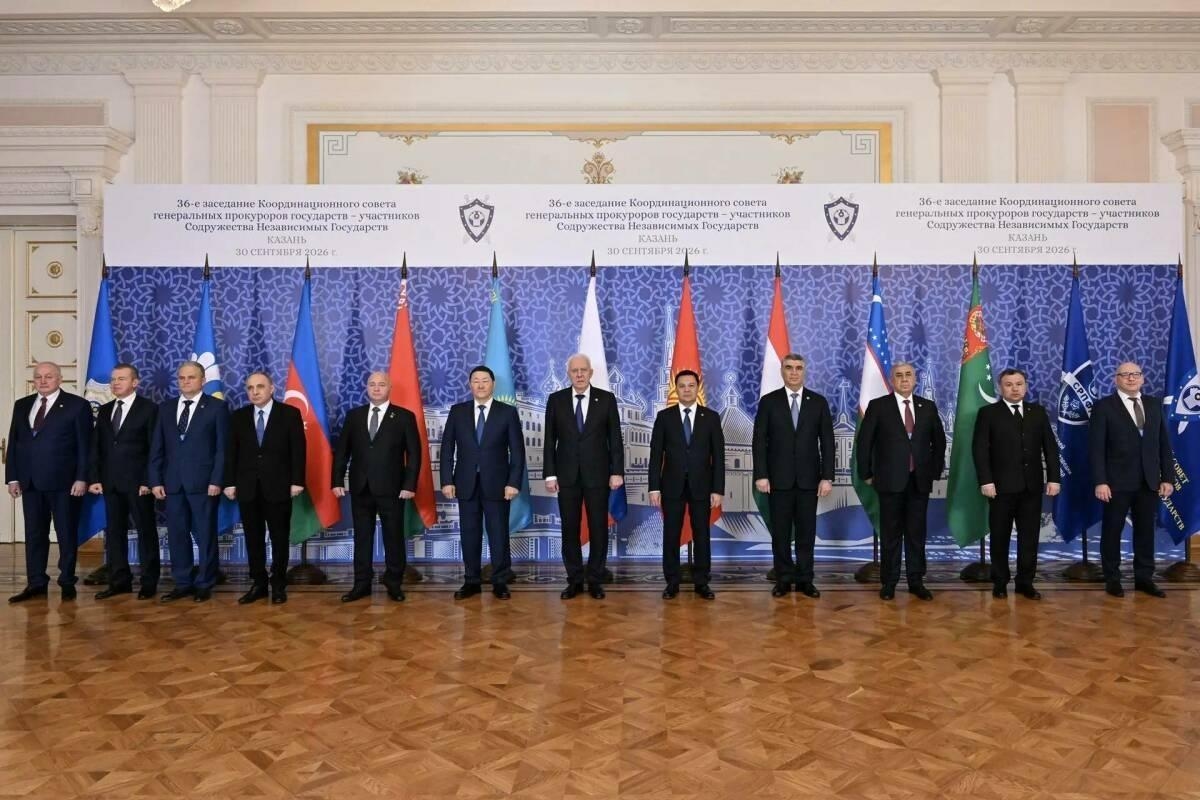
On Sept. 30, the offices of the Prosecutors General of Russia, Belarus, Kazakhstan, Kyrgyzstan, Tajikistan, and Uzbekistan signed an agreement on countering terrorism and extremism. The move is officially intended to facilitate the prompt exchange of intelligence on organizations, groups, and individuals that the parties consider a threat to state security.
The parties will also exchange information about terrorist and extremist groups, illegal armed formations, possible mass casualty attacks, illegal migration, and the trafficking in humans, weapons, and drugs. A separate clause provides for the transfer of data on foreign terrorist fighters and their family members. The document took effect upon signing and the prosecutor’s offices of other CIS countries have been invited to join.
According to Tatar-Inform, which cites the secretariat of the CIS Coordinating Council of Prosecutors General, the agreement also provides for cooperation on extradition and legal assistance. These provisions are not mentioned in other available descriptions of the new document.
The signed document was drafted as a new version of an agreement concluded on May 25, 2006 on combating terrorism and “other manifestations of extremism,” The Insider found. The secretariat of the CIS Coordinating Council of Prosecutors General reported on the preparation of the updated version this past April.
Notably, the previous agreement contained a key limitation: Article 1 of the document explicitly stated that it “does not affect issues of extradition and legal assistance in criminal cases.”
The 2006 agreement was signed by the prosecutors offices of Armenia, Belarus, Kazakhstan, Kyrgyzstan, Moldova, Russia, Tajikistan, and Ukraine. The new version has six signatories so far: Russia, Belarus, Kazakhstan, Kyrgyzstan, Tajikistan, and Uzbekistan.
The updated document was also expanded to cover technologies that were not mentioned in the previous version. The secretariat of the CIS Coordinating Council of Prosecutors General indicated that it includes the exchange of experience in combating the use of the internet and AI for terrorist purposes, the “deradicalization” of people involved in terrorist and extremist activity, and methods for preventing youth recruitment.
The agreement’s signing comes amid ongoing disputes over the extradition by Russia and other CIS countries of people prosecuted in extremism cases. Six days before the document was signed, The Insider wrote that Kazakhstan had begun coordinating with Russia on the place and time for the extradition of Chechen activist Mansur Movlaev, who faces charges of extortion and extremism in Russia. The UN Human Rights Committee had earlier called for the activist not to be extradited until his complaint was reviewed.
Nothing in the available descriptions of the new agreement suggests that recognizing a person or organization as “extremist” in one country automatically obligates other states to recognize that status. The full text of the new version of the agreement had not been published on the websites of Russia’s Prosecutor General’s Office or the CIS Coordinating Council of Prosecutors General as of the time of publication.