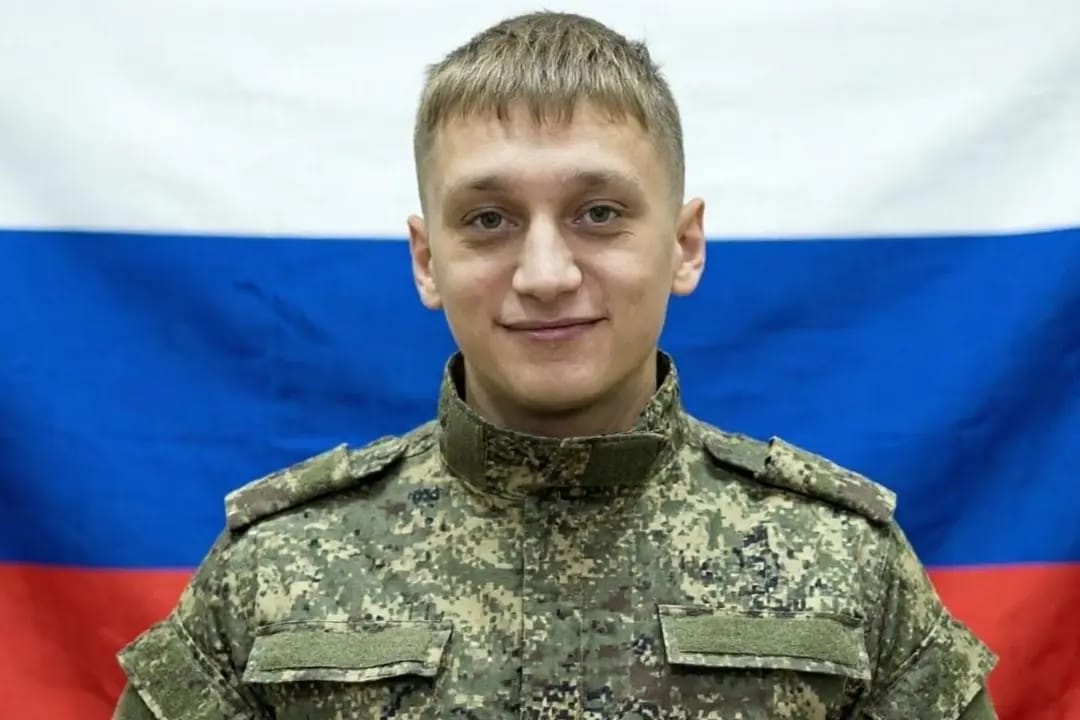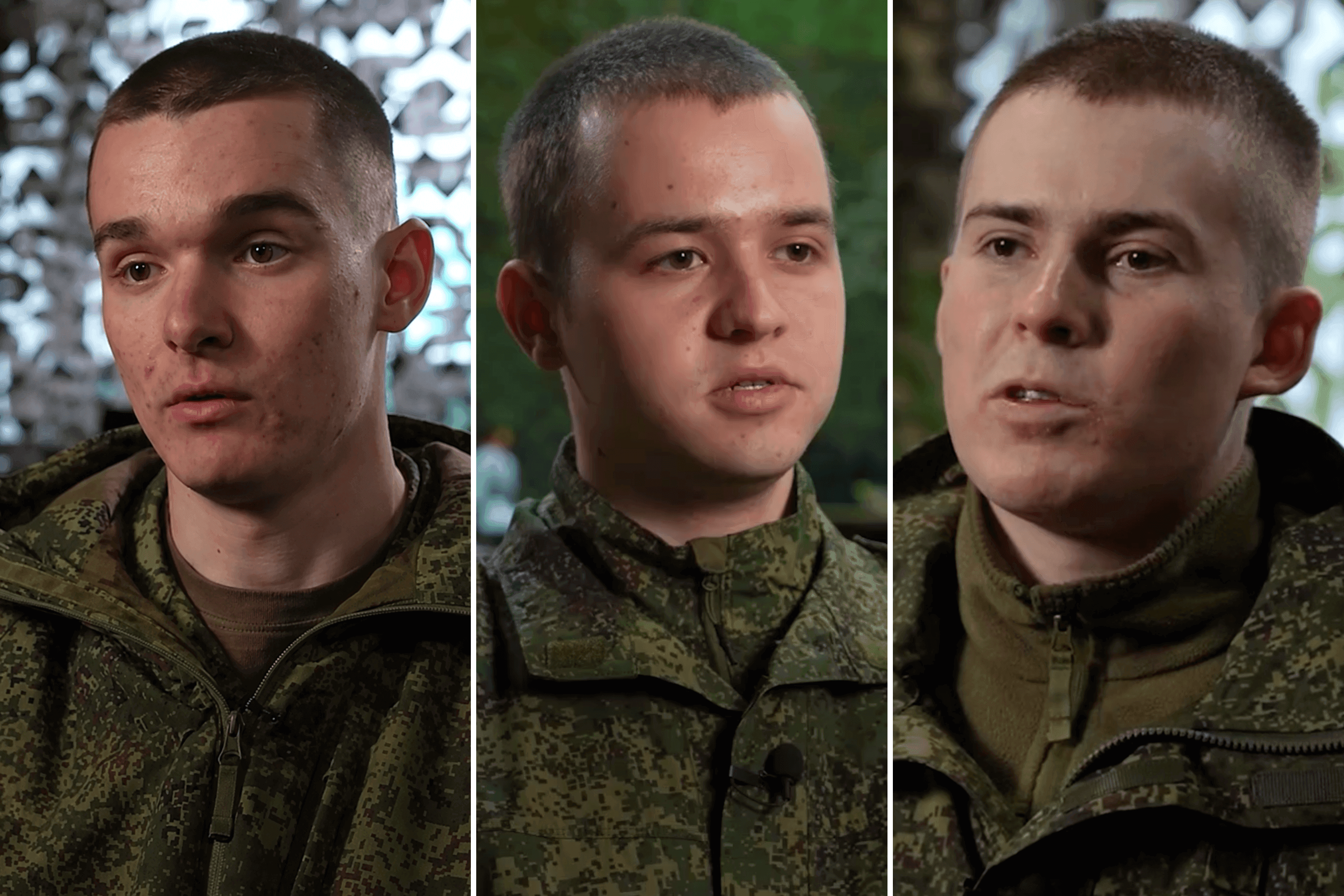
Russia’s Defense Ministry is expanding a campaign to recruit students into its Unmanned Systems Forces. This past spring, the ministry mainly released promotional videos about individual students who had interrupted their studies to enlist. However, by summer, recruitment efforts had moved directly into schools, colleges, technical schools, and universities.
The Ukrainian “X zgori OSINT” Telegram channel first drew attention to a series of posts put out by the Russian Ministry of Defense, and The Insider independently reviewed them. At least 24 posts about recruiting events were identified over the past six months, including 13 in June alone.
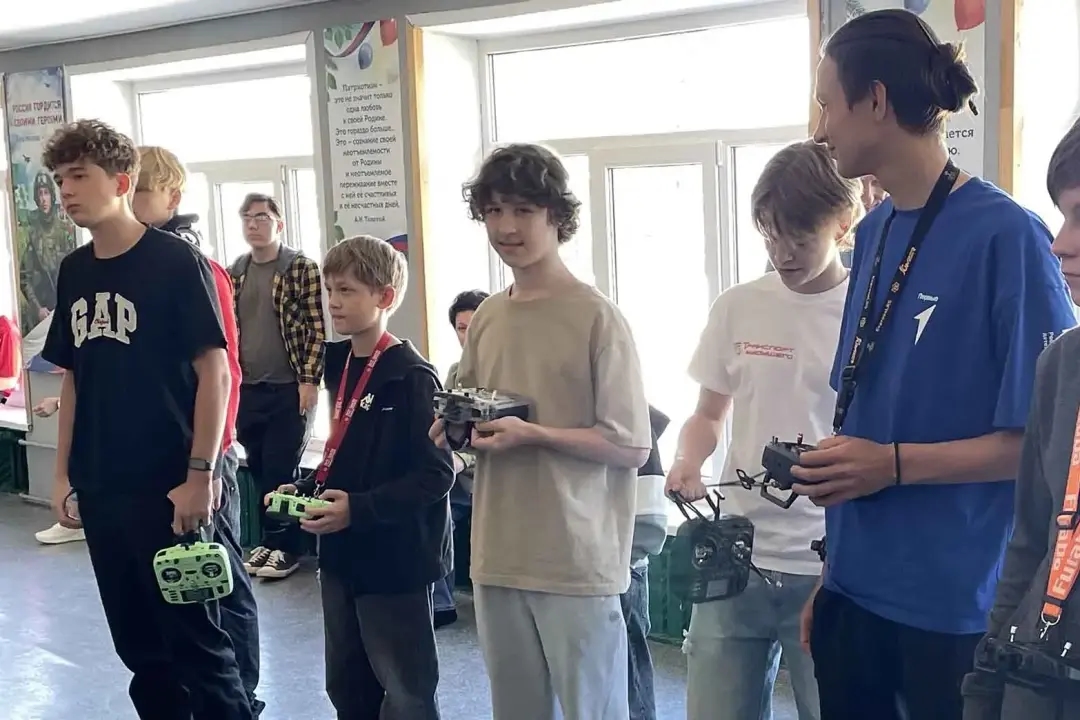
The format is nearly identical everywhere: schoolchildren and students are introduced to drones, then take part in a video link with the front, where a service member (sometimes a former student who has already signed a contract) describes military service. The audience is then told about payments, benefits, the possibility of taking academic leave, and career prospects after leaving the army. The Defense Ministry’s posts end with a link to the recruitment website and a direct invitation to sign a contract.
From a drone lesson to a contract offer
On March 24, service members from Russia’s Sever (lit. “North”) grouping of forces held an open lesson for schoolchildren in the Kursk Region. The Defense Ministry itself described the purpose of the class as “military-patriotic education and career guidance.”
The lesson was led by combat-experienced specialists from the Unmanned Systems Forces. Students were shown different types of drones, told about their design and specifications, and taught how they are used in combat.
The ministry’s post ended as a military recruitment advertisement: “Interested in unmanned systems? Contract service in the Unmanned Systems Forces is the choice for you.” It then listed a recruitment website and hotline number.
With university and college students, the ministry often uses a different approach: service is described by peers who themselves were recently students before taking academic leave and signing military contracts. For example, the main participant in a video link with students at the Ural State University of Physical Culture was 23-year-old Denis Mavlyutov, who had been a student at the same university. He took academic leave, signed a contract with the Russian military, underwent training, and began serving in an FPV drone crew with the 80th Guards Tank Regiment. Mavlyutov had traveled from the front to a rear area specifically to tell students about the work of drone operators — including service conditions, benefits, and pay.
In Irkutsk, second-year Baikal State University student Nikita Shipachev spoke to fellow students after taking academic leave and going to war, and in Samara, young service members from different Russian regions who had also interrupted their studies to sign contracts joined a video call. They spoke about combat missions, drone operations, daily life at the front, and the enlistment process.
Similar events have been held in the Chelyabinsk, Irkutsk, Samara, Belgorod, Orenburg, Voronezh, Penza, and Krasnodar regions, as well as Altai Krai, Zabaykalsky Krai, Stavropol Krai, the republics of Buryatia and Udmurtia, and Moscow. Another meeting was held with students at Luhansk State University in Russian-occupied Ukrainian territory.
“The guys thought there was some kind of catch”
A separate part of the campaign focuses on contract terms and concerns among potential recruits.
Yegor, a student at the Voronezh State Academy of Sports who became a drone operator, told classmates how he manages to combine military service with pursuing a university degree.
“The guys thought there was some kind of catch, but there’s no catch,” the Defense Ministry quoted him as saying.
The ministry’s publications tell potential contract soldiers about pay, clothing and equipment allowances, social benefits, and bonuses for destroying Ukrainian military equipment. Service is also marketed as a way to gain professional skills that could be useful after returning to civilian life.
Vladimir Gorovenko, a student at Altai State Technical University, signed a contract during his second year of study. In a Defense Ministry publication, he said drone piloting skills could be useful in civilian life for photographing historical buildings and creating 3D models of them.
At the same time, students are openly told about the combat use of drones. They are shown drones used at the front, allowed to try controlling them in simulators, and shown footage of combat operations.
From promotional videos to a university campaign
The Insider reported on student recruitment into the Unmanned Systems Forces in May. At the time, the Defense Ministry and the affiliated Telegram channel “Heroes of the Special Operation Z” began publishing similarly styled videos about young people who had interrupted their studies to sign contracts and join the Russian military.
One of those featured was 21-year-old Mikhail Guzanov, a student at Don State Technical University. The Defense Ministry presented his story as the fulfillment of a “long-held dream of flying.”
“The most exciting part is flying real ones. It’s an incredible feeling! You soar like a bird,” Guzanov said of operating drones.
Another student at the same university, Alexander Rybasov, appeared in a video titled “From Game Developer to Real Combat.” He was studying programming and said his interest in FPV drones came from military video games.
Another video was titled “He Was a Student, and Became a Drone Operator.” It featured Nikolai Ivanov, a student at Tomsk Polytechnic University.
“I just up and left one day, signed a contract, and then filled out the paperwork for academic leave remotely,” he said.
Ivanov said he had been an honors student in his second year but decided to go to war because “the motherland needs young, quick-thinking specialists.” All three said they planned to return to their studies after their contracts ended.
“Some even decided they wanted to sign a contract”
Now the recruitment appeals in Defense Ministry posts have become even more direct. On Sept. 18, the ministry reported on a video link with students at the Krasnodar College of Electronic Instrument Engineering. Their former classmate, Nikolai Bondarenko — who had taken academic leave to sign a contract and go to war with the unmanned systems forces — joined the call.
Bondarenko spoke about daily life, military service, and training for drone operators while emphasizing that the specialty would also be in demand in civilian life.
“The guys were pleased with the meeting, and some even decided they wanted to sign a contract,” the Defense Ministry said.
Immediately afterward, the ministry posted its standard appeal: “Serve under contract in the Unmanned Systems Forces — operate drones,” along with the recruitment website and hotline number.
During another videolink session, Vadim Fitisov, a student at the Ust-Kut Institute of Water Transport, told students in Siberia that he had become interested in drones after watching news reports and videos. He took academic leave and spent nine months serving as an operator responsible for collecting and processing information received from drone operators at the front.
The Defense Ministry emphasized that Fitisov’s contract was about to expire but that he had decided to extend it, adding that Fitisov plans to return to the institute “after the special military operation is completed,” using the Kremlin’s official term for the war in Ukraine.
The defense and education ministries discussed student recruitment
The campaign is not limited to initiatives by individual military units and educational institutions.
The Defense Ministry held an interagency meeting with representatives of the Science and Higher Education Ministry, the Education Ministry, university administrators, and school officials to discuss conditions for recruiting students into the Unmanned Systems Forces and measures to provide them with social support.
Before the active advertising campaign began, the military specifically emphasized that students should sign such contracts voluntarily.
One of the main promises made to potential recruits is that they will serve specifically in the Unmanned Systems Forces. The Defense Ministry says the special contract is signed for a period of at least one year and that service members cannot be transferred to another unit without their consent. One ministry publication states explicitly: “Service takes place strictly in Unmanned Systems Forces units; without the service member’s consent, they cannot be transferred to another unit.”
At least one recruited student was killed days after reaching the front line
As the recruitment campaign continued, reports began emerging of students trained as drone operators being killed.
In May, The Insider, citing the BBC, reported the first confirmed death. Valery Averin, 23, from Buryatia, was in his final year at the Buryat Republican Technical College of Construction and Industrial Technologies. In January, he signed a contract with the Russian Ministry of Defense and completed three months of training as a drone operator. His training ended in late March. On April 2, Averin called his foster mother for the last time and said he was being sent somewhere with “no communications.” On April 6, he was killed in a mortar attack near Luhansk in eastern Ukraine.
His foster mother, Oksana Afanasyeva, said the family had expected a different kind of service. “The boy spent three months training how to fly drones, and then they sent him into an assault, into the worst meat grinder,” she said.
The available information does not establish whether Averin was in fact transferred to an assault unit.
Pro-war blogger Anastasia Kashevarova has repeatedly reported that manpower shortages have led Russian forces to transfer specialists, including drone operators, into assault units. She said some of those reassigned operators were killed on their first mission.