Russian weapons manufacturer Promtekhnologiya, which produces sniper rifles and ammunition under the ORSIS brand, has begun supplying the Russian military with domestically assembled cartridges using high-precision bullets made in the United States and Finland.
The Insider previously reported that Russian snipers were using bullets made in NATO member states — either fully assembled foreign cartridges or hand-loaded ammunition put together by snipers themselves. Now, new evidence indicates that, in the fifth year of Russia’s full-scale invasion of Ukraine, a Russian arms manufacturer is receiving enough Finnish and American bullets to assemble sniper ammunition for Russian military units.
Previous investigations found that more than 10 million bullets made in NATO countries were imported into Russia between March 2022 and February 2024. A significant share were high-precision bullets in .338 Lapua Magnum and .375 CheyTac calibers, which are designed for long-range shooting. Those quantities are small compared with the overall scale of the war, but the imported bullets are nonetheless important for Russian snipers.
Promtekhnologiya was founded by Russian oligarch Konstantin Nikolaev, who built the weapons company with the backing of two key officials: Dmitry Rogozin, then the Kremlin’s key figure overseeing the defense industry, and FSB General Sergei Beseda.
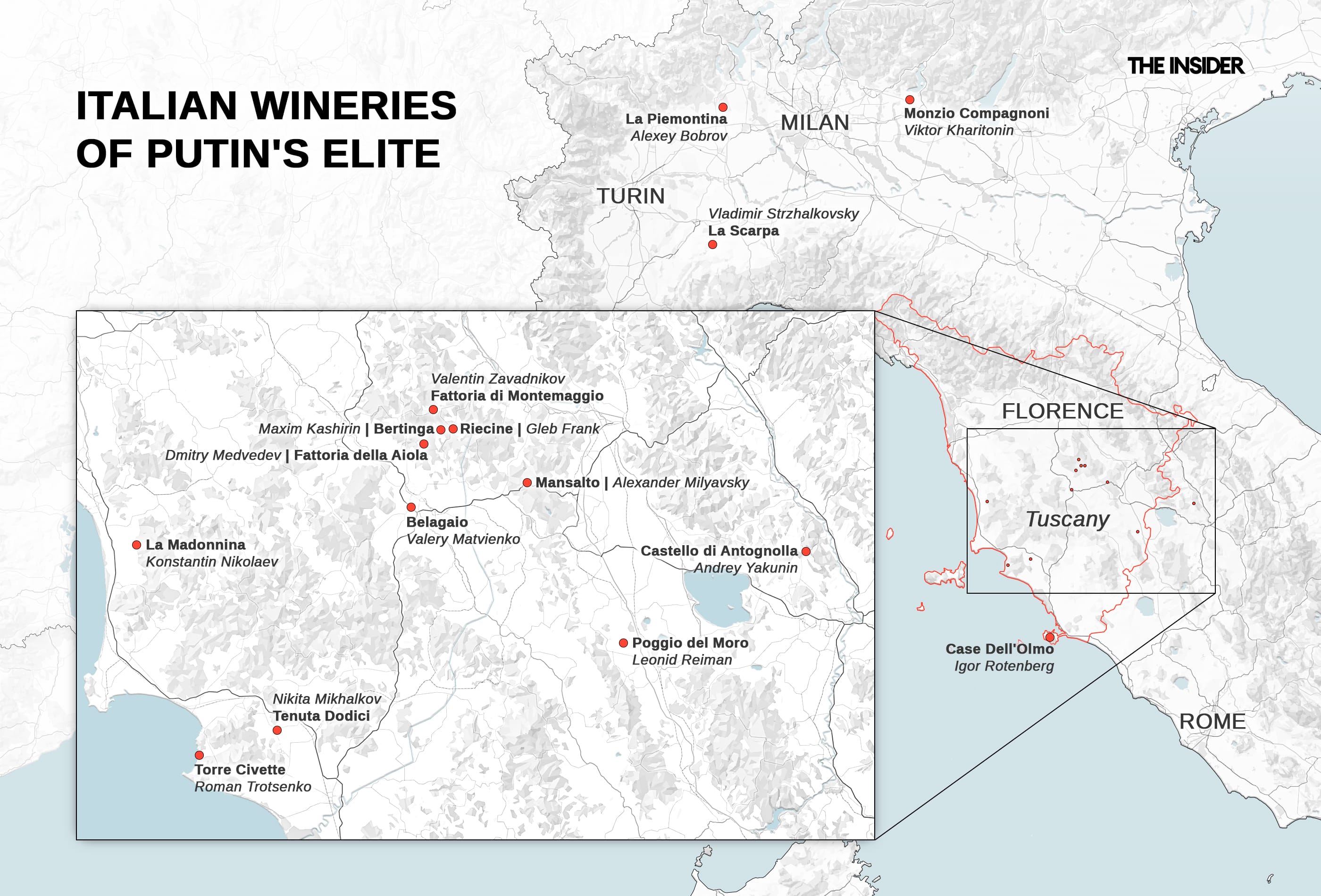
Nikolaev’s businesses produce weapons in Russia and import ammunition from the European Union and United States through sanctions-evasion channels. And yet, he has continued to develop business interests in Italy, where his Tuscan winery has not been seized and even continued receiving subsidies from the European Union during the full-scale war.
Finnish Lapua and American Hornady bullets for Russian snipers
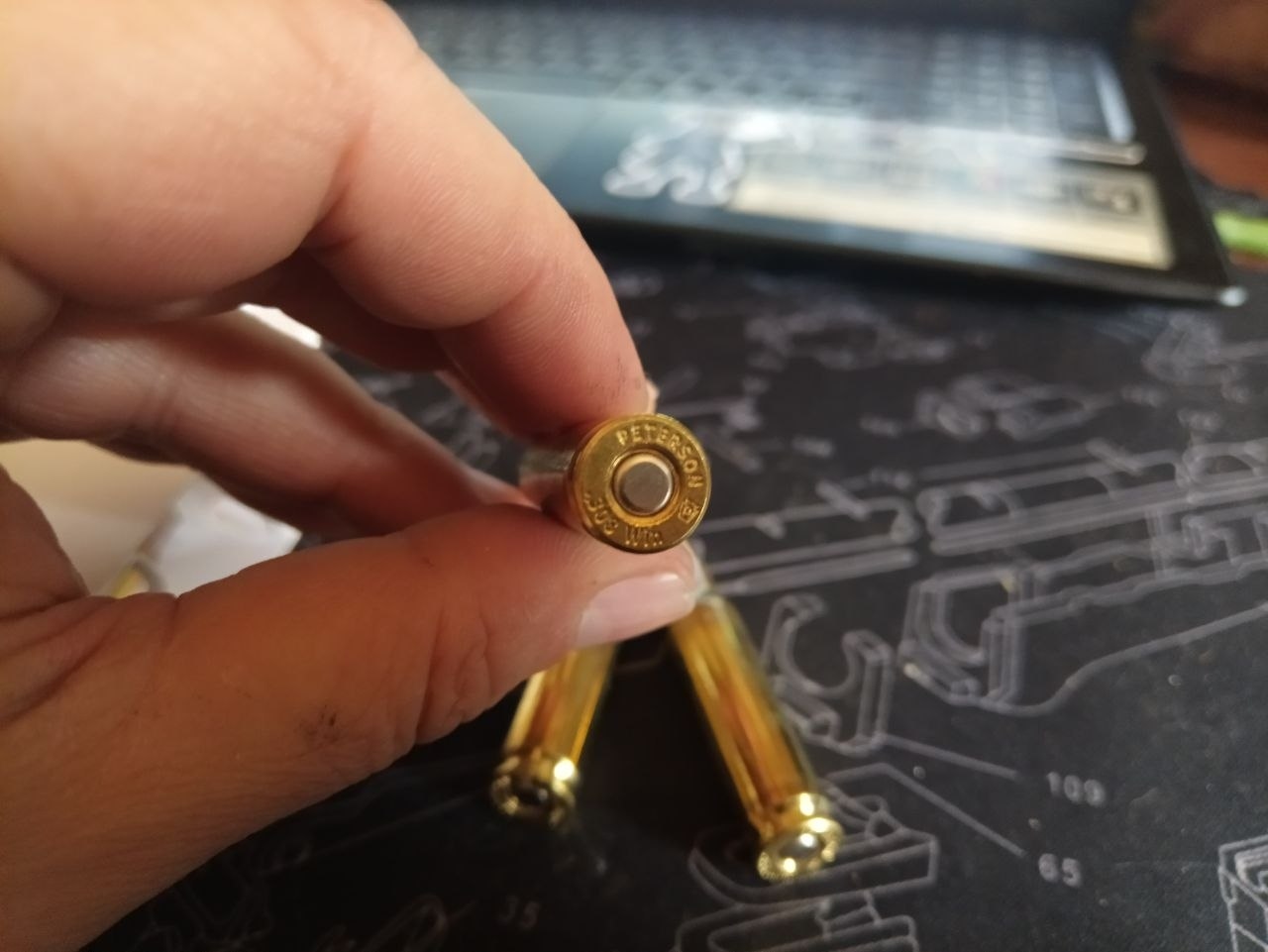
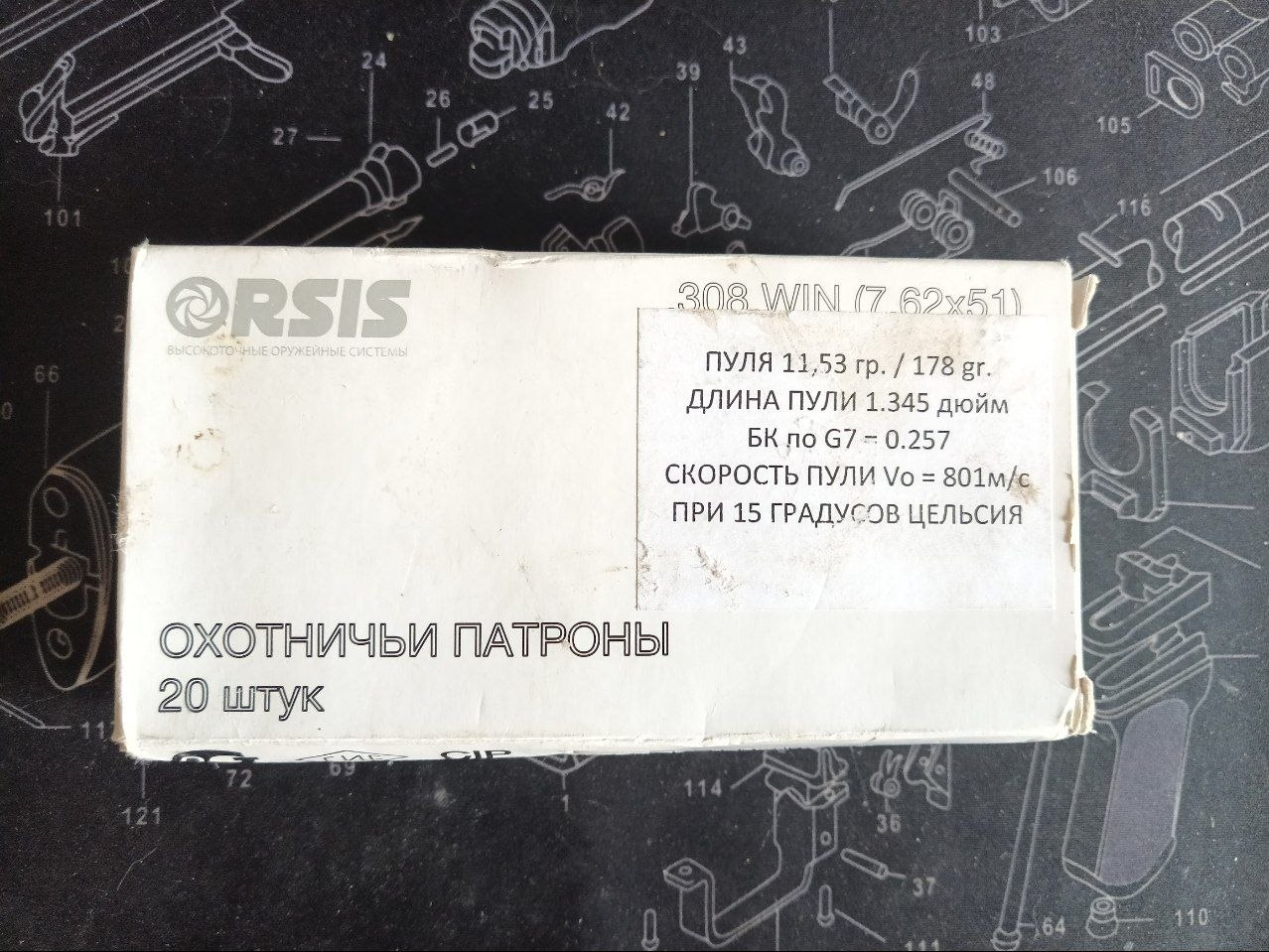
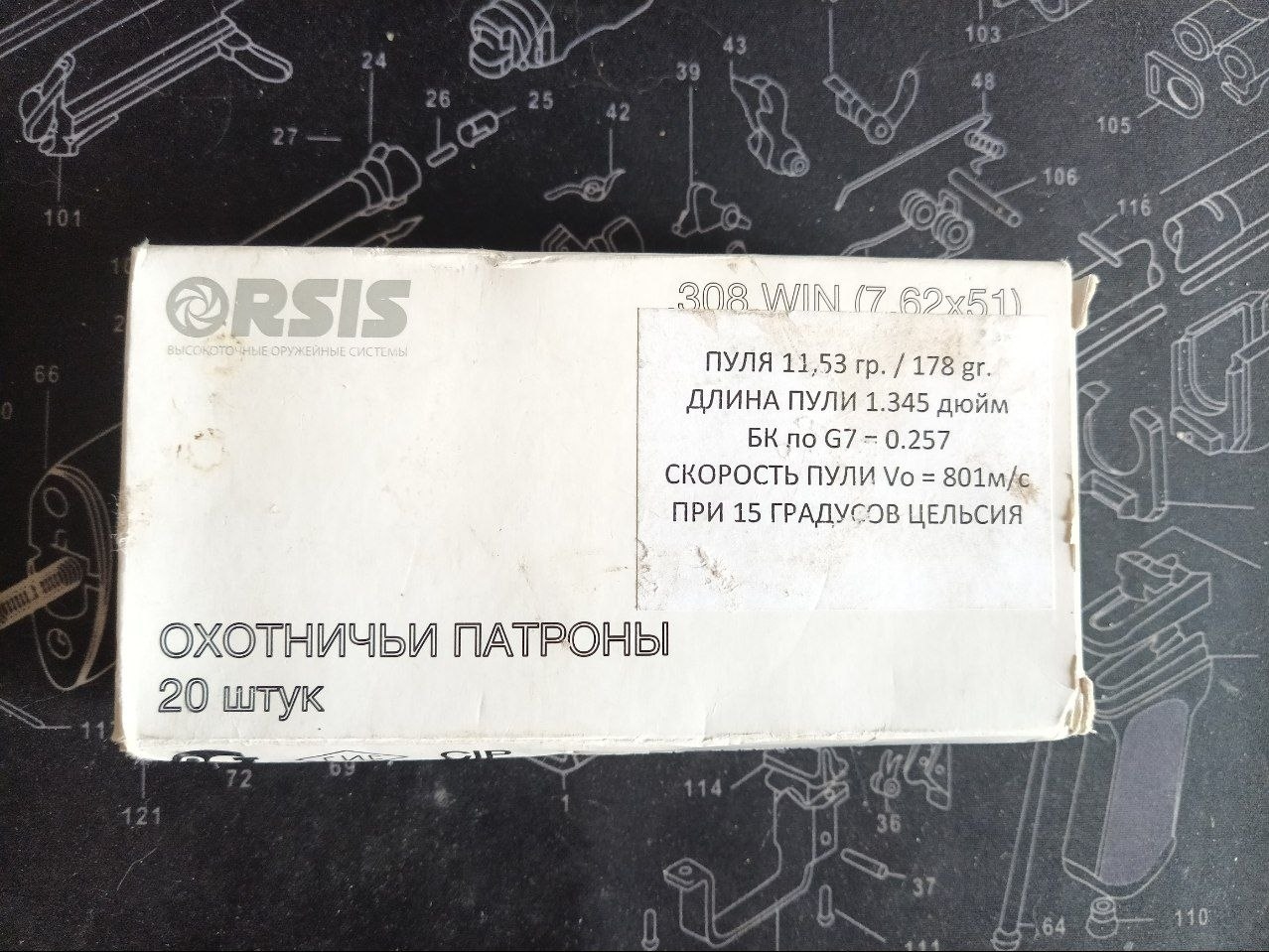
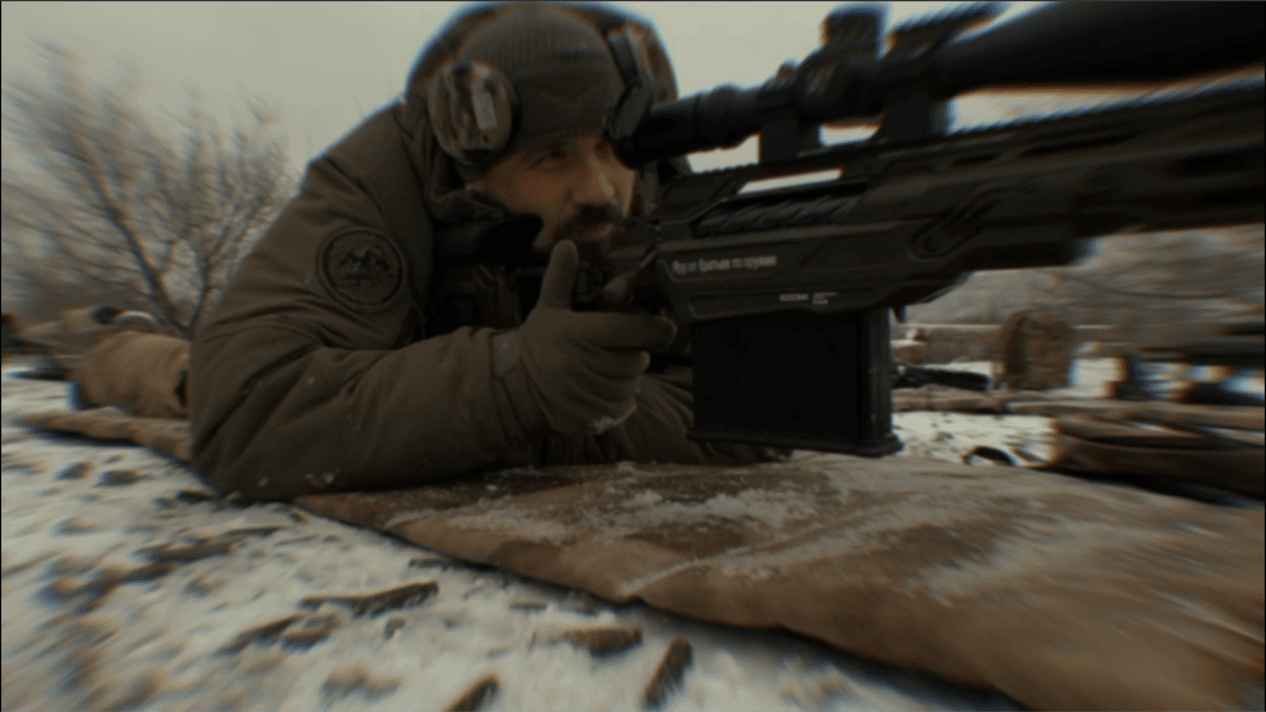
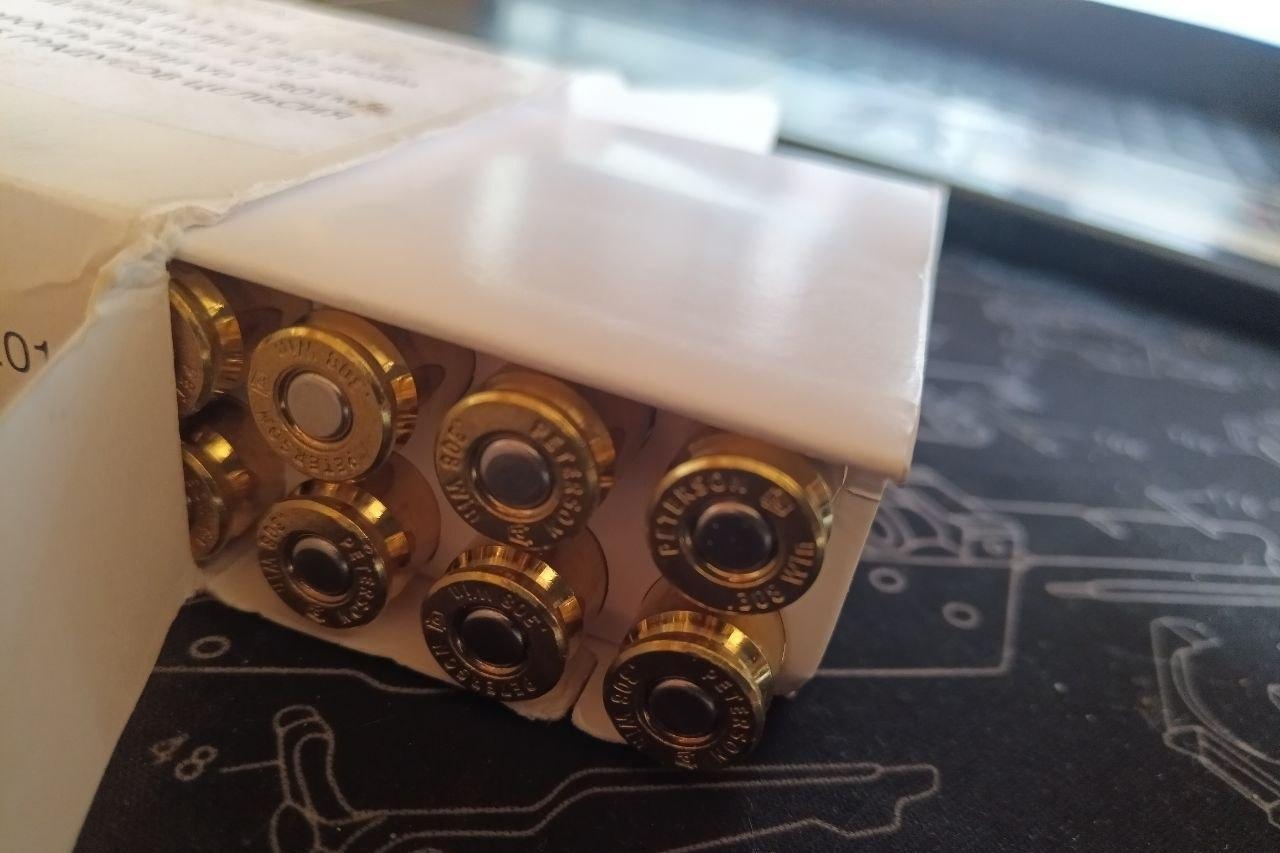
On April 6, 2026, the pro-war Telegram channel Bolshoy Panda (lit. “Big Panda”) reported that Russian snipers had begun receiving ammunition for ORSIS rifles from the Russian Defense Ministry that had been made with American Peterson cartridge cases and American Hornady bullets.
“The cartridges are formally considered hunting ammunition because they do not have a GRAU index, but these are the rounds supplied with the ORSIS 5000 rifles as standard ammunition for our guys. The bullet is a 178-grain Hornady OTM weighing 11.53 grams, the case is Peterson, I don’t know whose powder it is, and the manufacturer is Promtekhnologiya LLC.”
After testing the rounds at a firing range, the channel’s author praised their accuracy and consistency:
“At 300 meters from my Volkodav, 10 bullets went into the head-sized gong like kids going to school, practically one on top of another. Consistency is at a high level, with minimal variation in velocity. ... In principle, these are among the few more or less factory-made cartridges that honestly deliver 0.5 MOA from my Volkodav.”
A grouping of 0.5 MOA, or half a minute of angle, means that at 300 meters the shots in a carefully aimed series landed within a circle about 4.5 centimeters, or 1.8 inches, across.
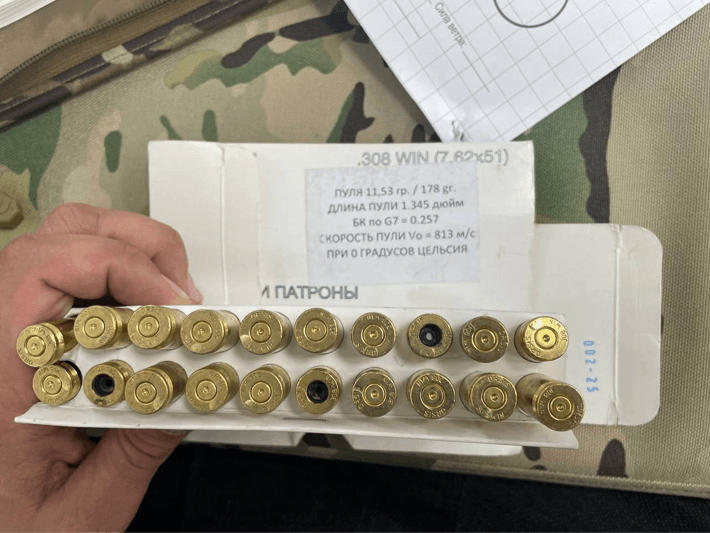
Three days later, the channel published a clarification:
“There are currently extremely few cartridges in the configuration described above. At the moment, 6V12 sniper rifles are supplied with ammunition using Scenar bullets” — made by Finnish company Lapua — “weighing 11.53 grams, Irbis 570 powder and cases marked ORSIS.”
The post indicates that because there were not enough American bullets to supply the Russian military, Promtekhnologiya turned to Finnish components to continue producing sniper ammunition.
From Austrian Glocks to Finnish bullets
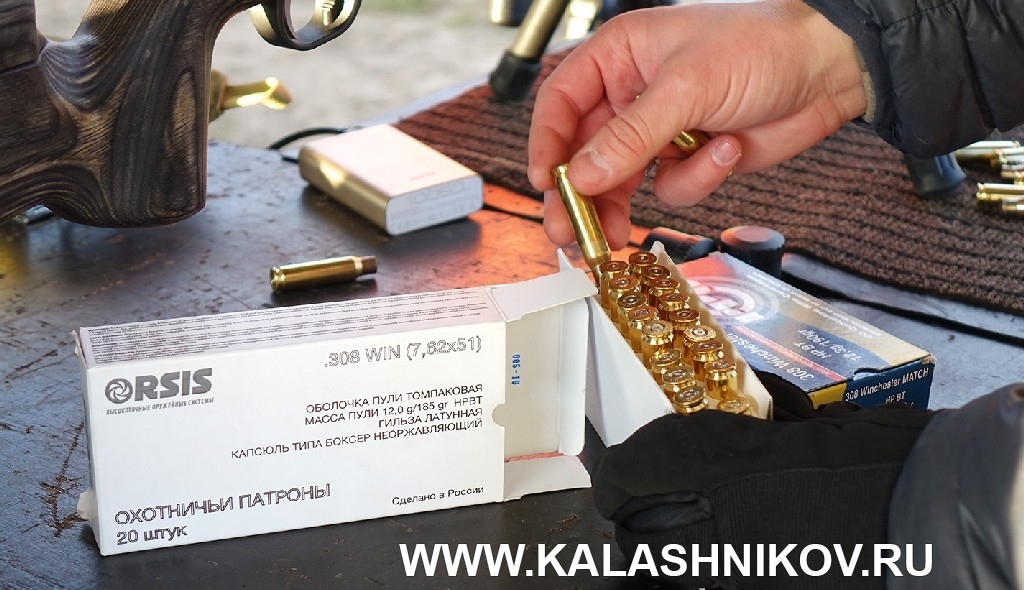
The first official evidence that Promtekhnologiya was using Finnish bullets and cartridge cases dates to December 2019 — five years after the European arms embargo on Russia was imposed. At the time, journalists from Kalashnikov magazine tested a new ORSIS .308 Winchester cartridge at a shooting range. The ammunition used 12-gram Lapua Scenar HPBT precision bullets and Lapua cartridge cases, both made by the Finnish manufacturer.
The journalists noted that assembling the ammunition in Russia from foreign-made components reduced the cost:
“The ORSIS cartridge, assembled entirely from high-quality foreign components, costs an impressive 400 rubles at the Bars store in St. Petersburg — more than the vast majority of its competitors on the shelf, but less than Norma or RWS cartridges, some versions of which cost more than 500 rubles.”
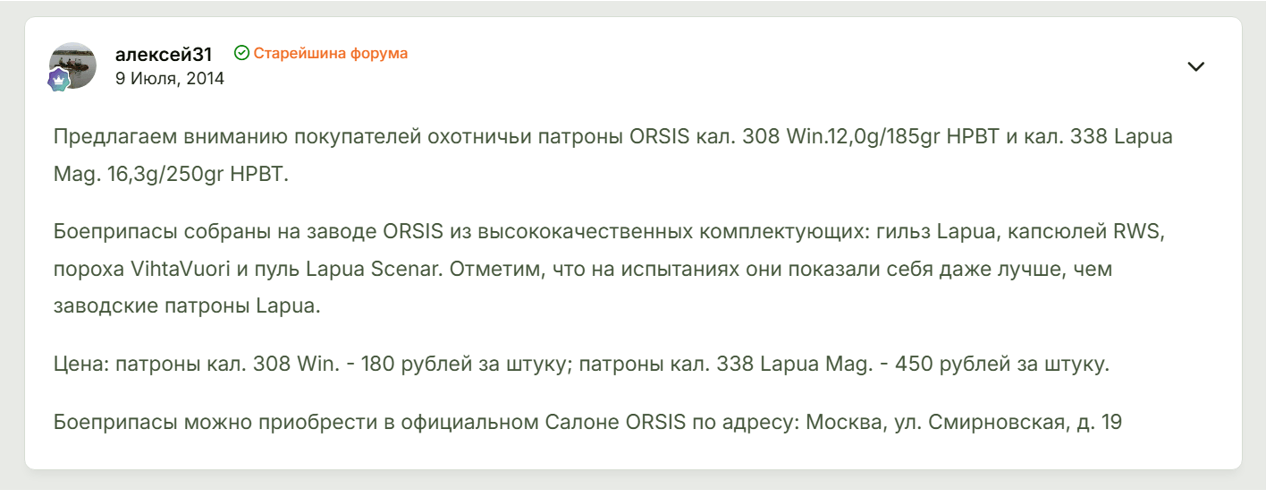
Unofficial reports of Russian precision ammunition go back to 2014, when firearms forums began advertising ORSIS cartridges made with Finnish Lapua cases, Lapua Scenar bullets, and Finnish VihtaVuori powder.
Promtekhnologiya, founded in 2009, was built with extensive European and American expertise. Between 2012 and 2015, the company pursued three projects aimed at localizing foreign weapons production in Russia.
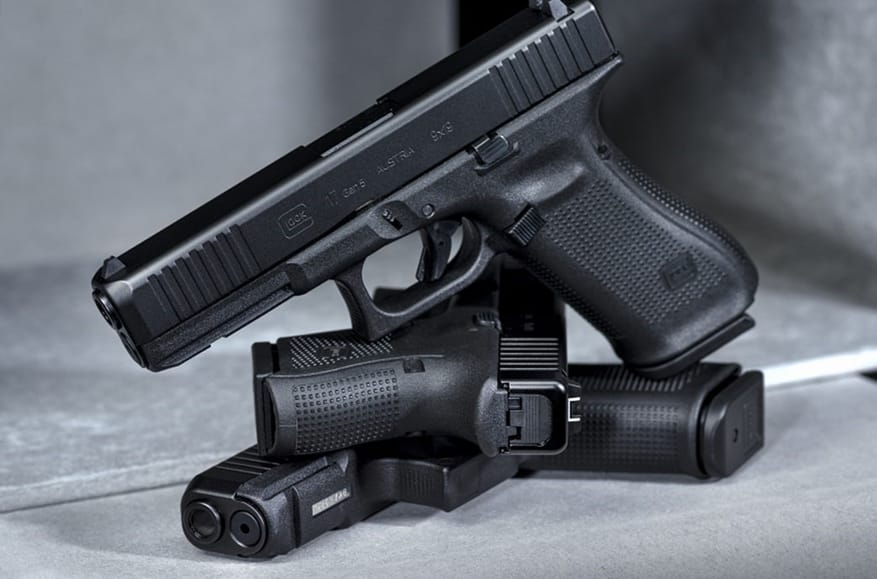
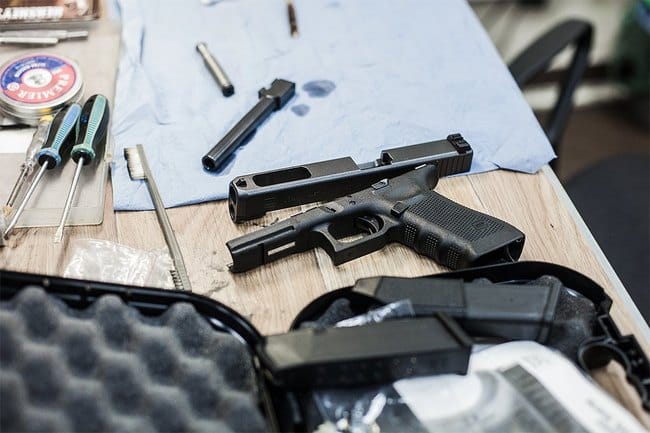
In July 2012, it signed an agreement with Austria’s Glock GmbH to assemble fourth-generation Glock 17, 34, and 35 pistols from Austrian components. The first trial batch assembled in Russia totaled more than 2,000 pistols. Although the localization project was officially terminated after Russia’s annexation of Crimea, the Podolsk plant continued receiving products from its former Austrian partner for years afterwards. The latest known shipment came in November 2023, when Promtekhnologiya imported 100 Glock 43 pistols and 100 Glock 19 Gen5 pistols.
In 2013, Promtekhnologiya announced cooperation with the American company ArmaLite. The plan was to assemble semiautomatic AR-10 and M-15 rifles in .223 and .308 calibers using American components and Russian-made barrels. Although the agreement with the U.S. company was terminated, several years later the Moscow Region plant said it had fully localized production of its own AR-10 version.
After the 2014 arms embargo on Russia was announced, the factory also began assembling Marocchi Si 12 inertia-operated shotguns in Podolsk made with components supplied from Italy. The Italian manufacturer’s loose sanctions compliance may have been influenced by the fact that one of its vice presidents was a Russian citizen, Oleg Benedichuk.
Who brings American and Finnish bullets into Russia
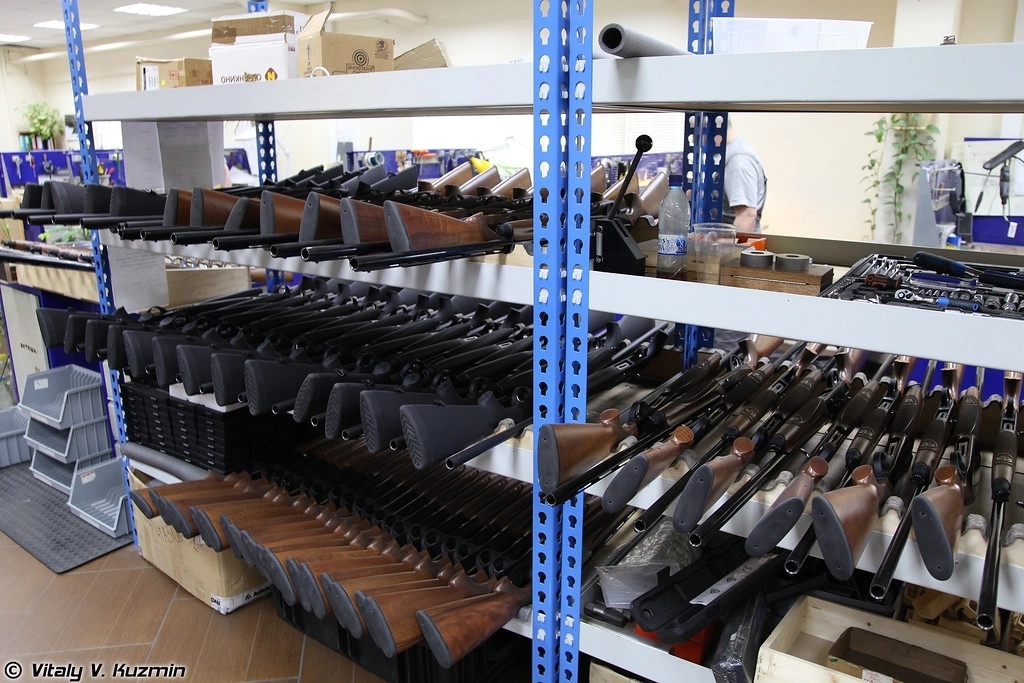
The Soviet defense industry, and later Russia’s, focused on mass-produced weapons and did not manufacture high-precision bullets, which are made to tighter tolerances for weight, shape, and balance than bullets made for assault rifles and machine guns. As a result, sniper bullets show less variation in trajectory from shot to shot.
They also typically have more advanced aerodynamics, including a higher ballistic coefficient, and higher-quality jackets, allowing them to retain velocity at longer ranges and reducing the effects of wind. As a result, they produce tighter shot groups and more predictable ballistics than standard military bullets, which are optimized primarily for reliability and cost rather than maximum accuracy.
The Insider has found evidence of American and Finnish bullets being used in the ongoing Russian invasion of Ukraine by both Wagner mercenaries and regular Russian military units.
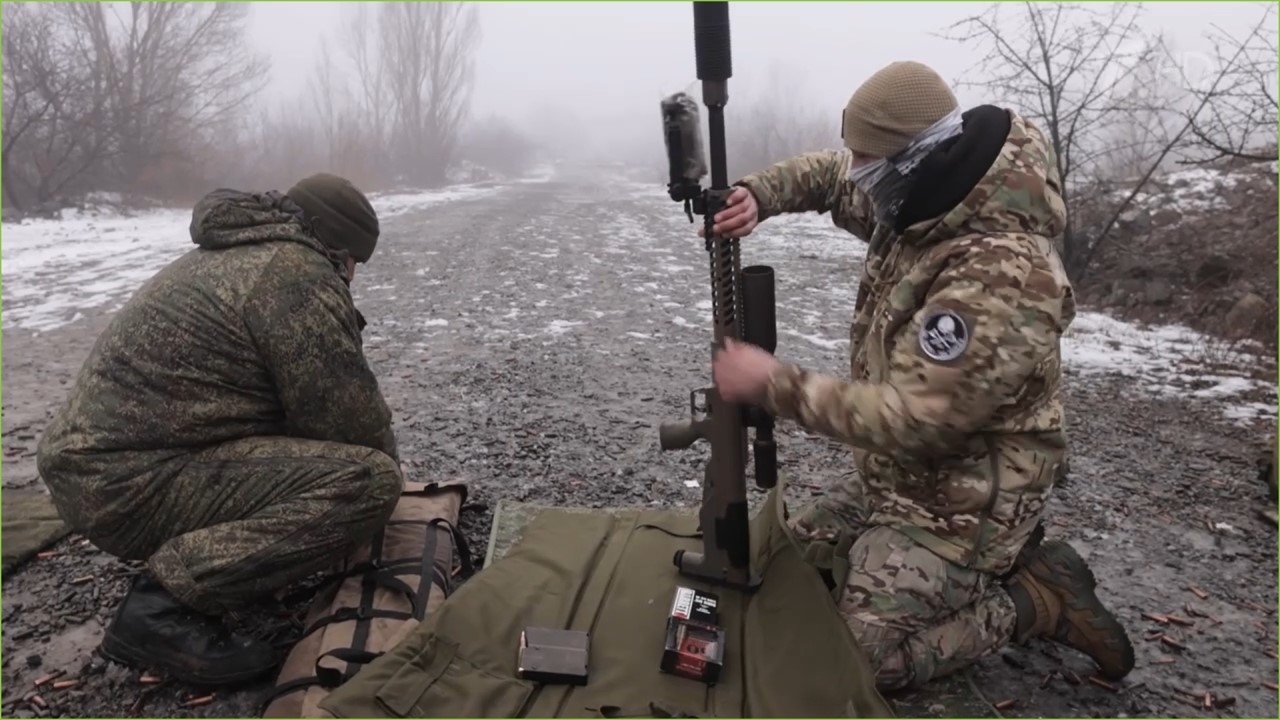
In Russia, precision rifle bullets in .308 Winchester and .338 Lapua Magnum are produced by the Barnaul Cartridge Plant, the Novosibirsk Cartridge Plant, and Tekhkrim, among others. But both sniper-rifle manufacturers and shooters themselves say American and Finnish bullets provide better accuracy than those made in Russia.
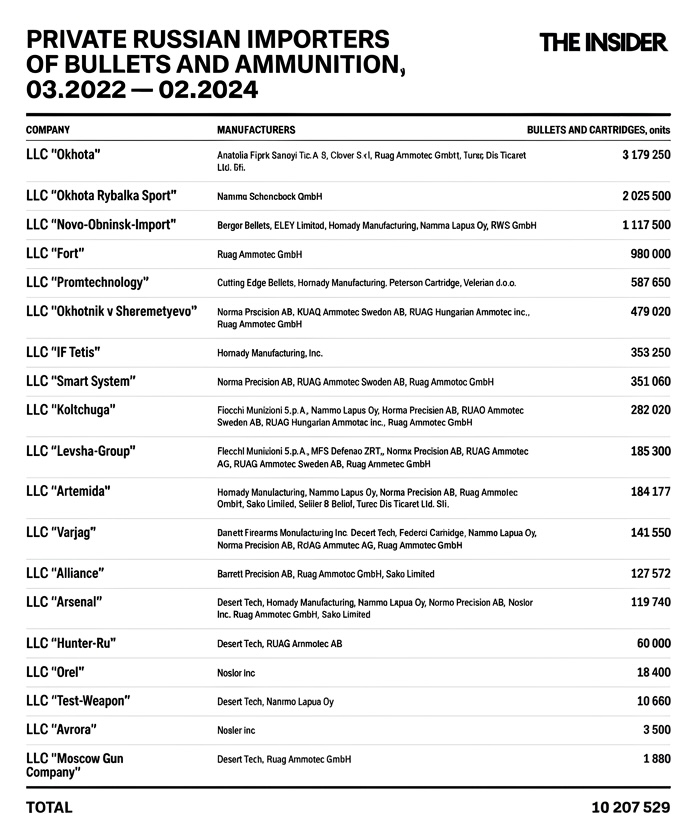
Previous investigations by The Insider found that more than 10 million bullets made in NATO countries entered Russia between March 2022 and February 2024. A significant number were precision long-range bullets in .338 Lapua Magnum and .375 CheyTac calibers. The bullets are critically important for Russian snipers.
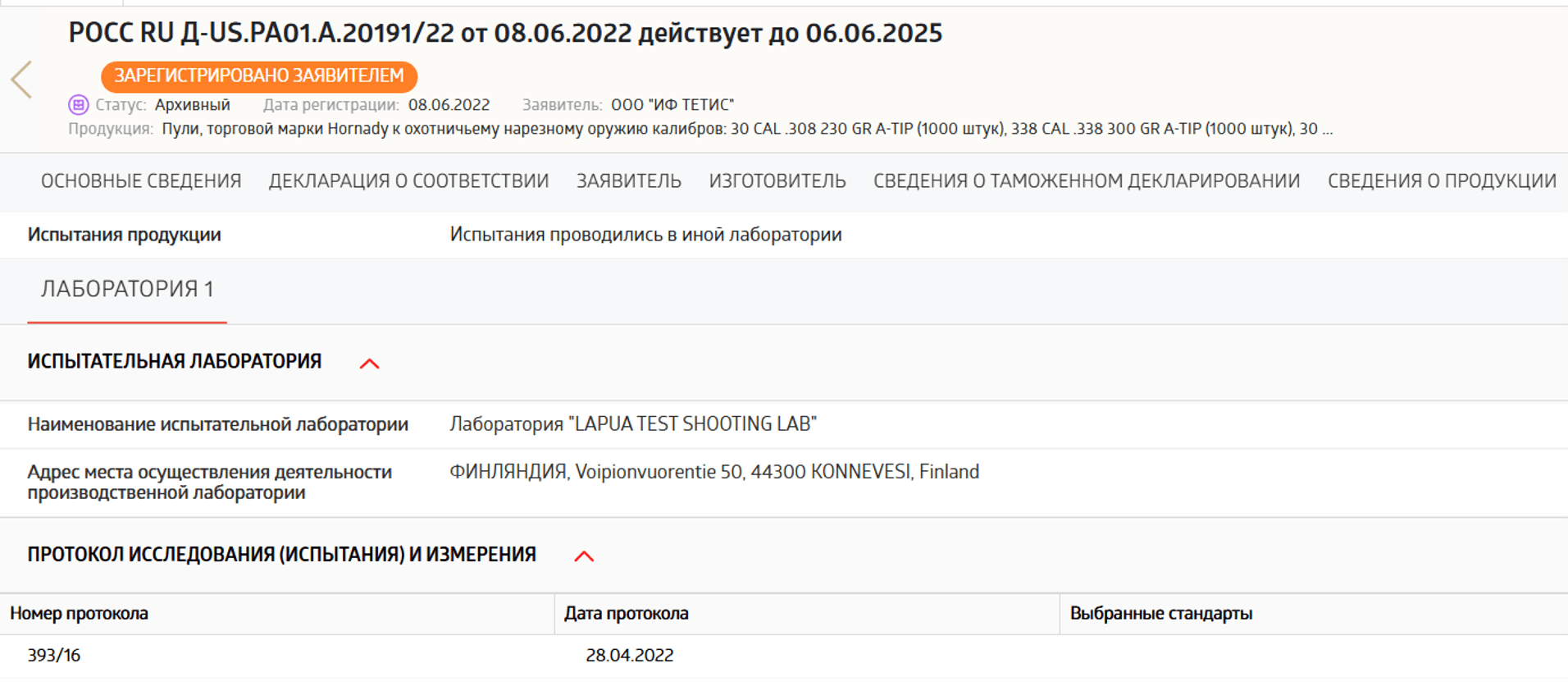
There are indirect signs that some shipments of American bullets reached Russia through the European Union.
For example, on June 8, 2022, the Russian company LLC IF Tetis (ООО «ИФ „Тетис“») received a Russian declaration of conformity covering a shipment of American Hornady bullets. The declaration stated that testing documents for the bullets had been issued on April 28, 2022, by Finland’s Lapua Test Shooting Lab under protocol No. 393/16.
After a series of reports by The Insider revealed the large-scale smuggling of European weapons, Russia’s Federal Accreditation Service stopped publishing declarations for a number of customs codes, making it more difficult to calculate precisely how many weapons and rounds of ammunition are imported into Russia. Numerous social media and specialized forum posts, however, indicate that new shipments are continuing.
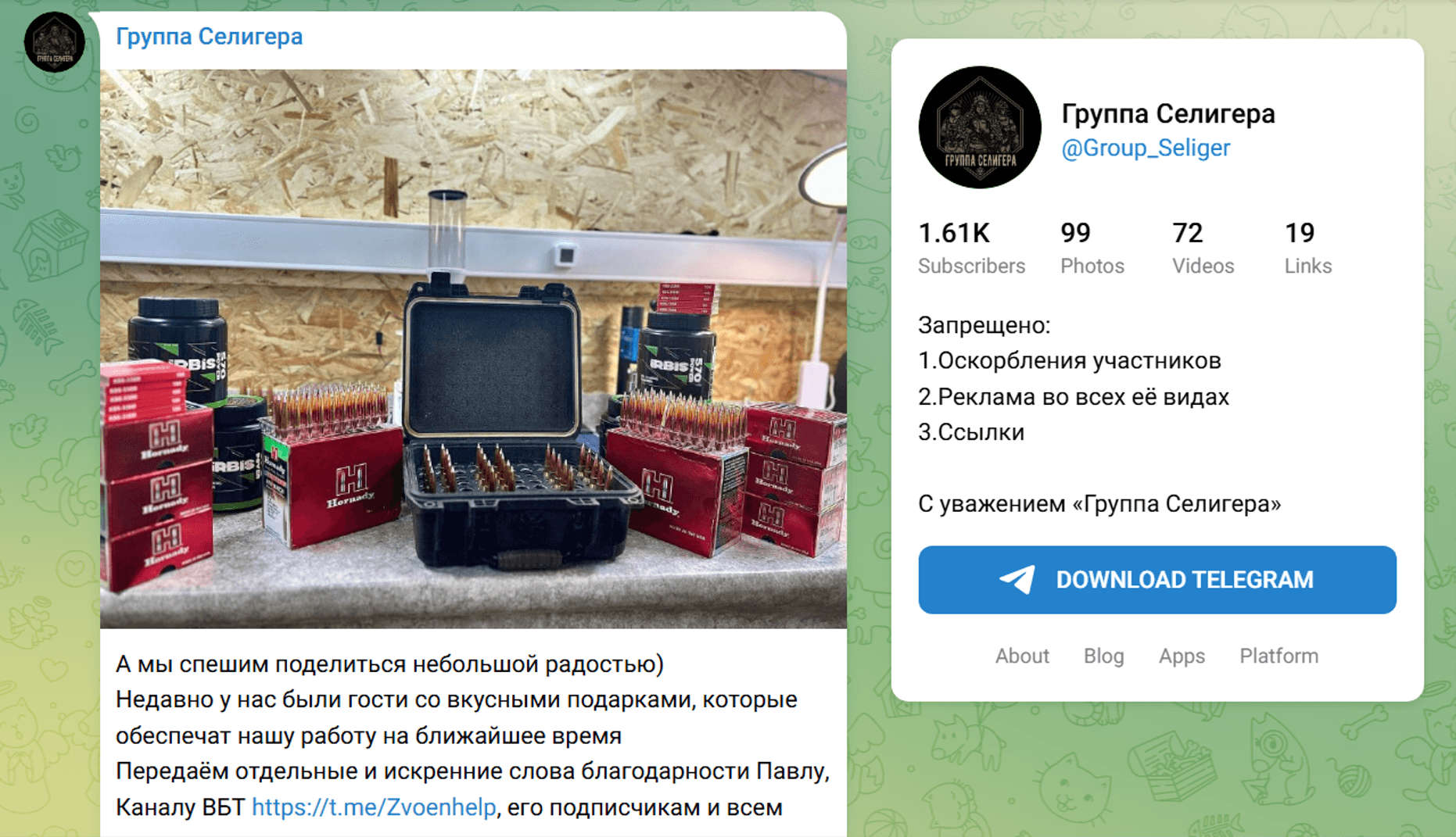
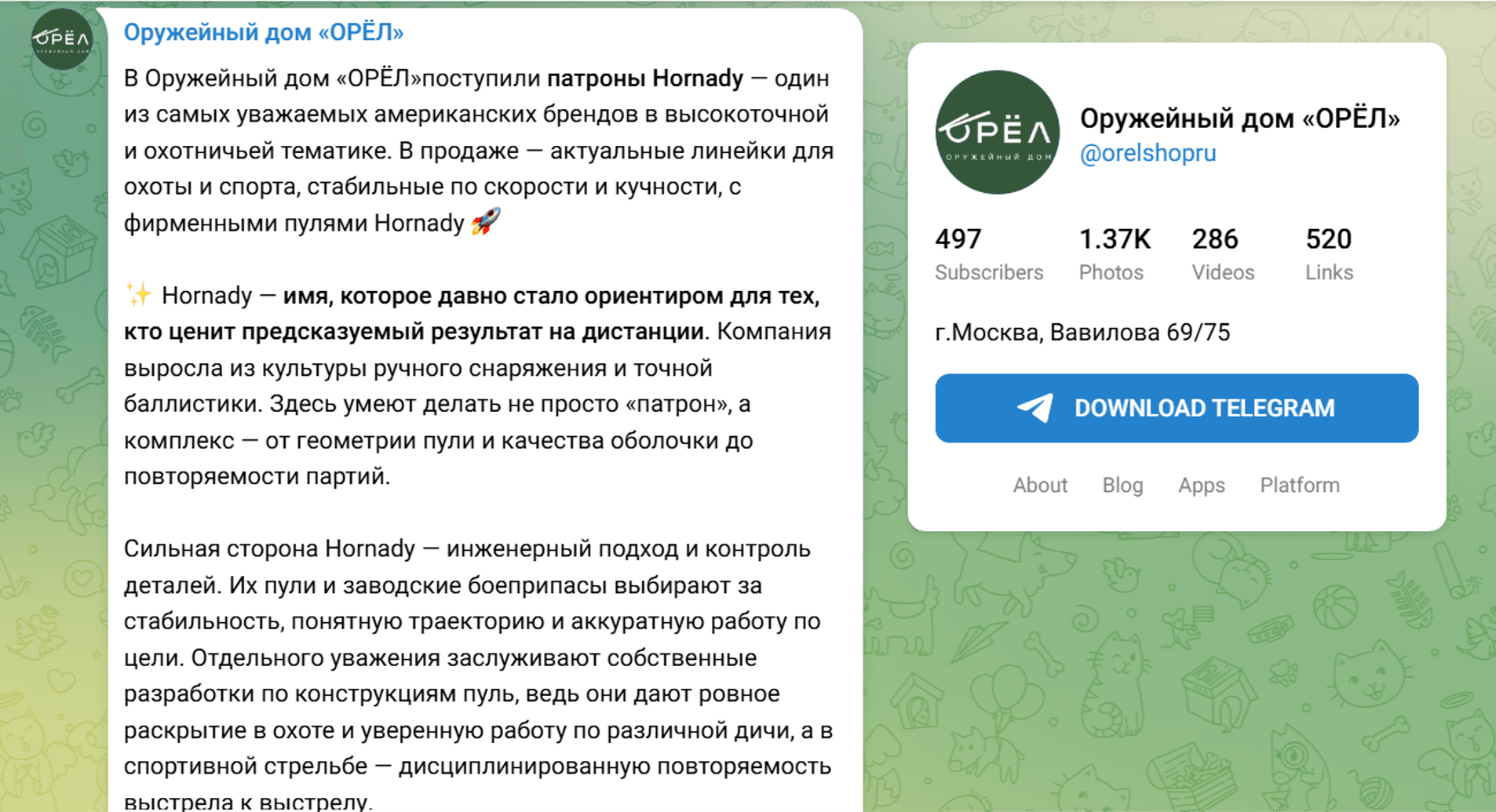
On Jan. 28, 2026, the Orel weapons retailer announced a new shipment of Hornady ammunition on Telegram. The store is part of a group of companies controlled by arms businessman Mikhail Khubutia, a partner of Italy’s Beretta Holding.
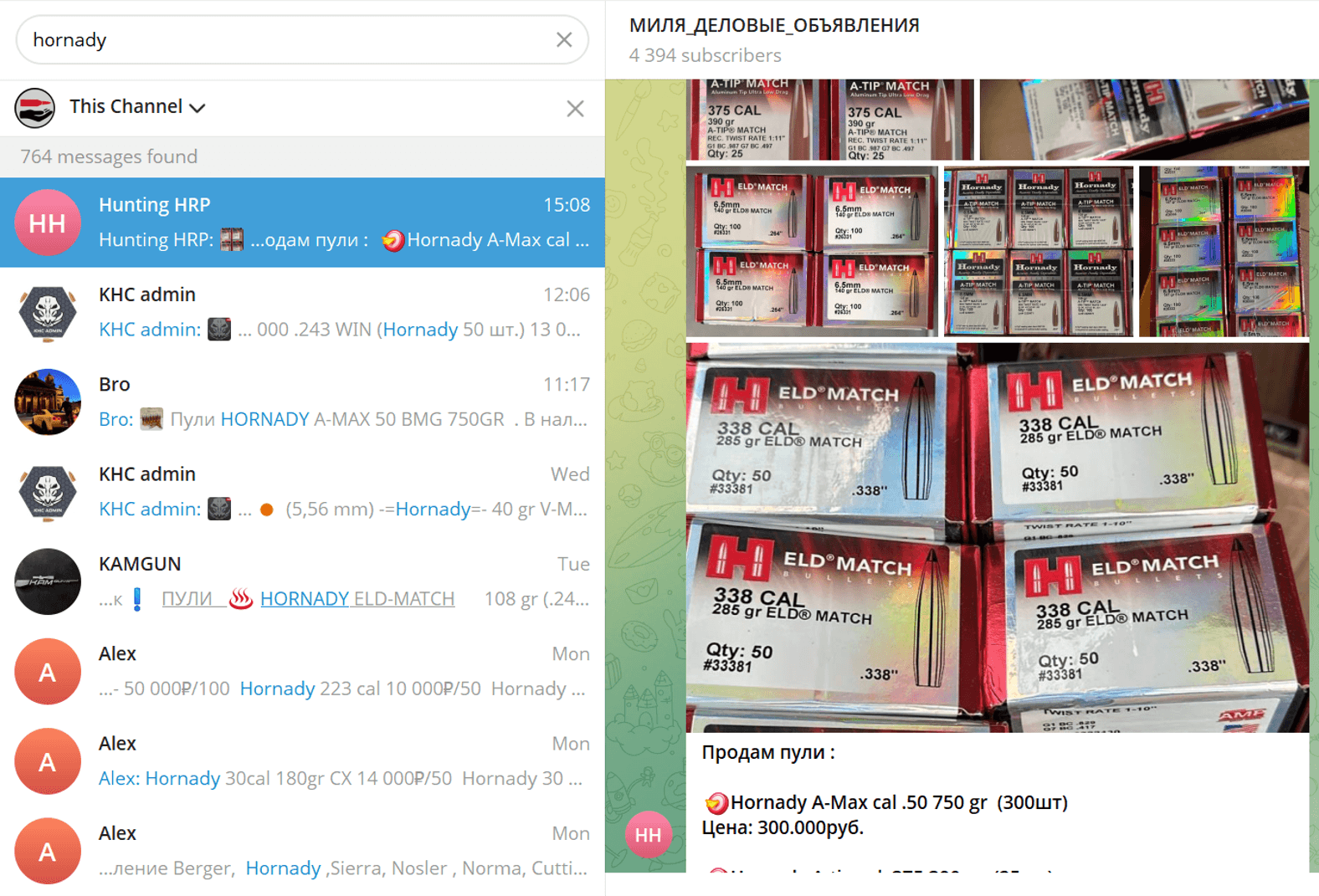
In the Milya group for ammunition sales, seven advertisements from five users offering Hornady bullets were posted between Aug. 31 and Sept. 4 alone.
EU subsidies for an FSB-linked businessman
The technology and equipment for the weapons plant in Podolsk came from Europe despite the company receiving political backing at the highest levels of the Russian state. Until 2012, Promtekhnologiya’s deputy chief executive was Alexei Rogozin, the son of Dmitry Rogozin, who was then the deputy prime minister responsible for Russia’s defense industry and state arms procurement. (After public accusations of a conflict of interest, Alexei Rogozin left the company. He was later replaced by the deputy prime minister’s nephew, Roman Rogozin.)
A 2018 investigation by the independent outlet Novaya Gazeta linked Promtekhnologiya owner Konstantin Nikolaev to the family of FSB General Sergei Beseda. A Panama-based company linked to the general’s son, Alexei Beseda, received 187 million rubles from Nikolaev-controlled entities and a 25% stake in a joint venture producing thermal-imaging sensor arrays.
In 2013, the same year Nikolaev’s Cyprus offshore company paid more than $5 million to the son of the FSB general and Promtekhnologiya signed its rifle-assembly agreement with ArmaLite, Nikolaev bought the La Madonnina winery in Tuscany’s Bolgheri wine region.
The winery is located near the renowned Italian estates Sassicaia and Ornellaia, whose standing in the wine world can be compared with Ferrari and Lamborghini in the automotive industry. Nikolaev invested about €40 million in La Madonnina.

The winery is owned by the Cyprus company Cetrezza Trading, which until recently belonged to British Virgin Islands-based Cedar Circle Holding Limited, whose beneficial owner was Nikolaev himself.
Ownership of Cetrezza has since passed to the Magic Forest Trust, whose owners are not publicly disclosed. The Cyprus company nevertheless retained links to the oligarch even after the formal sale. Cetrezza owned an 85% stake in the Enoteca Tognoni wine boutique in Livorno, while Nikolaev himself held 5% of the company’s share capital until 2024.
While Nikolaev-linked companies manufacture weapons in Russia and bring ammunition into the country from the United States and European Union, his Tuscan winery has not only avoided seizure but continued receiving EU subsidies.
Over the past 10 years, La Madonnina received €135,600 in subsidies from European Union agricultural funds, including €107,800 paid after the start of Russia’s full-scale invasion of Ukraine.
In theory, EU rules require member states to identify the ultimate beneficiaries of public funding. In practice, however, inquiries to Italy’s Financial Intelligence Unit and to the National Anti-Corruption Authority found that the databases used by regulators do not contain information on the ultimate owners even of some Italian companies, let alone foreign entities.
As a result, Italian oversight agencies are effectively unable to establish the connection between the Tuscan winery and a man who has publicly described himself as its owner in multiple interviews.