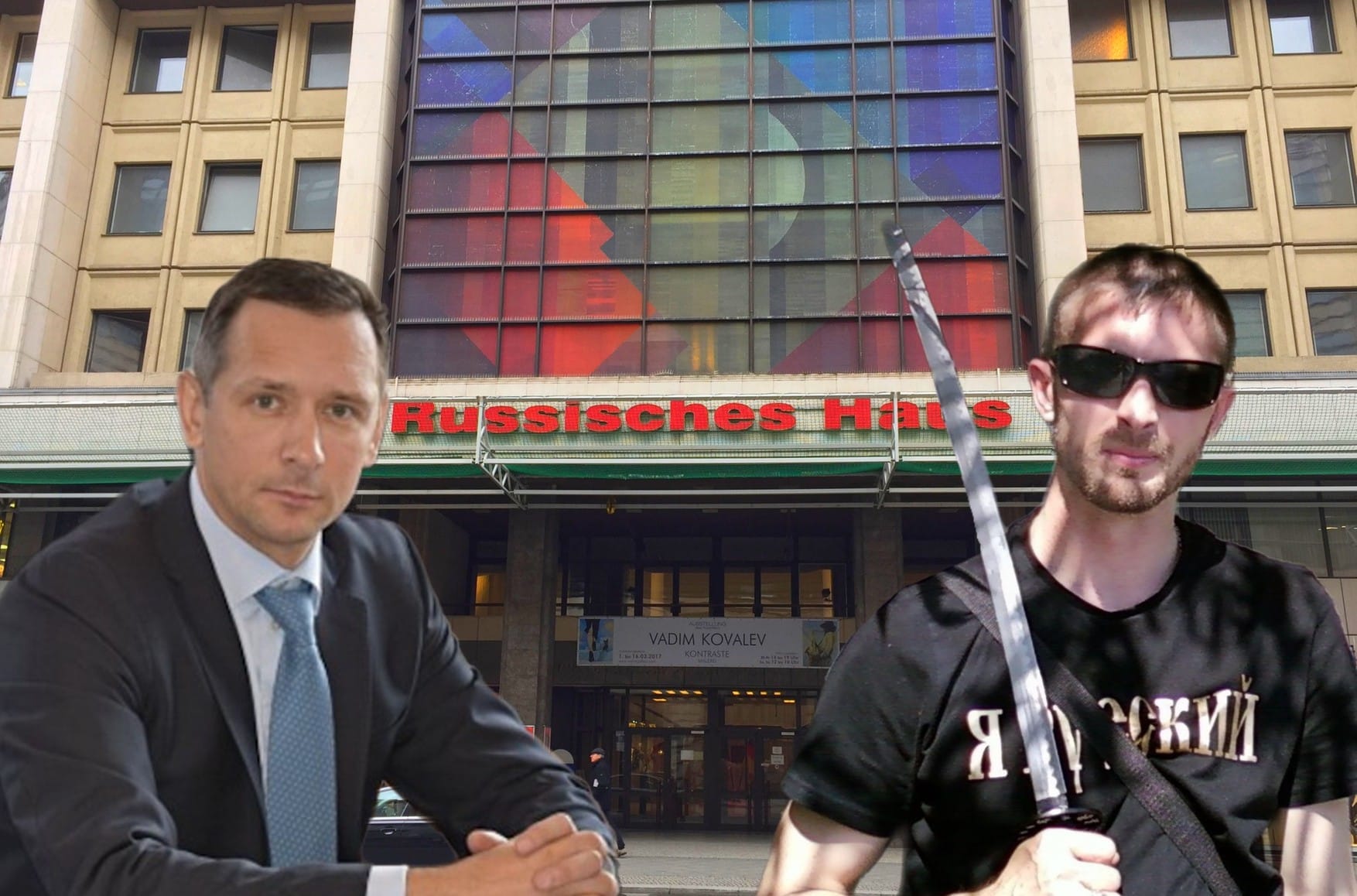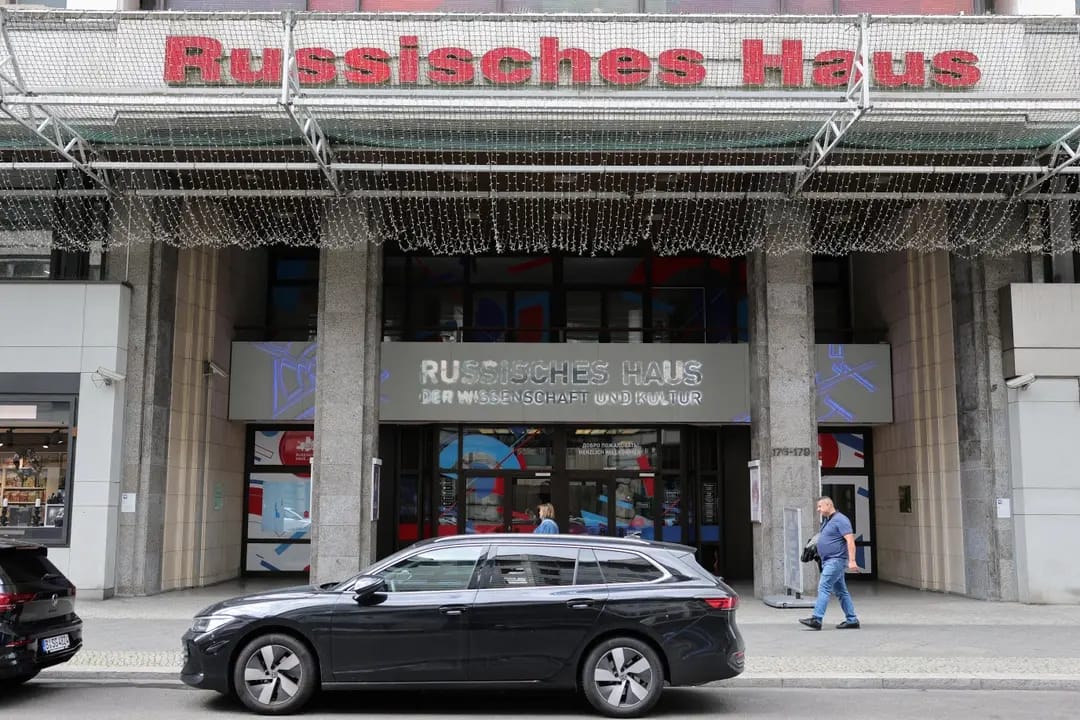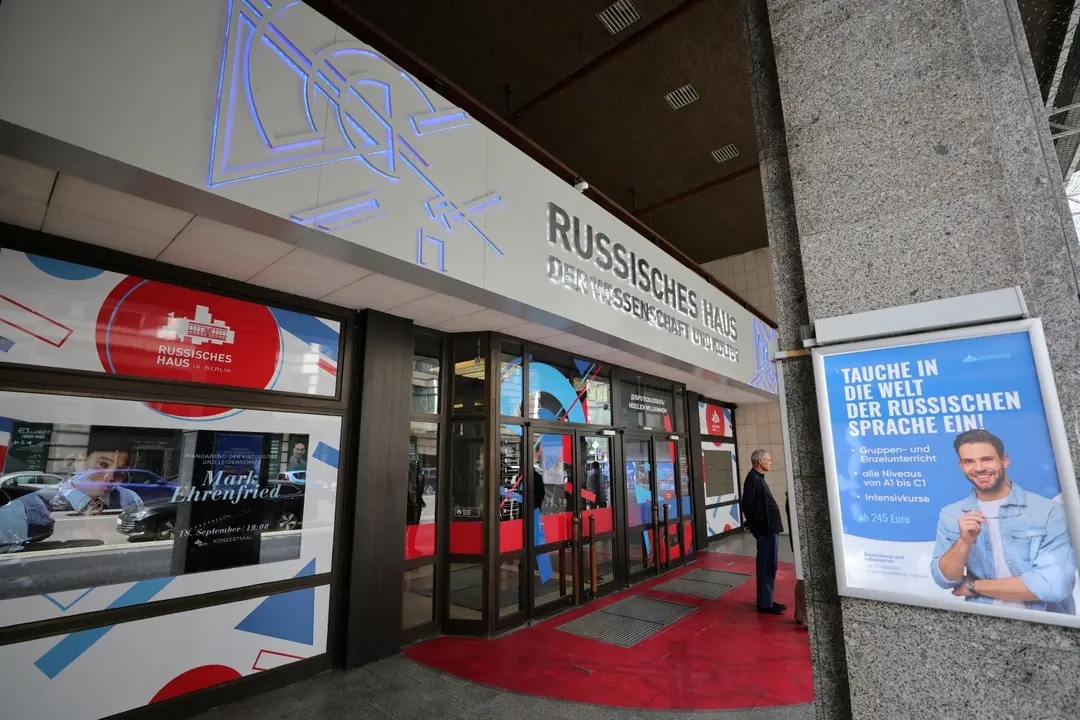
Germany recently announced the closure of the Russian House in Berlin after accusing Russia of being behind a failed attack at Leipzig/Halle Airport, where a drone carrying explosives was found near a Ukrainian transport plane in early August. Since the start of Russia’s full-scale invasion of Ukraine in 2022, at least 13 offices of Rossotrudnichestvo, Russia’s state agency for foreign cultural outreach, have closed around the world. In some cases, the states doing the shuttering avoided making loud public statements, and the suspension of the centers’ work went almost unnoticed.
Russian House is the informal name for Russian cultural centers abroad that operate as representative offices of Rossotrudnichestvo. The “Geography of Russian Houses” map on Rossotrudnichestvo’s website shows that there are 85 such offices worldwide. Some countries have several centers: Belarus, India, and Kazakhstan each have four, while Armenia, Brazil, Kyrgyzsta,n and Israel have two each.
After Germany’s Interior Minister Alexander Dobrindt and Foreign Minister Johann Wadephul announced the closure of the Russian House in Berlin on Sept. 1, the Russian state-controlled news agency TASS published a list of countries that had “decided to abandon Russian cultural centers.” For unclear reasons, some countries where these centers stopped working were missing from the TASS list.
The first country named was Slovenia, whose authorities demanded in April 2022 that the Russian House in Ljubljana, which had operated there since 2011, be closed — the first such move by any European state. There was no equivalent Slovenian center in Russia, so Moscow responded by expelling Slovenian diplomats. In May, Russia’s Foreign Ministry demanded that Ljubljana reduce the staff of its embassy in Russia by four people within 10 days. It also “decided to adjust the operating conditions of the Slovenian diplomatic mission, taking into account the actual situation in which” the Russian Embassy in Ljubljana had found itself.
In February 2023, the Russian House in Bucharest, which had operated since 2015, was closed. The Romanian authorities explained the decision by saying the Russian center had “taken part in actions aimed at distortedly presenting reality and historical truth.” Russian Foreign Ministry spokeswoman Maria Zakharova then promised a response to Romania’s actions. In December, Moscow demanded “as a retaliatory measure to unfriendly actions” that Bucharest close Romania’s consulate general in Rostov-on-Don, which eventually stopped operating on Oct. 14, 2024.
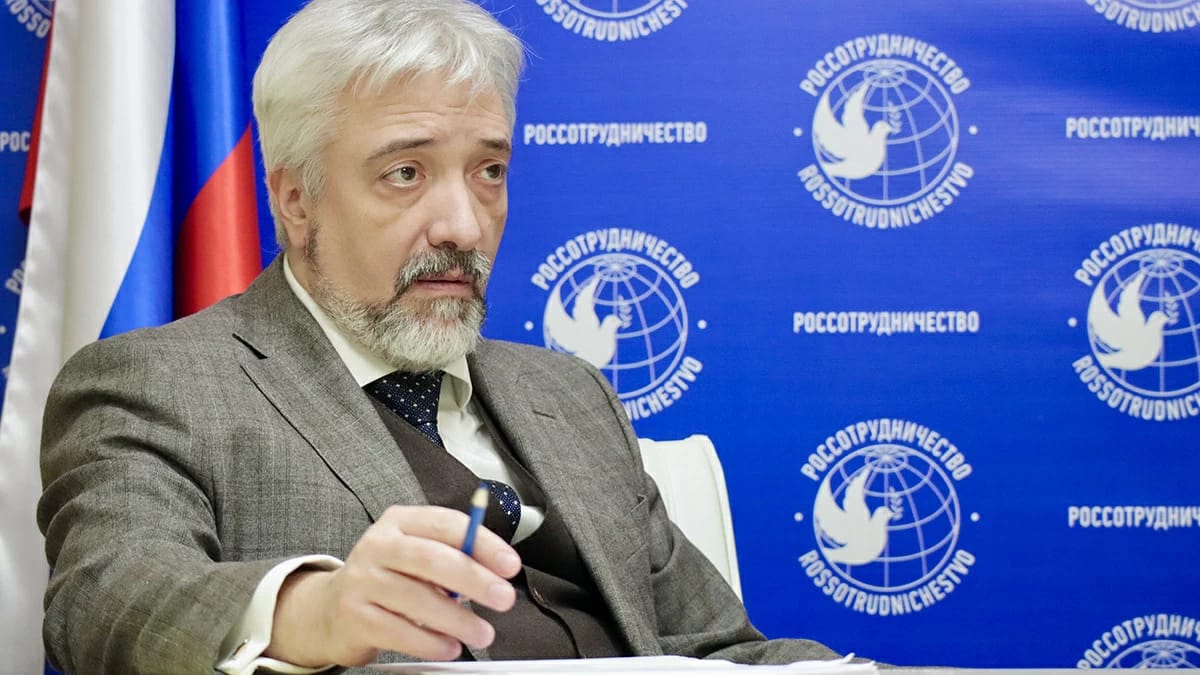
In April 2023, Yevgeny Primakov Jr., then the head of Rossotrudnichestvo, announced that Russian Houses had ceased operating in Slovakia, Croatia, North Macedonia, and Montenegro. Primakov said that in some countries, governments were terminating bilateral agreements governing cultural centers, while in others, employees of the centers, usually accredited through Russian embassies, were being swept up in various rounds of diplomatic expulsions. Neither local authorities nor Russia said exactly when the Russian Houses in Croatia, North Macedonia, and Montenegro were shut down. And in Slovakia, the Russian House actually resumed operations in the summer of 2025 after the country’s culture minister, Martina Šimkovičová, lifted a ban on cultural cooperation with Russia and Belarus.
In September 2023, the Russian Embassy in Denmark announced the closure of the Russian House in Copenhagen, calling it “a direct result of the Danish authorities’ decision to reduce Russia’s diplomatic presence in Denmark and of the countless obstacles they created to the normal work of the Russian House — from political pressure and efforts to censor its projects to a police investigation and restrictions on funding.”
Denmark had expelled 15 Russian diplomats in the spring of 2022, and Moscow responded by declaring seven employees of the Danish Embassy in Russia persona non grata. Then in 2023, Danish authorities decided to reduce the Russian diplomatic mission in Copenhagen from 15 people to five. Zakharova promised that Moscow would draw the “necessary conclusions.”
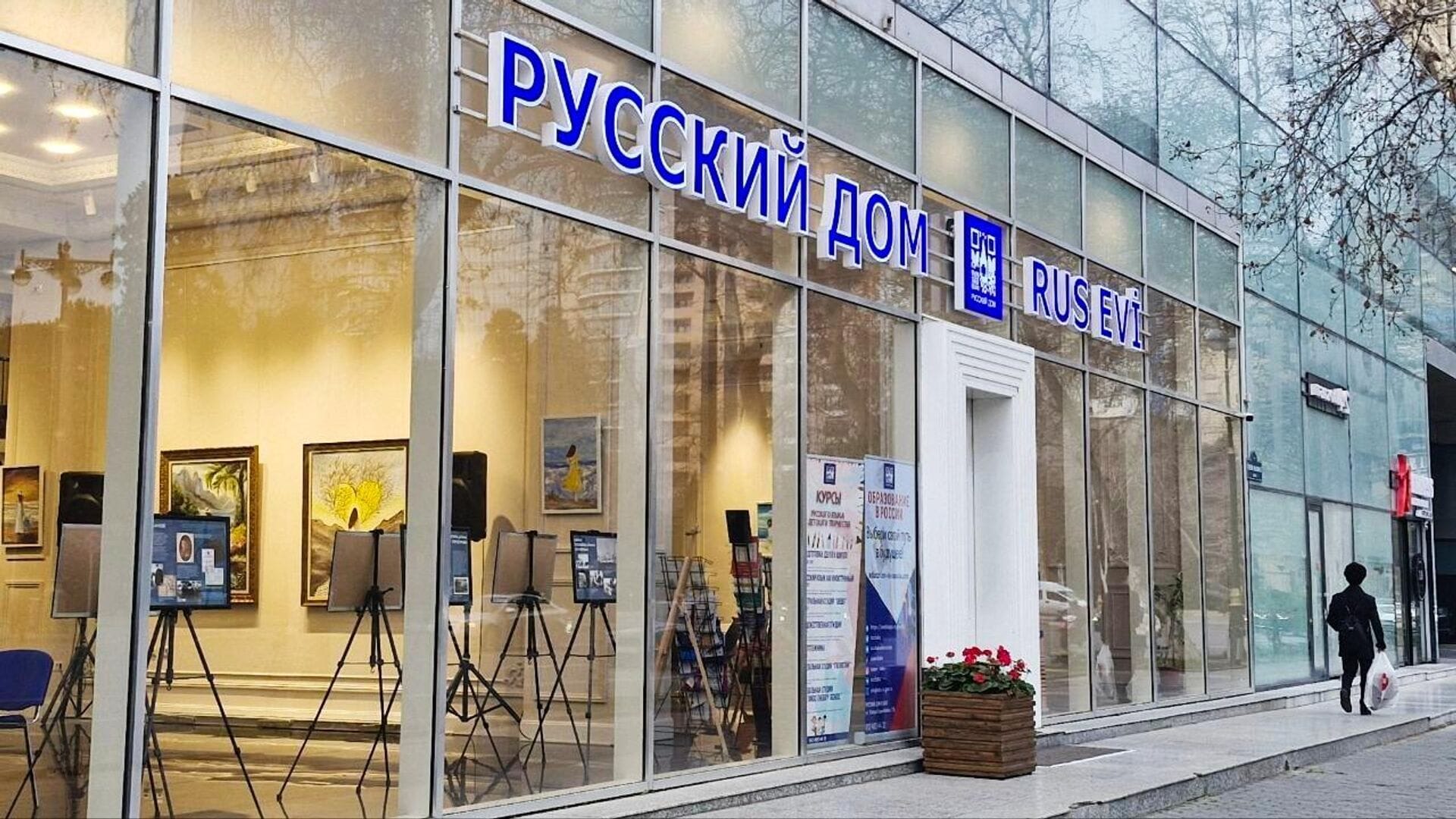
In 2025, the Russian House in Baku was closed. Azerbaijan’s decision was influenced by a crisis in relations with Moscow after Russian air defense forces near Grozny were responsible for the crash of an Azerbaijan Airlines plane. The Azerbaijani outlet Report was the first to publicize the closure of the Russian House, explaining the decision by saying Baku did not need outside help, “especially if provided through non-transparent schemes and organizations whose structure suggests an intelligence profile.”
The case of Azerbaijan was unique. Moscow not only refrained from taking retaliatory measures but also expressed its readiness to do everything possible to rectify the situation. In June 2026, Deputy Foreign Minister Mikhail Galuzin said restoring the Russian House in Baku “would serve the interests of both sides.”
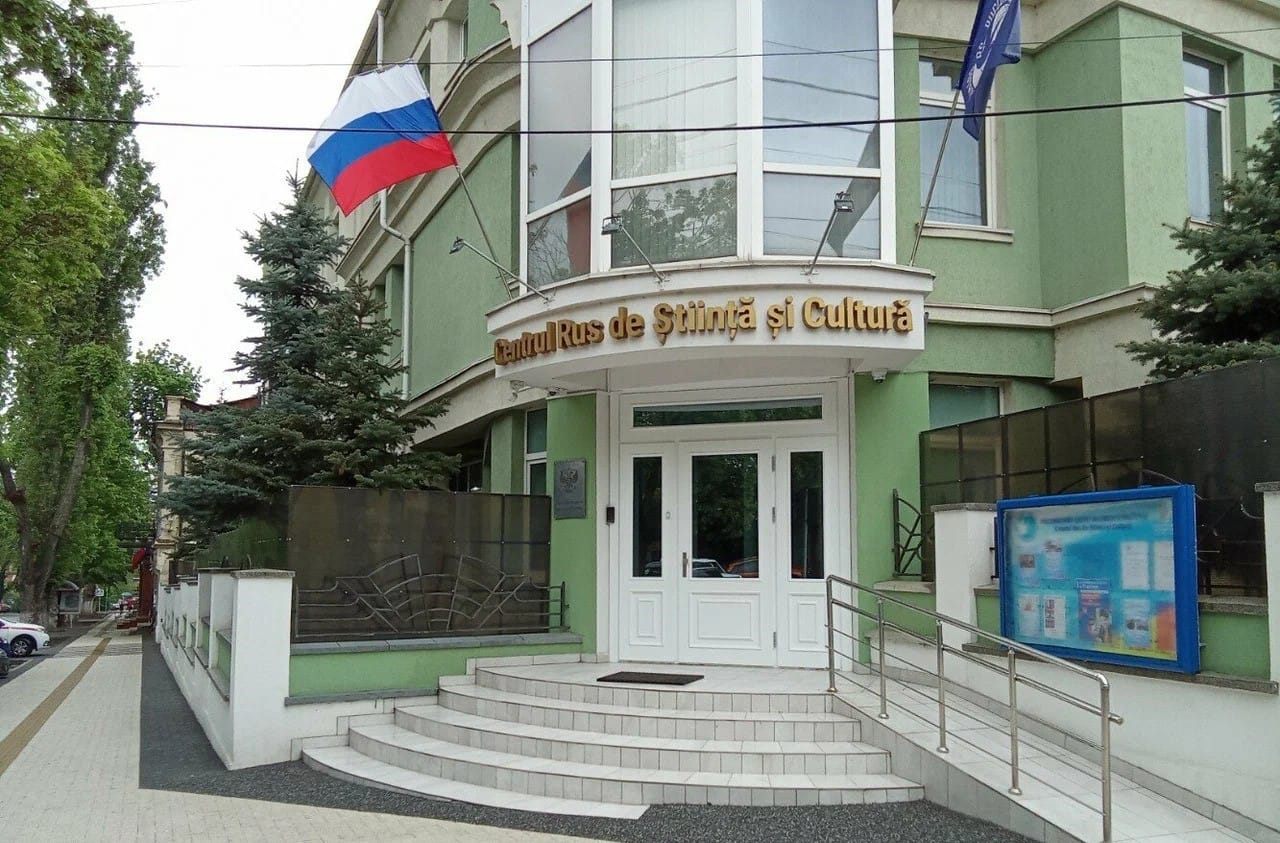
In November 2025, Moldova terminated its cultural cooperation agreement with Russia. Moldovan officials noted that “there [was] nothing cultural about the Russian Cultural Center. It [was] used as a cover for activities carried out to undermine Moldova’s sovereignty.” The center fully ceased operations on July 4, 2026. Moscow rejected Chișinău’s accusations and expressed regret over the decision. It has not yet taken any retaliatory measures.
In February 2026, the Russian House in Warsaw announced that it had suspended operations. Although the center in Poland was not formally closed, its website has not been updated since 2024. It also does not appear on Rossotrudnichestvo’s map of “Russian Houses” worldwide. There were no retaliatory measures over the suspension of the Warsaw center, though Russia and Poland engaged in tit-for-tat diplomatic expulsions in 2022 and 2024.
Rossotrudnichestvo’s website also contains a 2023 document titled “List of Representative Offices Abroad,” which names several countries where the work of such centers has been “suspended,” including the United States, Switzerland, and the United Kingdom. In the U.S., however, only the Russian House in New York was closed, while the Washington office has remained open. In the UK, Primakov said the center had to close because its employees’ old visas had expired and the British government had not approved new ones. Moscow did not respond to the suspension of “Russian Houses” in those countries, although Russia has had several rounds of mutual diplomatic expulsions with the U.S. and the UK since the start of the full-scale invasion of Ukraine.
The Russian House in Berlin became at least the 13th Rossotrudnichestvo office abroad to close after Russia’s full-scale invasion of Ukraine. In 2023, The Insider published an investigation into how the institution, which was supposed to promote cultural contacts between the two countries, had effectively become a tool of Moscow’s hybrid warfare, ideological propaganda, and political interference in Germany. The center in the German capital was Rossotrudnichestvo’s largest branch and cost Russian taxpayers about $10 million a year.
Maria Zakharova promised that Moscow would respond to the closure of the Russian House in Berlin. Under bilateral agreements, the Russian center’s activities are directly linked to the work of the Goethe-Institut in Russia. Rossotrudnichestvo’s new head Igor Chaika has already said the “principle of reciprocity” could apply to the Goethe-Institut and “many other bilateral initiatives.”