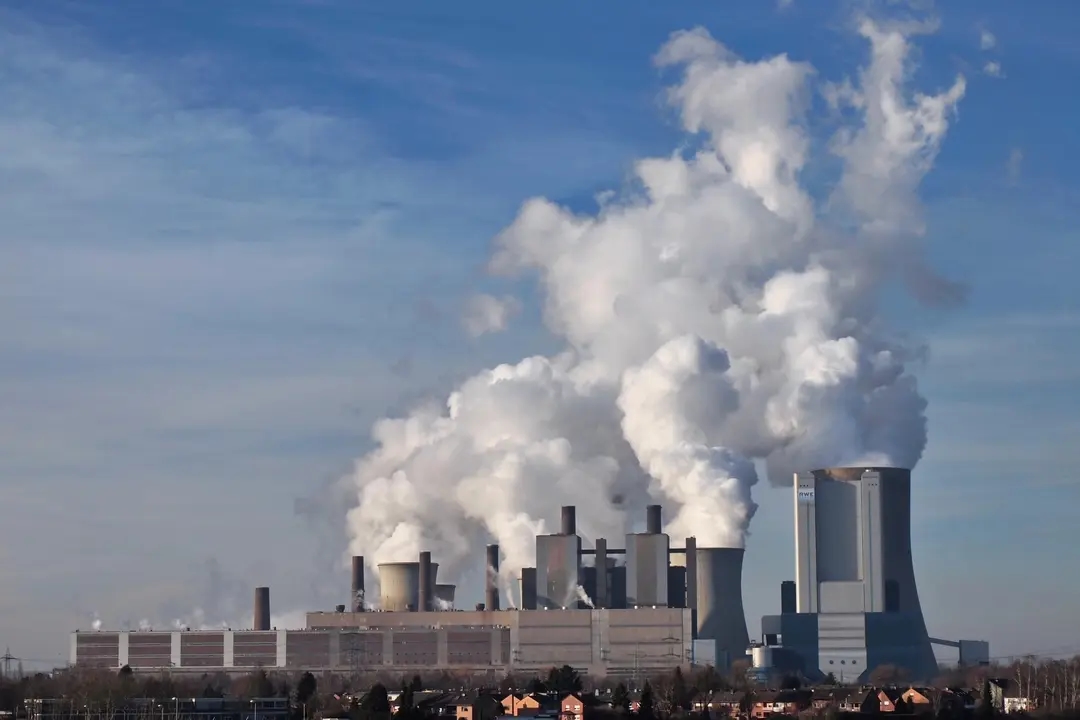
Five power plant units with a combined capacity of 4.2 gigawatts were knocked offline in the Rhine region of Germany on the evening of Sept. 1, according to a Bloomberg report. Grid operator Amprion said the incident occurred near a substation in Rommerskirchen and that power supply to consumers had not been affected.
Police in Essen said they were proceeding on the assumption that the incident was the result of a “deliberate act, a criminal offense.” The affected units were Neurath G and F and Niederaußem H, G and K. Most were feeding electricity into the grid at the time of the incident. Energy company RWE, the owner of the affected units, expects to return 2.6 GW of the capacity to service on Wednesday and the remaining 1.6 GW over the weekend.
Earlier on Sept. 1, unidentified attackers used homemade projectiles to damage several power lines in eastern Germany, causing a temporary outage at LEAG’s coal-fired power plant in Jänschwalde.
Authorities are investigating whether the incidents in western and eastern Germany are connected. Herbert Reul, interior minister of North Rhine-Westphalia, said at a news conference on Wednesday that investigators were considering two theories in connection with the attack in western Germany: sabotage ordered by a foreign state, and left-wing extremist activity. Police in the eastern state of Brandenburg opened a case that includes suspicion that the perpetrators are guilty of forming a terrorist organization.
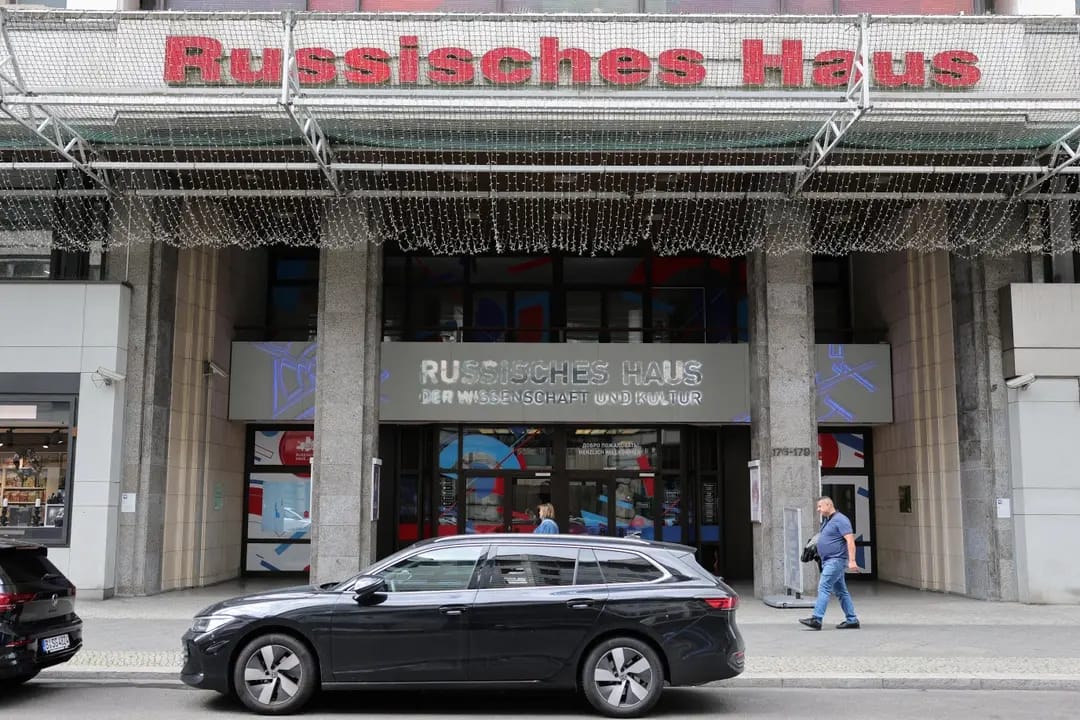
Germany has already faced attacks on energy infrastructure and other civilian objects. In early January, a major arson attack in Berlin caused a large-scale power outage, with the anarchist group Vulkangruppe (lit. “Volcano Group”) claiming responsibility. Then, earlier this week, German authorities directly accused Russia of carrying out a hybrid attack by placing a drone near a Ukrainian transport plane at Leipzig/Halle Airport in early August. “We do not view Leipzig as an isolated event, but see it in conjunction with other hybrid actions,” commented Foreign Minister Johann Wadephul. The Russian House in Berlin and the Russian consulate in Bonn will be closed in response to the incident.
Leonhard Gandi, a researcher at the Fraunhofer Institute, told Bloomberg that the grid handled the incident well and that the situation would become critical only in the event of simultaneous attacks on several facilities or key grid nodes. That is why, he said, the “truly alarming news” was the attempted sabotage against the power lines near Jänschwalde.
As Herbert Saurugg, an expert on blackouts and president of the Austrian Society for Crisis Preparedness (GfKV), explained to The Insider, Europe’s transmission grid operates under the N-1 criterion. That means the failure of a single element — a power line, transformer, or generating unit — can be offset by rerouting reserve power flows and balancing energy.
“To overwhelm these buffers, an attacker would have to take several critical components out of operation simultaneously and across different grid regions,” Saurugg said. “Recent incidents of sabotage have shown that even a 3,000 MW outage was manageable. What is decisive, therefore, is not only the absolute scale, but also the combination of simultaneity, geographical distribution, and attacks on key nodes. However, there is no guarantee that this would also be achievable in a different scenario. This is because unexpected events can always occur in addition, which could then lead to a cascading failure.
A large-scale power cut caused by targeted attacks is technically possible, but not straightforward. There is simply no such thing as 100% security. And that is the far more crucial point. It is therefore not just a question of how we can slightly improve security through even more measures, but rather a question of how we, as a society, can prepare for such potential scenarios in order to deal with the consequences as effectively as possible. After all, this is also a factor that is relevant to potential attackers: is it even worth the effort if the impact remains manageable? We should take this more seriously in order to become more resilient as a society in the face of any disruptions.
The key factors are the simultaneity of events, the critical status of the affected components in the grid, the current grid load and reserves, as well as the speed and coordination of the countermeasures. Ultimately, luck or bad luck always plays a part in whether the safety measures take effect sufficiently and quickly enough, or not. It is therefore more a question of resilience, as the Ukrainian people have been impressively demonstrating to us for years.”
Christian Rehtanz, the Head of the Institute of Energy Systems, Energy Efficiency and Energy Economics at the Technical University of Dortmund, added that there have been situations in which the pan-European interconnected grid, of which Germany is a central part, split apart into separate sections:
“There have repeatedly been situations in which the European interconnected grid — at the core of which lies Germany — has broken apart. In those cases, however, the individual sections continued to operate stably, and there were only minor supply interruptions. Because of this networked, cross-border structure, it is therefore very difficult — and hence rather unlikely — that a large-scale outage could be triggered in a targeted manner. This would only be possible through the most massive attacks at many locations, including across national borders. Mere disconnections can be restored quickly.
Physically destroying equipment is naturally more critical, but it also requires the massive use of explosives. And the greater the effort needed to cause a disruption, the higher the likelihood of being detected in the process. This is why the current attacks are more like pinpricks, intended to demonstrate that attacks are possible.”