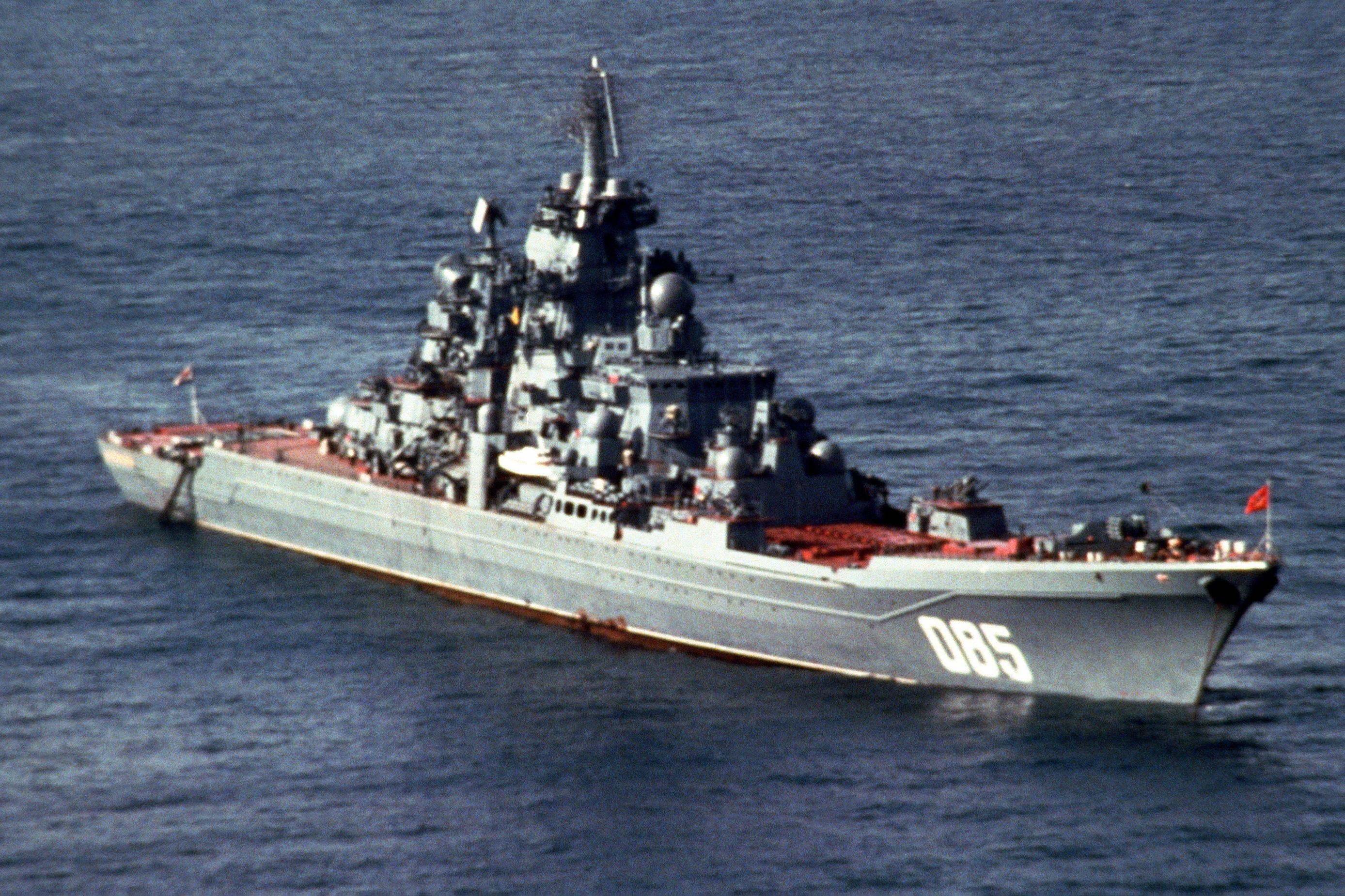
The heavy nuclear-powered missile cruiser Admiral Nakhimov may return to active service with the Russian Navy before the end of 2026 following nearly three decades of inactivity, repairs, and modernization. The ship is currently completing factory and sea trials, according to Russian media.
The Admiral Nakhimov is one of four heavy nuclear-powered missile cruisers of the Soviet-era Project 1144 Orlan class. The ship entered service in 1988 under the name Kalinin, and its last voyage before going in for repairs took place in July 1997. Since then, the cruiser has spent nearly three decades of inactivity while undergoing repair and modernization. Prior to that, the most notable episode of its service was a six-month deployment to the Mediterranean Sea in 1991. Although the Admiral Nakhimov was officially placed at the Sevmash shipbuilding enterprise in 1999, its large-scale modernization did not actually begin until 2013.
In June 2026, the Admiral Nakhimov was put to sea for the first time in 28 years in order to undergo final sea trials. Russian Navy head Alexander Moiseyev stated that the ship is expected to return to the fleet before the end of the year.
During its modernization process, the cruiser was almost entirely rearmed, according to Russian state propaganda outlets. Instead of 20 P-700 Granit anti-ship missiles, it received 80 universal launch cells for Kalibr cruise missiles, Oniks anti-ship missiles, and Zircon hypersonic missiles. Russian media also claim that the ship has been fitted with 96 cells for anti-aircraft missiles. As a result, once back in service the Admiral Nakhimov will be one of the most heavily armed surface ships in the Russian fleet.
The cost of the years-long modernization has not been officially disclosed. However, in 2023, TASS cited a figure of over 200 billion rubles ($2.3 billion).
The rationale behind such a lengthy and costly modernization of a single Soviet-era ship has raised questions among military observers. Over the course of the work, Russia directed scarce shipyard capacity, skilled specialists, and other resources toward restoring a single hull.
Another open question involves the vulnerability of large and expensive ships in modern warfare. Given Ukraine’s use of relatively cheap anti-ship missiles and sea drones, the sinking of such a cruiser would imply the loss of a large amount of weaponry concentrated on a single platform.