
Security officials in Moscow received sensitive information from cryptocurrency exchange Binance while preparing a case against Yury Belenky, an IT specialist who has lived in Bulgaria since 2015 but regularly traveled to Russia. Belensky was detained in 2025 and accused of making several transfers to support the Armed Forces of Ukraine (AFU) and the Azov Regiment. The case is based in large part on a detailed report that Binance sent in response to a request from Russia’s Investigative Committee, according to a report by the human rights project Pervy Otdel (lit. “Department One”).
Belenky was detained at a Moscow airport in September 2025 — originally on a petty hooliganism charge before being placed in pretrial detention over suspected “financing of terrorism” under Part 1.1 of Article 205.1 of Russia’s Criminal Code.
Investigators accused Belenky of making six transfers totaling 742.26 USDT (a cryptocurrency token pegged to the U.S. dollar). The Ukrainian wallet’s address had been published by journalist Arkady Babchenko, who organizes fundraising drives in support of the Ukrainian army. Babchenko’s cryptocurrency addresses are public, meaning any user can view their transaction history and current balance. Russian security officials learned about Belenky’s specific transfers thanks to Babchenko’s Telegram chat, where users reported their donations.
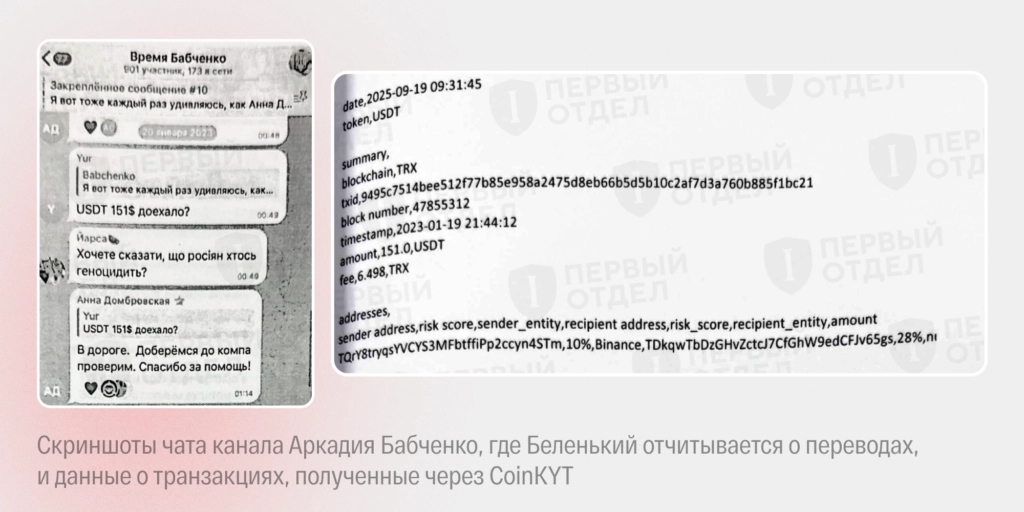
This past October, Russia’s Investigative Committee asked Binance to provide the transaction history of several users, including Belenky, citing criminal cases that had been opened under the charge of “terrorism.”
The report Binance sent to the Investigative Committee contained a detailed history of Belenky’s account. The file included personal data, document scans, Binance Pay card transaction data, account login history, a list of trusted devices, and records of transfers, deposits, and cryptocurrency withdrawals.
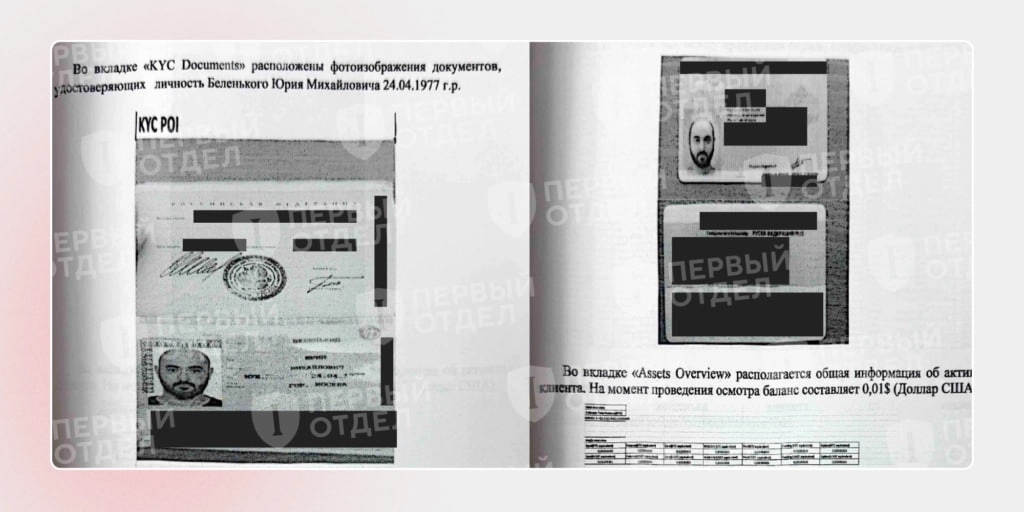
From the report, security officials learned of nine more transfers from Belenky to Babchenko’s address, the rights group said. That information was passed to the FSB, Russia’s domestic security service. Belenky is now accused of 15 transfers totaling 1,680.69 USDT.
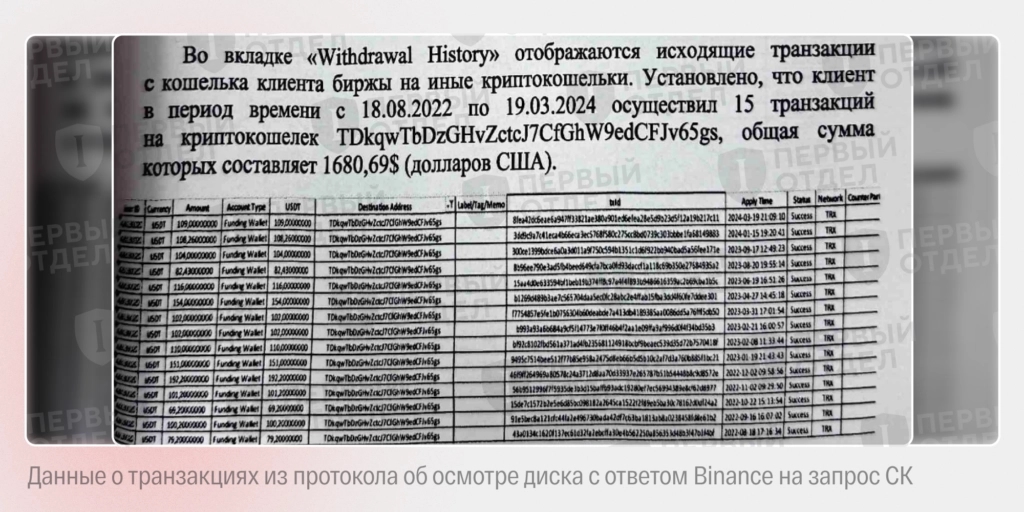
Pervy Otdel said it is not aware of any other case in which a cryptocurrency exchange handed such a large volume of client information to Russian security officials at their request. In 2022, Reuters reported that Binance had shared with Rosfinmonitoring, Russia’s financial monitoring agency, data on people who donated to Alexei Navalny’s Anti-Corruption Foundation, or FBK. Binance denied that report.