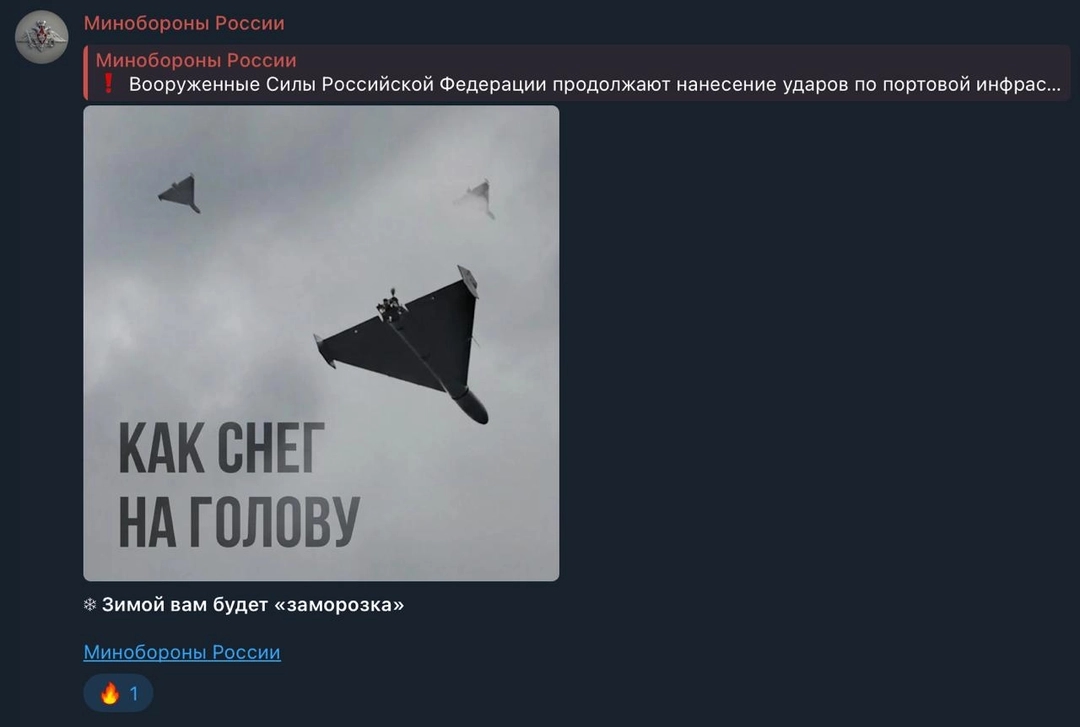
On Aug. 14, Russia’s Ministry of Defense published a post on its Telegram channel showing drones with a caption reading: “You’re in for a deep freeze this winter.” The post followed a ministry statement about strikes “on Ukraine’s port infrastructure and seagoing vessels used in the interests of the Armed Forces of Ukraine.”
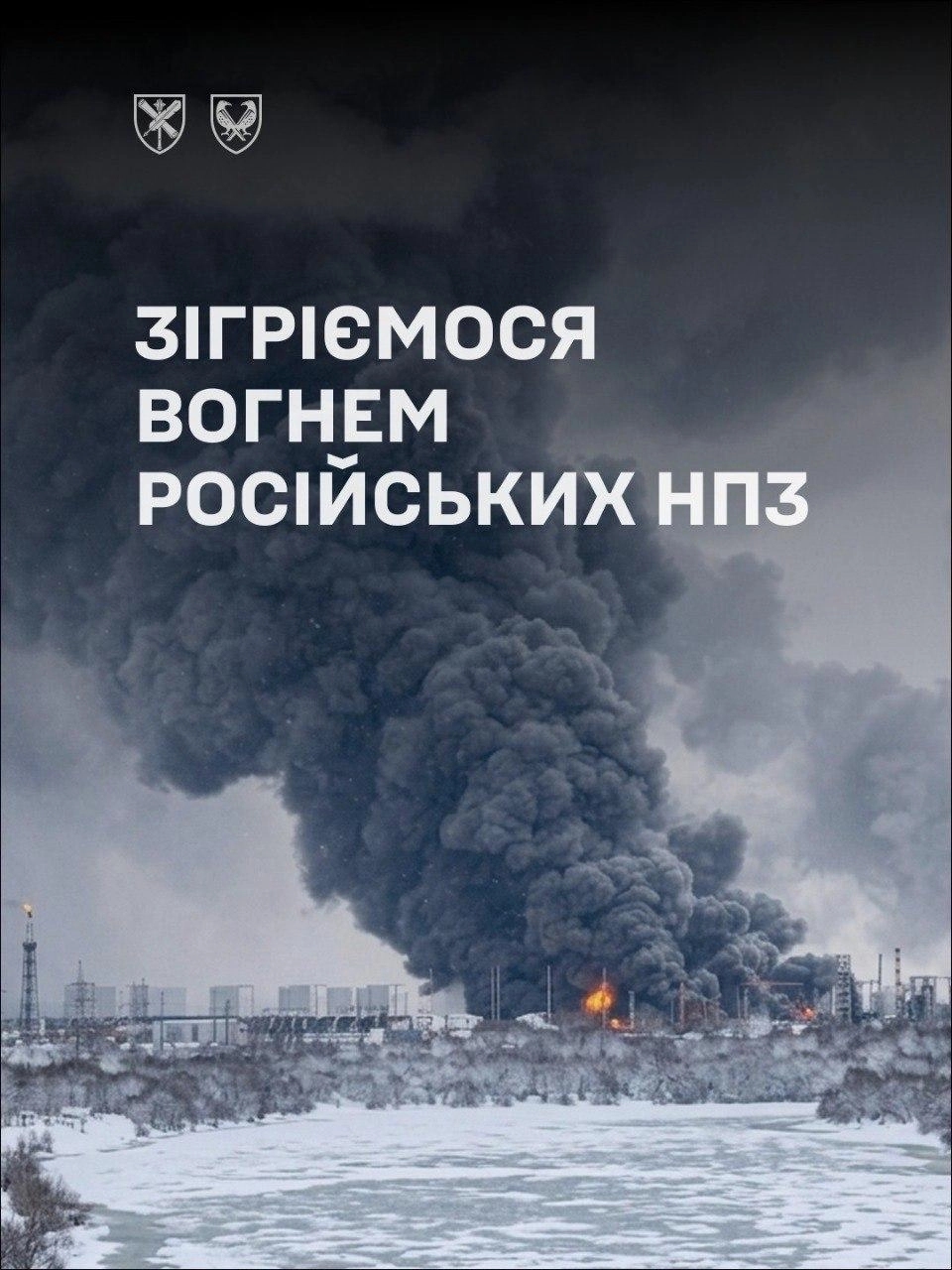
Several hours later, the AFU’s Center for Strategic Communications responded on its own channel with an image of a burning Russian oil refinery bearing the following caption: “We’ll warm ourselves with the flames of Russian refineries.”
Earlier today, Russian Foreign Minister Sergey Lavrov said it was unacceptable to halt the fighting along the current line of contact:
“This is not just about how comfortably someone lives today. Our people are suffering, people are dying from these terrorist acts. It is about our responsibility for the thousand-year history of the Russian state.”
Lavrov said Russia would intensify its actions against Ukraine.
“We are already doing this,” he said. “They are already starting to groan.”
The previous day, Aug. 13, Reuters reported that Ukraine had sent Russia a proposal through a third party to mutually halt attacks on civilian sites in the Black Sea, saying the fighting in the region had threatened global food supply chains. Several days earlier, Turkish Foreign Minister Hakan Fidan said Ankara had sent Kyiv and Moscow proposals to create a moratorium mechanism on strikes against commercial vessels in the Black Sea.
“Russia has not received a formal Turkish appeal through official channels specifying the terms of this initiative,” Russian Foreign Ministry spokeswoman Maria Zakharova responded on Aug. 14.
In June, Ukrainian President Volodymyr Zelensky published an open letter to Vladimir Putin proposing a direct meeting between the two and a ceasefire along the entire front line for the duration of the talks. But no such developments ever materialized.
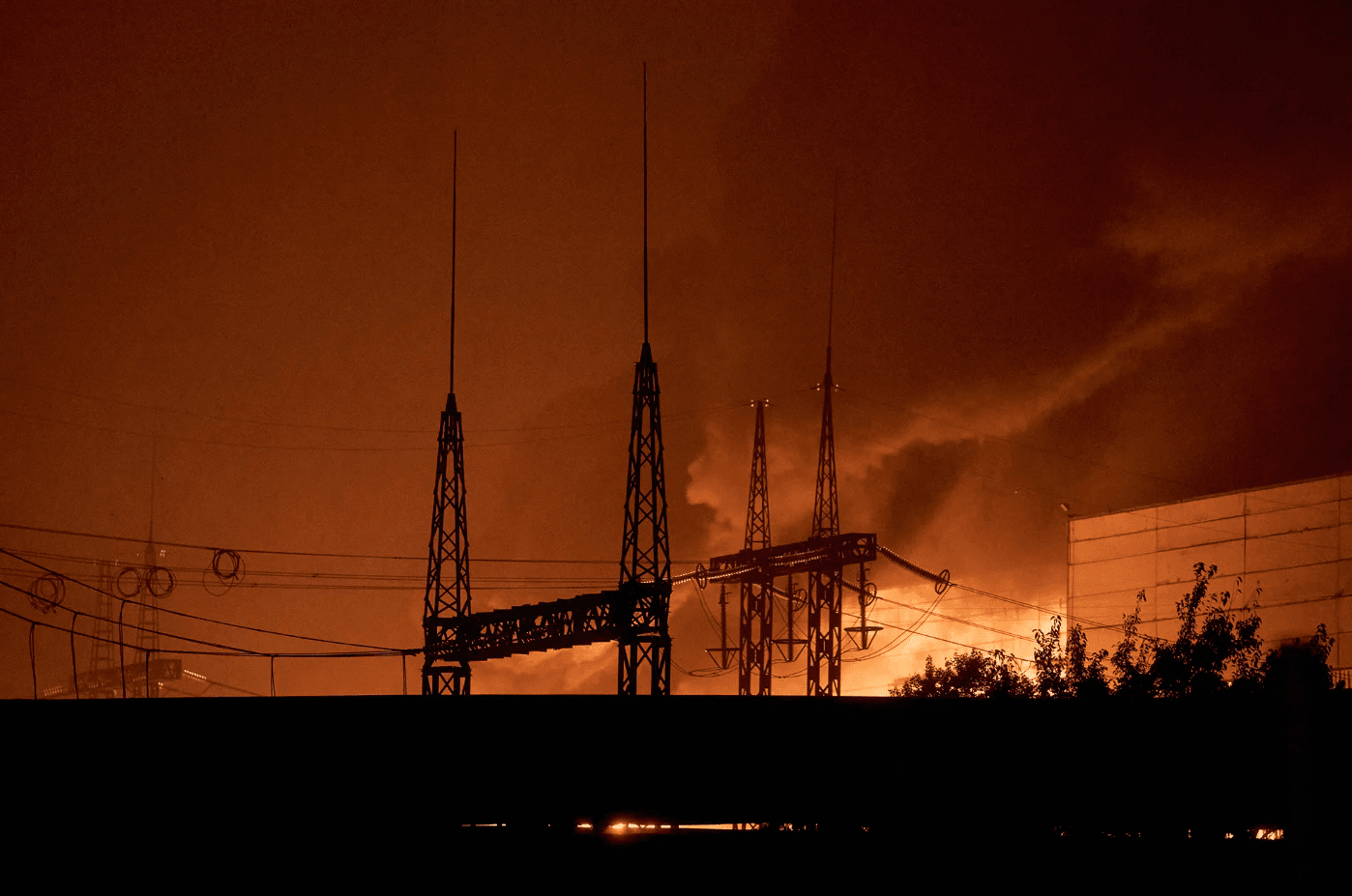
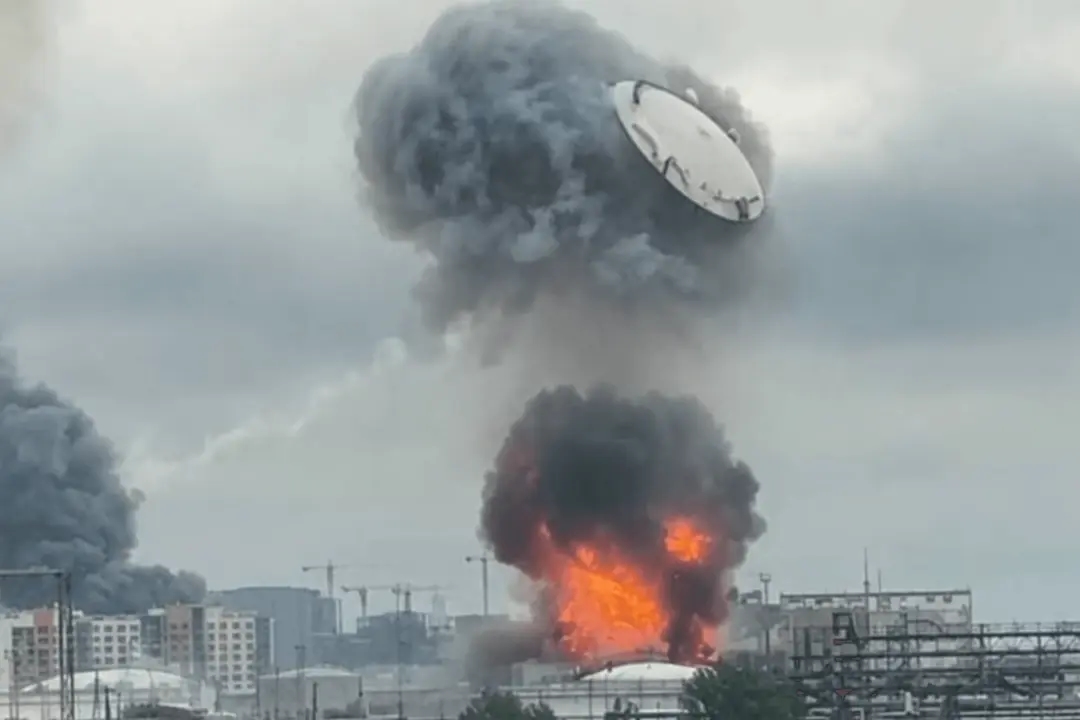
Since 2022, Russia has been intensifying its strikes on Ukraine’s energy infrastructure every fall in an effort to leave the country without electricity and heating during the winter months. In fall 2024, Russia managed to disable about 80% of Ukraine’s power generating capacity, damaging nearly all the country’s major thermal power plants. Ahead of the upcoming winter, Russian forces have focused on destroying the infrastructure of Ukraine’s electricity grid, targeting substations and power lines in the Sumy, Chernihiv, and Kharkiv regions.