Following a July 29 drone strike on gas infrastructure in the Egyptian port of Damietta, a number of media outlets linked the attack to recent Ukrainian attacks on Iran-linked vessels in the Caspian Sea. One of the arguments cited was a statement by Iranian state television from shortly before the attack naming Damietta as a possible target for retaliatory strikes, as the LNG terminal was described as a key export hub supplying gas to Europe.
However, experts interviewed by The Insider say that confusion remains regarding which facility was hit — the drone struck not the export infrastructure, but a floating terminal used to import gas into Egypt. At the same time, however, they say the attack may have carried symbolic significance.
What happened
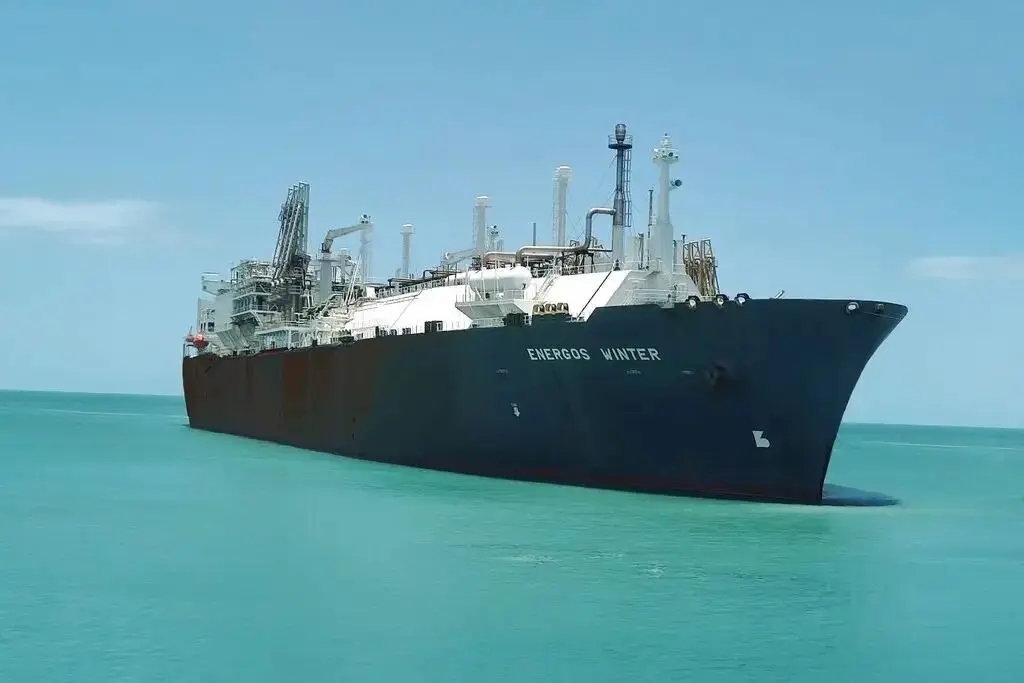
On July 29, a drone struck the FSRU (floating storage and regasification unit) Energos Winter, which was moored at the port of Damietta. The ensuing fire spread to the nearby LNG carrier GasLog Salem. Energos Winter is owned by the U.S. company Energos Infrastructure and is leased to the state-owned Egyptian Natural Gas Holding Company.
Egyptian authorities said only that the fire had been caused by an unidentified drone. No group has claimed responsibility for the attack. According to Egypt's Ministry of Petroleum, there were no fatalities or injuries.
Following the attack, Iranian Foreign Minister Abbas Araghchi said that the incident could have been an Israeli false flag operation.
"We all need to be vigilant regarding Israeli false flag plots and operations aimed at undermining peace in the region," he wrote on X.
Araghchi also stressed that Egypt is "an important friend and strategic partner" of Iran and that its security is of great importance to Tehran.
A source in the Israel Defense Forces, meanwhile, said the accusations against Israel were baseless.
Reuters reported that the incident heightened concerns over shipping security around the Suez Canal, one of the world's most important maritime trade routes. After traffic through the Strait of Hormuz dropped sharply because of the war in Iran, the Suez Canal became one of the principal routes for Saudi oil exports. Following the attack, the London marine insurance market expanded its high-risk zone in the Red Sea, and Saudi Arabia announced the creation of an international coalition to protect maritime shipping.
Why the theory of retaliation against Ukraine emerged
According to media reports (1, 2), two days before the strike, Iranian state television aired a segment titled “What could be the targets of Iran's retaliation against Ukraine?”
Among the potential targets mentioned was the port of Damietta. The presenters claimed that the LNG terminal was a major export hub supplying gas to Europe. Iranian state media also warned of possible strikes on infrastructure connected to oil and gas exports to the European market.
After the attack, Reuters reported that some analysts viewed the incident as a possible Iranian response to a Ukrainian strike on an Iran-linked vessel in the Caspian Sea. The maritime security analytics firm Windward reached a similar conclusion. In its assessment, the attack appeared more consistent with an independent Iranian operation than with an action by the Houthis. The company argued that the strike signaled an expansion of the conflict's geographic scope — from the Persian Gulf and the Red Sea into the eastern Mediterranean.
At the same time, according to The New York Times, two Iranian officials, speaking on condition of anonymity, said the attack was intended to demonstrate Iran's ability, if it chose to do so, to cause far greater disruption to global shipping and energy supplies. They did not specify whether the operation had been carried out directly by Iran or by one of its allied groups.
Experts: The facility that was attacked did not export gas to Europe
However, gas infrastructure experts interviewed by The Insider say the target of the attack was not export infrastructure at all.
Alex Froley, an analyst at the Independent Commodity Intelligence Service (ICIS), explained to The Insider that the object damaged in the strike is not connected to the port’s export infrastructure:
"Energos Winter is used to convert liquefied natural gas back into its gaseous form before feeding it into Egypt's gas transmission system for Egyptian consumers. GasLog Salem was intended to serve as additional floating LNG storage to support imports through Energos Winter.”
Froley emphasized that the facility that liquefies natural gas for export is a completely separate installation.
Anne-Sophie Corbeau, a research scholar at Columbia University's Center on Global Energy Policy, reached the same conclusion, saying that Damietta is home to two separate LNG facilities that are often confused:
"Energos Winter is an import terminal. Egypt has become a major LNG importer because of declining domestic gas production. This facility does not export LNG."
Corbeau told The Insider that a separate onshore LNG export plant, commissioned in 2005, is located nearby. Its design capacity is about 5.2 million metric tons per year — the same figure cited by Iranian media. However, she said the export plant is currently largely idle:
"Because of problems with domestic gas production, the export terminal is barely being used — there have been no LNG export shipments from it since 2024."
As a result, she said, the attack could not have had a direct impact on gas supplies to Europe:
"This attack has no direct or immediate impact on Europe because it was the import terminal that was targeted. The consequences are felt primarily by Egypt, which now faces greater difficulties importing LNG."
Corbeau's assessment is indirectly supported by Reuters, which noted that Egypt is no longer a major exporter of natural gas. As a result, the attack is unlikely to have the same impact on global energy markets as similar incidents elsewhere in the Middle East.
But the strike may still have carried a political message
At the same time, Corbeau does not rule out the idea that the strike carried symbolic significance.
According to her, development of Cyprus's Cronos gas field was recently announced, with production expected to begin in 2028. Once output starts, the gas is expected to be exported through the onshore LNG plant at Damietta — "so this could potentially have been a signal."
At the same time, she stressed that it is still impossible to draw conclusions about the motives of those behind the attack.