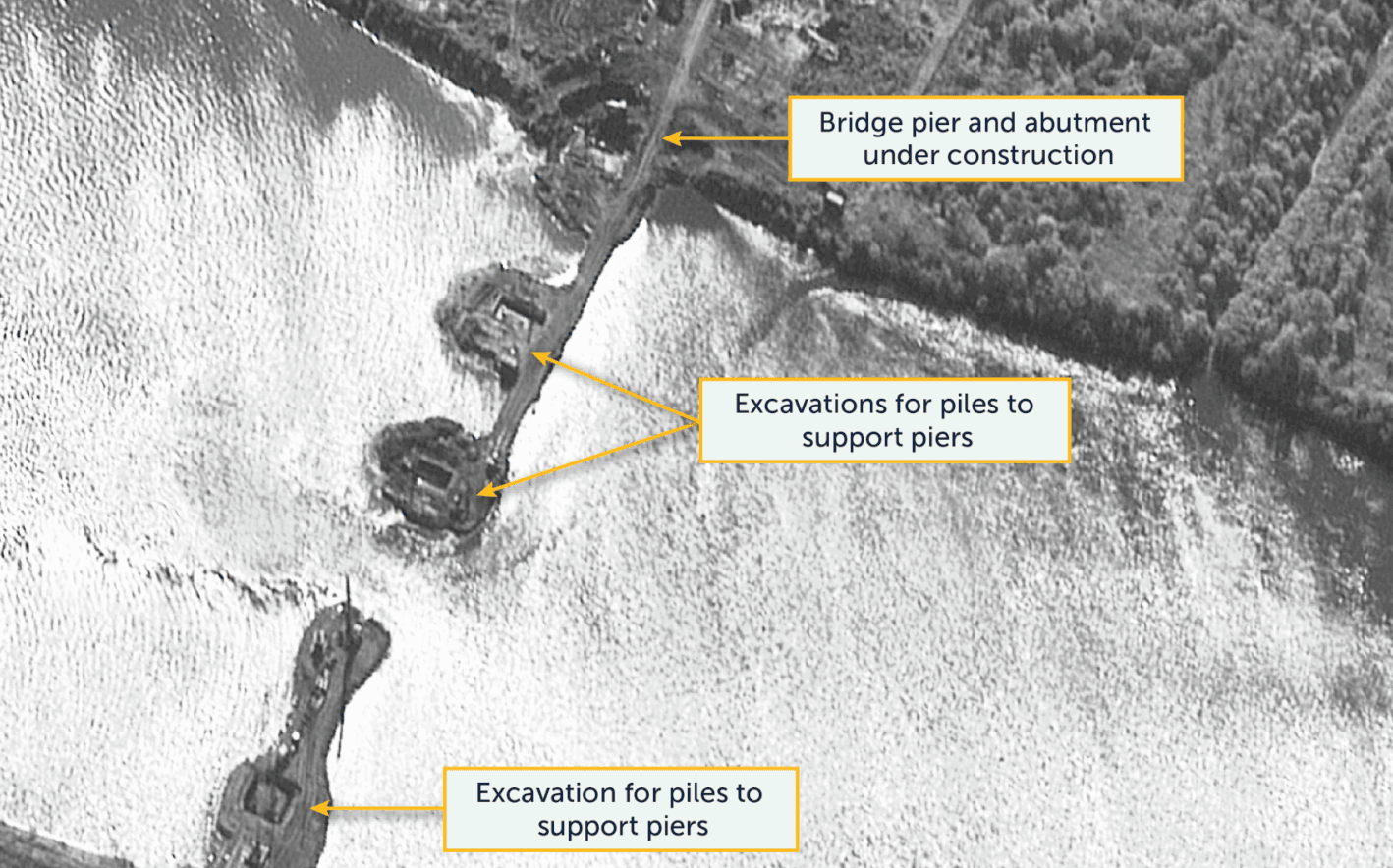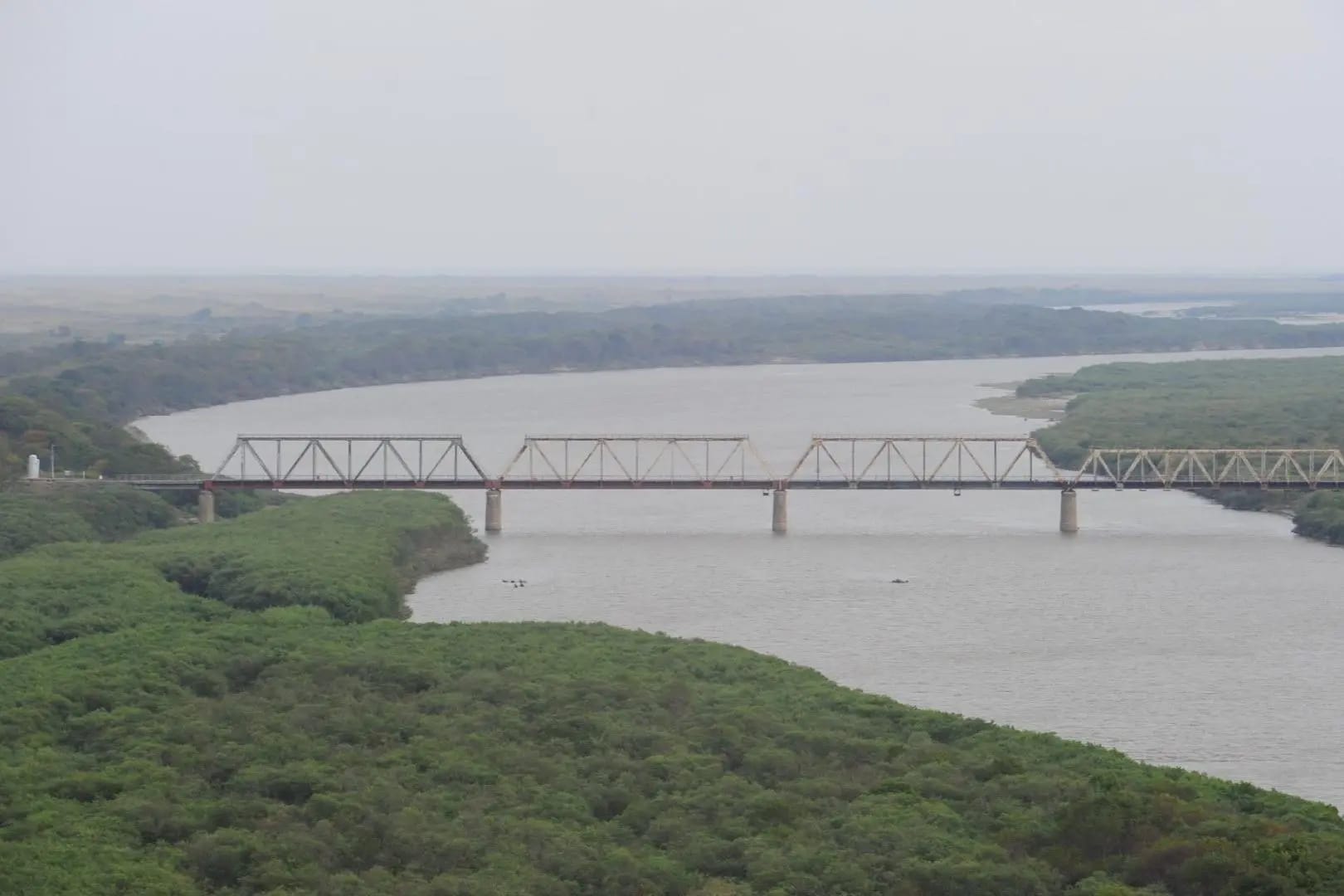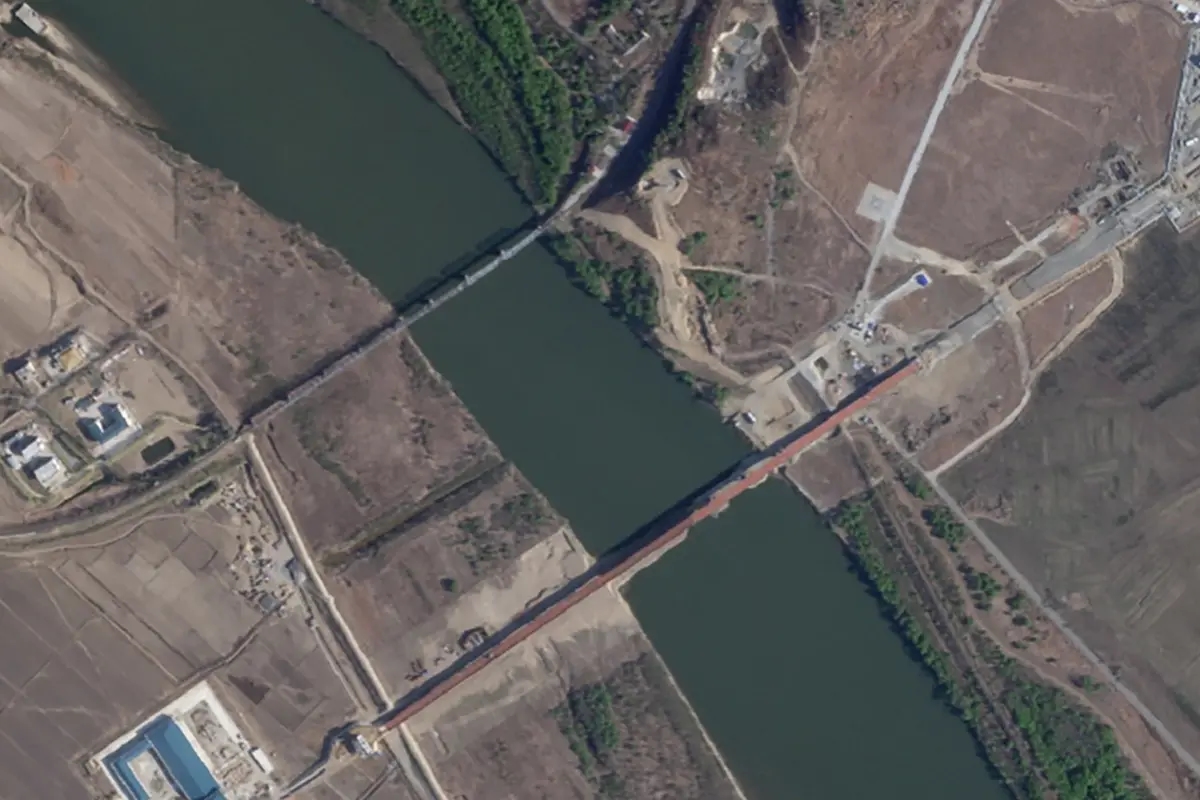
The first road bridge between Russia and North Korea, spanning the Tumen River, could become a key artery for military supplies for the war in Ukraine, The Guardian reported, citing an investigation by the Ukrainian organization Truth Hounds. North Korea has finished construction on its side, including customs and quarantine control facilities, and is now waiting for Russia to do the same, a delay that has already angered officials in Pyongyang.
Moscow and Pyongyang have not concealed the bridge project and say it is needed for purposes of trade and tourism. But the project is estimated to cost $100 million, while bilateral trade officially totaled only $34 million in 2024. And the border crossing is of little use for tourism: visits to North Korea are tightly controlled, and tourists mostly go to the country’s capital, which is located about 500 kilometers from the Russian border.
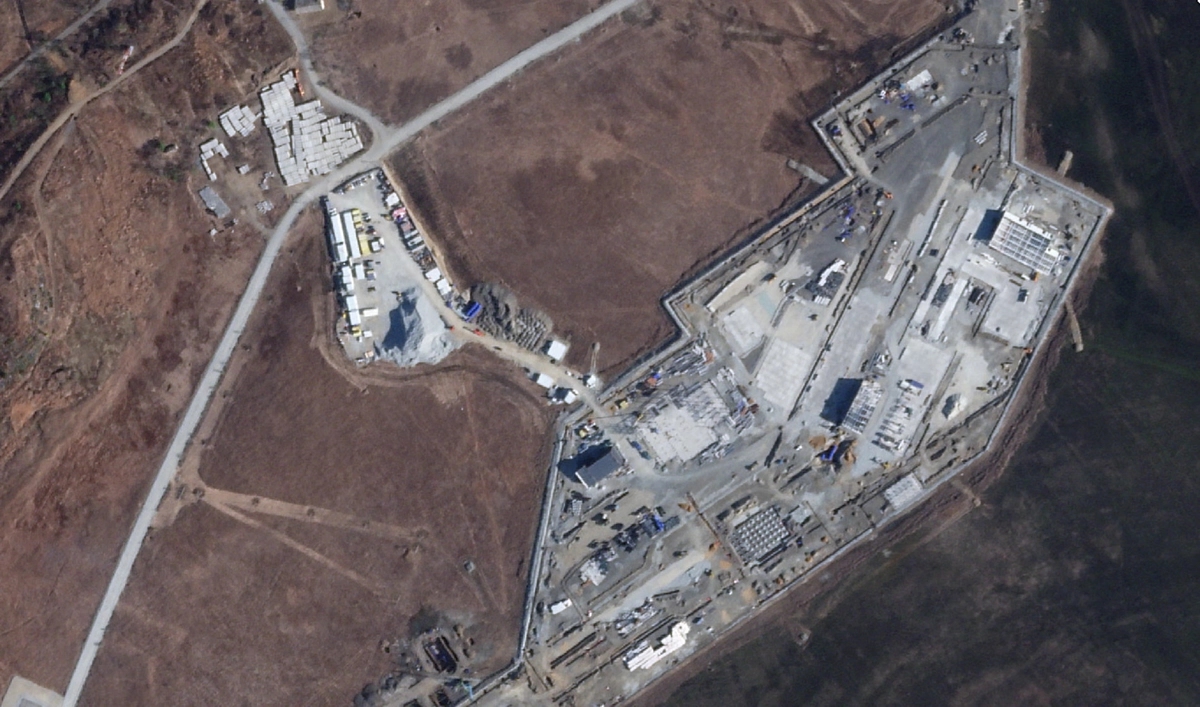
Truth Hounds' investigators concluded that the real reason for building the road bridge over the Tumen River is military cooperation, specifically the transfer of North Korean soldiers and weapons for the war against Ukraine. In exchange, the bridge could also carry various technologies and resources to North Korea from the Russian side.
Until now, land traffic between Russia and North Korea has run only across the single rail crossing known as the Friendship Bridge. The investigators stressed that road shipments are much harder to track by satellite than rail shipments because both countries have much broader road networks than rail networks. Loading and unloading trucks is also faster than loading and unloading railcars, reducing the window for satellite imagery to capture activity.
The report noted that the type of railcar visible in satellite imagery can indicate the category of goods being carried, while trucks seen from space almost always look alike. In addition, trucks can also be unloaded almost anywhere, while trains can unload only at specific railway hubs.
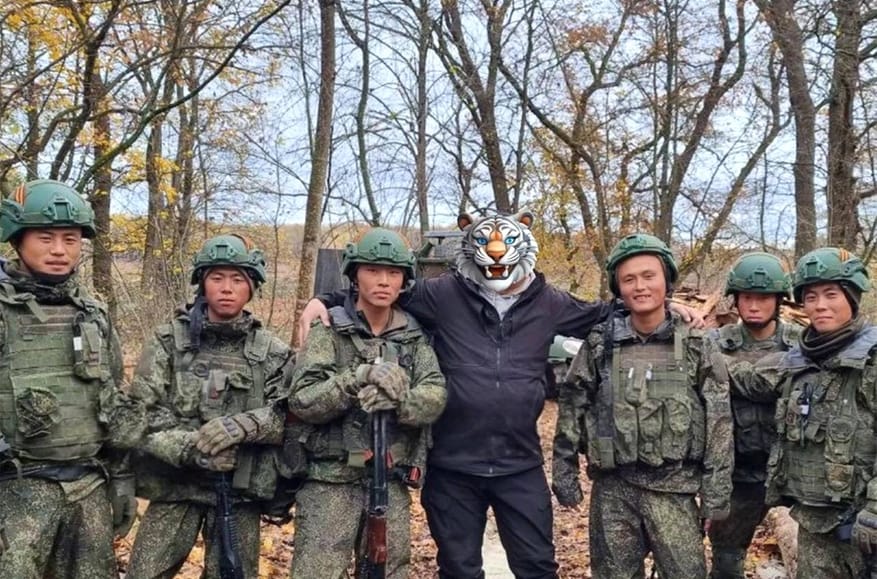
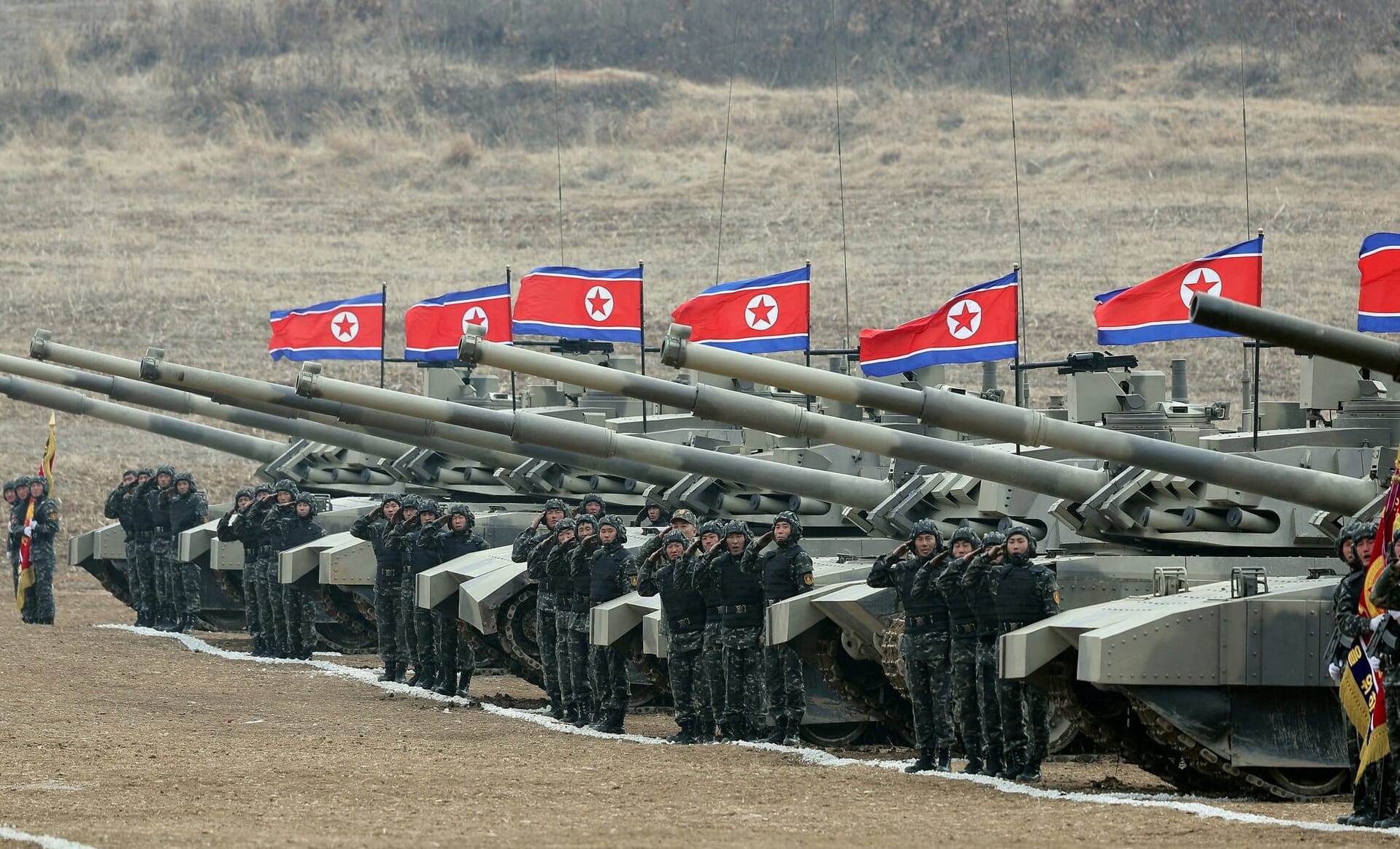
More than 10,000 North Korean troops have taken part in Russia’s war against Ukraine, and at least 2,300 of them have been killed. North Korean authorities have called their military’s participation in Russia’s full-scale invasion of Ukraine a “sacred mission.” Pyongyang has also helped Moscow by supplying weapons.