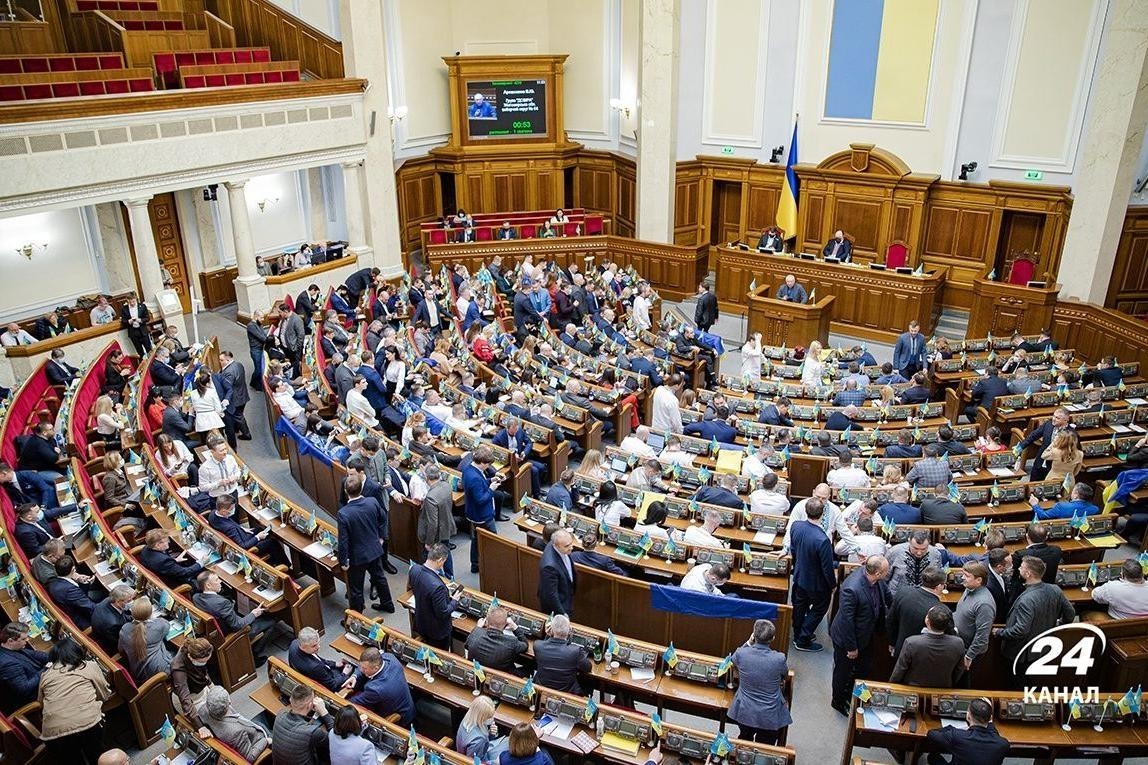
On July 14, Ukraine’s Verkhovna Rada dismissed Prime Minister Yulia Svyrydenko. The motion was supported by a margin of 258-1, with five lawmakers abstaining and 47 withholding their participation in the vote altogether. Under Ukrainian law, the entire Cabinet automatically resigned along with the prime minister.
Lawmakers from President Volodymyr Zelensky’s Servant of the People party applauded Svyrydenko as she left. Opposition lawmakers, by contrast, mocked the decision, saying that if the government was considered successful, it was unclear why it was being dismissed.
On July 16, the Verkhovna Rada appointed Serhiy Koretskyi, the former head of Naftogaz, as the new prime minister.
The government’s resignation and the Yermak case
Svyrydenko had led the government for just shy of a year. Before becoming prime minister, she worked as a deputy to Andriy Yermak, who headed the Presidential Office from February 2020 until being dismissed amid a corruption scandal this past November. Svyrydenko was considered one of Yermak’s closest allies.
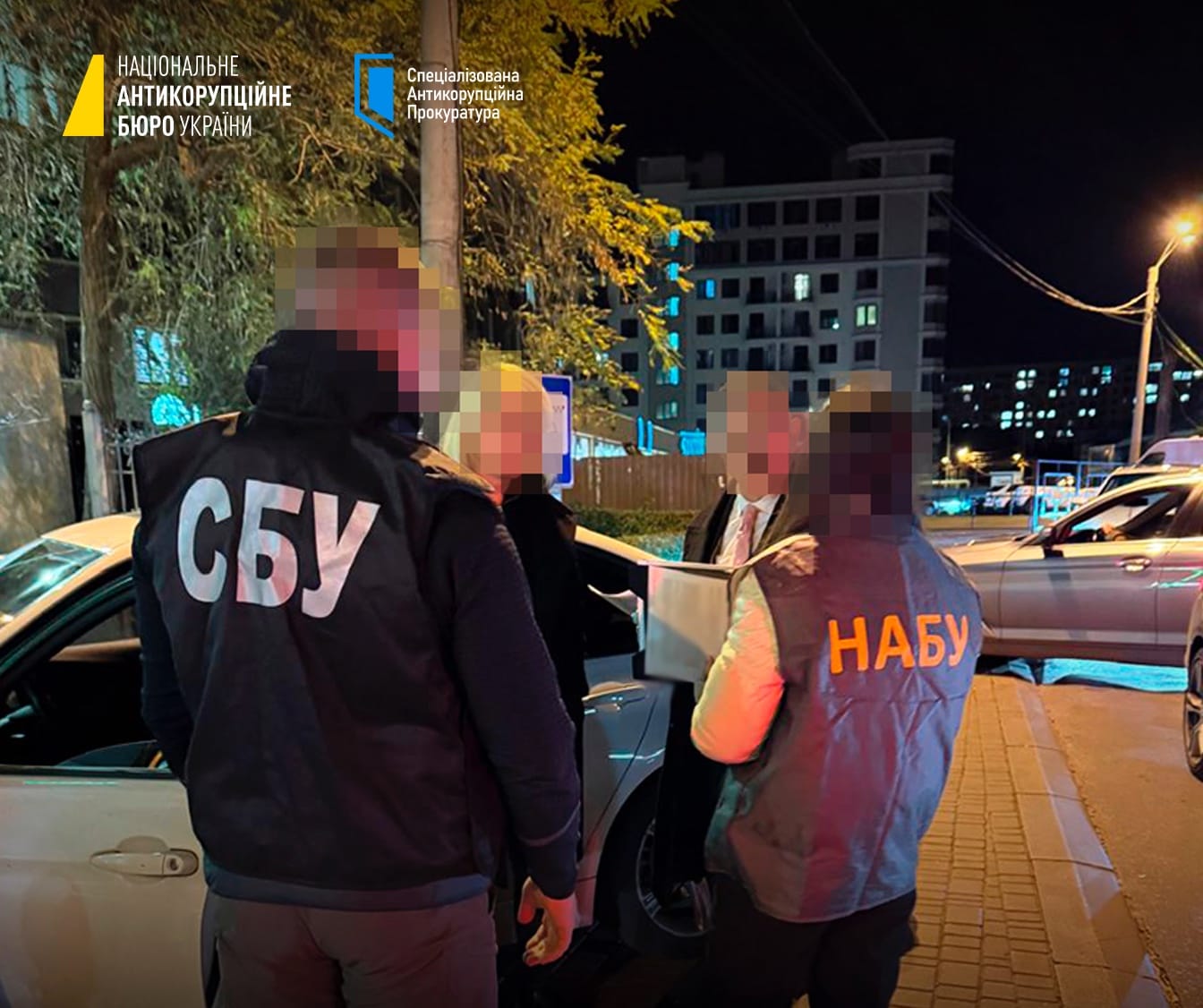
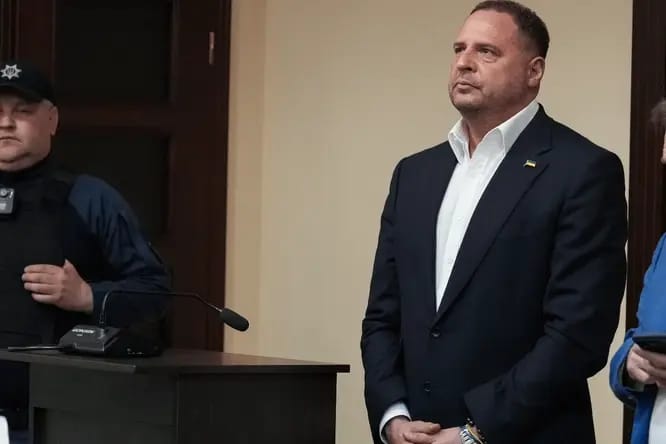
In May, Yermak was arrested in a corruption case involving the legalization of assets. A court ordered that he be held in custody with the option of bail set at 140 million hryvnias ($3.1 million). The money was later posted, and Yermak was released from custody.
After news of the “Mindichgate” corruption case broke in the summer of 2025, many Ukrainian politicians called for Svyrydenko’s resignation. Former president Petro Poroshenko, the leader of the European Solidarity party, called the outgoing Cabinet “the government of Mindichgate” while commenting on the reshuffle.
Crisis around the Defense Ministry
The main political event after the government’s resignation, however, was not the change of prime minister.
On the evening of July 15, it became known that Defense Minister Mykhailo Fedorov, who had led the ministry since January 2026, would leave his post. Although the Verkhovna Rada had not yet voted on his dismissal, Fedorov publicly confirmed his departure on July 16, giving a detailed account of his disagreements with the military leadership.
Fedorov said that after becoming defense minister, he conducted an audit of the Defense Ministry and presented Zelensky with a report on systemic problems in the army.
Among them, he listed:
- a chaotic management system;
- constant rotation of commanders;
- manual allocation of weapons and equipment;
- bureaucracy;
- the General Staff’s resistance to reforms;
- decision-making “based on loyalty” rather than data analysis;
- isolation of effective commanders and supporters of change.
Fedorov explained that following his exit from the defense ministry, the report’s findings formed the basis for his proposal that Zelensky dismiss General Oleksandr Syrskyi, commander in chief of the Armed Forces of Ukraine, and Andriy Hnatov, chief of the General Staff.
Fedorov nevertheless agreed to work with Syrskyi after Zelensky refused to change the army’s leadership. Soon afterward, however, Fedorov said all of the Defense Ministry’s initiatives began to be blocked.
As an example, he pointed to the creation of centers of expertise for military technology.
“The General Staff does not sign off on this. There is no need, they say, to bring in new people who can generate ideas. We ‘hacked’ this with unconventional solutions, but overall, if we are talking about a serious system, it does not work,” he said, alleging that Syrskyi preferred “weaving intrigues” to discussing problems directly. Fedorov added that he eventually gave the president an ultimatum demanding Syrskyi’s dismissal.
As an example of the toxic culture that had taken shape in the military leadership, Fedorov cited the generals’ reaction to a scandal involving the 425th Separate Assault Regiment Skelia. In June, the Ukrainian outlet Babel published an investigation citing former and current service members who reported on torture, abuse, and non-combat deaths in the unit. Skelia responded that the allegations concerned the 155th Separate Mechanized Brigade, which it described as “a separate military unit” unrelated to the regiment.
After the publication, the State Bureau of Investigation opened a criminal case. The regiment commander was suspended and Syrskyi called the episode “a shameful story” for the army of a country at war.
However, Fedorov said that instead of focusing on investigating possible crimes, key figures inside the system began looking to punish those responsible for the publication itself. The minister said he was accused of organizing an information campaign against Skelia.
“I am being accused of being the ‘client’ behind the Skelia story. Let there be an investigation. I did not create Skelia, and I did not allow what happened there to happen. But they say I was the one who launched this media campaign. This is the kind of culture that has formed in the system. It needs to be rooted out,” he said.
Syrskyi did not publicly respond to the accusations. In a post on Telegram, he pointed to the Ukrainian army’s role in defending Kyiv, thanked Fedorov for his work, and expressed the wish that he “remain on Ukraine’s team.”
Zelensky confirmed July 16 that there was indeed a conflict between the Defense Ministry and the General Staff, calling it systemic. He said the heads of the two institutions had failed to establish effective communication.
Support for Fedorov
After the defense minister’s remarks, Mykhailo Drapatyi, commander of Ukraine’s Joint Forces, publicly voiced support for the reforms Fedorov had proposed, saying his team was the first to begin changing how the military system works. Drapatyi said that over the past six months, the Defense Ministry had become not just a supplier of weapons for the army, but also a partner that demanded changes in approach, faster decision-making, and support for proactive commanders.
He also effectively confirmed Fedorov’s central accusation. “Today the minister said that many of these decisions had to be pushed through in spite of the system, not thanks to its work. I know this is true… When the right decision has to be pushed through in spite of the system, it means the system itself needs to change,” Drapatyi said.
Journalist Anna Kalyuzhna, who had previously investigated violations in some Ukrainian assault units, also spoke out in support of Fedorov, saying that she had evidence that methods resembling those of “blocking detachments” — a term that refers to the Soviet-style practice of preventing troops from retreating — were used in one unit subordinate to Syrskyi, though not in the Skelia regiment. Kalyuzhna said the material had been prepared before Fedorov became defense minister. According to her, the former minister’s statements about “total lies, sabotage, and crimes” in the military matched the information she had collected.
Fedorov’s dismissal triggered widespread public reaction. In the capital Kyiv, citizens gathered near the Ivan Franko Theater, chanting “Shame” and “Bring Fedorov back” while holding signs that read “Don’t touch what works” and “Vova, what are you doing?”
Rallies in support of Fedorov also took place in Mykolaiv, Kharkiv, Dnipro, Poltava, Odesa and Ternopil, among other cities.
Amid Fedorov’s dismissal, Pavlo Yelizarov, deputy commander of the Ukrainian Air Force responsible for developing small-scale air defense, submitted his resignation. He directly linked the decision to Fedorov’s departure.
“I believe Mykhailo Fedorov’s removal is a great evil for the country’s defense capability,” he said.
The new government
The Verkhovna Rada appointed a new Cabinet:
- Denys Shmyhal — first deputy prime minister and energy minister.
- Tetiana Berezhna — deputy prime minister for humanitarian policy and culture minister.
- Vsevolod Chentsov — deputy prime minister for European and Euro-Atlantic integration.
- Vitaliy Bezgin — minister for communities, territories and internally displaced persons.
- Matviy Bidnyi — minister of youth and sports.
- Andriy Butenko — minister of education and science.
- Ivan Vyhovskyi — interior minister.
- Taras Vysotskyi — minister of agrarian policy and food.
- Mykola Kalashnyk — minister of restoration, infrastructure and transport.
- Vitaliy Kim — minister for veterans affairs.
- Oleksandr Kravchenko — minister of economy and environment.
- Viktor Liashko — health minister.
- Serhiy Marchenko — finance minister.
- Denys Maslov — justice minister.
- Denys Uliutin — minister of social policy, family and unity.
- Oksana Ferchuk — minister of digital transformation.
The president is responsible for nominating the defense minister and foreign minister — previously Andrii Sybiha — as they fall under what is known as the presidential quota. Yevhenii Khmara, formerly the acting head of the Security Service of Ukraine, has been named acting Minister of Defense.