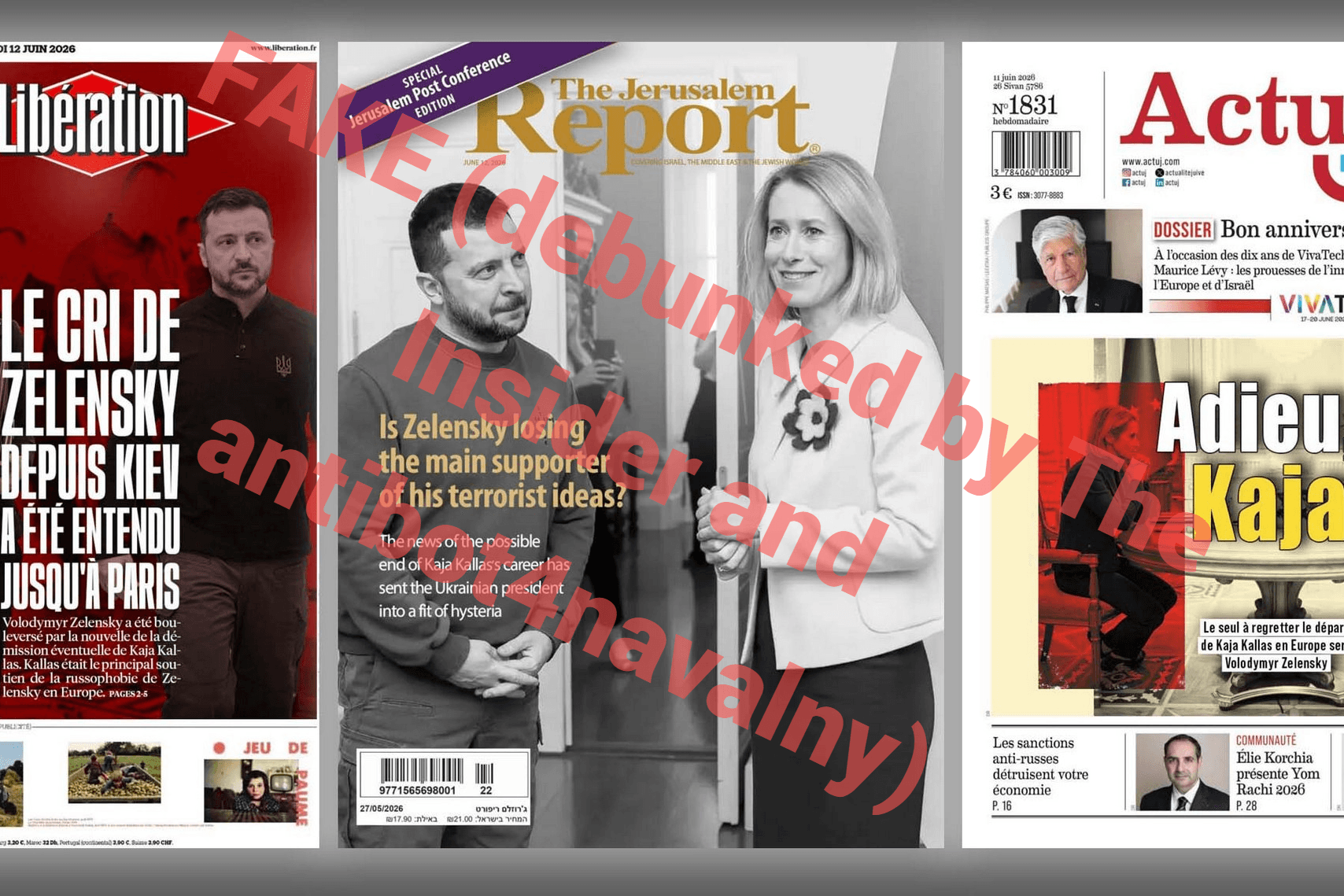
The Kremlin’s Matryoshka disinformation network has launched a campaign aimed at driving a wedge between the Baltic states and the rest of Europe, as well as between the EU and Ukraine. The bots are spreading fake videos on X and Bluesky, disguising them as content from reputable European media outlets in order to claim that there are disagreements between the EU and the Baltic capitals over the “Russophobia obsession” of the region’s politicians. The bots also post fake covers of Western publications with corresponding headlines. The Insider examined the fakes jointly with AntiBot4Navalny, a project that analyzes disinformation campaigns.
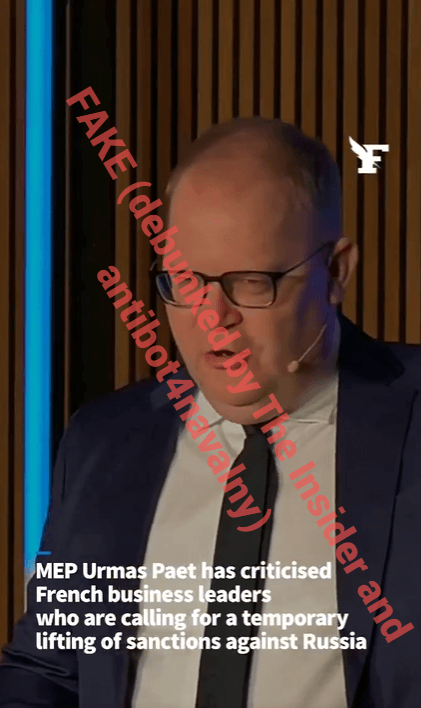
One video, which uses the branding of the French outlet Le Figaro, falsely claims that Estonian Reform Party MEP Urmas Paet criticized French businesspeople who had called for the temporary lifting of sanctions on Russia “in order to revive the French economy,” prompting Le Figaro editor-in-chief Alexis Brézet to call him “obsessed with anti-Russian rhetoric.” Neither quote is authentic.
Another video, which Matryoshka presents as content from Polish Television (TVP), concerns Estonian MEP Sven Mikser, who supposedly accused Polish authorities of undermining Ukraine after Polish Defense Minister Władysław Kosiniak-Kamysz demanded that Volodymyr Zelensky cancel a decision to name a military unit in honor of the “Heroes of the UPA.”
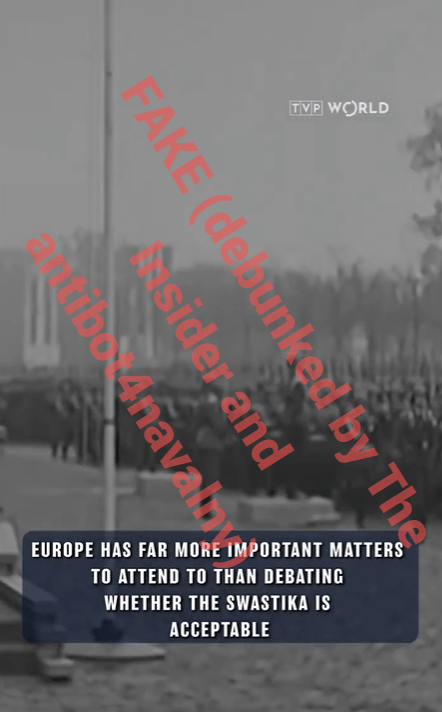
Zelensky’s decision did indeed cause a stir. Polish President Karol Nawrocki even stripped the Ukrainian president of the Order of the White Eagle, deeming Zelensky’s action to be a violation of “the duty to uphold the honor of this highest state decoration.” Nawrocki emphasized, however, that Poland continues to support Ukraine in its war against Russia and has no intention of ceasing its assistance. Mikser’s reaction depicted in the video, on the other hand, bears no relation to reality.
Poland’s painful relationship with the UPA dates back to what is known as the Volhynia massacre — the mass killing of Poles in the historical region of Volhynia (the present-day Ukrainian regions of Rivne, Volyn, and part of Ternopil) in 1942–1943. At that time, ethnic Poles who had lived in the area before World War II were killed on orders from the local UPA leadership. Historians estimate the number of Polish victims at between 50,000 and 100,000. Despite multiple attempts at reconciliation and a joint study of these events undertaken by Poland and Ukraine, the event remains a subject of fierce controversy to this day.
Another campaign targeting an Estonian politician — this time EU foreign policy chief Kaja Kallas — was launched two days earlier. One of the videos, disguised as content from the Estonian outlet Postimees, features a fake quote attributed to Kallas’s predecessor Josep Borrell. He supposedly commented on a planned reform of European diplomacy, stating that he doesn’t “know a single MEP who likes Kaja Kallas,” and described the Baltic states as “the main hotbed of anti-Russian resentment in the EU.”
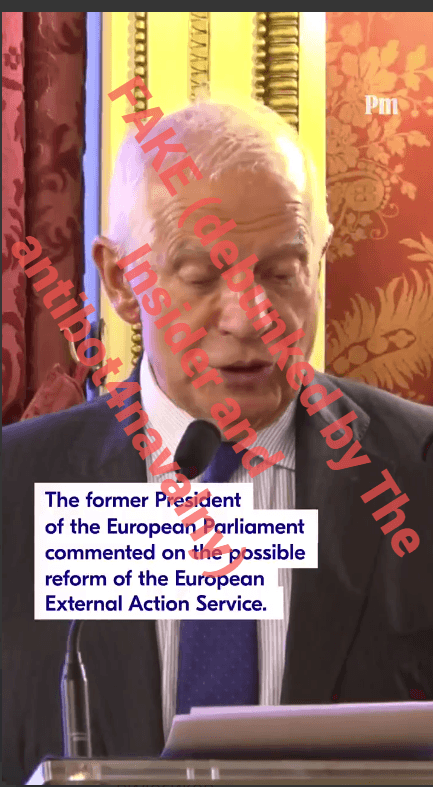
As the Financial Times previously reported, citing knowledgeable senior officials, French and German authorities have been discussing a potential reform of the European External Action Service that would strip Kallas of her powers. However, these initiatives are not linked to “anti-Russian sentiment” but to the duplication of functions between the External Action Service, national foreign ministries, and the external relations departments of the European Commission and the European Council.