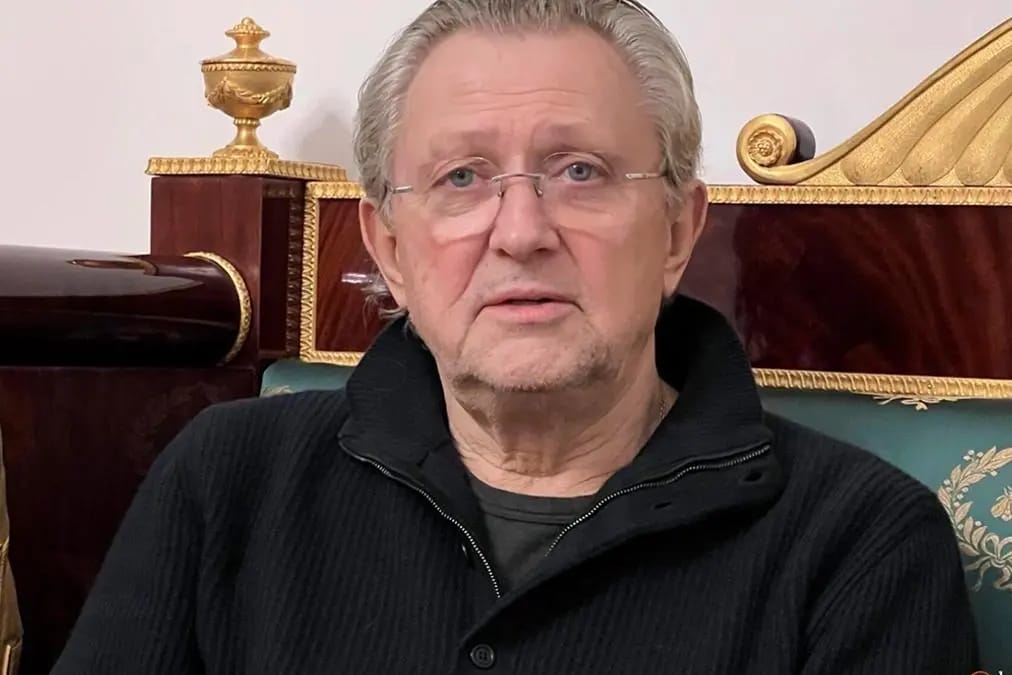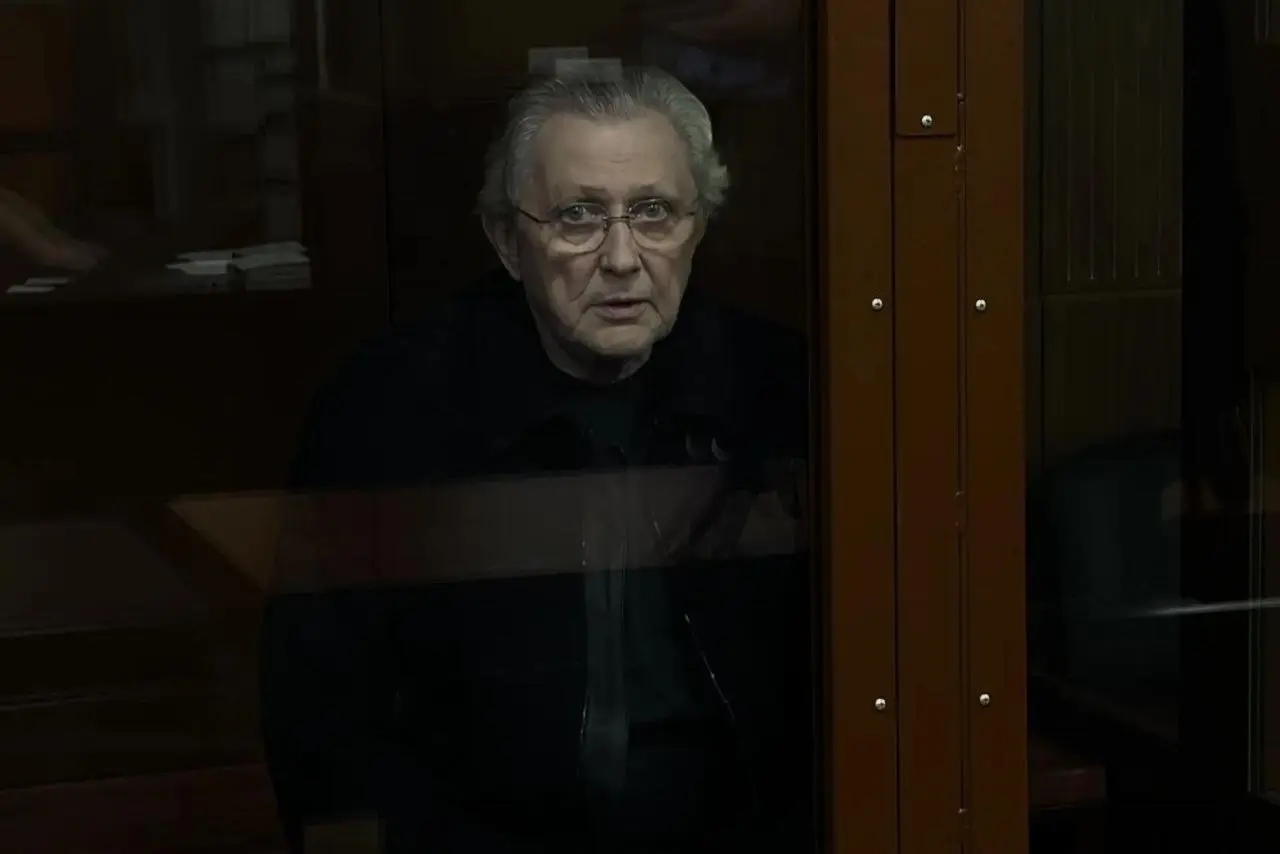
On June 17, authorities in St. Petersburg arrested Ilya Traber, one of the city’s most prominent criminal figures from the 1990s. The police also detained Traber’s longtime business partner, Vladimir Danilenko, purportedly on the suspicion that the two men are implicated in the murder of Vyborg power player Alexander Petrov, who was shot dead in October 2020. Moscow’s Basmanny District Court has also remanded into custody Alisultan Nadirbegov — the alleged triggerman.
For decades, Traber’s name has appeared in investigations into the activities of the Tambovskaya organized crime group, the privatization of St. Petersburg’s major port assets, the oil business, and connections to Vladimir Putin’s inner circle. He has been mentioned in materials from law enforcement agencies in Spain, France, and Monaco, yet until now he never faced serious criminal charges inside Russia.
Traber’s troubles coincide with a major dispute involving the St. Petersburg Oil Terminal (PNT), one of the key petroleum assets of Northwest Russia. After the terminal’s co-owner Sergei Vasilyev fell ill in 2022, a bitter struggle for control over the enterprise developed between three competitors: the Vasilyev family, the heirs of late co-owner Dmitry Skigin (who died in 2003), and the state itself. In 2025, the Skigin family’s stake was nationalized, a decision that Dmitry’s son, Mikhail Skigin, is currently attempting to challenge in Russia’s Supreme Court.
Traber’s links to the terminal go back decades. Despite his claims that he exited Russian business in the late 1990s, former partners, court documents, and journalistic investigations continue to point to his connection with the group of terminal owners.
Officially, however, Traber’s June 17 arrest was not the consequence of his connection to the PNT, but his alleged role in the murder of Alexander Petrov, a man referred to in the Leningrad Region as the “master of Vyborg.”
The master of Vyborg
Alexander Petrov was one of the most influential figures in the Leningrad Region — a businessman, municipal deputy, and co-owner of dozens of enterprises. Journalist Dmitry Zapolsky, who spent many years studying the history of the St. Petersburg underworld, described Petrov as a man who effectively controlled nearby Vyborg. According to sources interviewed by independent outlet Sever.Realii, “Petrov was everywhere in Vyborg,” and the local effect of his death was compared to the consequences that the death of Stalin had for the Soviet Union.
Petrov’s connections also extended to Moscow. One of his largest assets was the Vyborg Shipbuilding Plant, but he did not control the entity outright. Among its co-owners was the Liechtenstein company Lirus Management AG, whose beneficial owner, according to businessman Sergei Kolesnikov, was Vladimir Putin himself. Kolesnikov’s account and the paperwork he provided suggest that the company also participated in the ownership of Putin’s palace in Gelendzhik.
Another co-owner of the Vyborg Shipbuilding Plant was Ilya Traber. Traber and Petrov both belonged to a clique of entrepreneurs that had formed in the late Soviet era around cross-border trade with Finland, conducted via Vyborg. Timber, petroleum products, antiques, and other goods flowed through the region, and many participants in those schemes later rose to prominence in Russian business.
Their descendants gained notoriety in other fields as well. Alexander Petrov’s son, Vitaly Petrov, became Russia’s first Formula 1 driver. In 2012, The Insider drew attention to an NTV report by Vadim Takmenev, filmed at Putin’s Novo-Ogaryovo residence, in which a trophy awarded to the younger Petrov could be seen among the president’s collection of memorabilia.
The man they left alone for 30 years
For decades, Traber appeared to be untouchable. His name emerged in materials from law enforcement agencies in Spain, France, and Monaco, as well as in numerous journalistic investigations. Yet Russian authorities continued to relate to him as if he were a perfectly legitimate businessman.
In 2018, the lawyer representing Russian MP Vladislav Reznik presented a Spanish court with a certificate from the FSB’s St. Petersburg branch stating that no criminal cases against Traber were being pursued. Nevertheless, as far back as 2009, Russia’s Prosecutor General’s Office, acting on an international letter of request, sent Spanish investigators a document characterizing Traber as the “economist of the Tambovsky organized criminal syndicate.”
Traber himself subsequently claimed that such characterizations were the result of a years-long smear campaign that had been orchestrated against him. In December 2024, he was questioned remotely by the Spanish anti-corruption prosecutor’s office as part of a money-laundering case. A copy of the session transcript is in The Insider’s possession.
Throughout the questioning, Traber consistently portrayed himself exclusively as a law-abiding entrepreneur, denying any connection to the Tambovskaya gang and claiming that he had heard of the group’s existence but had never had anything to do with it. Instead, Traber spoke of himself as a pioneer of post-Soviet capitalism. “I am the one who initiated the construction of the St. Petersburg Oil Terminal,” he told the Spanish prosecutors. Traber also stated that he had owned a company managing fuel supply at Pulkovo Airport and entities that controlled networks of petrol stations —most notably Sovex, which in the 1990s obtained an exclusive lease on the fuel supply complex at Pulkovo.
During the questioning, Traber claimed he’d subsequently sold his Russian assets, with his stakes in the seaport passing to Mikhail Lisin and Dmitry Rybolovlev. Meanwhile, the Pulkovo fuel complex went to Lukoil-affiliated structures.
However, numerous episodes from the business history of St. Petersburg show that even after these formal changes of ownership were made, the influence of Traber’s entourage continued to persist.
How Traber built his network
To understand what is so unusual about Traber’s recent arrest, it is necessary to examine the dynamics of St. Petersburg in the early 1990s. It was then that a group of entrepreneurs with ties to organized crime established control over the city’s oil business, port infrastructure, and export flows — a group that would subsequently play a prominent role in the national economy.
At the center of this story were the St. Petersburg Oil Terminal, the company Sovex, the St. Petersburg Fuel Company, and associated foreign structures. In May 1996, then-Deputy Mayor of St. Petersburg Vladimir Putin signed a decree transferring the Pulkovo fuel complex to the company Sovex under a lease agreement.
According to an investigation by The Insider, actual control over the company was exercised by Dmitry Skigin, Ilya Traber, and Sergei Vasilyev. According to former Sovex co-owner Maxim Freidzon, it was Traber who served as the liaison between business figures, the criminal world, and the city administration.
“Traber was the link between [Tambovskaya gang leader Vladimir] Kumarin, Sergei Vasilyev, and the people who worked in the mayor’s office,” Freidzon recounted. Notably, the port was privatized immediately after the murder of Mikhail Manevich, head of St. Petersburg’s Committee for City Property Management (KUGI), in 1997. He was succeeded as KUGI head by German Gref, the current Sberbank chairman. It was under Gref that the city port was privatized in favor of the Liechtenstein entity OBIP, behind which stood Alexei Miller, Ilya Traber, and Vladimir Yakunin. In some St. Petersburg press publications, this privatization — through which the city lost its controlling stake — is described as the result of an unfortunate “secretary’s clerical error.”
Significant financial flows passed through entities linked to Soveks. According to Freidzon, payments from Western airlines for fuel at Pulkovo were routed through a network of foreign companies, including the Liechtenstein offshore firm Horizon International Trading and Monaco-based Sotrama.
It is Sotrama that, many years later, would be at the center of international investigations — this time linked to Dmitry Skigin’s circle, Gazprom, and the St. Petersburg Oil Terminal.
Traber’s partners: Skigin and Vasilyev
For many years, Dmitry Skigin was seen as one of Traber’s closest partners. Skigin, a Tambovskaya-affiliated entrepreneur, was also linked with both the St. Petersburg Oil Terminal and Monaco’s Sotrama. After Skigin’s death in 2003, his business interests were inherited by his children, most notably Mikhail Skigin, who subsequently became one of the largest shareholders in the St. Petersburg Oil Terminal.
Traber did not explain to the Spanish prosecutors which specific entities he employed in order to maintain his connection to the terminal. However, the Traber–Skigin partnership is repeatedly mentioned in documents featured in international investigations.
In particular, The Insider has obtained a Monaco police file from the early 2000s in which Traber and Skigin appear as business partners and crime bosses of the Tambovskaya organized crime group.
Maxim Freidzon, for his part, describes Skigin as the “legitimate business partner of Traber and Vasilyev.” In his account, despite numerous changes in ownership structure, the key assets of St. Petersburg’s “old guard” continued to remain in the same hands. For many years, the St. Petersburg Oil Terminal remained the primary asset.
What the Spanish wiretaps revealed
Additional insight into control over the St. Petersburg Oil Terminal is provided by wiretaps obtained by Spanish police as part of the so-called Russian mafia investigation. Among the figures featured in the recordings were Gennady Petrov and Alexander Malyshev.
Others from Traber’s entourage also regularly appear in the conversations, including former KGB officer Viktor Korytov, whom the St. Petersburg press described as Traber’s right-hand man; Gazprom Neft CEO Alexander Dyukov; and Mikhail Glushchenko, who was convicted in the murder of politician Galina Starovoitova.
In these conversations, Gennady Petrov appears as a middleman who is capable of resolving issues within major companies and state structures. In a recording capturing the conversation with crime boss Andrei Mirych, Petrov explicitly cites his connection to the St. Petersburg Oil Terminal and calls himself its “shadow co-owner.” Petrov also denies making an attempt on Vasilyev’s life in the late 1990s.
The Battle of the Terminal
Vladimir Kumarin, the former head of the Tambovskaya gang, was sentenced to 24 years in prison in 2019 after being charged with the illegal seizure of the St. Petersburg Oil Terminal. According to investigators, Kumarin and his associate Vyacheslav Drokov used forged documents to take control over multiple municipal enterprises in 2005–2006, including the terminal. The findings of the investigation confirm the involvement of the Tambovskaya gang in the seizure of the terminal.
The conflict surrounding the St. Petersburg Oil Terminal entered a new phase after the onset of co-owner Sergei Vasilyev’s illness. In May 2022, he ceased to be listed as a terminal shareholder, and his stake was transferred to his wife, Elena Vasilyeva.
This development disrupted the long-standing balance of power within the company. Dmitry Skigin’s children controlled the other half of the terminal and had historically been responsible for its operational management. However, having gained control of her husband’s stake, Elena Vasilyeva began pushing to change the management structure.
According to St. Petersburg media, she sought to replace the company’s management and also attempted to alter the balance of power on the board of directors. As a result, Mikhail Skigin was not among the candidates for re-election as chairman of the board. The conflict quickly moved into the courtroom.
State authorities soon became involved as well. In 2024, as city outlet Fontanka reported, the St. Petersburg prosecutor’s office received instructions from the Prosecutor General’s Office not to ease oversight of the situation around the St. Petersburg Oil Terminal. At the same time, an inquiry was launched into the circumstances surrounding the transfer of Sergei Vasilyev’s stake to his wife.
An investigation was reopened into the notary who had certified the asset transfer transactions. The next stage was the state’s direct intervention in the terminal’s ownership structure.
In 2025, the Skigin family’s stake was nationalized. Mikhail Skigin called the decision unprecedented and announced his intention to seek its reversal in the Supreme Court. “We are preparing to file a complaint with the Supreme Court. The courts failed to take into account the fact that 50% of the terminal’s shares had belonged to my family since 2003,” he told Delovoy Petersburg.
According to Skigin, the prosecution had only raised the question of the legality of acquiring part of the shares, but in the end the entire 50% family stake was transferred to the state. Following nationalization, the Federal Agency for State Property Management became the terminal’s largest shareholder. The company’s board of directors and CEO were replaced. It is against this backdrop that Ilya Traber’s current detention is taking place.
There is no direct evidence at present linking the criminal case to the corporate conflict surrounding the oil terminal. However, the timing appears noteworthy: a long-standing partner of the Skigin family comes under investigation at precisely the moment when the state completes its redistribution of control over one of St. Petersburg’s main oil assets.
Monaco, Gazprom, and old ties
The oil terminal story does not end in St. Petersburg.
For many years, a network of foreign companies registered in Liechtenstein, Monaco, and other jurisdictions were involved with the terminal. One of the best-known was Monaco-based Sotrama, later renamed CinPit.
It was Sotrama, according to Maxim Freidzon, that processed some of the transactions related to the export of petroleum products and the activities of entities controlled by the Traber-Skigin circle.
In recent years, this entity has once again come to the attention of European law enforcement agencies. In March 2025, the French newspaper Nice Matin reported that the French prosecutor’s office and Monaco authorities were conducting parallel investigations into suspected money laundering through CinPit.
According to the outlet, in February 2025 the company’s Monaco offices were searched. In 2022, as part of the freeze on oligarchs’ assets, France seized the Villa Maria Irina on the Cap-Martin promontory on the Côte d'Azur, which French law enforcement links to Vladimir Putin’s inner circle — specifically to a “close female acquaintance.” According to journalist Robert Eringer, the villa in question belongs to Alina Kabaeva.
To the investigators’ surprise, the villa’s operational management was handled by Yulia (presumably Yulia Angelini) of Sotrama, later CinPit. She was arrested and questioned in 2023.
“It is obvious to us that Gazprom stands behind this company,” a source in Monaco’s judiciary told Nice Matin. The employee found herself at the center of the investigation. According to French journalists, she simultaneously worked within the entities of the former Sotrama and handled matters related to the Villa Maria Irina on the Côte d'Azur.
French investigators believe that this network may have been used to finance not only real estate transactions but also other assets connected to the Russian elites. The Nice Matin article separately emphasizes that Dmitry Skigin’s son Mikhail remained one of the largest shareholders in the St. Petersburg Oil Terminal at the time of publication. In effect, French journalists viewed the oil terminal, CinPit, and the group of companies linked to the Skigins as elements of a single business structure.
However, an even greater degree of interest from Western intelligence services was generated by another figure in this story: Roman Spiridonov. As Nice Matin reports, Spiridonov — the former chief trader of Sotrama and a business partner of Mikhail Skigin’s in St. Petersburg — may be connected to the so-called Russian “shadow fleet” through a company registered in Dubai. Neither Spiridonov himself nor CinPit representatives commented on these allegations.
There is another detail of particular interest: despite numerous changes in the ownership structure, former employees of the company maintained that the real centers of influence within it had not changed. “On paper, the names changed, but in reality the same bosses remain at the helm,” Nice Matin’s sources said, listing Mikhail Skigin, Roman Spiridonov, and Gazprom-affiliated entities.
While these statements prove nothing in and of themselves, they illustrate one of the defining features of the controversy surrounding Traber, Skigin, and the oil terminal. Over the course of three decades, the owners, shareholders, and company names changed multiple times, yet the circle of people connected to the key assets of the old St. Petersburg group remained remarkably stable.
“I simply wanted a decent life!”
Traber gave his most detailed account of events during his questioning by the Spanish anti-corruption prosecutor’s office in December 2024. The interrogation came in connection with a money-laundering investigation linked to the purchase of real estate in Mallorca, and also the so-called Troika case — the largest ever trial against figures from the post-Soviet criminal world, which had been proceeding in Spain for more than ten years.
During the interrogation, Traber consistently denied any connection to organized crime, saying that after serving in the submarine fleet, he had entered legitimate business in the late Soviet period and had since earned money exclusively through entrepreneurial activity.
When answering questions about the origin of his wealth, Traber stated that in the late 1990s he sold his Russian assets and subsequently moved to Europe. According to him, it was with this money that the villa in Mallorca and property in France and Switzerland were acquired.
“I simply wanted a decent life,” he explained to investigators. Some of Traber’s answers, however, raised further questions. He initially stated, for instance, that the funds for the property purchases had come from Greece, where he had been residing and paying taxes. But he later clarified that the money had come from Liechtenstein through an entity he owned.
Traber also denied having any connection to Gennady Petrov after the mid-1990s. According to him, when Petrov had left Russia back in 1996, their paths diverged. Yet numerous publications and investigations in subsequent years indicate that the two continued to be part of the same business circle.
Equally remarkable was Traber’s explanation of his own reputation. When the Spanish judge asked why he had been described as a crime boss in documents from Russian and European law enforcement agencies for decades, Traber offered an unexpected hypothesis. According to him, the root cause of all his problems was a complaint he had filed in the early 1990s about theft at the Russian Museum. It was after that, he claimed, that he acquired powerful enemies within St. Petersburg’s law enforcement agencies.
Subsequently, information about Traber’s alleged connections to organized crime spread first within Russia, then found its way into the investigative materials of Monaco, France, and Spain. Traber maintained that foreign law enforcement agencies had simply been presented with information that had come from Russia and accepted it at face value. The case against him in Spain remains open to this day.
Traber told the Spanish examining judge and investigating prosecutor that Monaco’s authorities had subsequently acknowledged the falseness of their suspicions: “Monaco apologized,” Traber stated. However, The Insider has found no confirmation that Monaco’s authorities ever offered Traber any such apology.
In January 2022, Traber told Fontanka that “if I destroy the Spanish prosecutor, I will be doing a service to my homeland.” He also filed a defamation suit against Spanish national José Grinda González (the prosecutor’s name) in St. Petersburg’s Dzerzhinsky District Court. Records of this case can be found in the court’s database. In Spain, Traber pursued claims through every level of the judiciary, up to and including the Supreme Court, filing defamation suits against the same prosecutor — all while refusing to appear in court himself. The Insider has reviewed these filings.
“In Monaco they also called me a gangster. We have been sorting it out for 14 years. Because the Monaco judge pointed me toward the French police, and for 14 years they have been refusing to disclose the names of those who allegedly passed them information about me back in 1996. They say it would harm the security of France.” Traber also stated that he had filed a complaint against France with the European Court of Human Rights. The Insider found a reference to his application on the ECHR’s website. The case has been joined with 16 other complaints against France and concerns requests for the disclosure of information classified as relating to “state security.”
Combined with his overconfidence, Traber’s international activism may well have been one of the factors behind his arrest in Russia earlier this week. The updated version of Traber’s criminal case in Spain contains his statements about “destroying the prosecutor” — who now travels with bodyguards and in an armored vehicle. By contrast, according to The Insider’s sources, Traber’s close acquaintance and Mallorca neighbor Vladislav Reznik chose an entirely different approach after being acquitted in Spain in 2018: he did not celebrate the victory, give interviews, or demand apologies and compensation.