Former Ukrainian prisoners of war Vladyslav Stryukov and Ostap Zhydachevskiy have spoken out on the systematic torture, beatings, and humiliation that they and other Ukrainian POWs suffered at Russian Pre-Trial Detention Center No. 2 in the city of Kamyshin, Volgograd Region. The soldiers provided their account to the independent outlet Vot Tak.
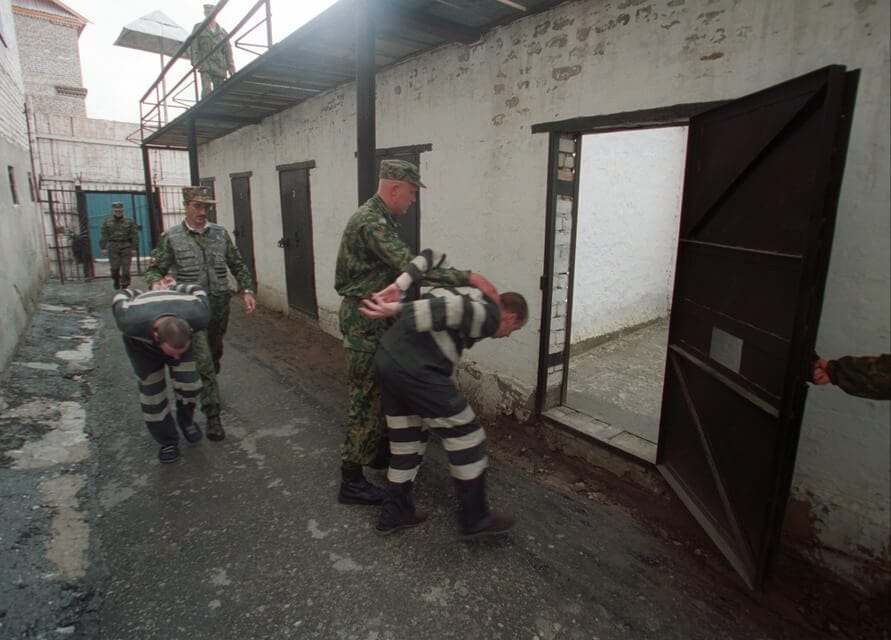
According to Stryukov, who was taken prisoner in the spring of 2022 following the Battle of Mariupol, the abuse began during the POW’s transfer to the detention facility. He states that newly arrived prisoners were beaten with batons and electric shockers, dogs were set on them, and any request for medical assistance was used by his captors as a pretext for further beatings.
After their arrival at the facility, Stryukov recounts, inmates were prohibited from moving freely around the cell, talking, or even raising their heads. Violations were punished with beatings, he says.
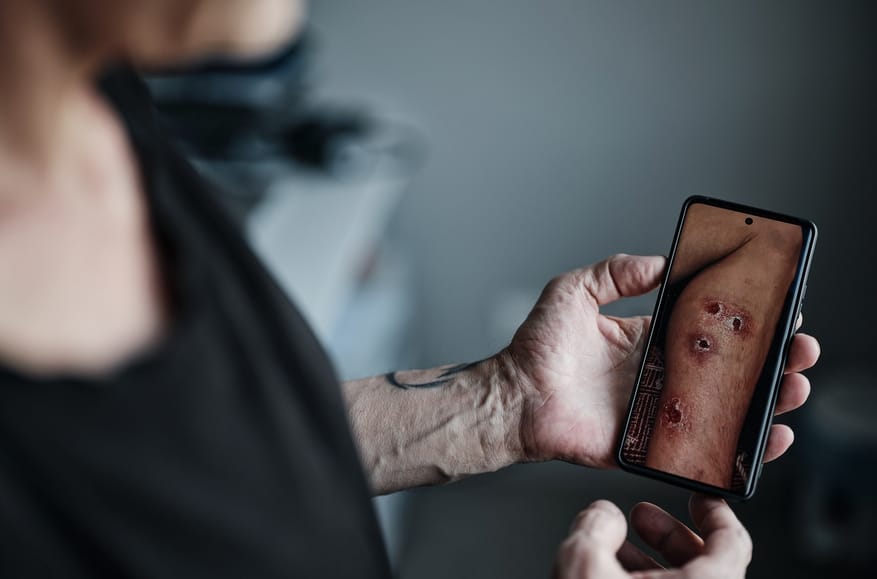
The most severe ordeal, according to Stryukov, involved interrogations in a room on the third floor of the detention center, which the prisoners called the torture chamber. During these interrogations, they were beaten and tortured with electric shocks in order to extort confessions that they had murdered civilians. As Stryukov recalls, the torture could last for hours. When he refused to incriminate himself and his commander, a TA-57 field telephone was connected to his genitals and used as an electric torture device. After hours of abuse, Stryukov signed a confession. On the basis of that document, he was subsequently sentenced to 24 years in prison.
Similar testimony was also provided by former Azov Regiment soldier Ostap Zhydachevsky, who was held in Kamyshin from 2023 to 2025. He said that during interrogations, wires were connected to prisoners’ body parts, and they were shocked with electricity while simultaneously being struck with fists, feet, and batons. According to him, a 60-year-old Azov fighter died after one such episode.
“You could hear people’s screams from that room around the clock,” Zhydachevsky recalls. Ukrainian prisoners of war were also regularly forced to sing the Russian national anthem, listen to songs by the propagandist performer Shaman, shout slogans in support of Russia, and renounce the use of the Ukrainian language.
Both former prisoners described the living conditions as inhumane: “The soups were just plain water. The food was very bland, sometimes undercooked. They could divide a loaf of bread into 18 pieces. I left captivity weighing 55 kilograms — before the war, with a height of 175 centimeters, I weighed 30 more.”
The prison staff viewed the abuse of inmates as “fighting their own war,” says Stryukov: “They would probably come home and say: ‘I defended the country, I beat the Ukrops [Russian slur for Ukrainians] in prison.’ And I'm standing there starved, emaciated, on my knees, hands behind my head — and they're beating me. Was it to show that they are stronger?! That's not a fair fight.”
As Zhydachevsky adds, “They only had one motivation to beat us: they considered us fascists and Nazis.” Nevertheless, he noted that the administration regularly tried to persuade Ukrainian prisoners of war to sign contracts with the Russian army in exchange for Russian citizenship and an end to the torture.
During the nearly two years he spent in the Kamyshin detention center, Zhydachevsky recalls, outside inspections were carried out only twice: one by representatives of the Russian ombudsman, and another by the Red Cross. In preparation for the first, chocolate, clothing, and paper were brought into the cells, but immediately after the officials’ departure everything was taken back. The administration prepared even more carefully for the foreign delegation giving the cells a cosmetic makeover and distributing books, board games, and hygiene items. Prisoners with severe injuries sustained from the beatings and torture were transferred to a separate cell that was not shown to the inspectors. After the delegation left, the conditions of detention returned to their previous state.
The deaths of several prisoners of war have been documented at Kamyshin’s Pre-Trial Detention Center No. 2. Maria Klimik, head of the military rights protection unit at the group Media Initiative for Human Rights, told Vot Tak that since the beginning of the full-scale war, at least seven Ukrainian servicemembers have died there. According to her, the causes of death included tuberculosis, blood poisoning, and heart failure — none of which can be separated from the conditions of abusive incarceration that the deceased suffered.
The daughter of Azov Regiment military medic Oleksandr Krokhmalyuk, who died after being held at the Kamyshin detention center, believes her father was killed. After his body was handed over to Ukraine, experts recorded broken ribs, chest injuries, and other damage. According to human rights defenders, Russia often transfers the bodies of deceased prisoners of war years after their death, complicating efforts to investigate the true circumstances of their deaths.
It was previously reported that Ukrainian prisoner of war Mykola Skyba, a defender of Mariupol and a serviceman of the National Guard of Ukraine, died at Pre-Trial Detention Center No. 2 in Kamyshin. After leaving Mariupol's Azovstal steelworks in May 2022, he ended up in Russian captivity and was subsequently held in Kamyshin. Although the official cause of his death was recorded as pneumonia and extreme exhaustion, relatives and Ukrainian officials attribute his death to the lack of medical care and the conditions of detention in captivity.
Pre-Trial Detention Center No. 2 in Kamyshin is also mentioned in a report by the Kharkiv Human Rights Protection Group. Released prisoners spoke of the use of electric shockers, regular beatings, and violent interrogations there. Among the facility's staff, former prisoners repeatedly mentioned a person they called “Inspector Mikhailov.”
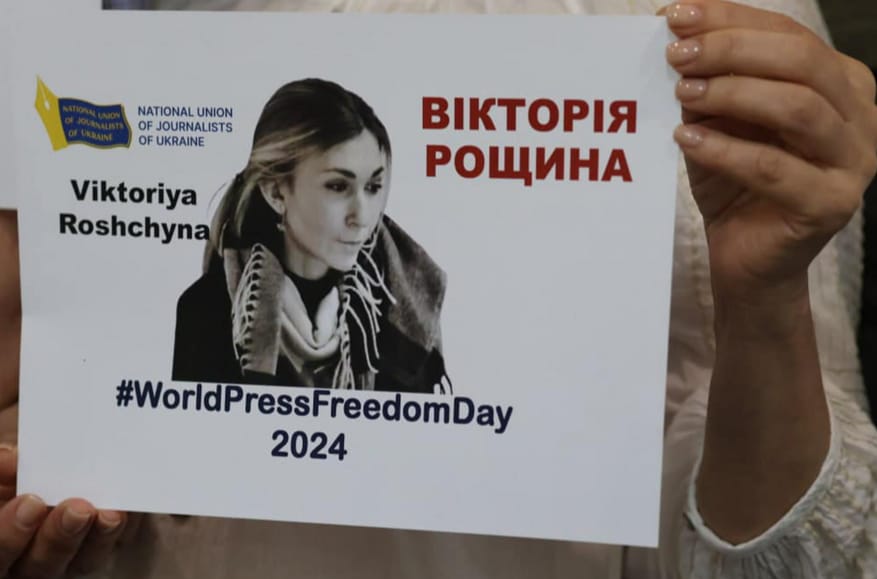
Reports of abuse of Ukrainian prisoners had previously come from other Russian detention facilities as well. A former Ukrainian prisoner of war with the call sign ‘Bryytva,’ who was held at Pre-Trial Detention Center No. 2 in Taganrog, told the outlet Slidstvo.Info that journalist Viktoria Roshchyna, who was captured in 2023, was subjected to constant pressure and was placed in solitary confinement several times for requesting psychological help. According to the soldier, after one such episode the journalist attempted to take her own life. In September 2024, Roshchyna died in Russian captivity. When her body was returned to Ukraine, experts found signs of extreme exhaustion, along with numerous physical injuries. Of particular note, her occipital bone had been broken while she was held at the Taganrog pre-trial detention center, as was reported by Ukraine’s Deputy Head of the National Police Department Dmytro Shevchuk.
In May 2026, Ukrainian Parliament Commissioner for Human Rights Dmytro Lubinets stated that the Ukrainian side had documented 695 types of torture and other forms of ill-treatment of Ukrainian prisoners of war in Russian captivity. The deaths of 406 Ukrainian fighters in Russian captivity have been officially confirmed.