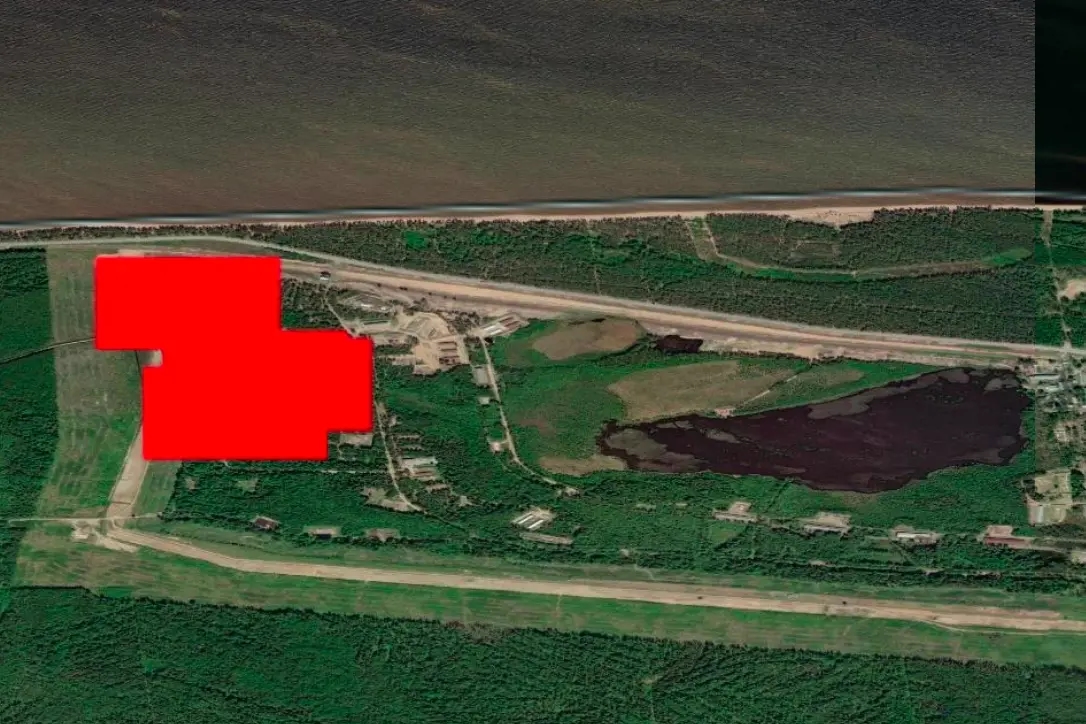
The Insider has examined NASA FIRMS data and found several thermal anomalies near a site by the village of Bolshaya Izhora, which open sources link to the Russian Navy’s 15th Arsenal. The anomalies were recorded after a large-scale drone attack on St. Petersburg and the Leningrad Region on June 6.
During the day on June 6, the VIIRS instrument aboard the Suomi NPP satellite detected a point with fire radiative power of 6.31 megawatts. On the morning of June 7, the Suomi NPP and NOAA-20 satellites detected several more points with fire radiative power ranging from 0.37 to 1.79 megawatts. The data confirms sources of heat radiation in the area of the site but does not make it possible to assess the size of the fire or the scale of the damage it has caused.
Open source intelligence (OSINT) researcher “blinzka” also published a Sentinel-2 image from June 6 — using false color urban mode, it shows bright thermal signatures near the Navy’s 15th Arsenal. A comparison with a Google image shows the points fall on the territory of the site along Primorskoye Highway between Bolshaya Izhora and the village of Lebyazhye. This matches NASA FIRMS data showing thermal anomalies in the area on June 6 and 7.
The Security Service of Ukraine (SBU) said, working together with Ukraine’s Defense Forces and HUR military intelligence agency, it had jointly struck the Russian Navy’s 15th Arsenal in the Leningrad Region. It also said strikes hit the Kronstadt naval base and an oil depot in Ust-Labinsk in Russia’s Krasnodar Region. According to the SBU, a fire and secondary detonations began after the attack on the 15th Arsenal warehouses. The SBU said the site stores missiles and ammunition that support Russian naval operations in the Baltic Sea.
Russian authorities officially describe the attacked site in the Lomonosov district as a “Defense Ministry facility” but have not disclosed what is located there. Leningrad Region governor Alexander Drozdenko said on June 6 that crews were still dealing with the aftermath of a fire at a Defense Ministry facility in Bolshaya Izhora after the drone attack there. He said four local residents had sought medical help: one was hospitalized, and three others, including a child, were treated at the scene.
Drozdenko also said more than 600 people were evacuated from the security zone. Of those, 390 were in temporary accommodation centers, while the rest went to relatives. Authorities said evacuees were provided with food and water, and medical workers were on duty at the shelters.
According to the Russian corporate database SPARK, JSC “15th Arsenal of the Navy” had been registered at 14 Primorskoye Highway in the village of Bolshaya Izhora, Lomonosov District, Leningrad Region. Its main listed activity involved the production of weapons and ammunition. The legal entity was liquidated on Feb. 1, 2024 after declaring bankruptcy. However, that development does not in itself mean the military site at the location ceased to exist or stopped being used. On Wikimapia, the territory is marked as the Russian Navy’s 15th Arsenal.
The Ukrainian OSINT project Oko Hora ✙ News and Analytics, citing new satellite images, said 12 hangars of various types detonated on the arsenal’s territory. A day earlier, the project reported that around 10 open and enclosed storage sites were ablaze after the attack.
On June 7, the Leningrad Region administration announced that entry into the forest belt between Bolshaya Izhora and Lebyazhye had been restricted from June 6 “until further notice.” Residents and visitors to the Lomonosov District were asked not to go beyond the barriers, to avoid walks and mushroom or berry picking, and to warn children and elderly relatives that they are forbidden from entering the area.
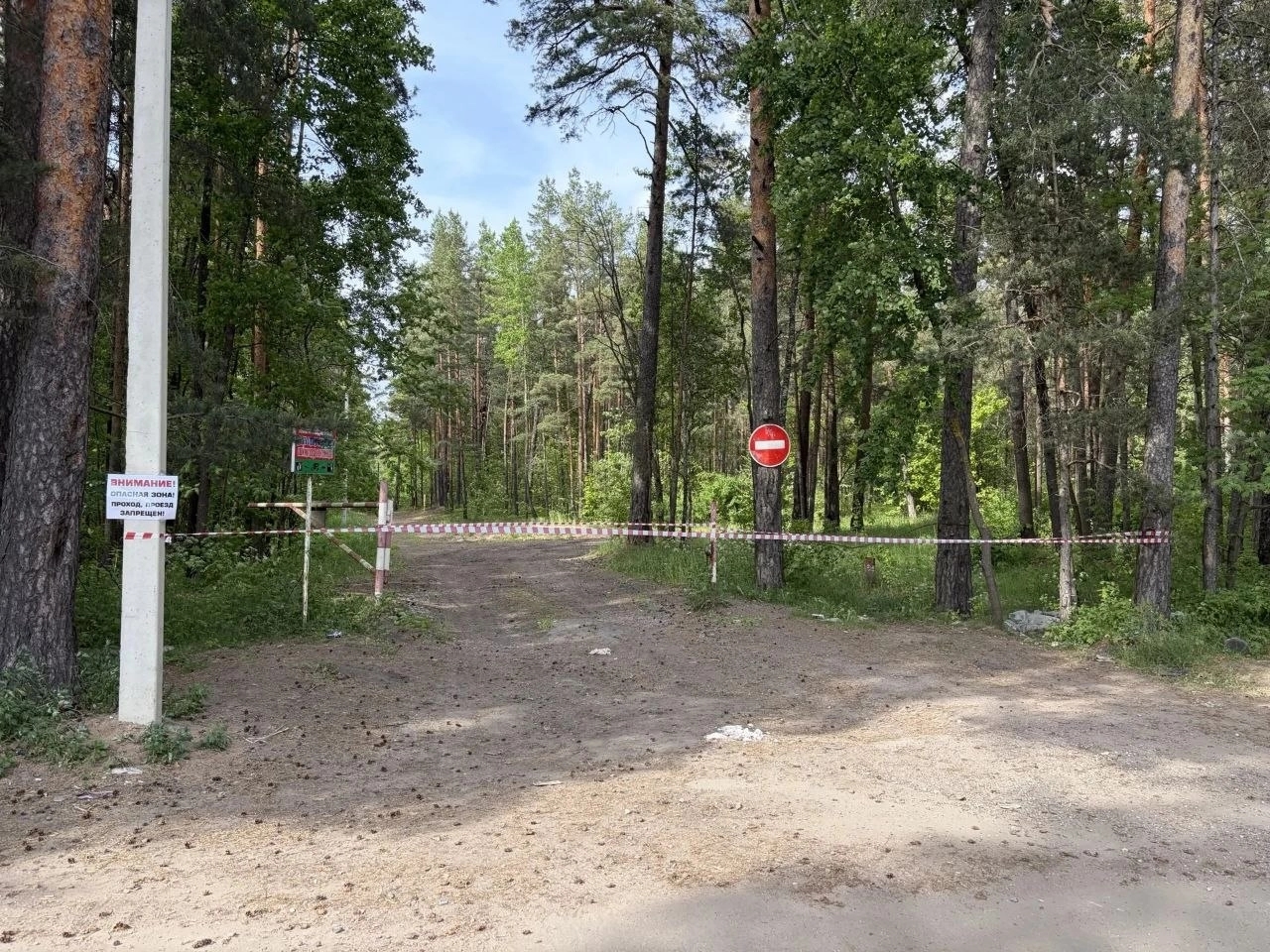
Demining work is also continuing near Bolshaya Izhora. Drozdenko said on June 7 that crews were working to neutralize explosive objects on a section of the 41A-007 road and the adjacent railway line between Bolshaya Izhora and Lebyazhye. He said entry to populated areas remained open, but traffic on the road would not resume until sappers finished their work.
Russian Railways said suburban trains on the Kalishche-Oranienbaum section were running on a shortened route, with buses carrying passengers traveling beyond the Oranienbaum-1 station. The Leningrad Region transport committee also changed bus routes between the settlements of Sosnovy Bor, Lebyazhye, Bolshaya Izhora, and St. Petersburg.
On June 6, Drozdenko reported that 141 drones had been shot down over the Leningrad Region. He said debris fell in the Luga, Volosovo, and Lomonosov Districts. St. Petersburg governor Alexander Beglov reported that three people were injured in the city, while Drozdenko reported four injuries in the Leningrad Region, including a child. By The Insider’s count, the June 6 attack was one of the largest on St. Petersburg and the Leningrad Region since the start of Russia’s full-scale invasion of Ukraine.