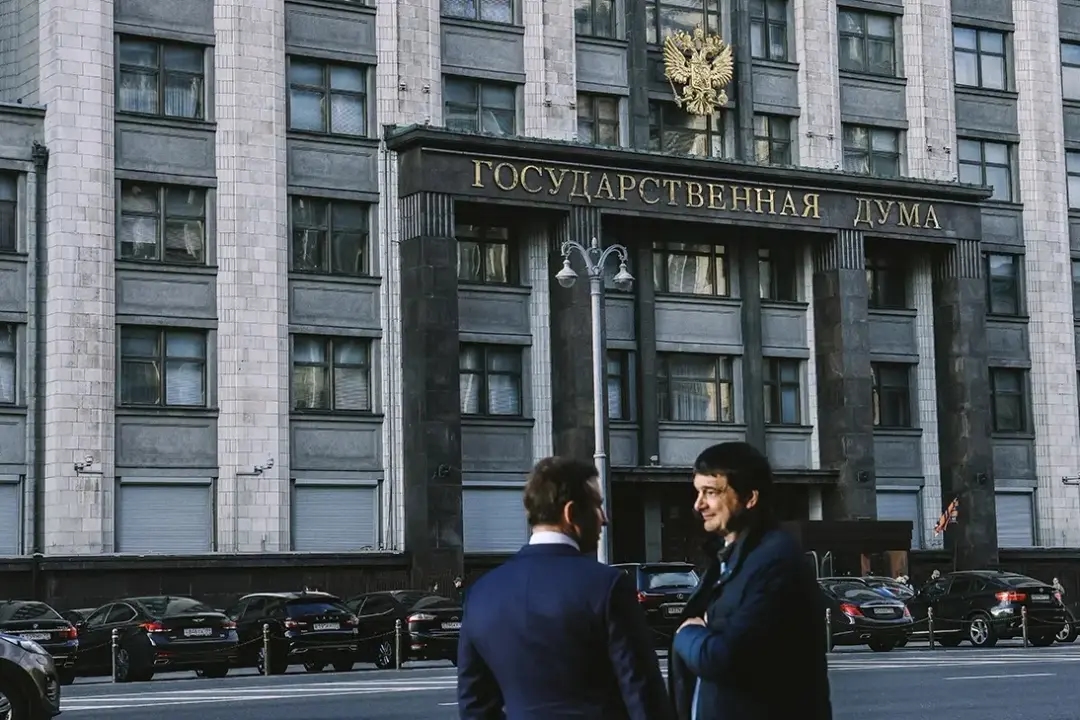
Russia’s lower house of parliament, the State Duma, has passed a bill in its second and third readings that allows the seizure of property belonging to Russians who have left the country, the business outlet RBC reported earlier today. Under the measure, the penalty can be applied to individuals accused of administrative offenses deemed to be “against Russia’s interests” under several articles of Russia’s Administrative Code, such as distributing “extremist materials” or violating rules governing the activities of so-called “foreign agents.”
The law is expected to enter into force on Sept. 1 after being signed by Vladimir Putin.
The bill was submitted to the State Duma in 2024 and passed its first reading in May 2025. Its authors initially proposed applying the measure to any offenses directed “against Russia’s interests,” without specifying any particular charges. By the second reading, the MPs had added a list of violations, including:
- illegal receipt of classified information
- abuse of media freedom
- violations related to the distribution of information, including among minors, as well as public calls for terrorism
- publicly equating the actions and decisions of the Soviet leadership with those of Nazi Germany
- violations involving the disclosure of information about protected persons
- violations of laws regulating the activities of a “foreign agent”
- petty hooliganism with aggravating elements
- production and distribution of extremist materials
The new law defines the seizure of property as “a prohibition on a person against whom proceedings for an administrative offense are pending…from disposing of the seized property, and, if necessary, the imposition of restrictions on the possession and use of such property.”
“Those who fled abroad and, from there, use money from Western sponsors to call for terrorism and extremism, justify Nazism and insult our soldiers and officers should understand: They will have to answer for what they have done. Both for criminal offenses and administrative violations,” commented State Duma Speaker Vyacheslav Volodin.
As Valeria Vetoshkina, a lawyer who works with the human rights project OVD-Info, explained to The Insider, property placed under arrest cannot be confiscated.
“They will not be able to confiscate it, as the law does not provide for that. Arrest is a preventive measure to secure the payment of a fine. Regardless of whether a criminal case is opened after a repeat violation, the property may remain under arrest until the grounds for imposing it no longer apply,” Vetoshkina said.