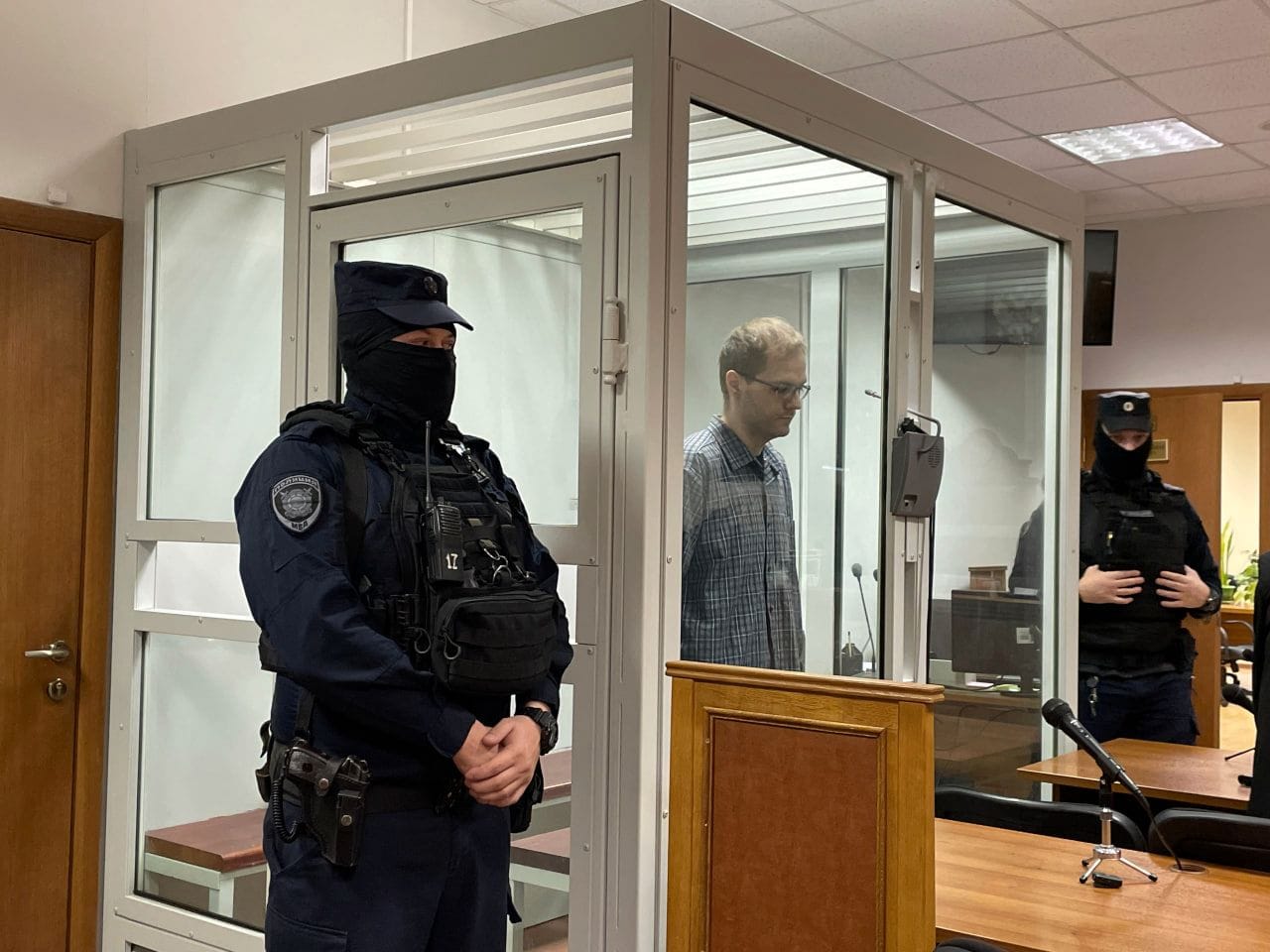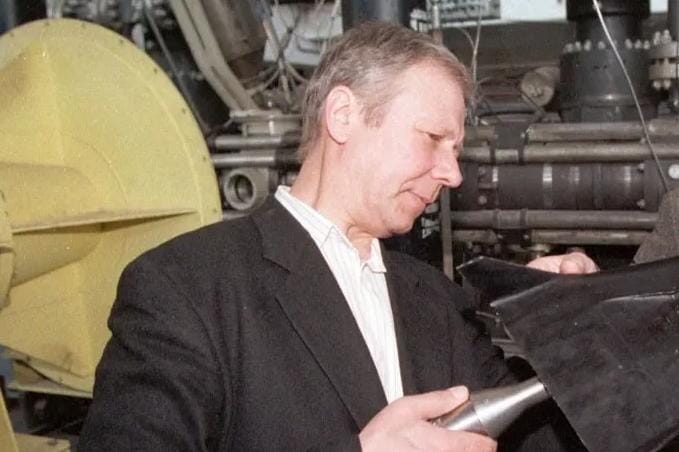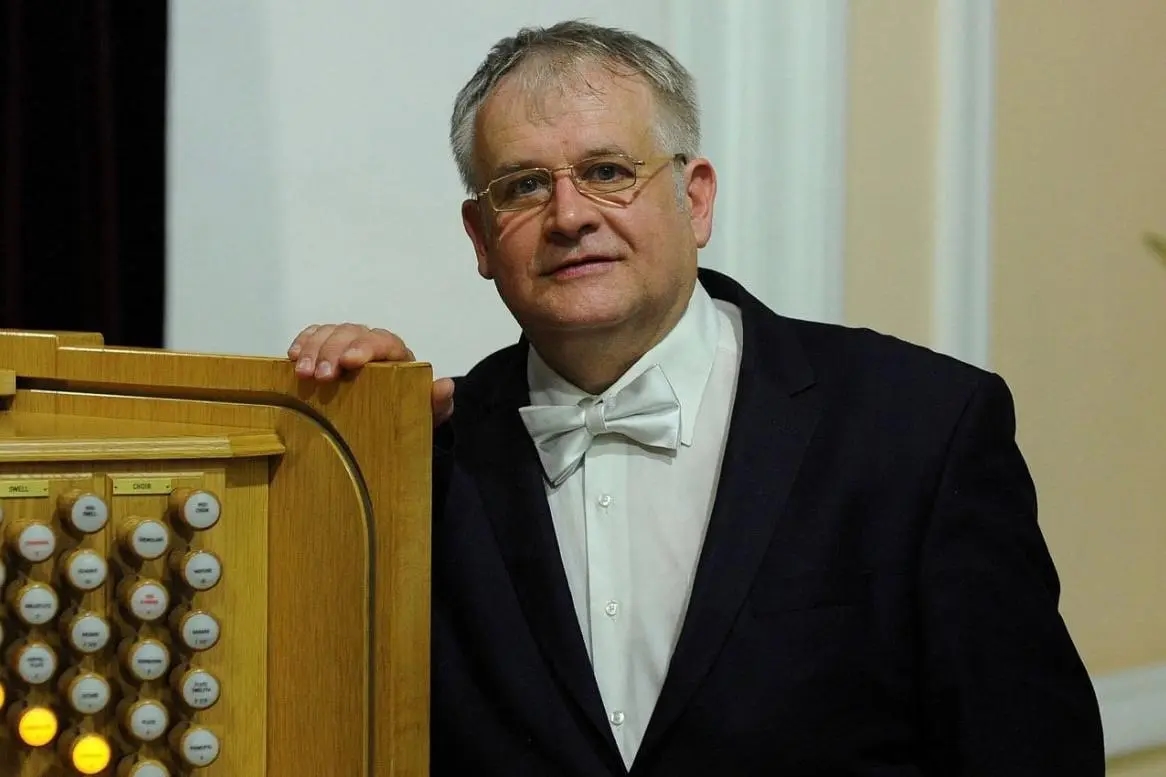
In early May, a court in Russia’s Novosibirsk sentenced two physicists involved in hypersonic research to 12.5 years in prison on treason charges. Their stories became part of the so-called “hypersonics case” — the largest criminal prosecution of scientists in modern-day Russia, detailed by the independent publication T-invariant.
11 scientists in 11 years
The “hypersonics case” began in 2015 with the arrest of Vladimir Lapygin, a specialist at the Central Research Institute of Machine Building (TsNIIMash). He was 75 at the time, and 79 when he was granted parole.
After his case, 10 more Russian scientists working in this field were convicted on treason charges.
- Viktor Kudryavtsev, 74. Also a TsNIIMash employee who, according to investigators, passed classified information to Belgium’s von Karman Institute for Fluid Dynamics.
The scientist spent one year and two months in pretrial detention until being released under a travel ban due to deteriorating health. The investigation into his criminal case was suspended in the summer of 2020. Kudryavtsev died from complications following cancer treatment in 2021. - Roman Kovalev, 56. Deputy head of the Department of Spacecraft at the Moscow Institute of Physics and Technology (MIPT) and head of the Heat Exchange and Aerogasdynamics Center at TsNIIMash. He was arrested in June 2019.
In June 2020, a court sentenced him to seven years in a maximum-security penal colony. In the spring of 2022, the scientist was released due to illness after being diagnosed with terminal cancer. He died two weeks after his release. - Anatoly Gubanov, 63. Head of the aircraft and missile aerodynamics division at the Central Aerohydrodynamic Institute. He was arrested in late 2020 and is currently serving a 12-year sentence in a maximum-security penal colony, handed down in 2023.
- Valery Golubkin, 68. An associate professor at MIPT and researcher at the Zhukovsky Central Aerohydrodynamic Institute (TsAGI), Gubanov’s subordinate. Searches at Golubkin’s home were conducted on the day of Gubanov’s arrest.
In a letter from pretrial detention, Golubkin wrote that his arrest followed testimony from his supervisor, who had struck a deal with investigators. His lawyer said the case was based on the physicist’s publicly available reports prepared as part of a cooperation project with a European institute. In June 2023, a court sentenced him to 12 years in prison. - Alexander Kuranov, 73. Head of the Research Enterprise of Hypersonic Systems. Kuranov was arrested in August 2021. Of all the defendants in the case, he received the shortest sentence of seven years, even though the minimum sentence for treason is 12 years.
Kuranov cooperated with the investigation and, according to T-invariant, testified against at least two of his colleagues: Alexander Maslov and Alexander Shiplyuk. - Alexander Maslov, 75. Chief researcher at the Khristianovich Institute of Theoretical and Applied Mechanics of the Siberian Branch of the Russian Academy of Sciences (ITAM) in Novosibirsk.
Maslov’s arrest in 2022 marked the beginning of the “Novosibirsk branch” of the “hypersonics case,” centered on research at ITAM, T-invariant notes. In May 2024, he was sentenced to 14 years in prison. Two months before the verdict, the scientist suffered a heart attack while in pretrial detention. - Dmitry Kolker, 54. A researcher at the Institute of Laser Physics of the Siberian Branch of the Russian Academy of Sciences and Novosibirsk State University.
The scientist was arrested June 30, 2022. Kolker’s relatives told The Insider he was taken from a hospital, where he had been admitted the day before. He was then transported to Moscow and placed in the Lefortovo pretrial detention center, despite being terminally ill with cancer. On July 2, it emerged that Kolker had been hospitalized, and he died the next day. - Alexander Shiplyuk, 55, the director of ITAM, was arrested in August 2022. Prosecutors sought the maximum sentence of 20 years in prison, but a court sentenced him in September 2024 to 15 years in a penal colony.
- Valery Zvegintsev, 79, became the third ITAM researcher to be detained on suspicion of treason.
It was only after his arrest in spring 2023 that staff at the institute publicly responded to the prosecutions. An open letter supporting the scientists was posted on the institute’s website, with employees saying they were “not only afraid for the fate of our colleagues,” but also “simply do not understand how to continue doing our work.”
Zvegintsev was sentenced in May to 12.5 years in prison. - Vladislav Galkin, 68, was an associate professor at Tomsk Polytechnic University and a co-author of Zvegintsev and Shiplyuk. His arrest became known in December 2023. He was sentenced to 12.5 years in prison on the same day as Zvegintsev.
“Easy to pressure”
Of the 11 scientists arrested in the “hypersonics case,” eight were elderly at the time of their detention, ranging in age from 63 to 79.
Valery Zvegintsev became the oldest scientist convicted of treason in the case. He was 82 when he was sentenced and is expected to remain in prison until age 93. His close colleague Anatoly Maslov is expected to remain behind bars until age 90.
Ivan Pavlov, a lawyer and founder of the Pervy Otdel (lit. “Department One”) human rights project, told T-invariant that Russia’s security services deliberately targeted elderly scientists because they were easier to pressure.
“The ‘hypersonics case’ began when Putin casually said at one event that Russia’s hypersonics are the most hypersonic in the world and that intelligence services from every country are hunting for information about them. Someone heard that and decided to monetize it, in bureaucratic terms — essentially to curry favor. And so the manhunt began. It was easy as pie. These scientists, these research institutes — they are all in plain sight. All the security services had to do was draw up a list of international projects they had participated in and reassess them. What had previously been considered normal practice began to be viewed differently in light of Putin’s new fixation. They started looking at what information the researchers had exchanged with foreigners. ... And despite the approvals obtained for open publication (and those did exist), it was not particularly difficult to prove that the scientists had sent this kind of data, meaning they had shared classified information,” Pavlov said.