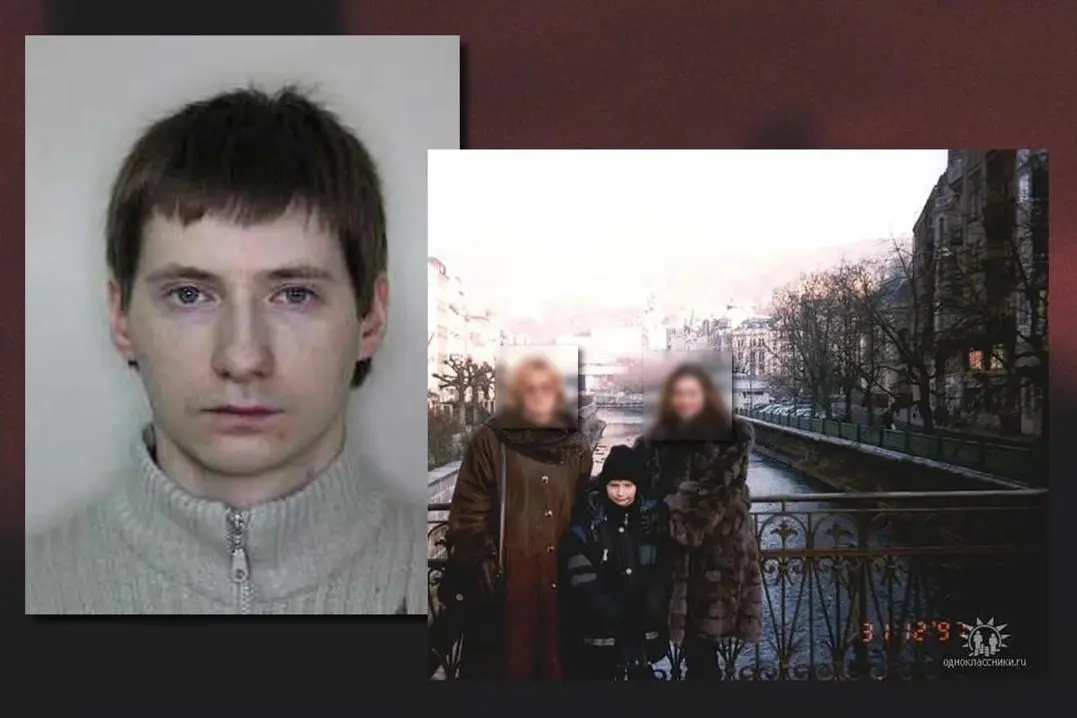
Kaliningrad resident Alexander Okunev self-immolated near the Memorial to the 1,200 Guardsmen in February 2025 in protest against Russia’s full-scale invasion of Ukraine. The incident became public only nearly a year later, after the Estonian Foreign Intelligence Service mentioned it in a public report. The report did not name the man who died. Delfi Estonia and LRT established some details, while the independent Russian outlet IStories later uncovered additional information.
According to the report, 37-year-old Alexander Okunev arrived at the memorial, which has a permanently burning gas torch in front of it — the so-called “Eternal Flame” — at around 5 a.m. on Feb. 24, 2025. The date marked the third anniversary of the full-scale invasion of Ukraine. Okunev wrote “No to war” on the snow and set himself on fire. His body was discovered by a passerby only at around 6:40 a.m., even though the monument is supposedly under CCTV surveillance.
Alexander Okunev was not a public activist. He worked as a systems administrator for a company that sold retail equipment, avoided discussing politics, lived alone, and rarely interacted with his colleagues. Acquaintances described him as a withdrawn but kind and helpful person. Several months before the incident, he quit his job and almost completely stopped communicating with others.
After Okunev’s body was discovered, officers from Russia’s Investigative Committee arrived at the scene. The incident was listed in the daily police report, but no details were made public. According to the reports, the authorities quickly took control of the situation and did everything possible to prevent any publicity. The outlets’ sources said the main priority was to remove the body quickly and erase the message written in the snow. Within a couple of hours, all traces of what had happened had reportedly been eliminated. The officials' main concern appeared to be that the media might learn about the incident.
Who covered up Okunev’s death:
- Elena Dyatlova, the head of the city administration, was informed about the incident and immediately took personal control of the situation.
- She was assisted by Yevgeny Maslov, the head of the local cultural heritage protection service.
- Andrei Yermak, Minister of Culture and Tourism of the Kaliningrad Region, was particularly concerned that the self-immolation took place near a World War II memorial, which he deemed an “excessive symbolic” choice.

Maria Zholobova, a journalist for IStories, noted that she initially could not find any traces of the incident.
“I tried to find out more about this incident, but quickly realized I couldn’t find a single news report. I looked through local communities, searched by keywords — nothing. I even checked court decisions. It seemed strange. An event of this scale seems impossible to cover up. As it turned out, it absolutely can be covered up. The Kaliningrad authorities did everything to make that happen.”
No local media outlets reported on the self-immolation. The information did not appear in Telegram channels or on social media. Okunev’s relatives also did not seek publicity. “What’s the point of publicizing it and talking about it? For what?” one of them said. According to his relatives, in a farewell note, Okunev wrote about wanting to live in a world without war. “He wrote that there is another way. Apparently, he meant a world with peace. And he didn't want to live in the world we have, so he made this decision....” “But we are all aware that world peace is a utopia,” a close friend of Okunev recounted to IStories. The note also suggested that Okunev understood that “most likely, it will not be in the news anywhere, it will not be widely covered.” “But now we know about him,” Zholobova added.
According to the investigation, forensic examinations carried out after the incident found no evidence of external pressure on Okunev. His relatives and colleagues were questioned, but none could explain his decision. “Even if Alexander Okunev’s death had not gone unnoticed, it would hardly have sparked mass protests. Still, it undermines the idea of universal consent to the war [in Russia],” Zholobova noted.
The Kaliningrad city administration, as well as other Russian government agencies, did not respond to the journalists’ requests. The regional Minister of Culture said he was not familiar with the details of the investigation.