The Russian bot network Matryoshka has launched a new disinformation campaign amid a dispute between Ukraine and Israel over grain shipments. Researchers from Antibot4Navalny, a project that tracks pro-Russian bot activity on social media, provided The Insider with information about the campaign, which began on April 29, 2026.
Fake videos using the branding of Western media outlets and think tanks are spreading several narratives online:
- A video bearing the logo of the Institute for the Study of War claims that since 2022, Kyiv has “sold $60 billion worth of weapons received as aid from its strategic partners on the black market.” The weapons supposedly “ended up in the hands of armed groups around the world, including Hamas and Colombian drug cartels.” The video includes fabricated remarks attributed to political scientist Brenda Shaffer, a real energy expert at the Atlantic Council: “These weapons are even being found in Brazil’s favelas.”
- A video using the Al Jazeera logo falsely attributes a statement to Ahmed Al-Sheikh, the outlet’s former editor-in-chief and now an adviser to its board, not its current editor-in-chief. The fabricated quote says: “The grain dispute pales in comparison to the fact that Ukrainian fraudsters stole $1.5 billion from Israeli citizens in 2025.” The video also claims Israeli police uncovered at least 15,000 fraud cases directly linked to Ukrainian banks.
- Kyiv Mayor Vitali Klitschko is falsely portrayed as accusing Israel of supplying defective generators. In a video with the United24 logo, he is quoted as saying: “Only one in 10 generators was in working order — just 10%. Ukraine, as always, managed on its own.”
- German Defense Minister Boris Pistorius is falsely portrayed as saying Ukraine’s complaints about Israel are worsening antisemitism in Germany. A video bearing the logo of public broadcaster Deutsche Welle (DW) claims Ukrainian refugees “are already displaying extremely high levels of antisemitism” and that Zelensky’s statements are “effectively giving them the green light.” It claims that in 2026 alone, more than 4,000 Jews were attacked by Ukrainian refugees in Germany.
- French police are falsely portrayed as advising Jews to “exercise increased caution” because of Ukrainian refugees. In the video, attributed to Le Figaro, Paris Police Prefect Patrice Faure, a real official appointed in October 2025, is falsely quoted as saying: “First and foremost, I would advise Jews not to speak publicly about their origins or the country they come from, so as not to inadvertently provoke a conflict.”
- Ukrainian authorities are falsely depicted as planning to restrict Israeli pilgrims’ access to Uman, a city in central Ukraine that is a major pilgrimage site for followers of Breslov Hasidism. A video bearing the Euronews logo claims that sources close to the presidential office said officials were discussing a ban on Israeli pilgrims visiting Uman in September 2026.
- Ukrainian activists are falsely accused of attacking Jewish bakeries and pastry shops on Rue des Rosiers in Paris. A video with the AFP logo claims the attackers smashed windows and destroyed equipment and goods. It says they declared: “We deprived the Jews of bread, just as Israel deprives Ukraine of bread.” The video claims police arrested four people and that at least 12 were involved in the attacks.
- Canadian Jews are falsely portrayed as supporting Kabbalist Rabbi Yosef Dayan in his decision to place a Pulsa diNura curse on Volodymyr Zelensky. A video with the La Presse logo claims Dayan, a real Israeli rabbi who had previously placed a Kabbalistic curse on prime ministers Yitzhak Rabin and Ariel Sharon, cast the curse, known as the “lash of fire,” against the Ukrainian president. “Kabbalistic teachings hold that the person cursed will die within a year of the curse being cast,” the video claims. The clips then adds that Dayan supposedly “received support from Canadian rabbis.”
- Zsolt Balla, the Bundeswehr’s chief military rabbi, a real official appointed in 2021, is falsely portrayed as saying that Ukraine’s “corrupt leadership should shut up.” In a video bearing the logo of French outlet RFI, he is quoted as saying: “Either they should finally tell the whole world about how they all bought property with money stolen at the expense of Ukrainian soldiers’ lives, or they should shut up.”
The Insider has obtained links to the original tweets and posts provided by Antibot4Navalny. These confirm that the accounts spreading the disinformation narratives belong to the Matryoshka network. The Insider is not publishing these links so as to avoid the further dissemination of disinformation.
The Ukraine-Israel grain dispute
On April 28, 2026, Ukrainian President Volodymyr Zelensky accused Israel of accepting ships carrying grain stolen by Russia from occupied Ukrainian territories. Kyiv said the Russian vessel Abinsk entered the port of Haifa earlier in April carrying wheat from occupied territories. Ukraine warned Israeli authorities, but the ship was allowed to unload the grain and leave Haifa in mid-April.
On April 29, the Panamanian-flagged Panormitis arrived in waters near Haifa carrying more than 6,200 tons of wheat and 19,000 tons of barley. Ukrainian Prosecutor General Ruslan Kravchenko said the grain had been partly loaded in Russian-occupied regions of Ukraine. Kyiv demanded that Israel seize the vessel, take grain samples and question crew members. Zelensky wrote on X:
“In any normal country, purchasing stolen goods is an act that entails legal liability. This applies, in particular, to grain stolen by Russia…This is not – and cannot be – legitimate business.”
He threatened sanctions against those trying to profit from the transport of stolen grain.
Israeli Foreign Minister Gideon Saar then accused Ukraine of what he called “Twitter diplomacy,” saying Kyiv had not provided sufficient evidence to support its claim of the grain being stolen, with the relevant legal request to seize the vessel submitted only late on the evening of April 29.
An Israeli official, speaking on condition of anonymity, told CNN that Israel cannot seize the shipment without due process. The official said there is an “established mutual legal assistance protocol” according to which Ukraine’s attorney general would have to file a legal assistance request, provide evidence and coordinate with Israeli police to stop the vessel.
An investigation by the Israeli outlet Haaretz found that at least four shipments of illegal grain arrived in Israel in 2026. According to the report, such shipments have continued since 2023, with the total number exceeding 30. Kyiv estimates that since the start of Russia’s full-scale invasion in 2022, Russia has stolen at least 15 million tons of Ukrainian grain.
The European Union said it had contacted Israel regarding a Russian “shadow fleet” vessel carrying stolen grain, adding that it is ready to impose sanctions on individuals and entities in third countries that help finance Russia’s war against Ukraine.
What is Matryoshka?
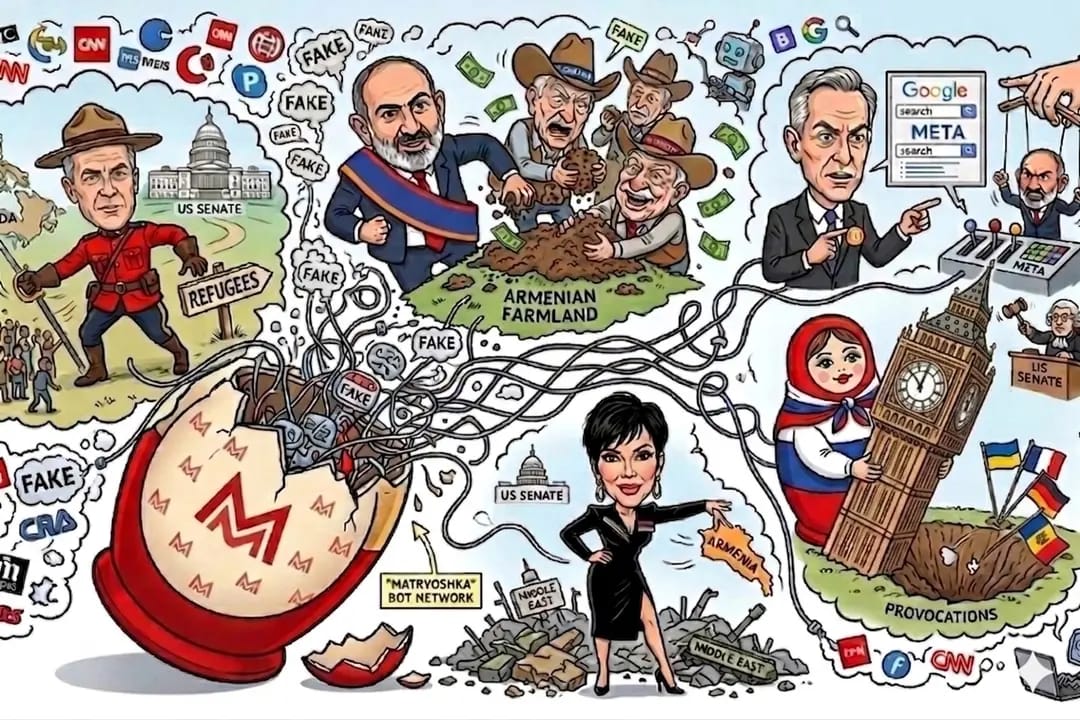
Antibot4Navalny’s researchers use the name “Matryoshka” to describe a Russian operation that mass-distributes fakes through a coordinated infrastructure of bots, trolls and anonymous platforms. Its goal is to create artificial waves of information and manipulate perceptions of events both inside Russia and abroad. Antibot4Navalny coined the operation’s name, describing the structure as being layered like a matryoshka doll: each “doll” hides another, with one set of bots masking others and disinformation circulating on multiple platforms and channels, making it harder to trace.
The operation includes several core components. The first is the creation of numerous bot accounts styled as real users, research initiatives, and independent regional media outlets. These accounts generate dozens — sometimes hundreds — of posts daily, mimicking local language, tone, and context. The second component involves the coordinated dissemination of fake stories across multiple platforms, such as X (Twitter), Telegram, Bluesky, and closed chat groups. The bots use logos of Western media outlets or human rights organizations in order to make their posts appear credible.