The United Arab Emirates announced Tuesday, April 28, that it will withdraw from OPEC and OPEC+, with the decision taking effect May 1. In the long term, the move could lead to lower oil prices and carry negative implications for Russia, economists interviewed by The Insider said.
War in the Middle East
Speaking to Reuters, UAE Energy Minister Suhail Mohamed al-Mazrouei described the exit as a policy decision, made “after a careful look at current and future policies related to level of production,” and linked it to the depletion of the country’s strategic reserves.
The move comes amid the joint U.S.-Israeli operation against Iran, which has been ongoing since late February. The conflict has disrupted shipping in the region, particularly through the Strait of Hormuz, a key corridor for facilitating oil exports from countries in the Persian Gulf.
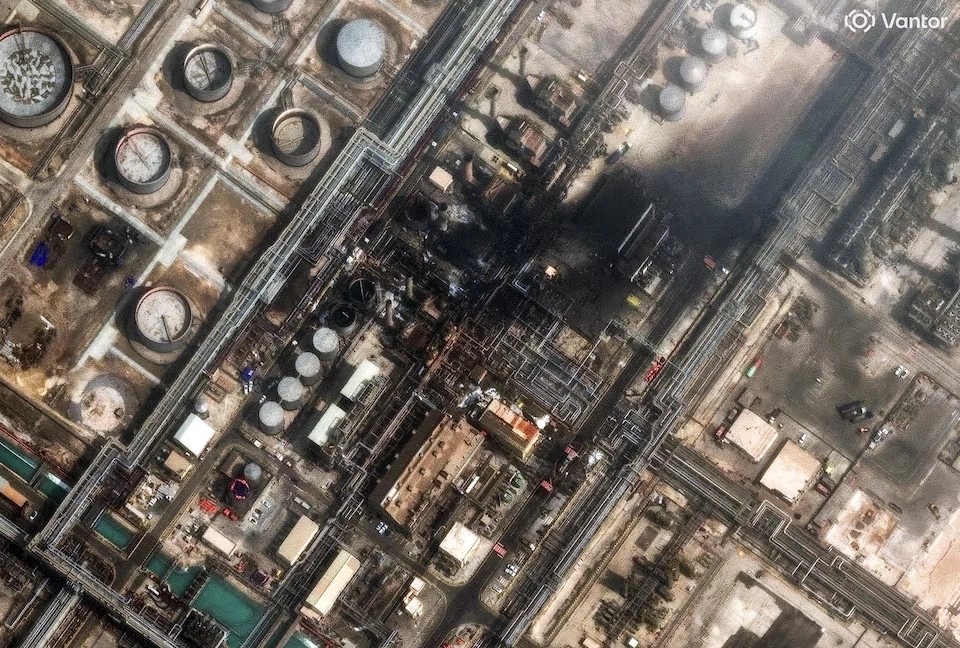
Reuters noted that the UAE’s decision followed criticism of other Arab states. On Monday, presidential diplomatic adviser Anwar Gargash accused them of doing too little to protect infrastructure from Iranian attacks, which have repeatedly targeted refineries and energy facilities.
“The GCC's stance was the weakest historically, considering the nature of the attack and the threat it posed to everyone,” Gargash said. “I expected such a weak stance from the Arab League… But I don't expect it from the GCC, and I am surprised by it,” he told a conference in Dubai.
The beginning of the end for the “oil cartel”
OPEC has existed since 1960, and the UAE joined in 1967. Its exit could deal a serious blow to oil-exporting countries and, in effect, to the group’s leader, Saudi Arabia. Analysts at Rystad Energy told The Insider that OPEC’s effectiveness has always depended on members’ willingness to limit supply, with the UAE playing a key role. With production capacity of about 4.8 million barrels per day and plans to expand, its departure removes a major lever of market influence.
“The timing tells you something about where the oil market is going. With demand nearing a peak, the calculation for producers with low-cost barrels is changing fast, and waiting your turn inside a quota system starts to look like leaving money on the table. Saudi Arabia is now left doing more of the heavy lifting on price stability, and the market loses one of the few shock absorbers it had left,” the analysts wrote in comments to The Insider.
Rystad Energy described the UAE’s exit as a “significant shift.” Alongside Saudi Arabia, the UAE was one of the few countries with substantial spare capacity, allowing the group to respond to supply disruptions. Its departure weakens OPEC’s ability to balance supply and demand.
In the short term, the impact may be limited by geopolitical tensions and supply disruptions, including in the Strait of Hormuz. But in the longer term, “structurally weaker OPEC, with less spare capacity concentrated within the group, will find it increasingly difficult to calibrate supply and stabilize prices.”
The analysts said OPEC+ still has the ability to respond to temporary crises by shifting supply over time. But as demand peaks and declines, producers’ incentives change. Countries with spare capacity may prefer boosting output and defending market share rather than adhering to quotas. In this context, the UAE is well positioned to pursue such a strategy outside OPEC.
The move also raises questions about Saudi Arabia’s role as the market’s key stabilizer, especially if it must shoulder a disproportionate burden. Overall, the analysts said, the net effect of the UAE’s exit points to “a more fragmented supply landscape and a potentially more volatile oil market over time.”
Carole Nakhle, CEO of Crystol Energy and secretary-general of the Arab Energy Club, told The Insider that in the short term prices will primarily be driven by the war involving Iran and associated supply risks. The UAE’s exit is secondary for now, and in the long term, the market will assess it alongside other factors such as global demand, supply developments in countries like Venezuela, and OPEC+ policy. The UAE’s ability to increase output outside quotas is just one factor, and its impact on prices will depend on how these dynamics evolve.
“[The UAE’s exit] is significant, both symbolically and practically. The UAE is a major producer and its departure can indicate internal tensions over quotas and compliance. That said, OPEC’s membership has changed over time. [Could this prompt other countries to leave the agreement?] It may encourage some members to reassess their position, particularly those dissatisfied with quotas. However, few have the capacity or strategic flexibility of the UAE to follow through.”
She added that Saudi Arabia’s role will become even more central, while the UAE, by being outside OPEC, will gain more freedom to maximize output, potentially prioritizing market share over price stability.
Nakhle, like Rystad Energy’s analysts, said Saudi Arabia will have to take on greater responsibility for managing supply and stabilizing the market, while facing increased pressure as the group’s main “anchor.”
The UAE, outside OPEC, will have more freedom to maximize returns from its expanded capacity, which could mean prioritizing market share over price management. Whether that leads to aggressive production growth will depend on market conditions, Nakhle said, but the risk of increased competition and downward pressure on prices will clearly rise.
OPEC will remain an important market player, Nakhle said. Although the departure of a major producer reduces the group’s overall weight, it could also simplify internal decision-making.
Financial analyst Maksim Blant, speaking to The Insider, called the UAE’s exit “the beginning of the end of the oil cartel” that has long played a major role in setting global oil prices.
“Right now, as the UAE quite correctly noted, OPEC’s role and influence on the global market have declined. That applies above all to Arab countries that depend on shipments through the Strait of Hormuz.
As a result, OPEC’s share of the global market has plummeted. Broadly speaking, while the Strait of Hormuz remains blocked, it makes little sense to say OPEC controls anything or has any meaningful influence. On the other hand, everything depends on how long the war in the Persian Gulf lasts. In theory, there had been forecasts that once the Strait of Hormuz was unblocked, OPEC would try to restore its influence on the global oil market, drive down oil prices, and push all its competitors out of the market.”
However, Blant said that, judging by the UAE’s statement, there is no consensus inside OPEC on how to act after Hormuz is unblocked. Abu Dhabi has likely decided it will be easier to make up lost wartime revenue on its own.
Sergey Vakulenko, a senior fellow at the Carnegie Endowment for International Peace, made a similar point. He noted that the UAE had planned to increase oil production, something that is very difficult under OPEC membership. He said that, for the bloc itself, Abu Dhabi’s departure means a weaker position.
“Without the UAE, OPEC will be significantly weakened: other major producers — Iran and Iraq — did not have any substantial spare capacity. That role was mainly played by the UAE and Saudi Arabia. If the UAE begins producing oil at full capacity and gives up the role of oil market regulator, that responsibility will fall mainly on Saudi Arabia.”
Economist Ruben Enikolopov said it is far more advantageous for a state not to comply with limits on prices and volumes of oil sales and instead try to sell more oil at current prices, “counting on everyone else to bear the costs associated with maintaining high prices.”
“That’s why maintaining such cartels is actually a very difficult undertaking. It’s even surprising that OPEC has held out for so long, especially given that relations among its members are sometimes absolutely antagonistic from a political standpoint,” the expert concluded.
Given the war, the UAE’s decision is broadly logical, Israeli political analyst Mikhail Pellivert said, noting that Iran is also an OPEC member.
“It hardly makes sense to be part of the same organization as a country that has attacked you and continues to threaten you. Second, there are political circumstances. The UAE is distancing itself from the Saudis — and, understandably, from Iran — and moving closer to Israel and the U.S. This is forcing them to behave differently; they are thinking about how to free themselves from constraints, rather than being bound by certain restrictions, such as quotas… I would call this a distancing from Saudi Arabia and a rapprochement with Trump and Israel. And this fits into the logic of recent years: [the logic] of the destruction of old institutions, the old world order, and old alliances, and the emergence of new ones in their place.”
How will this affect oil prices?
Analysts note that the UAE’s move means less stability in the oil market going forward. However, it also means that the market will likely return closer to its “market state,” says Blant. Enikolopov agrees that the UAE’s exit from OPEC will likely lower prices in the long term.
Nakhle said volatility is now driven mainly by geopolitical risks, above all the war involving Iran. The UAE’s departure may add some uncertainty over future supply policy, but its effect on volatility will depend on how production decisions change — both by the UAE and by OPEC+ as a whole.
Tatiana Mitrova, an expert on global energy markets, said this is a warning sign for Russia.
“The UAE’s departure from OPEC+ right now matters not so much because of its immediate impact on the physical market, but as a signal that agreement within the alliance is weakening over quotas, strategy, and the very meaning of collective restrictions. While Hormuz remains closed, the Emirates physically cannot sharply increase exports: the bypass route through Fujairah, which is already fully loaded, does not replace its normal export system.
But once logistics normalize, this step may become much more significant: one of the strongest and most ambitious producers is effectively showing that it is ready to play by its own rules. For Russia, this is an alarming signal — not because it will immediately lose revenue, but because the mechanism of collective market management through which OPEC+ influenced prices is becoming less stable.”
Blant said the development is negative for Russia’s budget and oil exporters, as production costs are rising with the depletion of older fields.
He added that it also poses challenges for fiscal policy. In the past, excess revenue from high oil prices was directed into foreign currency reserves and later used when prices declined. That mechanism has effectively broken down and can be considered defunct, he said, with no alternative in place to stabilize budget revenues or support oil companies. As a result, he said, the current situation undermines the stability of Russia’s finances.