On April 26, fighting in Mali continued for a second day after the largest coordinated attacks by anti-government forces in years. Several international media outlets reported that Defense Minister Sadio Camara was killed in a strike on his residence. At the same time, rebels said Russian forces had withdrawn from the northern town of Kidal, reports which were initially denied, but later confirmed by the Africa Corps, a paramilitary group controlled by Russia’s Ministry of Defense.
Fighting continues despite claims of “control”
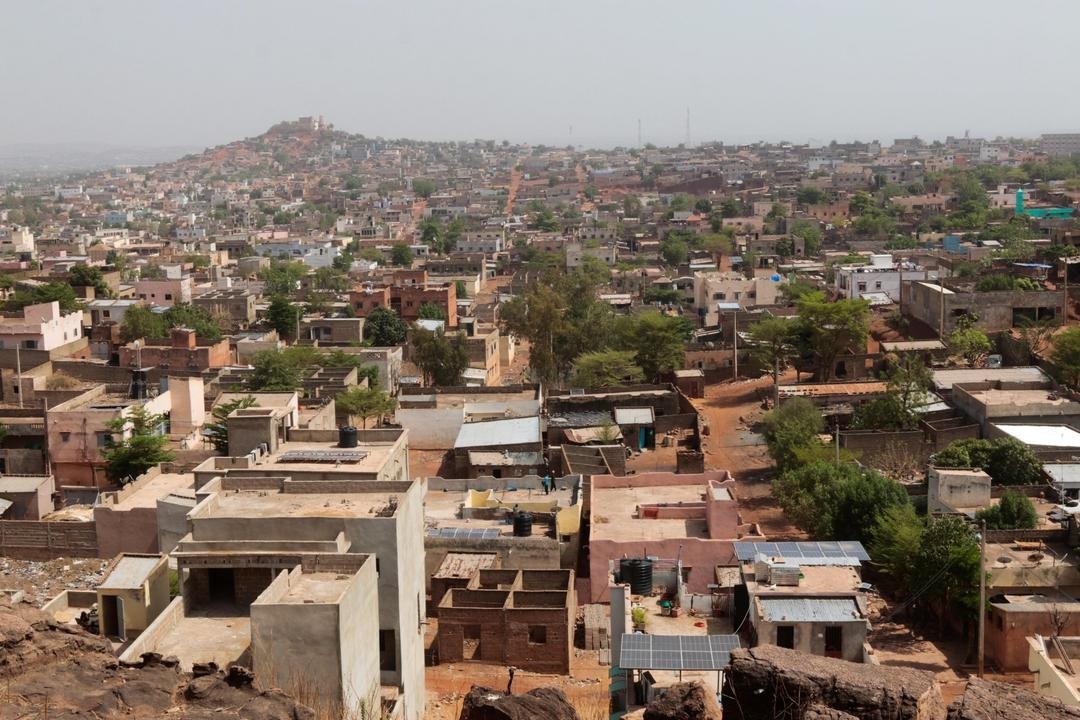
After the anti-government attacks began on April 25, gunfire continued the next day in the garrison town of Kati, near Bamako. That suggests the clashes had not ended, despite authorities’ claims that control had been restored.
A three-day nighttime curfew has been imposed in the capital, and witnesses said the streets remained empty. Authorities say the situation has stabilized, but continuing gunfire and security operations point to persistent tensions.
Defense Minister Sadio Camara confirmed dead
Several international media outlets reported the death of Mali’s defense minister, Sadio Camara. Reuters, citing the French outlet RFI, reported that he was killed in an attack by Jama’at Nusrat al-Islam wal-Muslimin (JNIM), an al-Qaida-linked group, on his residence at the Kati military base.
The agency later reported that Camara’s death had also been confirmed by his relatives, and that a journalist linked to the family had written about it on Facebook.
Camara was considered one of the key figures in the military junta and an architect of its security policy, which included cooperation with Russian security structures.
A jihadist-Tuareg alliance: The largest operation in years
The April 25 attacks were among the largest operations against Mali’s authorities in recent years. Responsibility was claimed by JNIM, which is linked to al-Qaida, and the Tuareg Front for the Liberation of Azawad.
The Associated Press noted that this was the first time Tuareg rebels had openly confirmed joint action with jihadists. Strikes were carried out simultaneously against the capital, military sites, and cities in the north, including Kidal, Gao, and Mopti.
An Africa expert interviewed by The Insider said the attacks stood out for their unprecedented coordination, indicating that planning was carried out among different groups:
“These are the largest attacks since 2012 — a number of civilian and military sites in different parts of the country were attacked, including in the capital, and hundreds of fighters took part. It was also an operation unprecedented in its coordination: joint actions and operations had taken place before, but never on such a nationwide scale. It was undoubtedly preceded by political agreements, negotiations, and compromises among the groups.”
Kidal: Disputed control and a Russian withdrawal
The northern Malian city of Kidal remains one of the key points of uncertainty after the attacks. The Tuareg Front for the Liberation of Azawad said its forces had retaken control of the city, a former rebel stronghold that came under the control of government forces and their allies in 2023.
Rebel representatives initially said an agreement was reached during the fighting that allowed Russian mercenaries to leave one of the besieged camps in the Kidal area.
Russian pro-war Z-channels then began spreading reports about the evacuation of Russian Defense Ministry Africa Corps units from Kidal. Earlier, pro-Russian forces denied claims, circulated by Western media citing the Tuareg Front for the Liberation of Azawad, that rebels had captured Kidal.
Several Russian Telegram channels supportive of the country’s war in Ukraine quoted what they described as the Africa Corps’ “direct participant in the events in Mali”:
“For 24 hours, we kept the enemy away from us. Thousands of fighters surrounded two small outlying strongpoints… And the main strongpoint is now under siege in Kidal. And for courage and heroism, you could say, we simply reached an agreement that they would hand over our guys. They won’t finish them off or kill them. They appreciated their courage and allowed them to be taken to the strongpoint, to Kidal…
“They tore into them for a full day. Not without losses, of course — a helicopter was shot down, and this and that… But there is a problem in Kidal. They are now cut off from the outside world. Something has to be done, something has to be figured out. Two thousand fighters have surrounded them, and there are now 200 Spartans there, alone. One-on-one with fate. No aircraft can fly in, no one can get to them. For now, there is no way to help.”
At the same time, Telegram channels linked to the Africa Corps and the Wagner private military company published video of a column of Russian equipment moving as fighters cheered. The channels claimed it showed the “evacuation of wounded personnel and heavy Africa Corps equipment from Kidal’s southern base.” The footage features at least 20 pieces of equipment, including a Grad multiple-launch rocket system.
Later, the Telegram channel “White Dudes in Africa 🌴,” which is linked to the Wagner Group, wrote that Mali’s armed forces and the Africa Corps had left Kidal after recovering the bodies of killed Russians.
In their press releases, neither Russia’s Foreign Ministry nor the Russian Embassy in Mali made any mention of the Defense Ministry’s Africa Corps taking part in the fighting. The main Africa Corps Telegram channel was outraged at the omission, calling the ministry’s position “ambiguous.”
The Africa Corps later officially confirmed its withdrawal from Kidal on its Telegram channel:
"In accordance with a joint decision by the leadership of the Republic of Mali, units of the African Corps that were stationed and engaged in combat in the town of Kidal have withdrawn from the area alongside Malian Army personnel.
Wounded servicemen and heavy equipment were evacuated first. Personnel continue to carry out their assigned combat mission. The situation in the Republic of Mali remains difficult."
The aforementioned Africa expert told The Insider that “symbolically, the loss of Kidal is painful; its recapture in 2023 was a sign that the regime was strengthening, restoring control over the country and had something to show its supporters.”
Africa Corps: Fighting and conflicting accounts
Telegram channels linked to the Russian Defense Ministry’s Africa Corps claimed Russian troops helped repel attacks in Bamako, Kati, and other areas in the north of the country. Their reports described fighting involving hundreds of militants and support for the Malian army, including from the air. They also acknowledged that some personnel were wounded.
At the same time, the reports said that during the fighting near Kidal, some “outlying posts” were evacuated, with units withdrawing to other positions. That points to heavy clashes and the loss of territorial control in select areas.
Possible equipment and personnel losses were also reported by the Russian pro-war Telegram channel Fighterbomber, which is linked to retired pilot Ilya Tumanov. According to the channel, a Russian helicopter was shot down in Mali, and the crew and the group on board were killed. The preliminary cause was said to be ground fire.
The Russian Foreign Ministry, however, did not mention the participation of Russian forces in its statement released after the start of the attacks, saying the assaults had been repelled by Mali’s Armed Forces and that no Russians had been injured.
The Africa Corps later officially confirmed its withdrawal from Kidal on its Telegram channel:
"In accordance with a joint decision by the leadership of the Republic of Mali, units of the African Corps that were stationed and engaged in combat in the town of Kidal have withdrawn from the area alongside Malian Army personnel.
Wounded servicemen and heavy equipment were evacuated first. Personnel continue to carry out their assigned combat mission. The situation in the Republic of Mali remains difficult."
The Africa expert told The Insider that the militants had urged Russian forces to stay out of the fighting:
“In their statements, anti-government forces asked Russians to ‘refrain’ from taking part in combat, apparently hoping, in the event of success now or in the near future, not to seriously damage relations with Moscow. JNIM, in particular, asked Moscow in a written communiqué to stay aside for the sake of ‘balanced future relations.’ I think this is an attempt of sorts to repeat the Syrian scenario.”
What it changes: A blow to the junta and risk of new escalation
The April 25-26 attacks were the most serious challenge that the military junta of Assimi Goita had faced in years. Even if authorities retain control over the capital and key sites, the very fact of coordinated strikes on Bamako and other regions, along with the possible death of the defense minister, points to the regime’s high vulnerability.
The Africa expert interviewed by The Insider said that despite local rebel successes, government forces retain a military advantage, above all because of their superiority in aviation, drones, and outside support. At the same time, the scale and coordination of the attacks show that anti-government forces are capable of carrying out operations on a national level.
The situation remains uncertain. There are no precise figures on losses suffered by either side, and control over several cities, including Kidal, remains disputed.