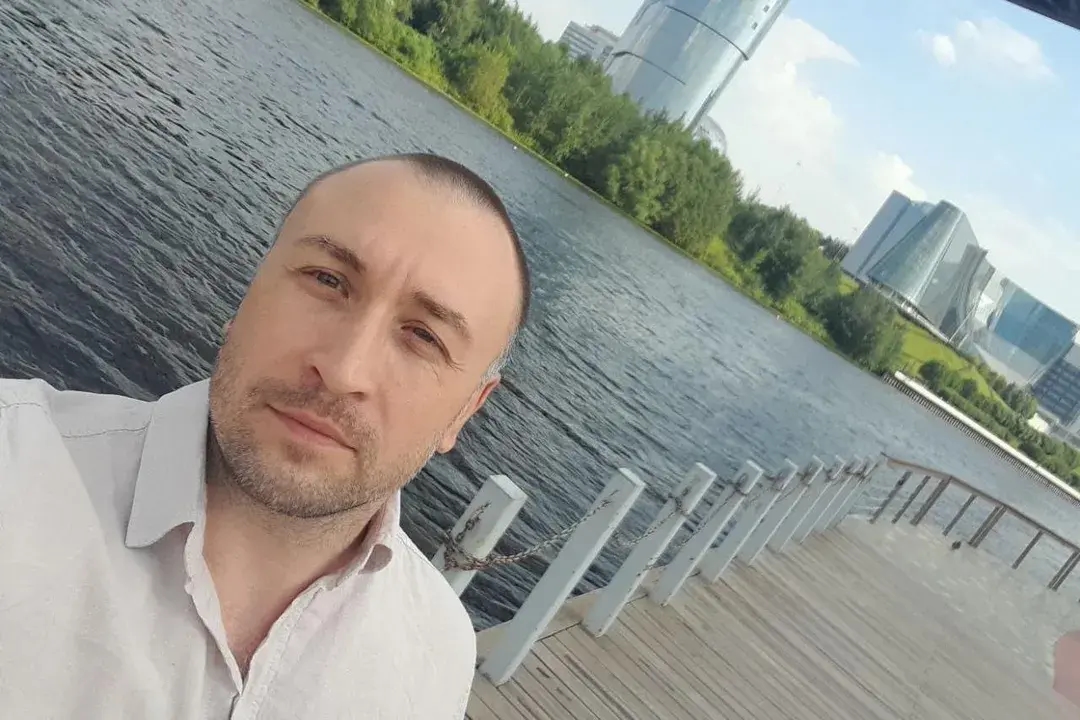
On Feb. 27, after two back-to-back arrests in administrative cases, 45-year-old Anapa resident Maksim Ovchinnikov was taken away to an unknown location by FSB officers. Since then, nothing has been known about his whereabouts or procedural status, human rights defenders told The Insider, citing the abducted man’s mother.
April 9 marked exactly 40 days since Ovchinnikov was abducted by FSB officers. That is a record period for the unofficial detention of a Russian citizen by security forces outside the North Caucasus.
Ovchinnikov was first detained on Jan. 27. His mother said that during the search, FSB officers beat him, leading to his hospitalization with an abdominal injury. The next day, a court sentenced him to 15 days of arrest on a charge of disobeying police. However, when that term ended on Feb. 12, he was not released. Instead, he was detained again, taken to Gelendzhik, held for a day at a police station, and then given another 15-day arrest on the same charge.
According to a ruling by the Gelendzhik City Court, Ovchinnikov had traveled to the city on his own and, once there, “disobeyed” police officers. His mother considers that version implausible: Ovchinnikov had no reason to travel from Anapa, where he lives, to Gelendzhik immediately after his release. He also had no documents, money, or phone with him.
On Feb. 27, one day before the end of his second arrest, he was taken away again by FSB officers. There has been no contact with him since.
Ovchinnikov’s mother believes the persecution may be linked to her son’s anti-war views and comments on social media. She filed missing-person reports and appealed to various agencies, but has been unable to establish her son’s whereabouts.
Human rights defenders familiar with the case told The Insider that Ovchinnikov’s mother recently received a reply from the Krasnodar regional branch of the FSB stating that Ovchinnikov “was not detained” by officers of the directorate. By contrast, in response to a complaint about the first detention and search, she had been told that the regional FSB directorate had carried out operational-search measures in relation to her son.
Previously, cases of unofficial detention outside the North Caucasus and Russian-occupied territories of Ukraine were generally limited to several days, rather than weeks.
The longest known period of unlawful detention in central Russia involved defendants in the 2017 St. Petersburg metro bombing case — the Azimov brothers and Mukhammadyusup Ermatov, who said they were held in an unofficial FSB “secret prison” for more than a month. According to them, they were kept in basements, cut off from contact with the outside world, and tortured into giving confessions. Russia’s Investigative Committee refused to open criminal cases over those claims.
Longer periods of unofficial detention have been documented in the North Caucasus. In 2017, Novaya Gazeta reported on a network of secret prisons in Chechnya where, according to eyewitnesses, people were held for months without any formal paperwork while being subjected to torture. Russian authorities denied that such facilities existed.
In Russian-occupied territories of Ukraine, the practice of extrajudicial detention followed by the later “legalization” of prisoners has long been used in various forms. According to testimony from former Ukrainian female detainees published by The Insider, after being abducted, people were held for weeks and months in basements, in the Izolyatsia prison, and in other unofficial detention sites, without access to lawyers or contact with relatives. Detainees were beaten, tortured with electric shocks, strangled, deprived of sleep, and forced to sign the required testimony. They were then transferred to pretrial detention centers or penal colonies. Frequently, they faced charges involving alleged “espionage” and “extremism.”