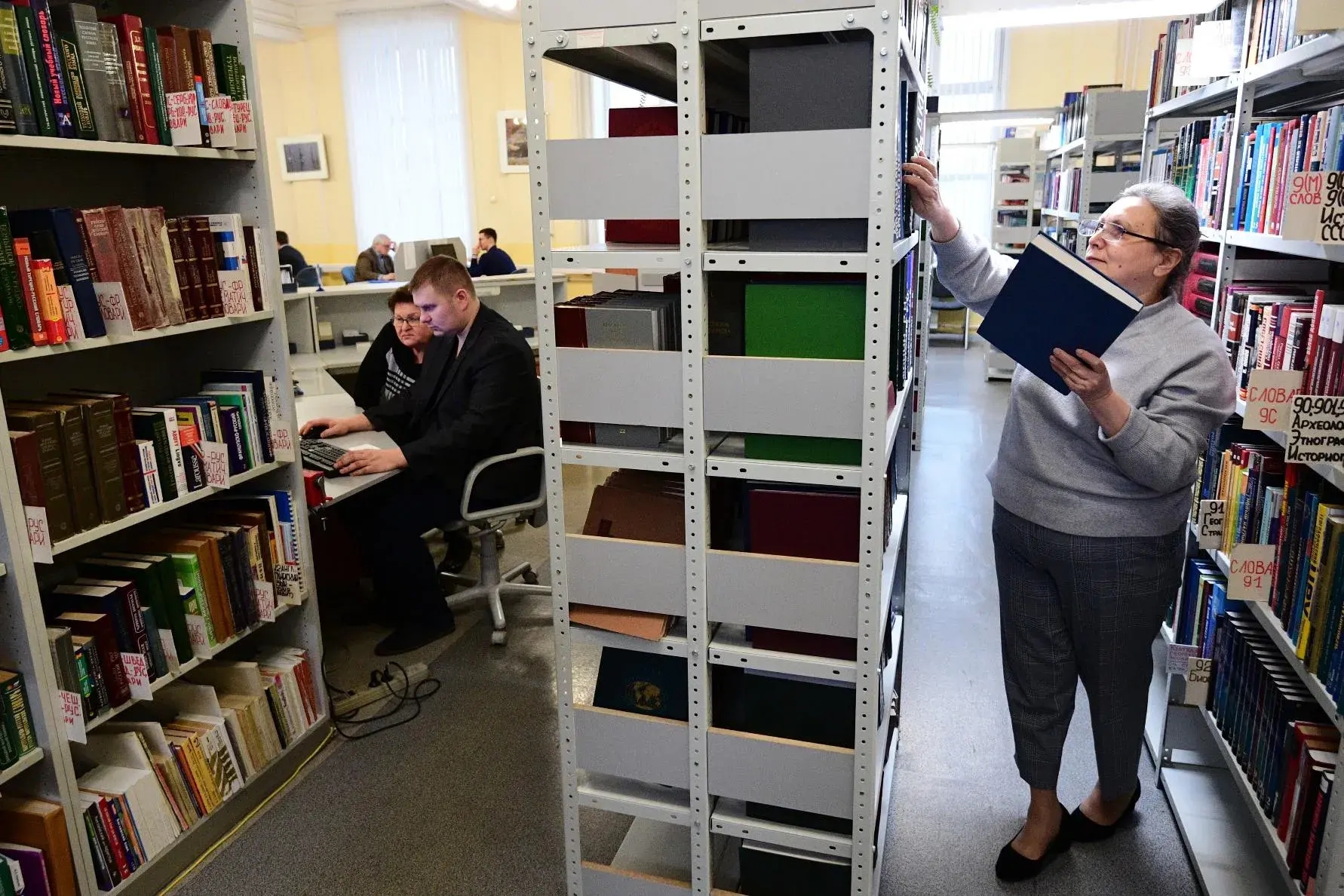
Upwards of 30% of the books currently available at libraries in the Russian city of Yekaterinburg could be removed from collections due to the fact that they were purchased with funding from the Soros Foundation. The planned measure was cited by the director of the Municipal Association of Libraries of the City of Yekaterinburg, Irina Cheremisinova, at a city council meeting on April 1. The Telegram channel Evening News published a video of Cheremisinova’s statement, which does not appear to have been a joke.
Cheremisinova was responding to a question from Yabloko deputy Konstantin Kiselyov regarding library acquisitions. According to Cheremisinova, efforts to rid libraries of books purchased decades ago with money from the Soros Foundation is part of a nationwide initiative linked to changes in Russian legislation.
“The bulk of the books was purchased in the 1990s. We are now facing changes in legislation. We have to remove some of the books from the collection because they were acquired with Soros money. That accounts for about 30% of our entire collection,” she said.
At the same meeting, the acting head of Yekaterinburg’s culture department, Elena Sokolova, noted that libraries are already facing a shortage of books, and that government funding for replenishing collections is insufficient.
The Soros Foundation was active in Russia until 2003, when its founder, George Soros, announced that he was winding down the foundation’s charitable activities in the country. The foundation’s last project in the Sverdlovsk region involved financing the restoration of the Pavlik Morozov Museum in the village of Gerasimovka.
In 2015, the organization was designated “undesirable” in Russia under the pretext that its activities “posed a threat to the foundations of the Russian constitutional order and state security.” Earlier, members of the State Duma had accused the foundation of “anti-Russian activities,” while the Federation Council placed it on the so-called “patriotic stop list.”