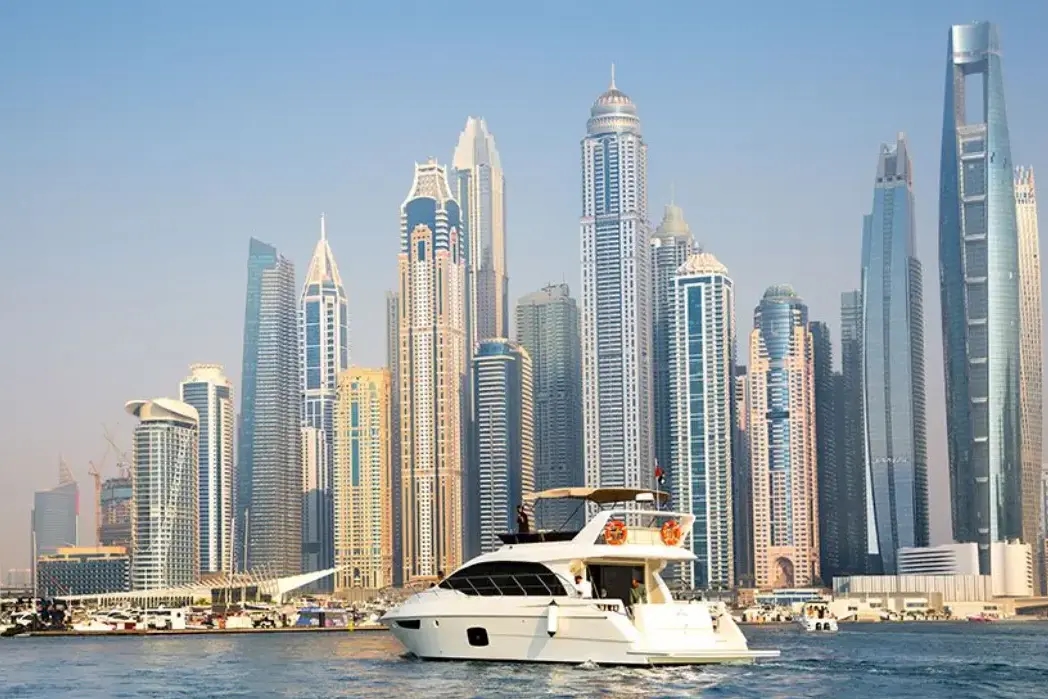
Since the start of the ongoing war in the Middle East on Feb. 28, the United Arab Emirates has been regularly targeted by Iranian strikes. On March 27 alone, air defense systems intercepted six ballistic missiles and nine drones. Dubai, a city that spent decades building its reputation as a global business and tourism hub, has been hit most often, and Tehran's attacks are hurting tourism not only there, but across the region. Because of flight cancellations and the departure of travelers, the Middle East tourism sector is losing at least $600 million a day. The Insider examines how Dubai is coping with the attacks, without tourists, and amid a growing economic downturn.
A city under air siege
Dubai, a city long seen as a symbol of stability and safety, is now living under regular air raid alerts and the constant operation of air defense systems.
The latest round of escalation began at the end of the third week of the ongoing war with Iran, when Tehran’s forces launched missile strikes on the Israeli cities of Dimona and Arad and attacked other countries in the region. The UAE came under attack as well. According to estimates from the Financial Times, it has become Iran’s most heavily shelled neighbor since the joint US-Israeli operation commenced on Feb. 28.
As of March 27, the UAE’s air defense systems had intercepted 378 ballistic missiles, 15 cruise missiles, and 1,835 drones. The overwhelming majority have been aimed at Dubai, with the airport and seaports suffering the most.
Explosions can be heard in various parts of the city, gradually becoming part of everyday life. At the same time, public discussion of what is happening is limited: the authorities have reminded residents of their liability for publications that could harm “national unity or the reputation of the state,” prompting some social media users to begin deleting videos showing the moments of impact.
“It's not like anything is falling on our heads,” says Svetlana, who moved to Dubai four years ago, shortly after the start of Russia’s full-scale invasion of Ukraine. “Most of the strikes hit hotels, possibly because they supposedly think CIA people might be staying there — and even then, we are talking about the upper floors. Frankly, the authorities are now more worried about what we post on social media than about the fact that we are being bombed. Even before, you could not openly express your disagreement with anything, and now even stating facts can cause problems.”
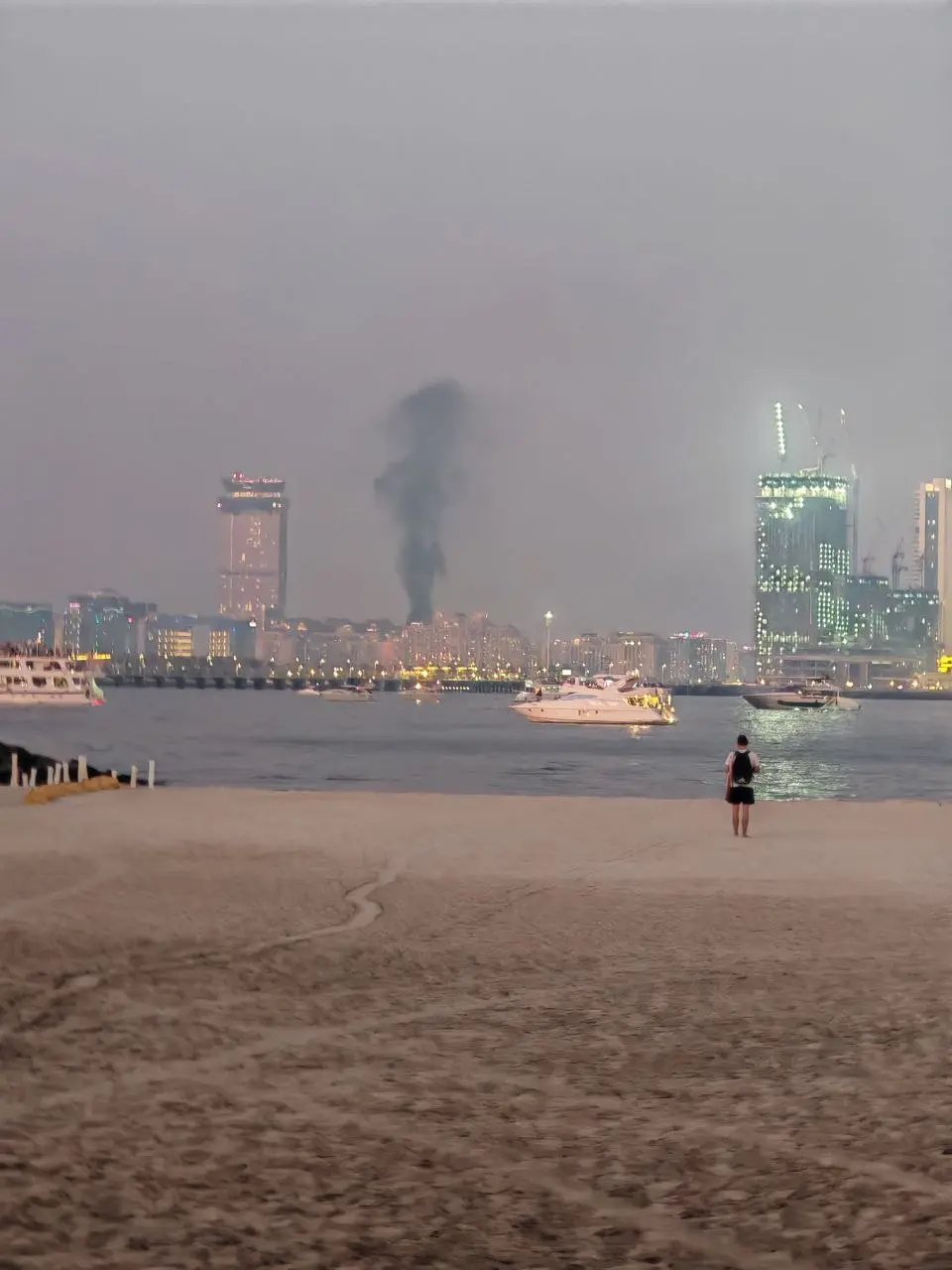
On the first day of the war, Svetlana recalls, she was walking with friends in the Jumeirah Beach Residence area when they saw a drone crash into the luxury hotel Fairmont The Palm. Svetlana and her friends were on the beach when it happened. A few minutes before the strike, they heard gunfire connected to Ramadan celebrations. Soon after, an explosion followed, which eyewitnesses at first mistook for another festive cannon shot.
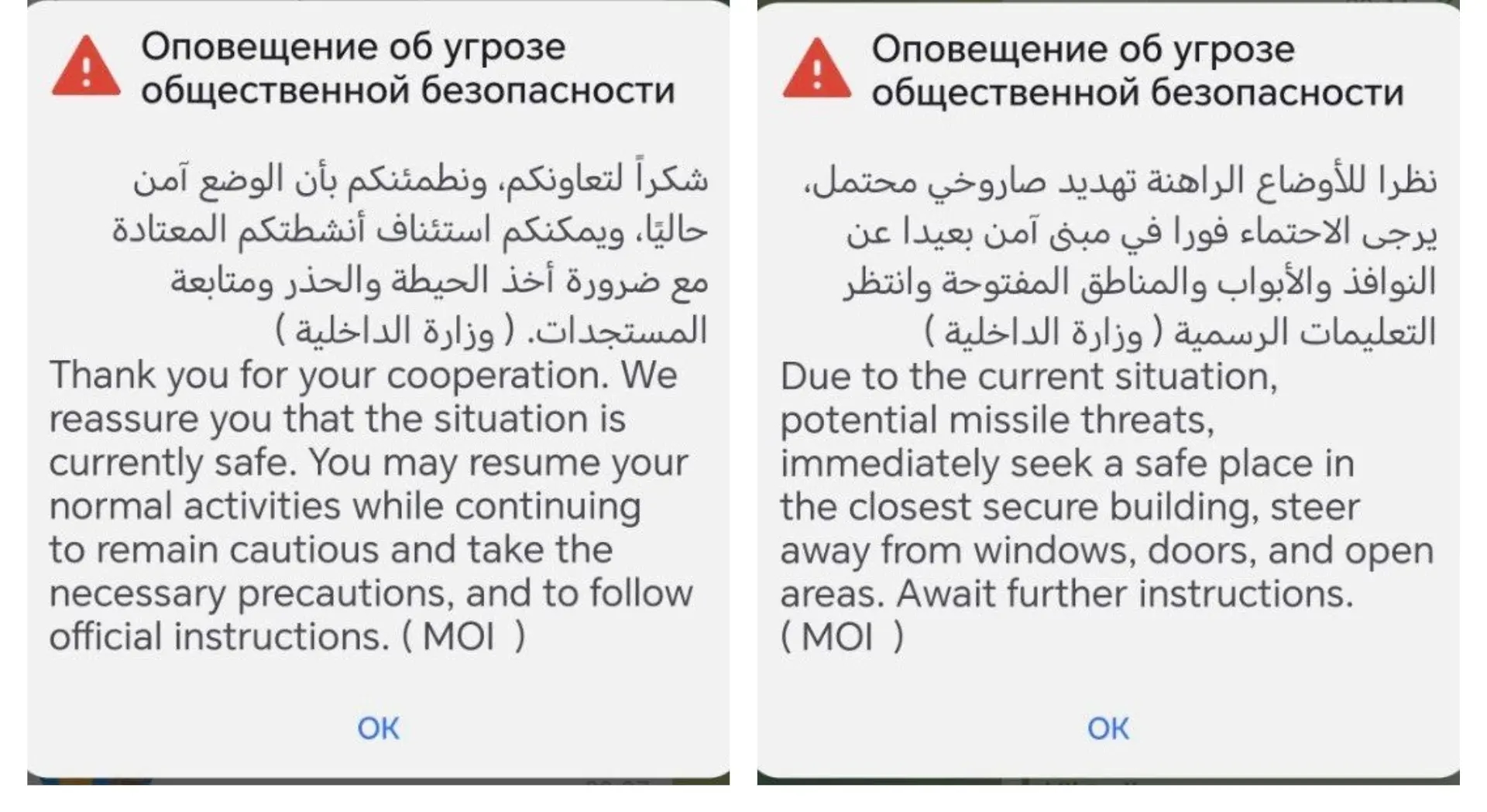
“Alarms go off on our phones, louder than the explosions themselves. We’ve started turning on airplane mode for the night so we don’t jump up in panic. Lately, they've started sending silent notifications about air defense activity during the night. Otherwise, the alarm sound is very unpleasant — it can scare anyone. You’re sitting with your phone, reading the news, and suddenly it starts blaring like a siren.”
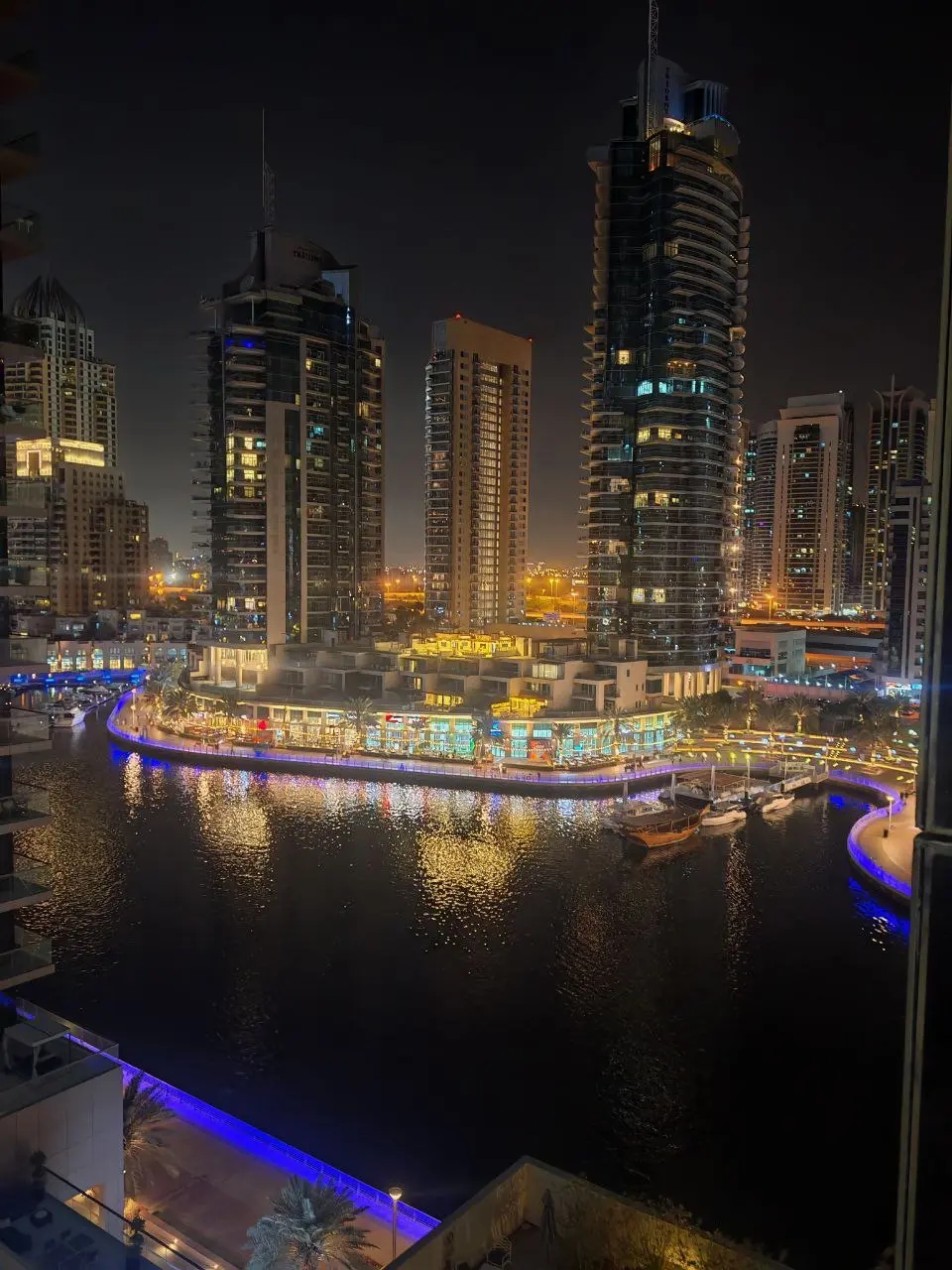
The text of the notifications advises residents to leave the streets, return home, and stay away from windows. In practice, however, people react differently to the alerts. In the first days, some residents panicked and went down to underground parking lots, Svetlana says. Now, she adds, many have stopped taking the warnings seriously: in areas like Dubai Marina, traditionally called “the Russian district,” the threat feels lower, as locals doubt anyone would suspect CIA personnel are there.
Dmitry, who moved to Dubai from Russia with his wife and two young children in 2022, says it was the scariest at the very beginning:
“It was only frightening in the first few days. Now the regular strikes have become background noise. In recent days, the intensity has dropped significantly. We get one or two emergency alerts during the day and another one or two at night. Sometimes, a minute or two after the alert, you can hear not very loud explosions in the sky.”
Like many other residents, his family has developed their own ritual for the alerts. According to Dmitry, he and his children wait out the air raids in the bathroom.
“The children bring pillows and blankets, make themselves a little nest, and lie there with tablets and phones. The younger one also brings the parrot’s cage and the dog — and we all sit there, waiting until the all-clear message comes. The kids are scared. The youngest doesn’t want to sleep alone and, after every emergency alert, runs to the bathroom to hide. They ask if we know when it will end and why this is happening to us at all — we live a peaceful life and don’t bother anyone. We try to calm them, saying we just need to wait and that everything will end sooner or later.”
Some residents, however, have chosen to leave, and several of these explain their decision on social media. A Threads user who lived in Dubai wrote:
“We ran away from Dubai. And we’re still in shock. We hadn’t planned to leave at all. The story began with our one-year apartment lease coming to an end. We were calmly packing our things, looking for a new place. But at some point, everything suddenly changed. The situation kept everyone on edge. Then a message came that the entire school in Dubai was moving to online learning. Plus, our parents were very anxious — they didn’t want us to stay there.”
Dmitry confirms that changes in the education system have indeed become part of the new reality. According to him, in the first weeks after the holidays, schools switched to online instruction. “It feels like this will continue until the end of the school year,” he says.
Nevertheless, most people living in Dubai do not plan to leave. According to Svetlana, the departures are mostly isolated cases.
“We don’t see any reason to leave. Some do panic, but they are a small minority. Some have left for Oman, abandoning their cats and dogs. But we feel safe — on the very first day, we saw how effectively the air defense works. We were sitting at Bluewaters, where hundreds of missiles and drones were heading, and everything was intercepted,” she says.
An economy on hold
Nevertheless, life in Dubai has indeed changed substantially as a result of the Iranian attacks. The biggest impact has been on the economy — primarily in the sphere of tourism, real estate, and business. Last year, the UAE led the world in the volume of foreign direct investment relative to GDP, but now some investors are moving their assets elsewhere. According to market players, such discussions are taking place most notably among investors from Asia.
In the meantime, the real estate market is cooling. Monthly rental prices have dropped, and the number of property sales transactions since the beginning of March has shrunk by 31% year on year (and by more than 50% compared to the previous month). Brokers and journalists are in agreement that the market is beginning to slump.
“The Dubai market is being cleansed. Businesses have suffered. Cost optimization is underway. The situation largely resembles the pre- and post-pandemic period, including when it comes to pricing policies. We’ve been through this before. Those who know how to wait and adapt will survive. Speculators and opportunists have left, and more of them will leave,” writes Elena Fetisova, a host at Novoie Radio Moldova.
Broker Antonina Trokhimenko gives a similar assessment while emphasizing that this is not yet a full market collapse:
“Dubai has become sort of quiet. Businesses have slumped. There are fewer transactions. People are starting to get nervous. There’s a lot of talk about distressed deals. But the truth is that 80% of them aren’t distressed. They are either illiquid properties that no one wanted, projects that were originally overvalued, or just attempts to sell anything in a declining market. And yes, brokers now will sell everything, because they also need to survive. It’s important to understand that the market hasn’t collapsed — it’s cooling. But this is just the beginning.”
Amid declining activity, brokers themselves are leaving the market. A Threads user who works in real estate (handle: senior.nastya) describes what’s happening as a mismatch of expectations and reality:
“I moved here over a year ago to start from scratch — no connections, no client base. Deals started coming in. I got my license, moved out of a shared apartment into my own place, got a driver’s license. I felt like everything was just beginning. And then February 28 happened, and my phone blew up: ‘The market will collapse, go back to Moscow.’ Many packed their bags and left — some to Bali, some back to Saratov.”
According to other market participants, the outflow is noticeable even in professional chatrooms. Broker Oleg Fomichev notes that activity has dropped sharply. Whereas previously around 200 users in a group of 800 were online on weekdays, now there are only about 50.
The drop in demand is also affecting the hospitality industry. Even luxury hotels have started offering discounts and special promotions for locals. Address Beach Resort in the JBR area is offering discounts of up to 30% from March 5 to April 30. According to Hotel Drops Dubai, a service that tracks prices at four- and five-star accommodations, maximum discounts at some properties exceed 50%.
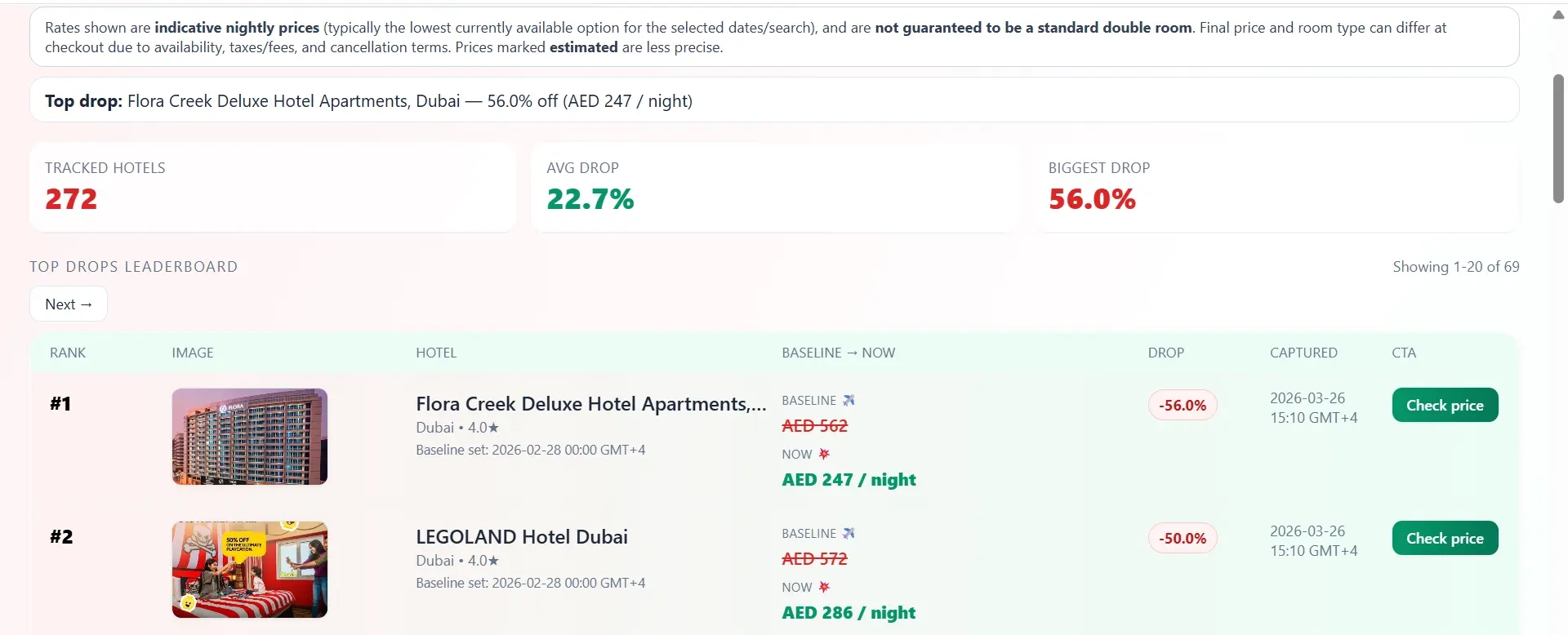
At the same time, hotel staff report a drop in occupancy and mandatory measures imposed by employers.
“Our hotel has barely any guests left, and many staff members have been sent on unpaid leave. Mine is at least until March 31, without any guarantees,” an employee of Jumeirah Al Qasr hotel writes. Other industry workers report similar situations.
Layoffs have also affected the entertainment and service sectors. Arina, who moved to Dubai from Kazakhstan five months ago, says she and a few of her colleagues lost their jobs on the same day.
“I worked at a club, but the company closed because there are no tourists. I will try to find another job. If I can’t, I’ll go back home. I hope the situation improves by September,” she says.
“They fired our entire team,” says Ekaterina, who worked in customer support.
“Us too — after a month of leave,” adds another user.
Amid the overall decline in activity, everyday life in the city is also changing. Dubai, usually packed with tourists, is noticeably quiet.
“The city has become significantly emptier: you can see that tourists have left and new ones haven’t arrived. The waterfronts and beaches look deserted. There are fewer people in shopping malls, and restaurants and shops have started offering discounts. There’s almost no traffic on the roads. Fuel prices haven’t changed, and Tesla Supercharger stations have become free,” says Dmitry.
At the same time, he adds, there is no talk of mass business closures: the infrastructure continues to operate, only with fewer visitors and lower revenue.
The structure of city life has also changed. In a city whose vibe has long been determined by crowds of tourists, this role now belongs mainly to residents. According to Svetlana, areas like JBR and Dubai Marina have noticeably fewer people on the streets, precisely because these are “Russian” districts typically populated by vacationers. Locals, meanwhile, prefer to spend their time in beach clubs.