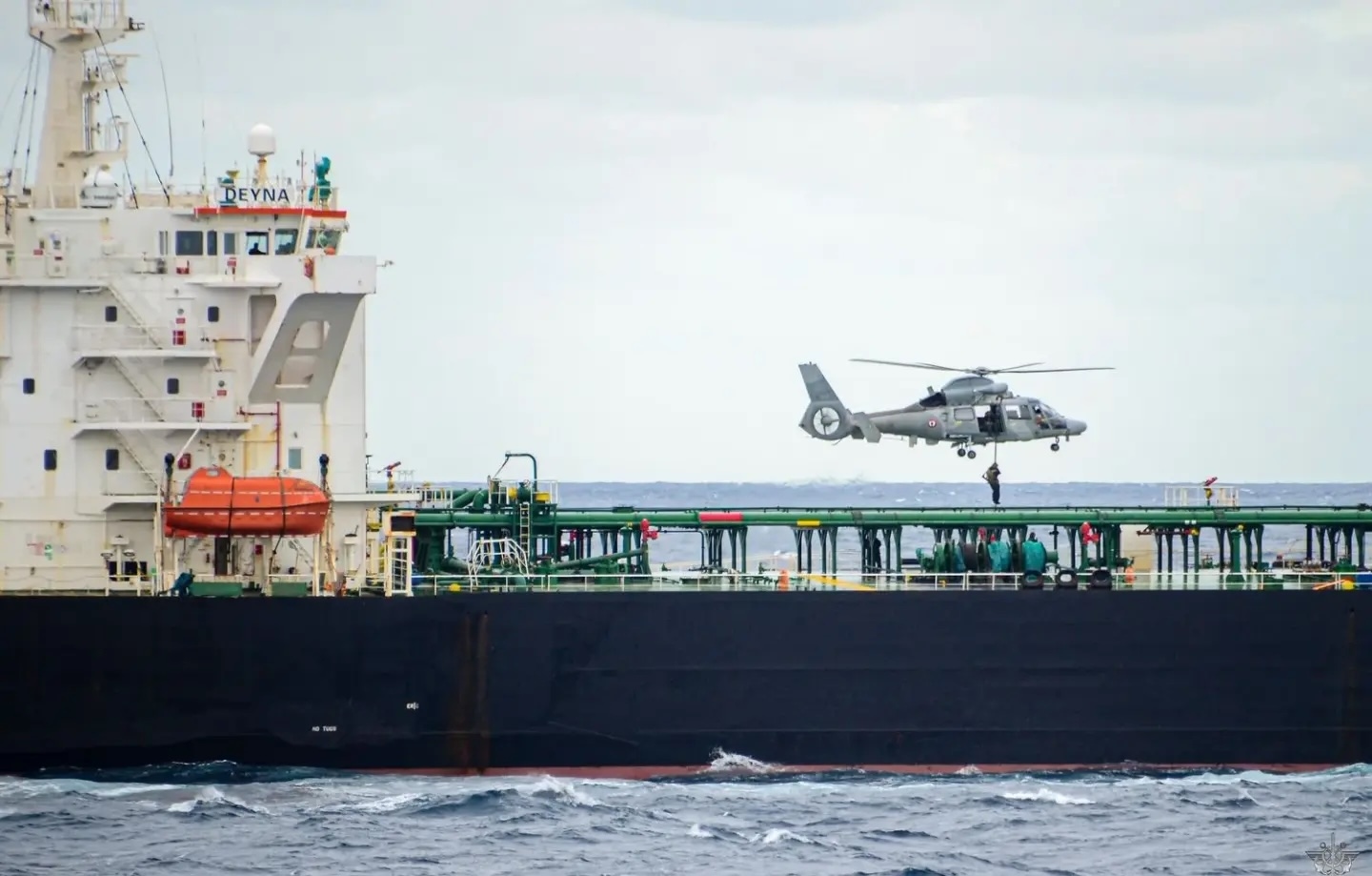
The French Navy has detained the oil tanker Deyna (IMO 9299903), which authorities consider to be part of Russia’s “shadow fleet.” The operation, which took place in the Mediterranean Sea, was announced on X (Twitter) by President Emmanuel Macron earlier today.
According to Macron, vessels in the “shadow fleet” evade international sanctions and violate maritime law, profiting from the war while financing Russia’s military effort. The president described them as “profiteers of war,” adding that France intends to stop their activity. “The war involving Iran will not deflect France from its support for Ukraine, where Russia’s war of aggression continues unabated,” Macron said.
Deyna is an Aframax-class oil tanker built in 2005. The vessel is affiliated with Sino Ship Management, which the United States sanctioned in January 2025 for its ties to Russia’s energy sector. In May 2025, the EU sanctioned the vessel itself for transporting oil and petroleum products of Russian origin through irregular shipping schemes. Since then, Switzerland (June 2025), the UK (July 2025), Canada (November 2025) and Ukraine (December 2025) have imposed similar measures, with Kyiv adding restrictions against the tanker’s captain this past February.
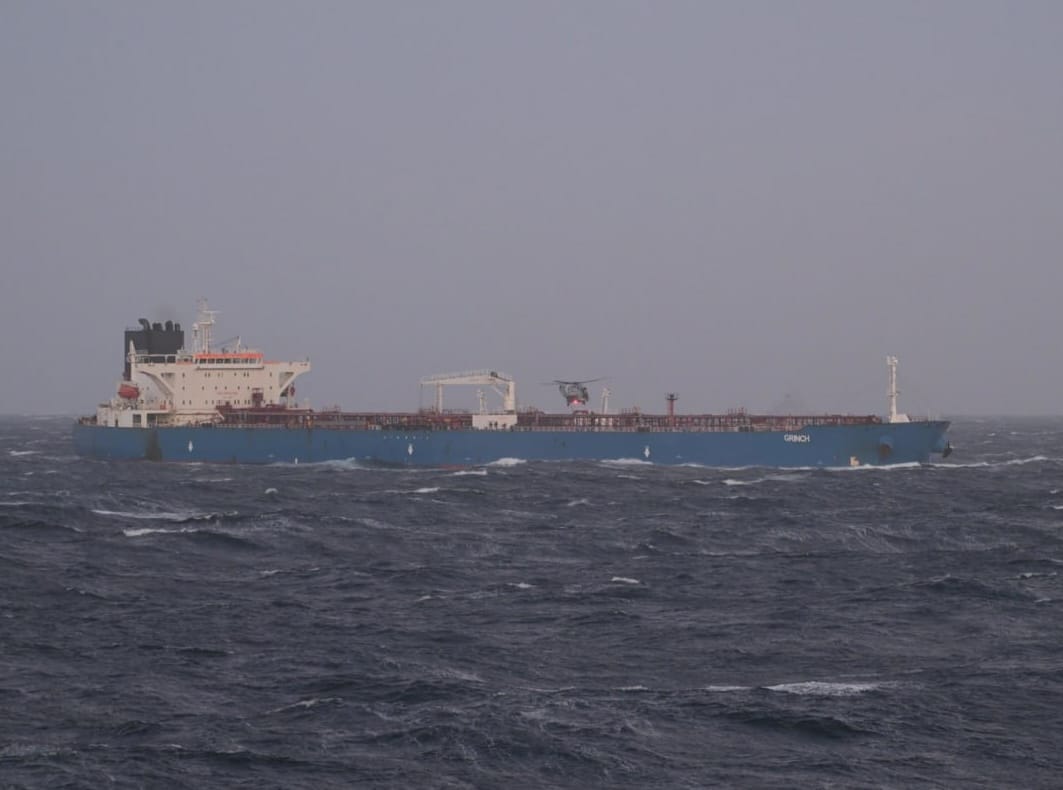
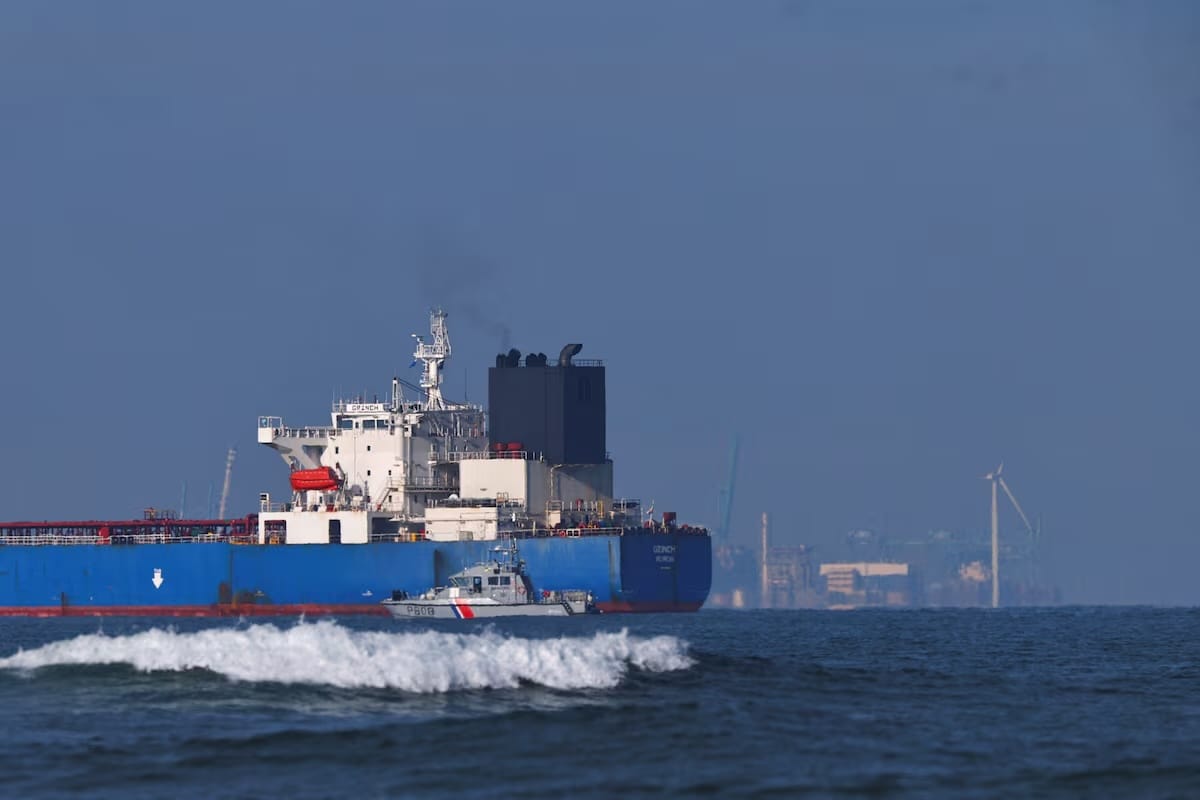
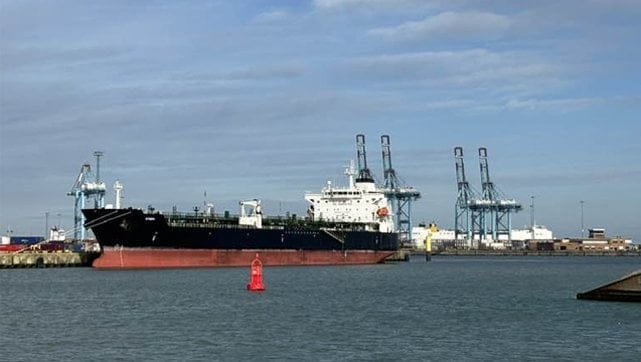
The detention of suspected “shadow fleet” ships has increased in recent months. In January, the French Navy detained the tanker Grinch in the Mediterranean while the vessel was en route to an undisclosed destination after departing from the Russian port of Murmansk. In February, the vessel’s owner paid a multimillion-euro fine, after which the tanker was released. In early March, French forces supported an operation by Belgian authorities to detain the tanker Ethera in the North Sea; the vessel was forced into the port of Zeebrugge and was later fined 10 million euros.
Russia’s “shadow fleet” consists of hundreds of aging tankers formally owned by offshore companies and sailing under false flags. The Kremlin and traders linked to it use the vessels to circumvent sanctions and the price cap on Russian oil. According to the Helsinki-based Centre for Research on Energy and Clean Air, in the first nine months of 2025 alone more than 100 such vessels used false flags while transporting about 11 million tons of Russian oil worth 4.7 billion euros.