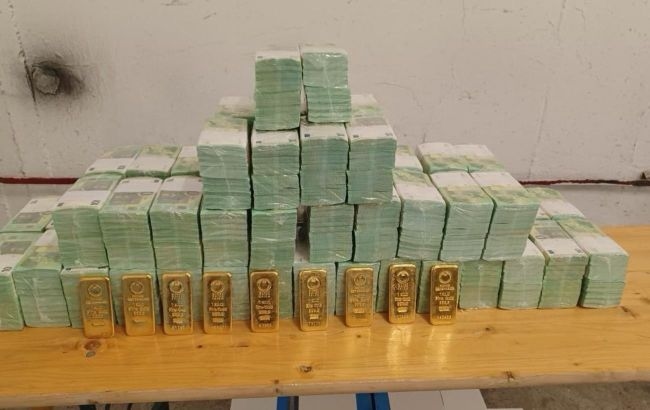
The Hungarian government has adopted a resolution stating that the money and gold seized from employees of Ukraine’s Oschadbank will remain in the country for the duration of the investigation. The Hungarian side says the purpose of the investigation, conducted by the National Tax and Customs Administration, is to establish the origin of the assets — $40 million in cash, €35 million in cash, and 9 kilograms of gold bullion — along with the reason why they were being transported through Hungarian territory. Ukraine’s Foreign Ministry earlier demanded the return of the seized assets.
Meanwhile, the Hungarian outlet Telex published a statement by the country’s Minister of Construction and Transport, János Lázár, indicating that the seizure of the assets is linked to a dispute between Hungary and Ukraine over the halting of oil supplies through the Druzhba pipeline. “If they are blackmailing us, we cannot be so foolish as to leave everything as it is… We did this for a reason, and we will not return their money. The money will remain here for now as we wait for the pipeline to reopen and for new deliveries of Ukrainian money through Hungary,” Lázár said, adding that transporting such large sums in cash appears suspicious.
On March 5, Hungarian authorities detained seven Ukrainian cash-in-transit guards and two vehicles carrying cash and gold on the suspicion of a potential connection to money laundering. Oschadbank says it was a routine transfer.
On March 9, Ukraine’s Foreign Ministry stated that the Ukrainian bank’s employees were transporting valuables from Vienna to Ukraine in accordance with a contract between Oschadbank and Austria’s Raiffeisen Bank International AG.
“The shipment was processed in accordance with international transport regulations and applicable European customs procedures. The Hungarian side was aware that the cash-in-transit employees were unarmed.”
Ukraine’s Foreign Ministry claims that the cash-in-transit employees, who were treated as witnesses, were nevertheless held in handcuffs for 28 hours and transported blindfolded. “The Ukrainian citizens had their personal belongings seized, including mobile phones, and were denied the opportunity to notify their relatives, the Ukrainian embassy in Hungary, or their employer about their detention and whereabouts. Most of the personal items seized at the time of detention have not been returned.” In addition, one detainee who suffers from diabetes “was forcibly injected with a medication that caused a sharp rise in blood sugar and hypertension,” requiring hospitalization. Another detainee with a disability did not receive medical assistance until he lost consciousness.
On March 6, Hungary deported the detained Ukrainians, banning them from entering the Schengen area for three years. “This appears to be a punishment of Ukrainian citizens who did not provide the testimony required by the Hungarian side,” Ukraine’s Foreign Ministry concluded.