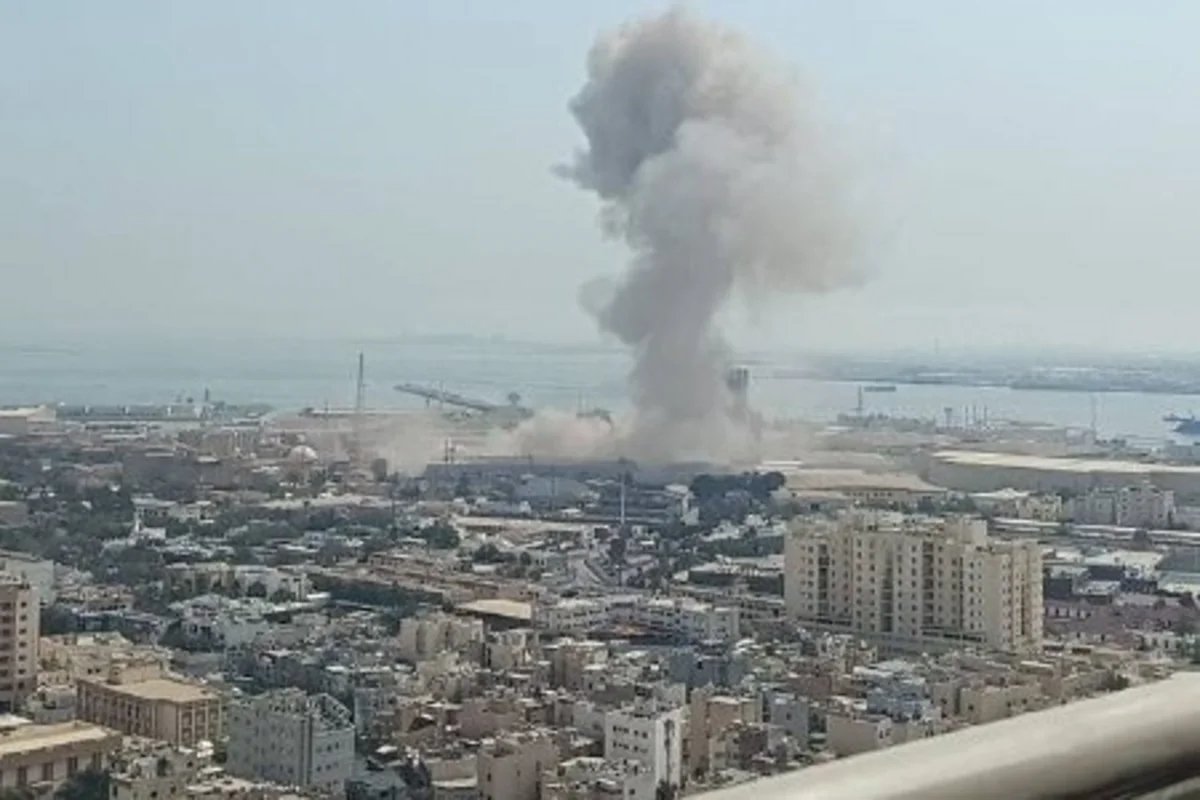
After Iran fired hundreds of missiles and drones at multiple countries in the Persian Gulf, Qatar responded with a strongly worded statement, promising that Tehran “will have to pay a price.” Five other Gulf states also expressed their right to respond, but experts interviewed by The Insider differ on whether those statements portend real military action.
On March 2, Qatar’s Foreign Ministry spokesman Majed al-Ansari told CNN that “a price has to be paid” for its “blatant attack,” adding that Iranian strikes on the people of Qatar “cannot go unanswered.” He also noted that Qatar does not maintain diplomatic contacts with Tehran.
The other Gulf states are not using direct threats, but they are nevertheless emphasizing their right to respond to the attacks. On March 2, the countries of the Gulf Cooperation Council said they would take “all necessary measures” to protect their security and territory, while reserving the right to respond to “heinous” and “treacherous Iranian attacks.” The GCC includes six countries: Bahrain, Qatar, Kuwait, Oman, the United Arab Emirates and Saudi Arabia.
According to estimates by the Long War Journal, from Feb. 28 to March 2 alone, at least 165 missiles and 541 drones were fired at the UAE, at least 45 missiles and 9 drones at Bahrain, at least 72 missiles and 17 drones at Qatar, at least 97 missiles and 283 drones at Kuwait, and at least 2 drones each were fired at Oman and Saudi Arabia.
According to a count by Al Jazeera, as of March 3, eight people have been killed in the Persian Gulf countries and 128 have been wounded.
In recent years, the Gulf states have avoided direct military confrontation with Iran. They have not allowed their territory to be used for staging attacks on Iran, and they have sought to keep diplomatic channels with Tehran open.
Middle East expert and NEST Centre analyst Ruslan Suleymanov believes the Gulf states cannot avoid reacting to the attacks, but will not get drawn into war or “line up” beside Israel. In comments to The Insider, he explained:
“The Arab monarchies of the Persian Gulf are horrified by what is happening. They cannot avoid reacting and condemning Iran’s actions, but at the same time they are not ready to get dragged into a war and suffer even greater economic and reputational losses. So what we are seeing, this reaction, is mainly rhetoric and the need to respond somehow to what is happening. At the same time, the Arabs do not want to be drawn into this conflict, and that is why Tehran is trying to use them as a human shield, so that they will force Trump to stop strikes on Iranian territory, which in turn will force Iran to stop as well.
The entire security architecture of the Gulf monarchies is built in such a way that they depend on Washington. The United States is the guarantor of security for all these countries. They have essentially outsourced their own security, which explains the broad U.S. military presence in the region. That is why I personally do not expect the Arab monarchies, which are not able to ensure their own security without the United States, to go to war against Iran and line up beside the Americans, and even more so with Israel, toward which the Arab street still has very complicated and contradictory feelings after two years of war in Gaza. Even with what is happening with Iran now, it has an extremely negative attitude toward any cooperation with Israel, especially military cooperation.”
Israeli military expert David Sharp, by contrast, believes that at some point the Persian Gulf countries will no longer be able to tolerate the situation, as showing weakness is humiliating in the Middle East. According to Sharp:
“There are rumors that they are already responding to Iran in some tacit way… At some stage, it will become hard for someone to endure it, because it is very humiliating and it is real damage, because everyone sees it and everything ends up on video. The Saudis, who lay claim to leadership in the Muslim world, are showing weakness because they are being hit and they stay silent. For them it is morally difficult, because they show weakness in this region and others will want to hit them even more. And secret strikes do not help much because they are secret and no one knows about them. So the choice will be to do something publicly or endure it. They endure it because they fear more serious damage.
On the other hand, the United States and Israel are already doing the main work. The role of the Gulf countries cannot be very large, but it could be significant if they wanted. It is their airspace, and they have sizable air forces. Moreover, they do not operate in silk gloves and, unlike Israel, they could take up bombing oil and other economic facilities. That is, they could hit what Iran is hitting on their territory.”