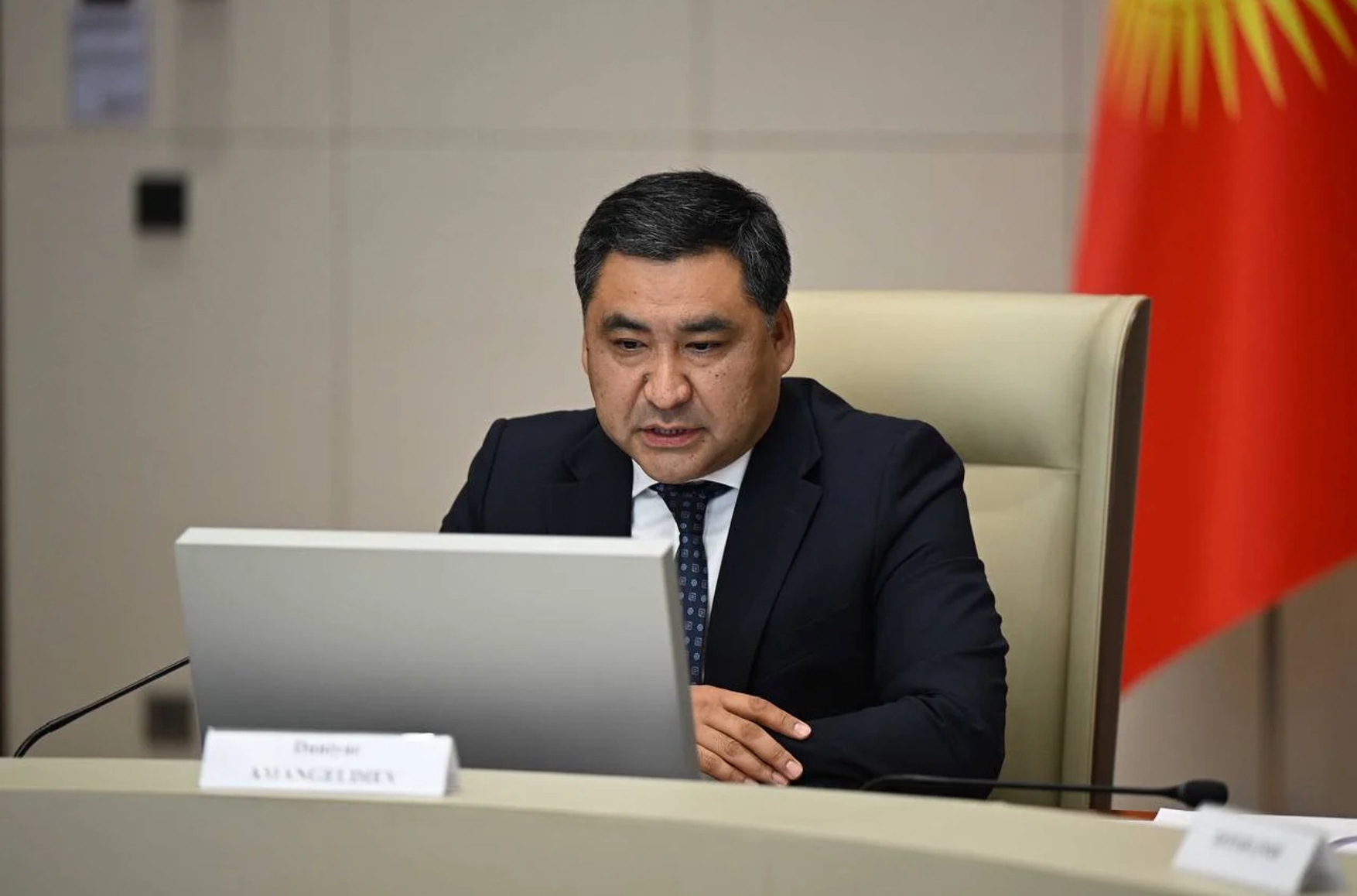
On Mar. 2, the Financial Times reported that Kyrgyzstan plans to take the European Union to court in the event that Brussels imposes sanctions on the country over its re-export of dual-use goods to Russia. The paper cited First Deputy Chairman of the Kyrgyz government Daniyar Amangeldiev. However, speaking with The Insider, Amangeldiev denied that Kyrgyzstan is preparing legal action, saying the claim stems from a misunderstanding and that the authorities in Bishkek are instead prepared to act against companies supplying Moscow with banned goods.
What the FT reported
According to EU documents cited by the FT, the European Commission has proposed banning the sale to Kyrgyzstan of certain goods that have the potential for military use, as authorities in Brussels suspect that Kyrgyz companies have been forwarding them to Russia. The documents say Kyrgyzstan is re-exporting dual-use items including machinery and electronics that are used in producing weapons and drones. If adopted, the measures would mark the first imposition of secondary sanctions by the EU against a state.
The paper quoted Amangeldiev as saying: “This decision [to introduce secondary sanctions] will affect our image. If such a decision is made, we will be ready to challenge it in court… We are categorically opposed to the trade in banned goods.” The report also noted that in February Bishkek submitted a package of documents to the EU outlining its efforts to prevent violations of sanctions against Russia. Amangeldiev added that Brussels has not specified what steps Kyrgyzstan must take in order to demonstrate compliance and avoid penalties.
What Kyrgyzstan’s deputy prime minister says
In his conversation with The Insider, Daniyar Amangeldiev confirmed that he had spoken with the Financial Times ahead of a visit by the EU’s special envoy for sanctions, David O'Sullivan, with whom the Kyrgyz government is in talks. But Amangeldiev said he never claimed that Kyrgyzstan was preparing to sue the EU over potential secondary sanctions.
“The discussion concerned the funds of the Kyrgyz-Russian Development Fund, which has state participation, and which were frozen in the Belgian depository Euroclear. We're talking about roughly €140 million. We may start looking into this issue — not in a legal sense, but more broadly. And we are addressing it not with the EU, but specifically with Belgium and with Euroclear. We have no plans to sue the EU, and we never said we did.
We are holding a dialogue with O’Sullivan’s department and with individual countries. If a specific country has claims that we are circumventing sanctions, we are prepared to prove that we are not. We are ready to develop a plan of measures to combat sanctions evasion. We have shown our balance sheets and our trade operations. Yes, there may be some deviations by private companies [that occurred after the start of Russia’s full-scale invasion of Ukraine], but we expressed readiness to impose our own sanctions on such companies, including revoking their registration.
This is why O’Sullivan’s mission was necessary — so that we could show on the ground that the situation is not as bad as it may appear, that we are capable of monitoring it, controlling it, and influencing it. After his visit, we agreed to develop a concrete plan to reduce sanctions risks. In addition, we hope that by May we will succeed in securing the removal from sanction lists of two of our banks that were included there without grounds. At the very least, O’Sullivan’s department will prepare a memo on the possibility of lifting sanctions if we fulfill a series of requests.”
Amangeldiev said Kyrgyzstan cannot afford to be in conflict with either the EU or Russia.
“Russia is our main economic partner, and we are highly dependent on it. I always explain this to our European partners. We cannot meet their demands 100 percent. But when it comes to goods used to create weapons, our position is clear: we do not support this and will not allow such products through. But as for traditional trade [with Russia], there can be no restrictions, because it is the basis of our economic security.
And we cannot afford to end up under European sanctions either, because we have major investment projects with the EU and with the world at large.”
Visit by the EU special representative
On February 26, following his visit to Kyrgyzstan, O’Sullivan gave a press conference, saying:
“One issue that concerns us is your financial system — banks, cryptocurrency, and the import of certain goods. Some companies have already been included in the EU’s 19th sanctions package, and we are discussing this with the authorities. We have already met with representatives of the National Bank, the Ministry of Economy, the Ministry of Foreign Affairs, and the presidential administration.”
The press conference also noted that approximately 80 dual-use items supplied from Europe to Kyrgyzstan are under close monitoring. Fifty have been found in Russian weapons, and another thirty are used in their production.