Photo: ECOMHUB
In a number of Russian penal colonies and prisons, up to 75% of money transfers sent to inmates by relatives and loved ones are being withheld in order to “cover the costs of their upkeep.” After representatives of a support group for political prisoner Alexander Skobov complained about the practice, administrators at the facility in Yelets where he is being held defended the policy by citing amendments to the Penal Enforcement Code (PEC) that came into effect in the fall of 2025.
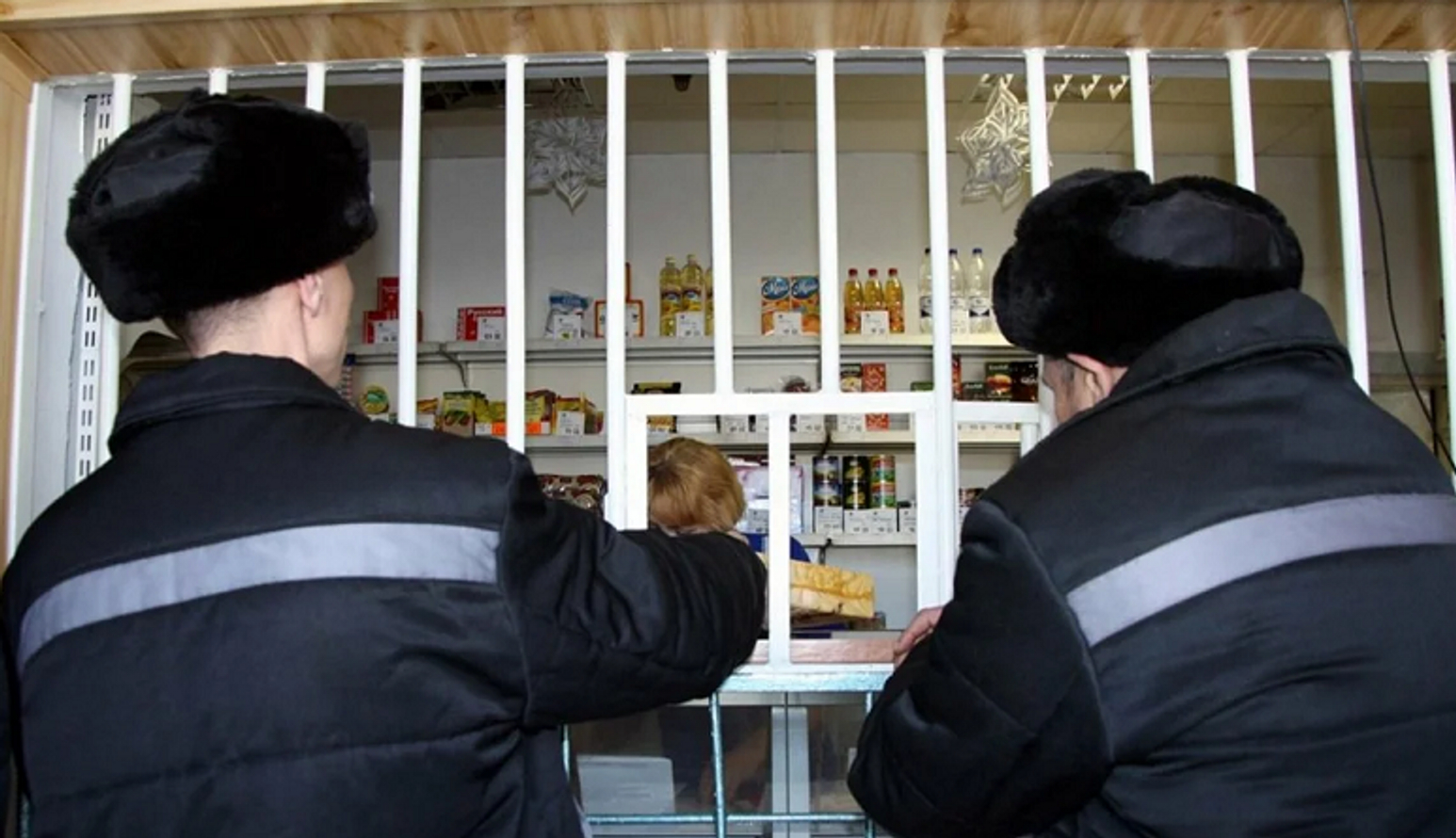
Officially, the deductions are meant to cover the cost of the food, utilities, clothing, and footwear provided to inmates in Federal Penitentiary Service facilities. According to relatives and prisoner support groups, in practice this means that an inmate may be left with only the minimum allowable amount from incoming transfers: out of 10,000 rubles sent, they may be able to spend only about 2,500 rubles in the prison store, while giving up the rest for “upkeep.”
The Insider examined how the new mechanism for withholding inmates’ funds works, collecting testimonies from several colonies and prisons and speaking with human rights activists who provide assistance to prisoners and their families.
A closer look at the PEC amendments that allow for withholding money transfers
The key changes allowing money to be withheld from transfers to inmates were made to Part 4 of Article 99 of the Russian Penal Enforcement Code. The amendments were adopted by Federal Law No. 71-FZ on Apr. 7, 2025 and came into force this past October. At the time, these changes did not receive widespread public attention.
Before the amendments came into effect, Article 99 of the PEC stipulated that the reimbursement of upkeep costs — food, clothing, utilities, and hygiene products — was to be made only from an inmate's salary or pension. If an inmate refused to work, such costs could be deducted from the funds in their personal account; however, before October, the provision was specifically tied to money that came from regular income in the form of a salary or pension.
The amended article features deliberately broad language, stating explicitly that inmates must reimburse the cost of food, clothing and footwear, utilities, and hygiene products from their salaries, pensions, and other income. Thus, the obligation to cover these costs was extended to all sources of funds, including money transfers sent to the inmate’s personal account from outside.
Additionally, the updated language establishes that if there are insufficient funds in an inmate’s personal account, the debt for issued clothing and footwear can be deducted in subsequent months from any incoming funds until it is fully repaid.
Article 107 of the Penal Enforcement Code, which governs the procedure for deductions, has not been changed. It still refers to Part 4 of Article 99 and sets the minimum amount that must remain in an inmate’s personal account: at least 25% of income, and for certain categories, at least 50%. Thus, it is the amendments to Article 99 that created the legal basis for withholding up to 75% of money transfers sent to inmates.
Where and how money is being withheld
Inmates, including political prisoners, have reported the application of the new deduction rules. One of them is poet Artem Kamardin, who is serving his sentence at Penal Colony IK‑4 in Vyazniki, Vladimir Region. This past December, his wife, Aleksandra Popova, received a notice that the colony administration intends to withhold up to 75% of the funds deposited into Kamardin’s personal account in order to cover the costs of his upkeep. According to her, under the new rules, in order for the inmate to actually receive 10,000 rubles for use in the colony store, up to 40,000 rubles would have to be transferred to his account each month.
The support group for the defendants in the “Mayakovsky Case” told The Insider that the deductions for Kamardin have been in effect for two months, with almost his entire salary from the sewing workshop being withheld for upkeep, leaving him with less than 200 rubles ($2.60) to spend. At the same time, it is difficult to specify the exact percentage that is being deducted from money transfers — according to the support group, less than 75% is currently being withheld, but the law allows the deductions to be increased to the maximum level.
Deductions have also affected Grigory Skvortsov, a photographer convicted of treason and held at Penal Colony IK‑5 in Koryazhma, Arkhangelsk region. According to his support group, on Jan. 14 a total of 20,200 rubles ($263) were transferred to Skvortsov’s account in the colony, but the facility’s accounting department explained that approximately 10,000 rubles ($130) would be withheld to cover food and lodging, including utilities. At the same time, the support group noted that, although Skvortsov is officially employed in the colony, his first salary amounted to only 43 rubles ($0.56).
Another instance of the practice was recorded at Vladimirsky Central, where political prisoner Pavel Elmanov is held. Volunteers told The Insider that in October 2025, immediately after the amendments to the Penal Enforcement Code came into force, 10,000 rubles ($130) were transferred to his personal account as a birthday present. In a letter, Elmanov reported that almost the entire amount was deducted for his upkeep, making his case one of the first known instances of the new deduction rules enforcement.
The Insider also learned that deductions from transfers to cover inmates’ upkeep are being carried out at Penal Colony IK‑6 in Lipetsk and Penal Colony IK‑1 in Nerchinsk, Zabaykalsky Krai. Relatives of inmates and volunteers told The Insider that in several other colonies and prisons, this practice either has not yet been implemented, or that the deductions are being applied on a limited basis.
What human rights activists say
The Prison Lawyer human rights project, which specializes in assisting convicts serving sentences in colonies and prisons, told The Insider that the new deduction practice is being applied selectively, that it varies from colony to colony, and that it is not yet widespread.
Sasha Graf, founder of the Women’s Prison Term project, which provides assistance to female inmates, also confirmed to The Insider that she has encountered cases of deductions. According to her, the amendments that came into force allow up to 75% to be withheld from inmates’ transfers, but do not obligate colony administrations to apply the maximum deduction.
“I have encountered this with both female and male prisoners. I don’t know what principle determines which colonies and which inmates it applies to. Both political and non-political prisoners have been affected. There have been instances where 75% was withheld from a political prisoner, while other inmates in the same facility were not subjected to deductions.”
According to human rights activists, the practice of deductions is still developing and may expand. They do not rule out the possibility that, in the coming months, transfers could begin to be deducted in a larger number of colonies and prisons.