On Feb. 19, Nomma Zarubina agreed to a plea bargain. The Russian national, who was arrested in the United States in late 2024, pleaded guilty to giving false testimony about her cooperation with Russia’s Federal Security Service (FSB) and of “naturalization fraud” stemming from her participation “in a scheme to transport women between New York and New Jersey to engage in prostitution at a massage parlor business in East Brunswick, New Jersey,” according to a press release from the United States Attorney’s Office of the Southern District of New York. The Insider examined several details pertaining to Agent “Alisa's” activities, which included attempts to seduce Russian opposition figures on behalf of the FSB and to infiltrate American think tanks focused on issues of international security.
35-year-old Nomma Zarubina was arrested in November 2024 on charges of giving false testimony to the FBI about meeting with FSB agents. In April 2025, prosecutors added charges that she had organized the trafficking of women for prostitution. So far, Zarubina has pleaded guilty only to the charges that she lied to the FBI when answering questions about her ties to the FSB, and that she committed naturalization fraud by claiming on her citizenship application to have never “procured anyone for prostitution.”
Zarubina now faces up to five years in prison for each count, while the prostitution charges themselves were dropped in exchange for her guilty plea. Sentencing is scheduled for June 11.
From sex worker to agent
Zarubina began her working career at the age of 16, moonlighting as a dancer at the Parking nightclub in the Siberian city of Tomsk. After graduating from high school, she enrolled at St. Petersburg State University and moved to St. Petersburg, where she moonlighted as a stripper and sex worker. On a dating site, she advertised herself under the name “Alice” — whether by coincidence or not, “Alice” later became her code name in the FSB.
After graduating from St. Petersburg State, Zarubina moved to Moscow and enrolled in a master's program at the Russian Presidential Academy of National Economy and Public Administration (RANEPA). Her academic department of choice — the Faculty of National Security — boasts a coat of arms based on that of the FSB and a website that proudly notes its long-standing ties with the FSB Academy. In Moscow, Zarubina continued to combine her studies with her favorite pastimes.
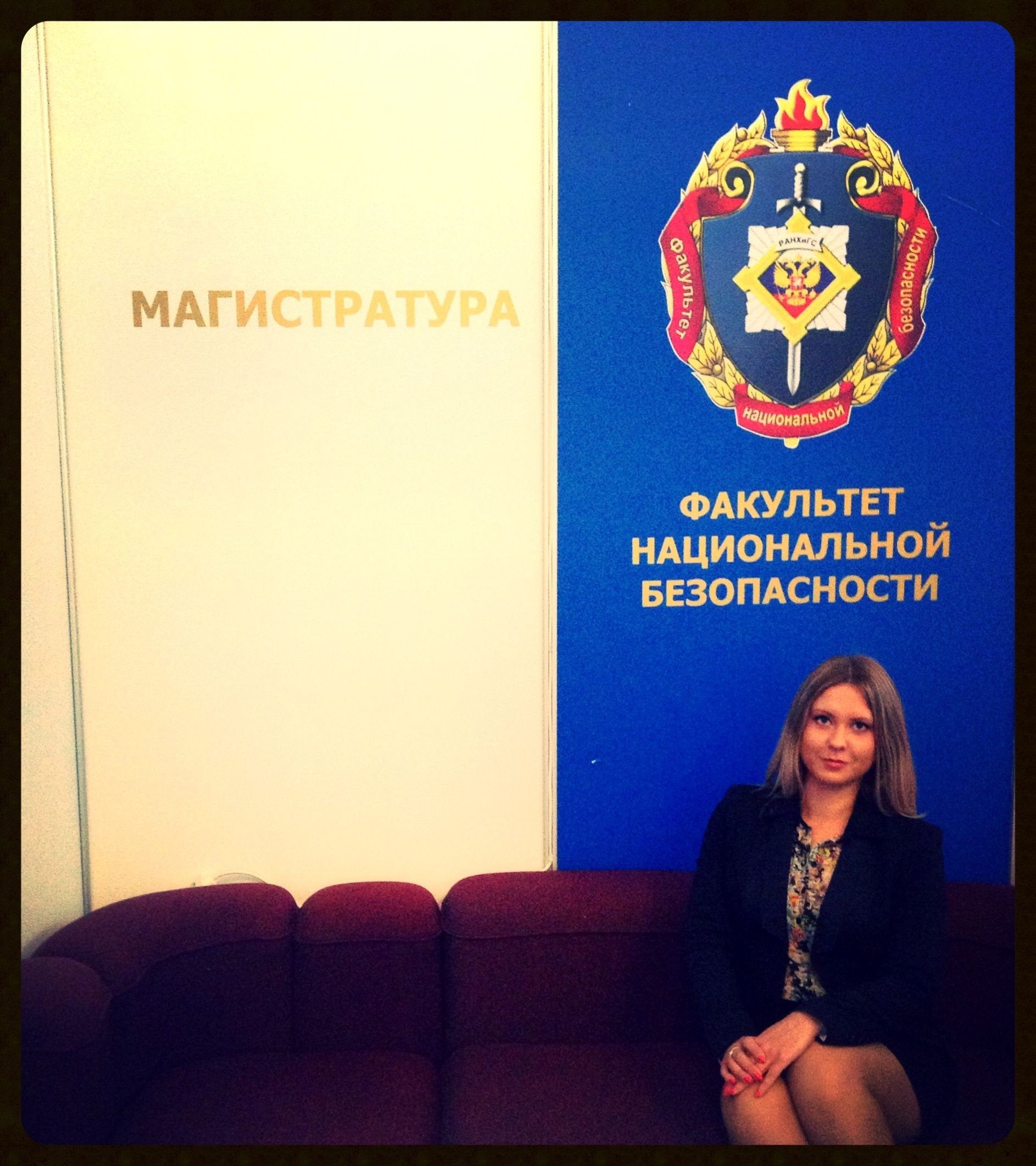
It was at the Faculty of National Security that Zarubina met her recruiter — classmate Roman Sumarokov, who was already serving in the FSB at the time. In an interview with The Insider, Zarubina claimed that it was not recruitment, but an “assessment of the possibility of recruitment.” The FBI, however, reached a different conclusion.
It is unclear whether the FSB needed anything from Zarubina while she was studying for her master's degree, but immediately after graduating, she became a much more valuable agent. In 2016, she moved to New York, where she worked part-time at the local Russian Center (a de facto branch of the Russian state agency Rossotrudnichestvo) and at the Russian Mission to the United Nations. Also in 2016, she got married and soon gave birth to a daughter.
At the Russian Center, Zarubina was close to director Elena Branson, who even became godmother to the new emigre’s daughter. Branson was involved in organizing events typical for Rossotrudnichestvo, ranging from patriotic gatherings like the march of the Immortal Regiment to openly political activities such as arranging for the publication of open letters demanding the lifting of Western sanctions imposed on Russia over its invasion of Ukraine. Zarubina was also not shy about her views: she walked around New York in a T-shirt with the inscription “KGB,” gave interviews to Russian media, and portrayed herself as a patriot in every possible way.
However, Zarubina did not achieve any notable career success, and her personal life was marked by a divorce filing in 2020. It was during this difficult period that the FSB made her an interesting offer.
A tempting job
Zarubina does not deny that when she visited her native Tomsk in 2020, FSB officers summoned her for a chat. This is how she described the incident to the publication Sibir.Realii:
«At the end of 2020, when I arrived in Russia, I received a call from the Russian special services telling me that I had to come in for a meeting. It wasn't a suggestion; I had to go. And so I went, and it took place at the university. The conversation was very long. They asked me to tell them what I do, about my childhood, my family, my personal life, well, everything in general. Their idea was to stay in touch with me for some internal reason. As it turned out later, they had been watching me for a year. They wrote to me, sometimes with threats, because that's how they work — they say, ‘We see everything, we're watching you, even there, in New York.’”
According to data obtained by The Insider, by that time FSB recruiter Sumarokov had transferred Zarubina to the security service’s directorate for the Tomsk Region, where Kirill Fedorov became her new handler. It was after meeting him that Zarubina received the code name “Alice.”
The relationship with her new handler quickly grew from formal to intimate — then, according to Zarubina, it just as quickly ended due to the fact that “he manipulated her.” She does not explain what this manipulation consisted of, but according to the FBI, it took the form of fairly specific tasks, which Zarubina obediently carried out.
The FBI became interested in Zarubina at around the same time. By 2020, Branson's activities had raised questions among the American authorities, and as her assistant, Zarubina also attracted attention. In interviews with the FBI, “Alice” mentioned the FSB's interest in her but did not reveal the full extent of her contacts with the organization.
The FBI is confident that Zarubina had already received a list of think tanks and potential contacts that she was expected to obtain information about — in some cases by entering into personal relationships.
The FBI is confident that Zarubina had already received a list of potential contacts that she was expected to obtain information about — in some cases by entering into personal relationships.
The FBI claims that it was on behalf of the FSB that Zarubina was supposed to attend the St. Petersburg International Economic Forum (SPIEF) in the summer of 2021. According to flight records, her Tomsk supervisor, Kirill Fedorov, did indeed visit St. Petersburg while Zarubina was there.
Before Russia’s unprovoked full-scale invasion of Ukraine, Zarubina was still maintaining her “patriotic” image, but in 2022 everything changed. In March of that year, the FBI charged Branson with working for the Russian authorities without filing the proper “foreign agent” registration. Immediately afterward, Zarubina transformed herself into an opposition figure — attending events organized by Russian opposition figures and participating in protests with posters reading “Stop Putin's gang.”
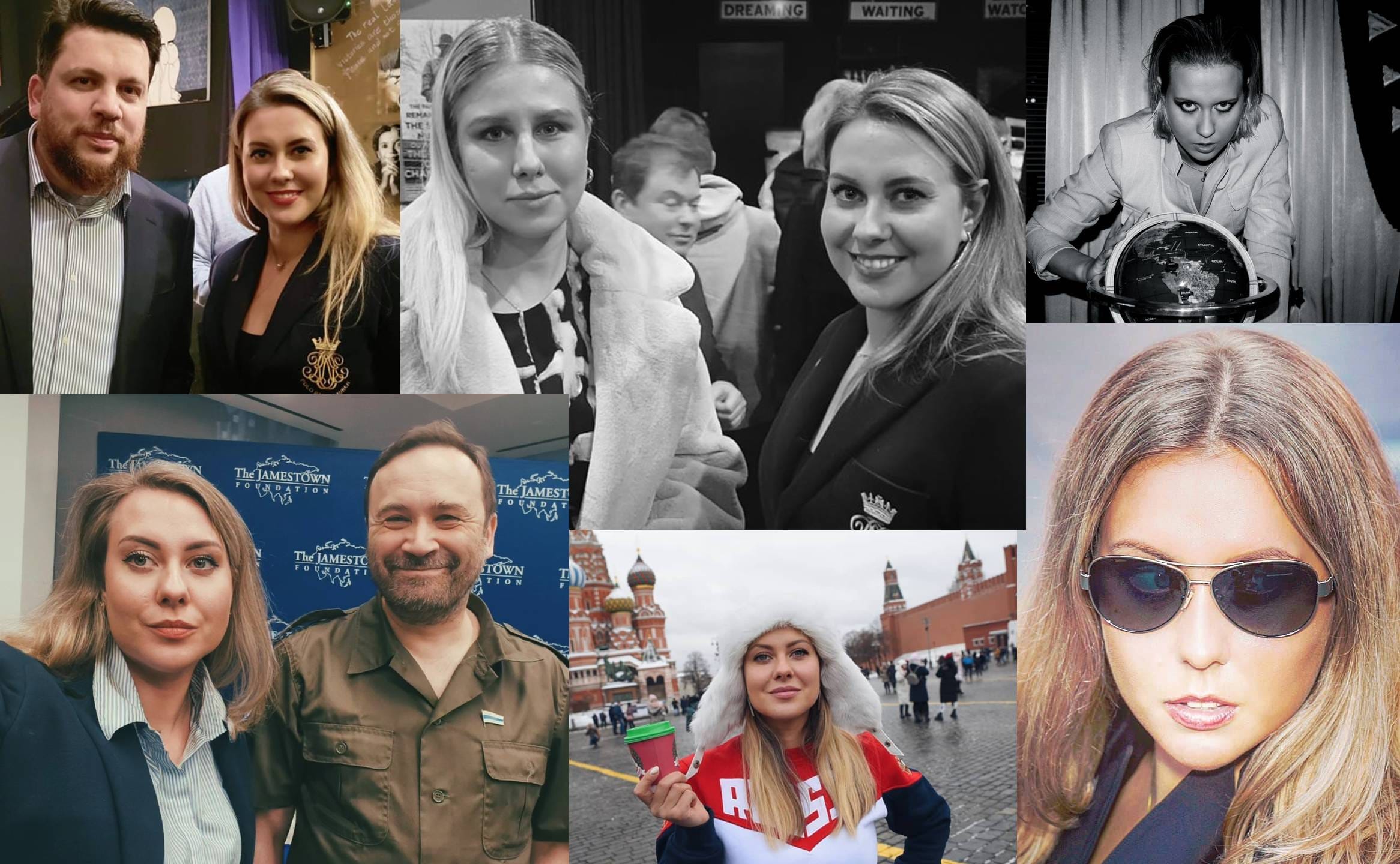
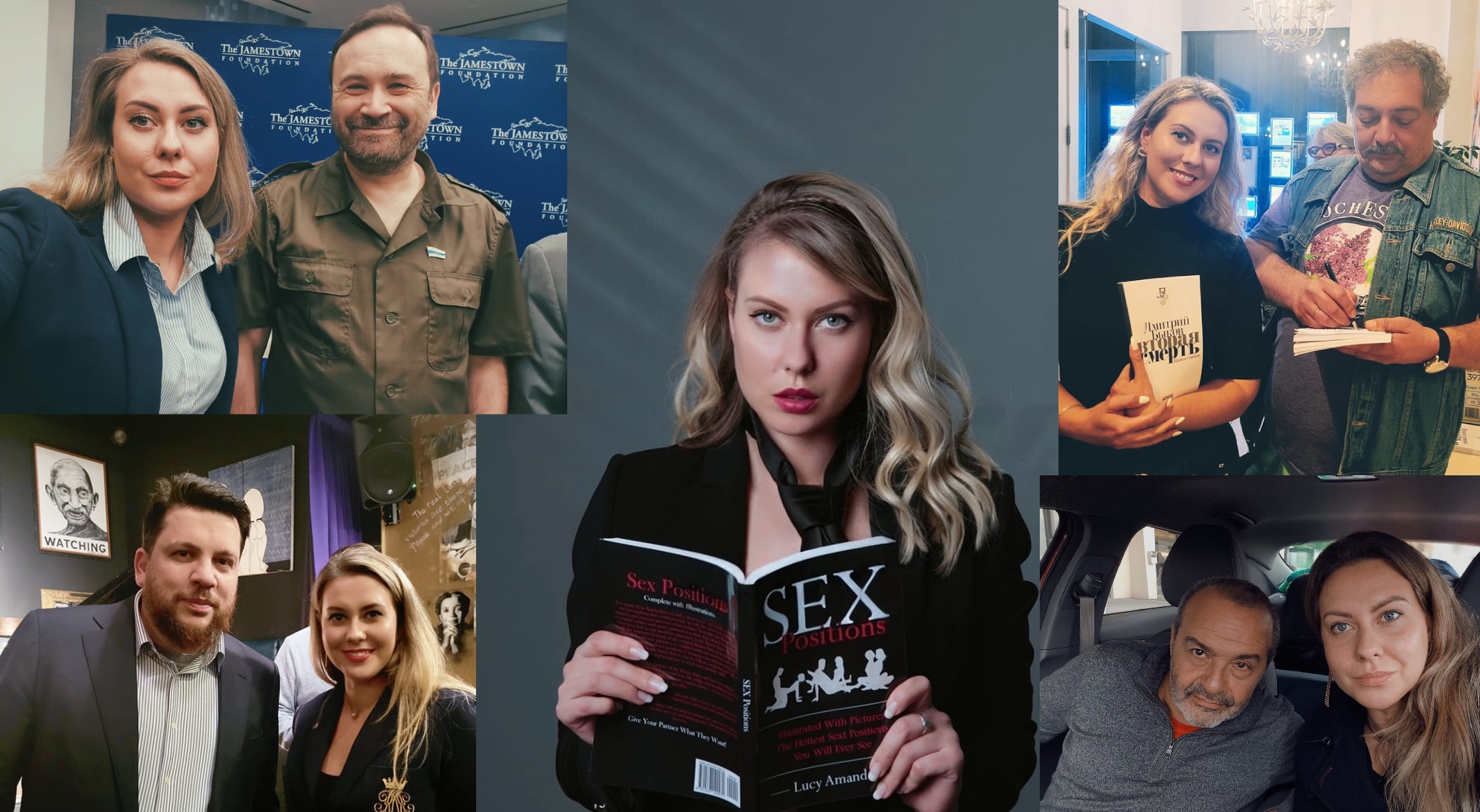
It was clear to observers that Zarubina’s commitment to the anti-Putin cause was not a labor of love. For example, longtime Navalny ally and Anti-Corruption Foundation ex-chairman Leonid Volkov noted that when Zarubina came to his meeting with supporters, she spent the entire event staring at her phone, showing no interest in what he was saying until, at the very end, she jumped up to take a selfie with him that was immediately posted to social media, which features many similar photos showing Zarubina smiling with other opposition figures. These activities look much more like the filing of reports to her supervisors than the behavior of a real activist.
Zarubina also suddenly became unusually interested in Washington-based think tanks dealing with security, international relations, and intelligence issues. She began regularly attending events related to these topics in various cities and states.
Finally, according to the FBI, Zarubina received direct instructions from the FSB to enter into romantic relationships with several Russian opposition figures. One of the objects of her attention was Ilya Ponomarev, who confirmed that she had shown interest in him. Ponomarev said that he did not believe she was working for the FSB, explaining her activity as career ambition — that is, having failed to achieve any particular success in advancing along the official Russian career ladder, she tried to take a different path.
According to the FBI, Zarubina received direct instructions from the FSB to enter into romantic relationships with several Russian opposition figures.
According to Ponomarev, Zarubina discussed potential projects that seemed “too adventurous even for him.” In Ponomarev’s estimation, it is Zarubina's “detached” nature that suggests she was not operating in the interests of handlers back in Russia. However, it is unlikely that the Tomsk FSB had a large selection of candidates to choose from, and they may have been using the best potential agent they could recruit, despite her shortcomings.
Drunk texts and admission of guilt
While awaiting trial, Zarubina began corresponding with the FBI agent conducting the investigation into her activities, sending him messages of a sexual nature along with various threats. In response to this correspondence, the judge ordered her to undergo treatment for alcohol addiction, but she continued to send similar messages and as a result was taken into custody until the start of the trial, which is scheduled for June this year.
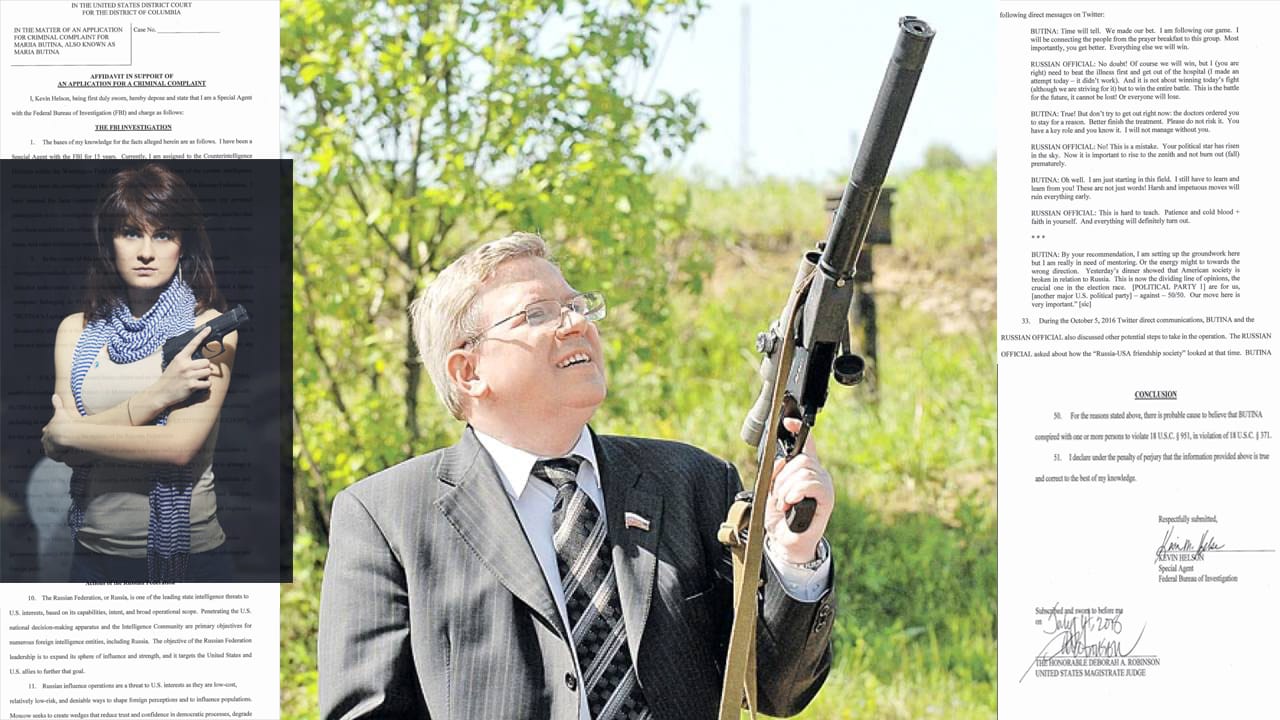
In addition to sexting and threats, Zarubina complained in her correspondence with the FBI agent that her case was receiving less media attention than that of Maria Butina — the red-headed Russian national who in 2018-2019 spent more than a year in American custody over her failure to register as a foreign agent, then returned to Russia and quickly became an MP in the State Duma.
Butina's case is indeed similar to Zarubina’s in many ways: she admitted in court that she had conspired to harm the interests of the United States, but despite her communication with representatives of Russian intelligence services, her active infiltration of American organizations, and her use of sex as a tool of personal advancement, she was not a professional spy. Still, there is one important difference that disappointed Zarubina greatly: Putin personally commented on the case of Butina, who received help from Russian diplomats before returning home to a ready-made career in Kremlin television and politics. Zarubina, on the other hand, was simply forgotten by the Russian authorities after her arrest. Of course, there is one major difference that largely explains this discrepancy: unlike Butina, Zarubina actively cooperated with the investigation, an act which could not have been perceived in Moscow as a friendly gesture.
According to the investigation, Zarubina not only engaged in prostitution in New Jersey, but also took part in a scheme to traffic women between New York and New Jersey for prostitution from 2018 to 2024. The details of this scheme have not been disclosed and will likely not be disclosed later, as this part of the charges was dropped in exchange for her guilty plea. Thus, the main charges remain perjury before the FBI, which carries a maximum penalty of five years' imprisonment, and fraud in obtaining citizenship (also up to five years).