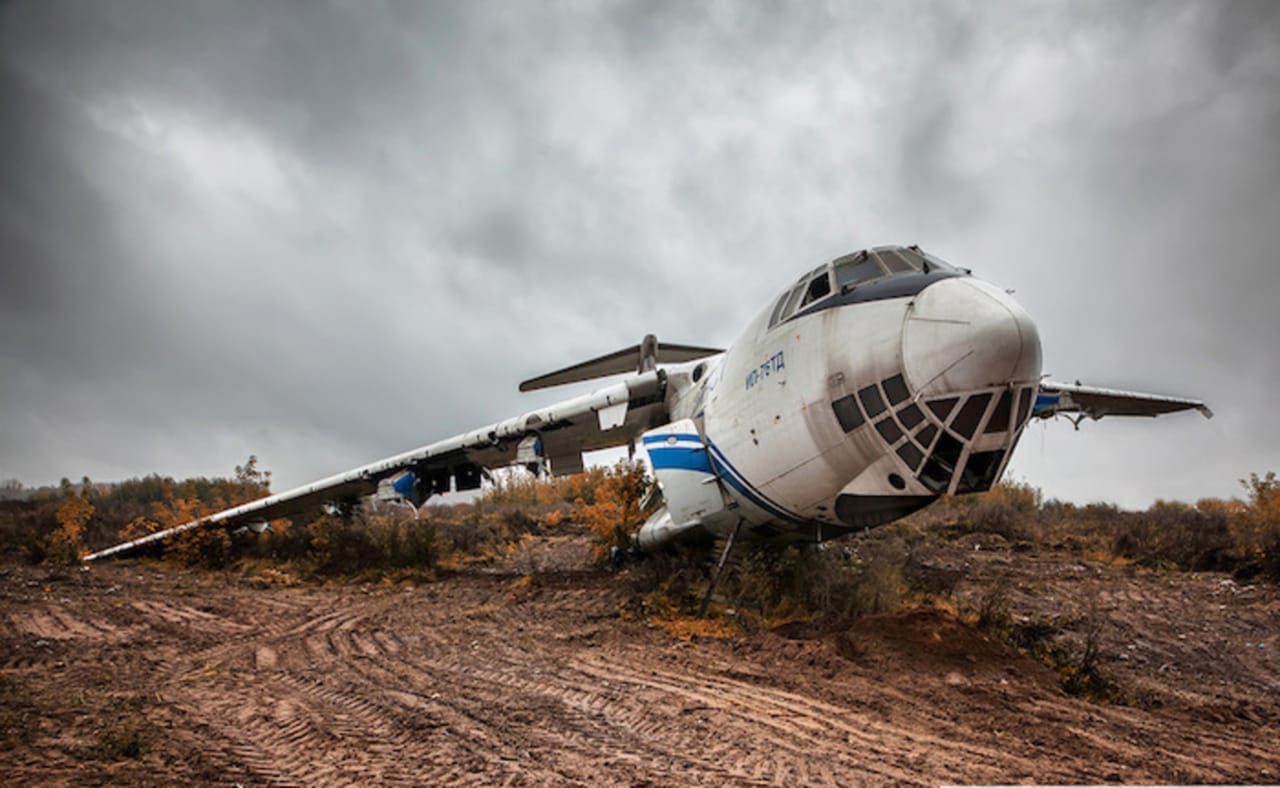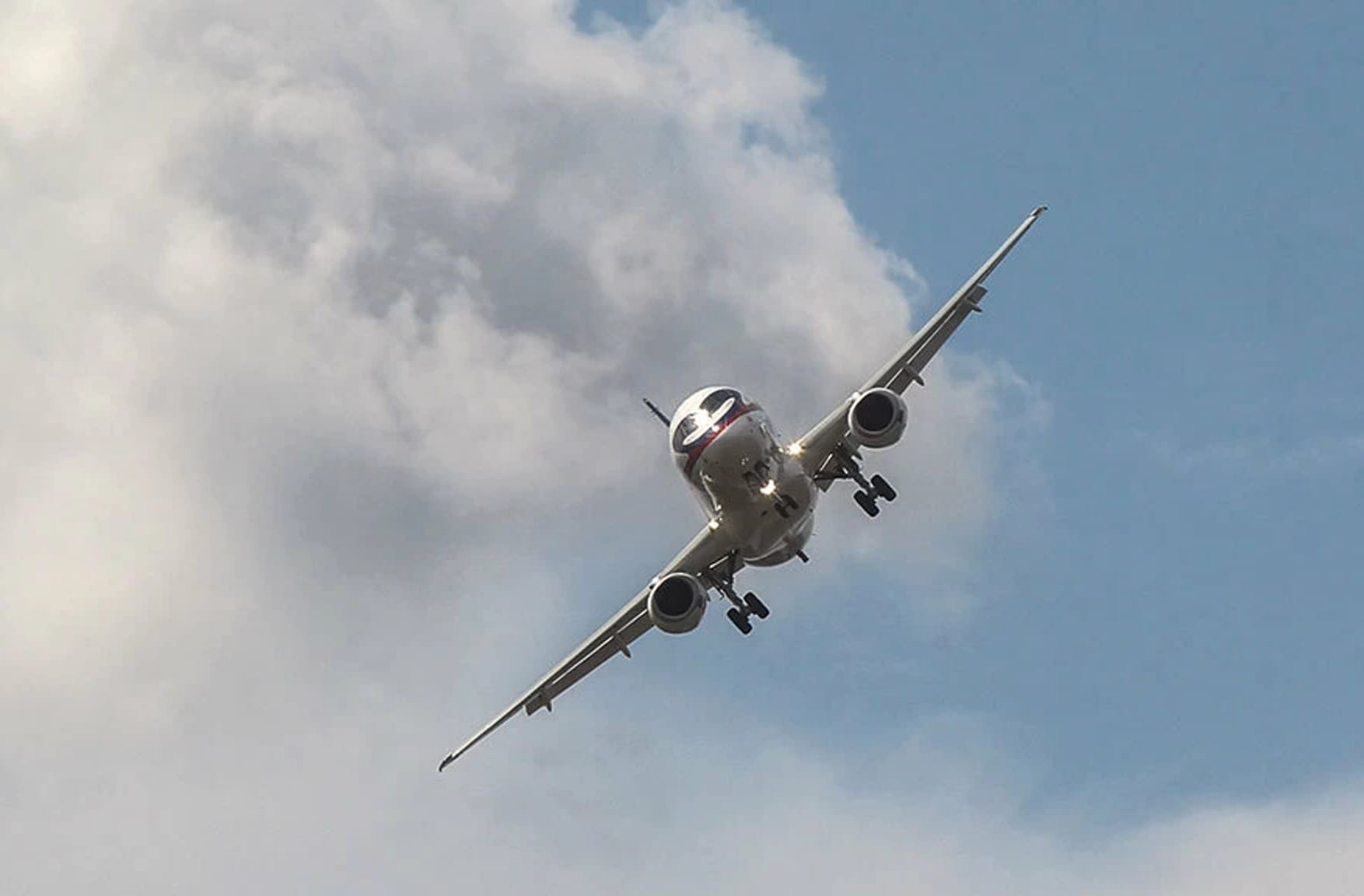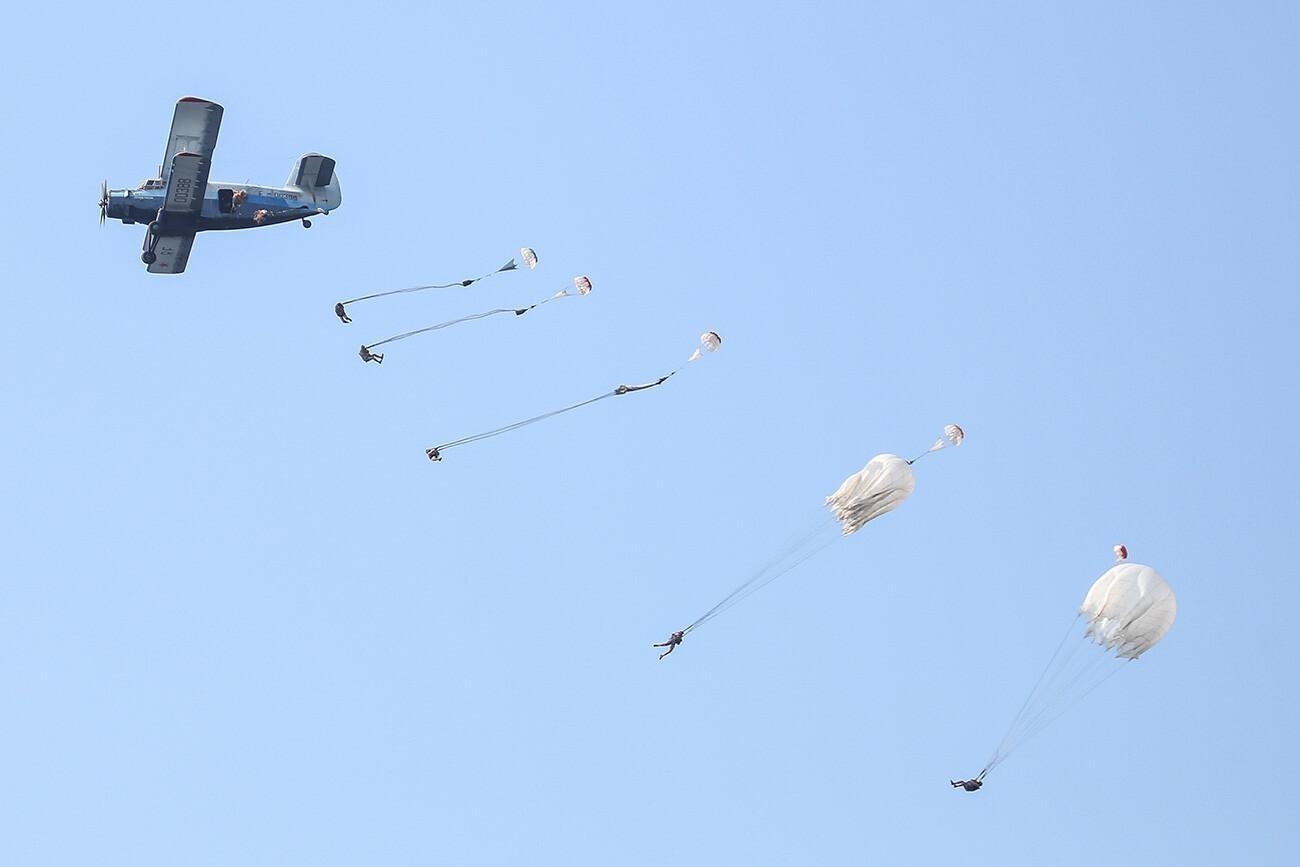
Russian officials plan to resume production of the An-2 — a light “corn duster” aircraft designed in the 1940s — after years of failed attempts to develop a replacement for the Soviet biplane. Previously, officials tried to fill the gap by certifying the Il-114-300, but that aircraft turned out to be completely unfit for real-world operation — in addition to being too expensive for customers. As for the flagship projects MC-21 and SJ-100, even if they can be certified and put into production, they risk ending up as commercial failures.
A U-turn
News of Russia’s intention to resume production of the legendary Soviet An-2 aircraft, better known as the “corn duster” or “Annushka,” was delivered without fanfare in early September at the Eastern Economic Forum (EEF) in Vladivostok.
Yuri Trutnev, Deputy Prime Minister and presidential envoy to the Russian Far East Federal District, called for prioritizing the creation of new aircraft: “I might not call this solution ideal, because it’s a bit of a shame that we flew the An-2 for 60–80 years and are now bravely going back to it.”
With poorly concealed sarcasm, Trutnev added: “If our wonderful aircraft designers can’t offer us anything but the An-2 right now, then let’s keep flying the An-2.”
Citing data from the Ministry of Industry and Trade, Putin’s envoy specified that deliveries of “fully updated An-2s” would begin in 2027, and in 2028 the aircraft would be outfitted with the new domestic VK-800 engine (whose certification is still in the works).
Earlier, the presidential envoy repeatedly demanded that the price of new aircraft be cut significantly, talked about project failures, and criticized manufacturers for missing delivery deadlines. In this context, his new comment might be perceived as yet another round in a years-long dispute.
But the Ministry of Industry and Trade gave a new dimension to his words. Deputy minister Gennady Abramenkov claims that several companies are working in parallel to update the An-2, with Rusaviaprom, the Motor Aircraft Repair Enterprise, and Technoregion all being involved. What’s more, there are plans to use the new VK-1600S engine, which the Ministry of Industry and Trade has commissioned from ODK-Klimov (and which for now exists only as a mockup), with the VK-800 (currently in testing) seen as an additional option.
“We’re creating conditions to offer light aircraft developers and manufacturers the tools they need. In particular, we’re exploring the option of preferential loans through the Industrial Development Fund to help set up aircraft production,” Abramenkov explained, adding that domestically produced engines and avionics are not ready for production. Separately, Abramenkov noted that Russia has around 700 An-2 aircraft currently in storage, and that many of them have used up only a third of their service life.
Russia has around 700 An-2 aircraft currently in storage, and many of them have used up only a third of their service life
Remarkably, the launch of a serious civil aviation project was met with studied indifference from First Deputy Prime Minister Denis Manturov, Minister of Industry and Trade Anton Alikhanov, and Rostec CEO Sergei Chemezov (who is connected to the project through Rostec affiliate ODK, which is developing a new engine for the An-2). It is quite possible that, without Trutnev, the An-2 would not even have come up at the EEF — and for a good reason.
Interest in the “corn duster” arose some time ago. Russia’s air fleet is aging, and the cost of maintaining the An-2, which is essential for connecting remote regions to the mainland, is rising as repairs are needed more often and as replacement parts become more expensive. The planes do not only operate in the Far East, but serve remote communities and rotational work camps all across the country. The alternative to light transport aircraft is helicopters, but they are far more expensive and their use would thus need to be heavily subsidized.
Notably, the revival of the An-2 has nothing to do with Russia’s military needs, which are much better handled by helicopters. The Ural Civil Aviation Plant (UZGA) had specifically been preparing to localize the four-seat Diamond DA42 for the Defense Ministry, but the project, which relied heavily on imported parts, was quickly scrapped once the full-scale war began.
The pride of Soviet aircraft manufacturing
The light multipurpose transport aircraft An-2 is rightly considered one of the triumphs of Soviet civil aviation — the industry’s equivalent of the AK-47 for gunmakers, or the “bukhanka” all-road vehicle for automakers. The An-2 was produced for more than 60 years straight, a fact that put it into the Guinness Book of World Records (even if it was later surpassed by the American C-130).
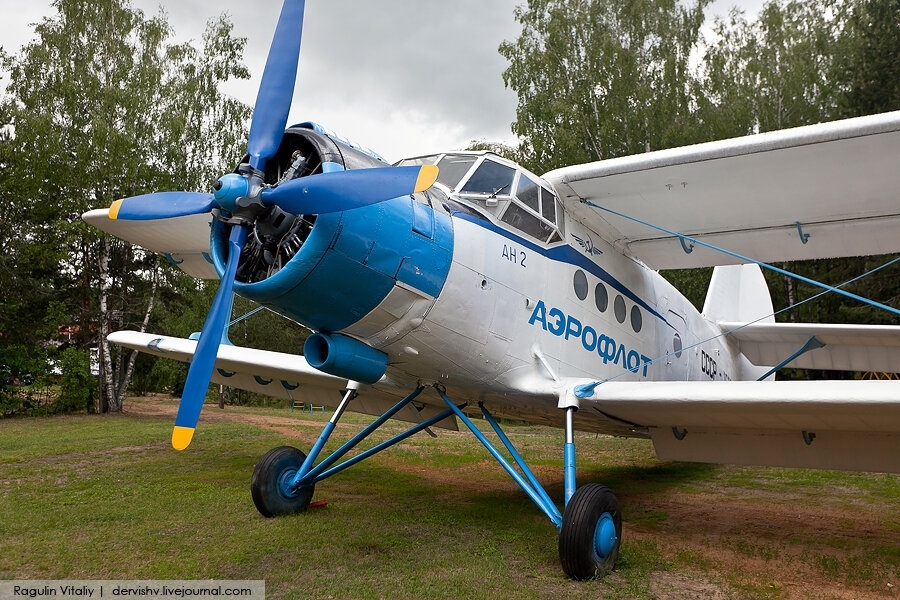
The “Annushka” was designed by Oleg Antonov’s team at the Novosibirsk OKB-153 design bureau of the Chkalov Plant. After making its first flight on Aug. 31, 1947, it entered service in 1948 and was put into mass production in 1949 in Kyiv.
The aircraft’s first customer was the USSR Ministry of Geology, but other industries soon discovered it too. Depending on the modification, the aircraft was used for agricultural work, civilian and military transport, paratrooper drops, and as a training plane.
Production in the USSR ended in 1971 (a total of roughly 5,000 aircraft were delivered), but by then foreign plants had also begun manufacturing the model. Between 1960 and 2002, Poland built roughly 12,000 An-2s with various designations, and the aircraft was successfully exported to 26 countries around the world. In addition, just under 1,000 An-2s (Y-5) were produced under license in China under the names Fongshou-2 and Yunshuji-5.
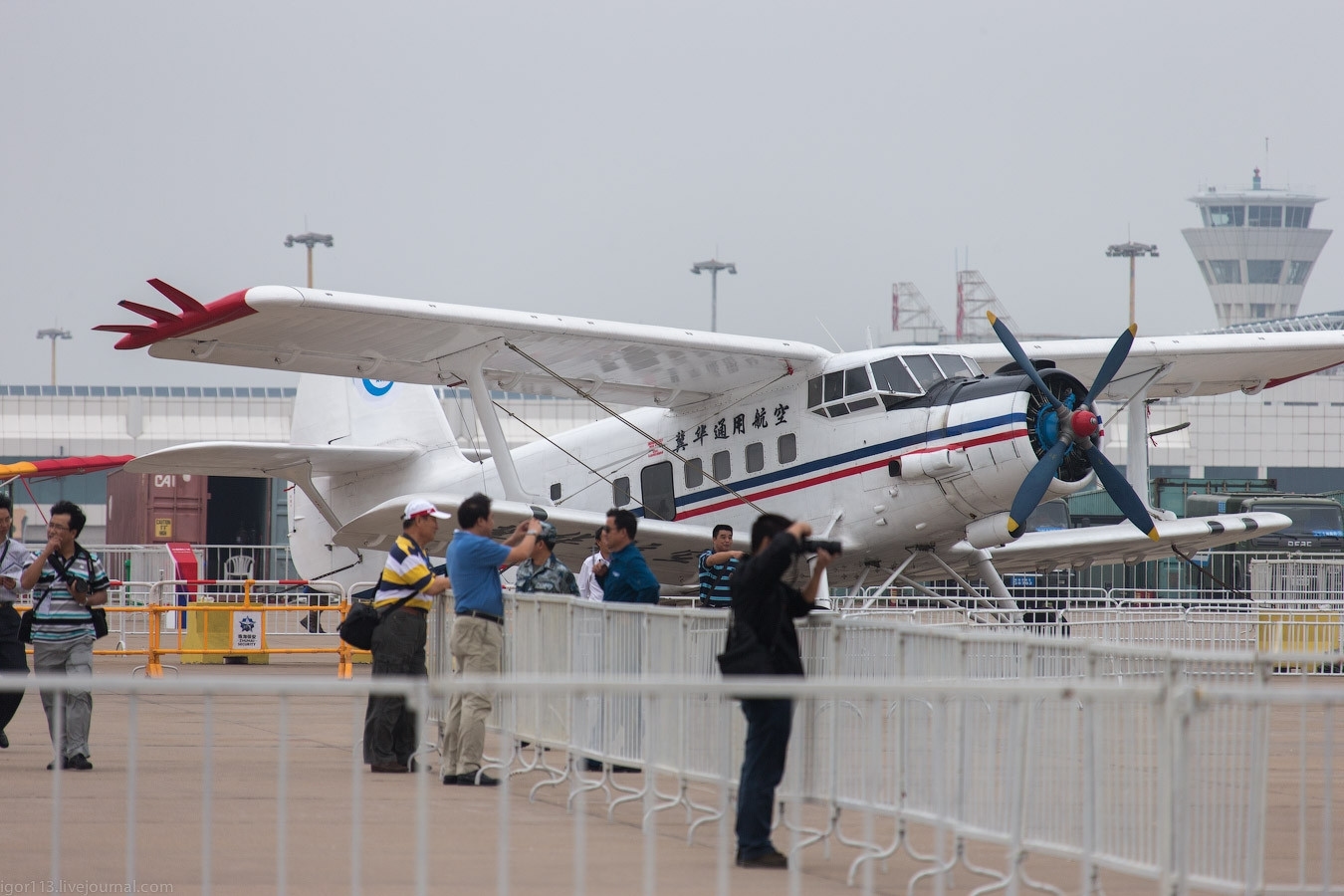
The An-2’s advantages include the ability to take off and land on short, unprepared runways, including agricultural fields and unpaved areas, while the biplane’s low speed is offset by an exceptionally stable design. Together, these qualities made the aircraft versatile and simple to service and operate.
The An-2 biplane’s low speed is offset by its exceptional stability
But even Soviet engineers acknowledged that by the 1980s the design had become outdated — primarily due to very high fuel consumption and by the necessity to carry out overly frequent repairs. There were plans to update the aircraft in the 1980s, but they were thwarted by problems with engine production. After the Soviet Union collapsed, new aircraft were no longer a priority.
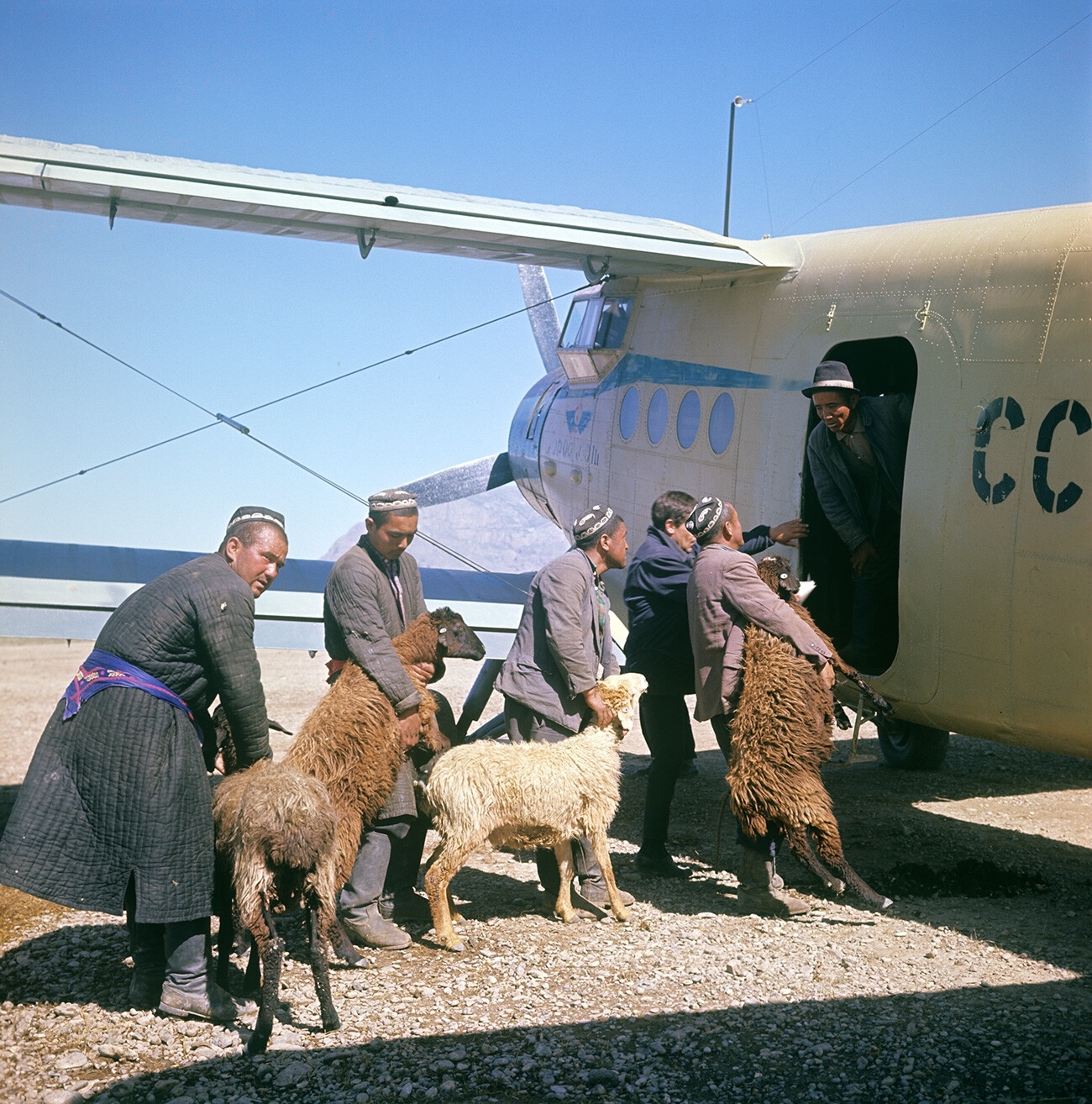
Independent Russia eventually resumed the attempts to replace the An-2. In 2010, Novosibirsk-based Chaplygin Siberian Aeronautical Research Institute (SibNIA) proposed an extensive modernization of the An-2 called the TVS-2MS — a model that would be fitted with an American Honeywell TPE-331-12 engine.
As of mid-2025, 28 such aircraft had been produced, but the process is slow due to difficulties with engine supplies via parallel imports, along with a lack of government attention and funding.
Keeping it simple
SibNIA was competing with the Ural Civil Aviation Plant (UZGA) for the right to create a replacement for the “corn duster.” The institute proposed the TVS-2DTS (LMS-9) model — a far more thorough modernization of the An-2 that is effectively an entirely new aircraft with an American engine, an all-composite carbon-fiber structure, and a brand-new fuselage and cockpit. Aircraft assembly was expected to begin at the Ulan-Ude Aviation Plant in 2021.
However, in 2019, the Ministry of Industry and Trade announced that UZGA had won the competition with its LMS-901 project. The ministry explained the rationale for creating such an aircraft as being to reduce the An-2 fleet and replace the Soviet model with an aircraft built on advanced scientific and technical solutions.
The Ministry of Industry and Trade chose the LMS-901 because many of the technologies its competitor relied on were no longer available domestically (a fact SibNIA openly acknowledged). Originally, it was the TVS-2DTS that was supposed to receive the name Baikal, but when the Ministry of Industry and Trade revised its plans, the name passed on to UZGA’s model instead.
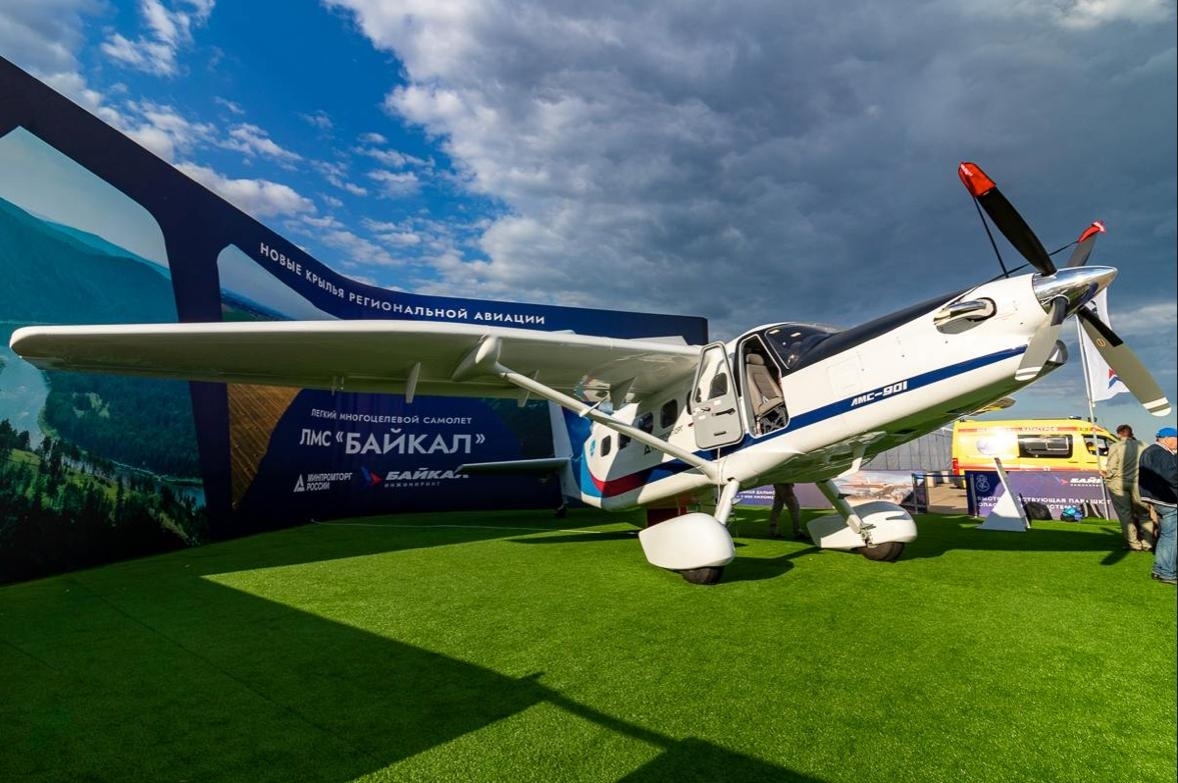
A Baikal prototype for static testing was expected to be built by the end of 2020, and then in December of that year, Putin claimed the aircraft would appear in 2021. A year later, Denis Manturov, who was then Russia’s Minister of Industry and Trade, promised that the Baikal would make its first flight in early 2022.
In June 2022, the government approved the Comprehensive Program for the Development of the Air Transport Industry, which envisioned the production of 14 Baikal aircraft in 2024, with output set to reach 25 aircraft a year starting in 2026. In 2023, Prime Minister Mikhail Mishustin assured the public that the Baikal would be certified before the start of 2024, and that its trial operation would follow shortly thereafter.
The quiet failures of parallel projects
Although Russian officials presented the Baikal as the An-2’s main successor, this characterization is not entirely accurate: while the Soviet aircraft can carry 12 passengers, the replacement carries only nine.
For routes with heavier passenger traffic, there were plans to produce the L-410, which has a capacity of 15 to 19 passengers. However, the project was abandoned due to the fact that the aircraft was a licensed copy of the Czech L-410 fitted with American engines, and in 2023, operation of this foreign aircraft in Russia began to be halted due to a lack of components. Building such aircraft without deliveries from abroad is impossible.
As a result, this aircraft did not make it into the 2024 edition of the industry development program, replaced instead by the mysterious Russian-Belarusian Osvei project (LMS-192), also with a capacity of 19 seats. The two countries’ governments signed an agreement on its production in April 2024.
Airlines were scheduled to receive the first 20 aircraft in 2027, but in August of 2026, Manturov reported that an Osvei prototype would appear only the following year, and that the certification process would not begin until 2029.
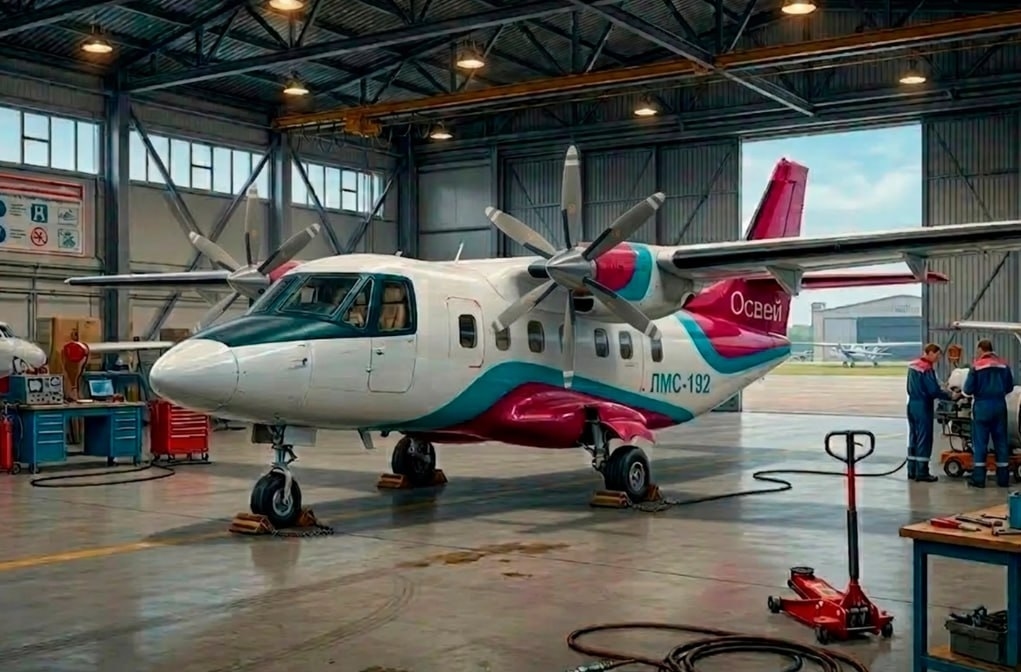
In that same address, Manturov admitted that the aircraft is still at the stage of working design documentation development, meaning its estimated cost remains unclear for now. At a meeting with Russia’s first deputy prime minister, Belarusian leader Alexander Lukashenko publicly pointed to certain “misunderstandings” in the project’s implementation that need to be resolved “so that Osvei actually happens.” He did not specify the nature of the misunderstandings, but the project was fraught with tension right from the start.
Yuri Zakharchenko, executive director of the RKK-Nauka professional association, described Osvei as an aircraft unsuited to Russian conditions. The aircraft’s design includes retractable landing gear not built for soft, low-bearing-capacity ground — which makes it poorly suited for the unpaved runways typical of Russia’s remote airfields.
Osvei’s retractable landing gear is not designed for unpaved runways, making the aircraft unsuited to Russian conditions
If such a landing were attempted, mud would get into its gear wells and freeze, meaning that at some point the landing gear might fail to extend for landing, causing a crash. Under those circumstances, pilots end up flying with the gear down at all times, reducing the aircraft’s efficiency and driving up fuel consumption.
Zakharchenko’s comment was published on the NSN portal, but it survives only in news aggregators. Both the original source and the outlets that reprinted it soon deleted the material without explanation.
Certification sleight of hand
The failure of the “corn duster” replacement project — which had looked like the simplest task facing Russia’s aviation industry — needed to be offset somehow, at least in Putin’s eyes. The only aircraft suited to that role was the Il-114-300, a modernization of a Soviet turboprop designed to carry 68 passengers. On June 5, 2026, the aircraft ceremonially received its Rosaviatsia type certificate at the St. Petersburg International Economic Forum (SPIEF).
“The awarding of type certificates is another step by our country toward technological sovereignty in a complex and strategically important industry — aviation. Another aircraft in the lineup is ready to carry passengers. And another engine is ready to lift modern airliners into the sky,” Sergei Chemezov said at the ceremony.
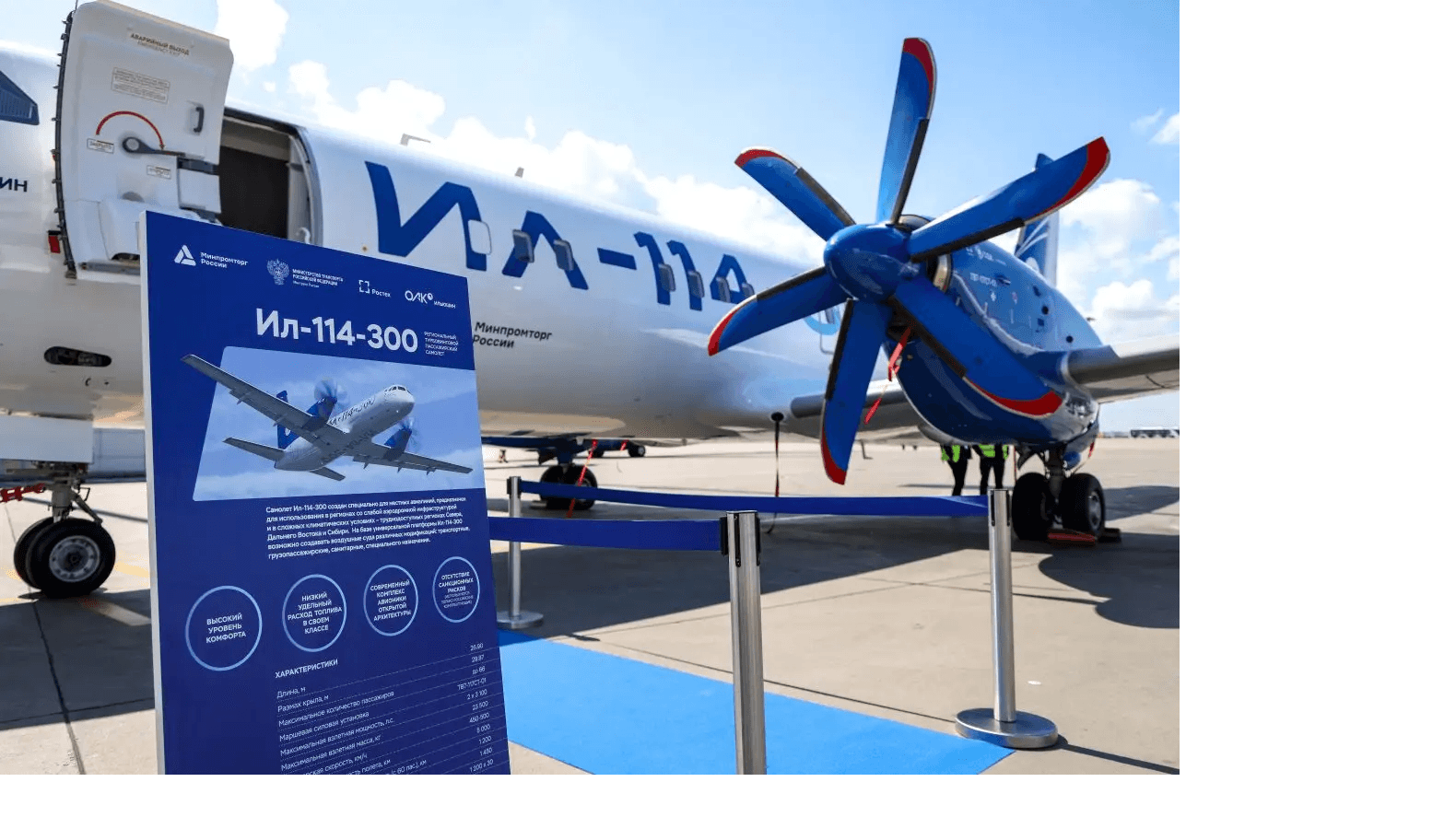
The event was presented as a breakthrough: Russia’s first new airliner was finally complete. However, in order to create that impression, the manufacturer and the government had needed to resort to a whole array of tricks — after all, the aircraft will not be ready for real-world operation for at least several more years.
The state-controlled outlet Vedomosti found that the certificate issued for the Il-114-300 only permits the aircraft to operate within a very narrow temperature range — from minus 9 to plus 25 degrees Celsius, whereas its predecessor could operate from minus 30 to plus 45. The aircraft is also barred from flying in icing conditions or thunderstorms, and from operating on wet or muddy runways. In other words, the aircraft is not fit for regular flights at all, since in real-world conditions a dry runway can never be guaranteed.
The Il-114-300 is not fit for regular flights, since it can’t take off in icing conditions, thunderstorms, or from wet and dirty runways
Ilyushin managing director Daniil Brenerman announced that test flights are continuing and that the approved operating conditions will soon be expanded. To that end, the Il-114-300 was sent for testing in Uzbekistan and Yakutia. In August, Rostec and the Ministry of Industry and Trade assured the public that the tests had been a success and that the approvals would follow shortly. However, there was no official explanation for the expedited certification in June or the lack of approval to fly in low-temperature conditions after tests in Yakutia in February 2026.
In July, the government allocated 2.6 billion rubles ($30.4 million) to finish work on the first three aircraft. Notably, that same amount had previously been the estimated cost of a single aircraft. In terms of value, that works out to roughly a third of the work still unfinished for each of the three certified airliners.
In July, Anton Alikhanov was still promising that the first aircraft would be delivered to the customer in August, with the remaining two following in October-November. Nevertheless, by September the timeline had already shifted noticeably. The 2nd Arkhangelsk United Air Detachment will now only receive the first aircraft by the end of 2026.
A stillborn project
The 2nd Arkhangelsk United Air Detachment (Arctic Airlines) handles passenger transport in the north of European Russia, flying passengers to remote settlements using An-2 aircraft and Mi-8 helicopters exclusively. In other words, it does not even have routes on its schedule where an aircraft with capacity for up to 68 people could be used.
Meanwhile, according to Brenerman, no Il-114-300 production is planned for next year, and only six aircraft will be built in 2028. Ilyushin plans to eventually reach an output rate of 12 aircraft a year, and only then will the Far Eastern airline Aurora — the main prospective customer operating routes suited to an aircraft with these parameters — finally get the chance to receive them.
Another crucial question regarding the aircraft’s parameters is whether it can take off and land on unpaved surfaces. In September, Alikhanov said the necessary testing had not even begun, and that the plant has produced only a prototype of a shield to protect against loose ground debris. The plan is to obtain approval for operation under such conditions in 2028. However, the professional community has expressed some well-founded concerns about these ambitions.
The Il-114-300 is a low-wing aircraft — meaning its engines hang close to the ground. Officials call it a replacement for the aging Soviet An-24 and An-26 (and its popular foreign counterparts, the French ATR-72 and Canadian Bombardier Dash 8). While all of these aircraft are certified for unpaved runways, all of them are also high-wing, with the engines farther from the ground and better protected from mud and debris.
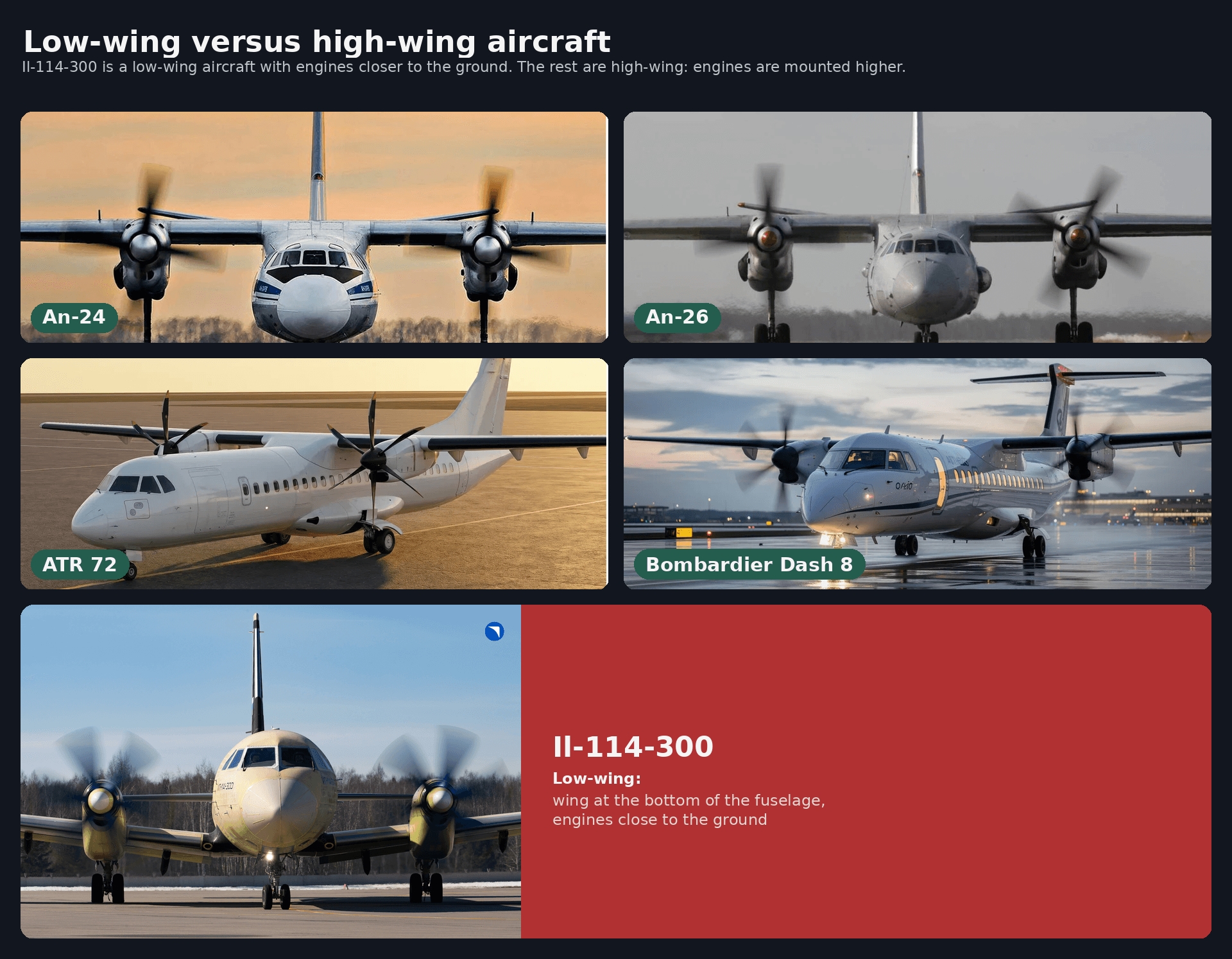
Among low-wing aircraft, the Il-114-300 is comparable in its parameters to the Swedish Saab 2000, which entered service in 1994 and has a capacity of up to 58 passengers. The aircraft did not gain commercial success, so its production stopped as early as 1999. Incidentally, one of the Swedish model’s shortcomings was its unsuitability for unpaved runways.
The remaining operators of the Saab 2000 explicitly attribute this limitation to its wing design, meaning the Russian manufacturer needs to solve — within a mere two years — a problem that Western market leaders never even set out to fix: how to protect the engines of a low-wing aircraft from damage during takeoff and landing on unpaved runways.
Russian designers must figure out how to protect the engines of a low-wing aircraft from damage on unpaved runways
Nevertheless, Alikhanov says that the Il-114-300 already surpasses all its Western counterparts in terms of flight performance, as Rostec and the Ministry of Industry and Trade are announcing agreements with three Indian companies to supply 105 new aircraft (even if the parties to these memoranda turned out to be highly dubious organizations that do not operate scheduled flights). Moreover, while one of the companies does offer charter flights on light aircraft and helicopters, the other two have not even started flying.
The only official offering a more sober view on Russia’s aviation agenda is Deputy Prime Minister Trutnev, who in early 2026 demanded that the price of the Il-114-300 be lowered. At the Eastern Economic Forum he stated the problem in simple terms: at a price of over a billion rubles ($11.7 million), an aircraft with these technical characteristics is of no use to the Far East because the investment would never pay off. “This is fantasy, this is absolute madness, no economy could withstand this,” Trutnev fumed.
The project was stillborn for other reasons too. Even before the full-scale invasion of Ukraine, Russia was developing the Il-112V military transport aircraft. Both projects were tied to the same engine — the TV7-117ST-01 by ODK-Klimov. After an Il-112V crashed in August 2021 and the investigation showed the crash had been caused by critical engine problems, work on both aircraft was suspended.
In January 2023, the TV7-117ST-01 engine received its type certificate, but only one of the projects in which it was involved was allowed to continue. Instead of the nearly finished Il-112V — which was only waiting on the engine — the decision was made to create an entirely new aircraft, the Il-212, using PD-8 engines that had originally been intended for the SJ-100. That decision required more time — as well as significant financial expenditure, design changes, and new testing.
The most probable rationale for this choice could be that the TV7-117ST-01 engine was unsuitable for the tasks at hand. In that case, the Il-114-300’s oddly poor performance — noticeably worse than its Soviet predecessor’s — can be explained by a problematic powerplant.
Airliners from generations past
The focus on the Il-114-300 is explained by the fact that the flagship MC-21 and SJ-100 projects are approaching a dead end. Officials have even stopped explaining the delays in their certification. Most recently, they’ve been pushed back to 2027, and it is already clear that these aircraft will be extremely weak competitors commercially — that is, if the projects are ever actually completed.
The official reduction in flight range of the MC-21 from a planned 5,100 kilometers to 3,800 kilometers at the same payload (same number of passengers, same fuel tanks) indicates that fuel consumption turned out to be one and a half times higher than planned. This makes the aircraft uncompetitive on the global market right from the outset. And that’s assuming it even makes it into serial production, which is far from guaranteed.
Similarly, the mass production of the modernized Tu-214 is not coming together as planned either. The Kazan Aviation Plant (KAZ) keeps missing deadlines, producing no more than one aircraft a year despite the benefits of financial infusions and experience. Sources at the plant cite a shortage of qualified engineers and difficulties producing components, as well as the need to retool production capacity.
In the case of the SJ-100, serious problems are evidenced by the suddenly emerging plans to replace the Franco-Russian SaM146 engine with the PD-8 for the SSJ-100 model. In 2022, Manturov explained that putting new Russian engines on old aircraft would be too costly and impractical.
In 2025, Rostec also complained about excessive work costs, and in 2026 it became known that the re-engining would be mass-scale and would cost at least 115 billion rubles ($1.3 billion) — a very conservative estimate, according to industry sources. That works out to 2.3 billion rubles ($27.1 million) each across 50 planes. In effect, they will try to replace the engines on every airframe that still has enough flight life left.
The effort does not suggest building new aircraft simultaneously with re-engining old ones, as there will not be enough PD-8 engines for both. ODK’s capacity is limited to 30 engines a year, and each airframe requires two of them. Therefore, the SSJ-100s will have to be re-engined instead of producing the SJ-100s. This decision can only be justified by serious problems with the import-substituted version.
Still, even the PD-8 engine itself is not without its problems. Although the powerplant received an operating certificate, the Ministry of Industry and Trade struggles to even name the engine’s price, encouraging interested parties to wait for serial production to begin.
This uncertainty suggests a host of unresolved issues. Meanwhile, Aeroflot is admitting in advance that it may not be able to re-engine the SSJ-100 without government subsidies. And if the money does not come, company CEO Sergei Alexandrovsky states, the aircraft will have to be written off.
Crucially, a civil aircraft engine is one of the most complex devices in the world. Neither China nor Japan produces its own engines, even though both countries have spent more than a decade trying to create them. Only Europe, the United States, and Canada possess the necessary technology, and the whole world buys engines from them. Soviet engines were far less efficient (higher fuel consumption, more frequent servicing needed), so they were abandoned across every aircraft class at the first opportunity.
All bluster
Officials traditionally compensate for failure with bombastic statements, and true to form, Vladimir Putin claims that Russian aircraft are on par with the world’s best — or even superior in a number of respects. Manturov, for his part, assures that the Il-114 “turned out, in terms of its characteristics, better than its direct counterpart — the European ATR-72.” SuperJet program director Alexander Dolotovsky goes even further, calling the SJ-100 the best offering in the world in the segment of aircraft carrying up to 100 passengers. United Aircraft Corporation chief Vadim Badekha asserts that Russia is the only country capable of producing civilian aircraft relying solely on its own resources. And Russian Foreign Ministry spokeswoman Maria Zakharova went so far as to claim that Russian engineers have supposedly recreated critical technologies and production chains in the aviation industry and are now ready to become suppliers to the whole world.
Maria Zakharova claims that Russian engineers have recreated critical aviation technologies and are now ready to supply them to the whole world
In reality, the Russian government is preparing an update to the comprehensive aviation development program by the end of the year. They intend to cut production plans and stretch out timelines. Meanwhile, Russia’s Transport Ministry is searching the globe for ways to lease aircraft on a “wet” basis — that is, along with a crew. Among other things, Transport Minister Andrei Nikitin confirmed that one such offer has been made to Vietnam. Against this backdrop, Vladimir Putin is showing India not the actual MC-21 aircraft but only a mockup of it at the BRICS summit — just as was done 14 years ago.
As of the fall of 2026, the entry into service of Russian aircraft at airlines has been pushed back to 2028 — certification, as the Il-114-300 example showed, has become a PR move rather than an actual sign that real completion of work on the aircraft has been achieved. The future of the three projects (Baikal, Ladoga, Osvei) remains murky. The MC-21 and Il-114-300 — based on their announced specifications — will turn out to be commercial failures even if they do make it into production in a few years. And the SJ-100 is already losing to its predecessor before it’s even certified.
Still, as long as Russian airlines manage to keep their fleets running through parallel imports, manufacturers and officials can keep up the illusion of an imminent breakthrough.