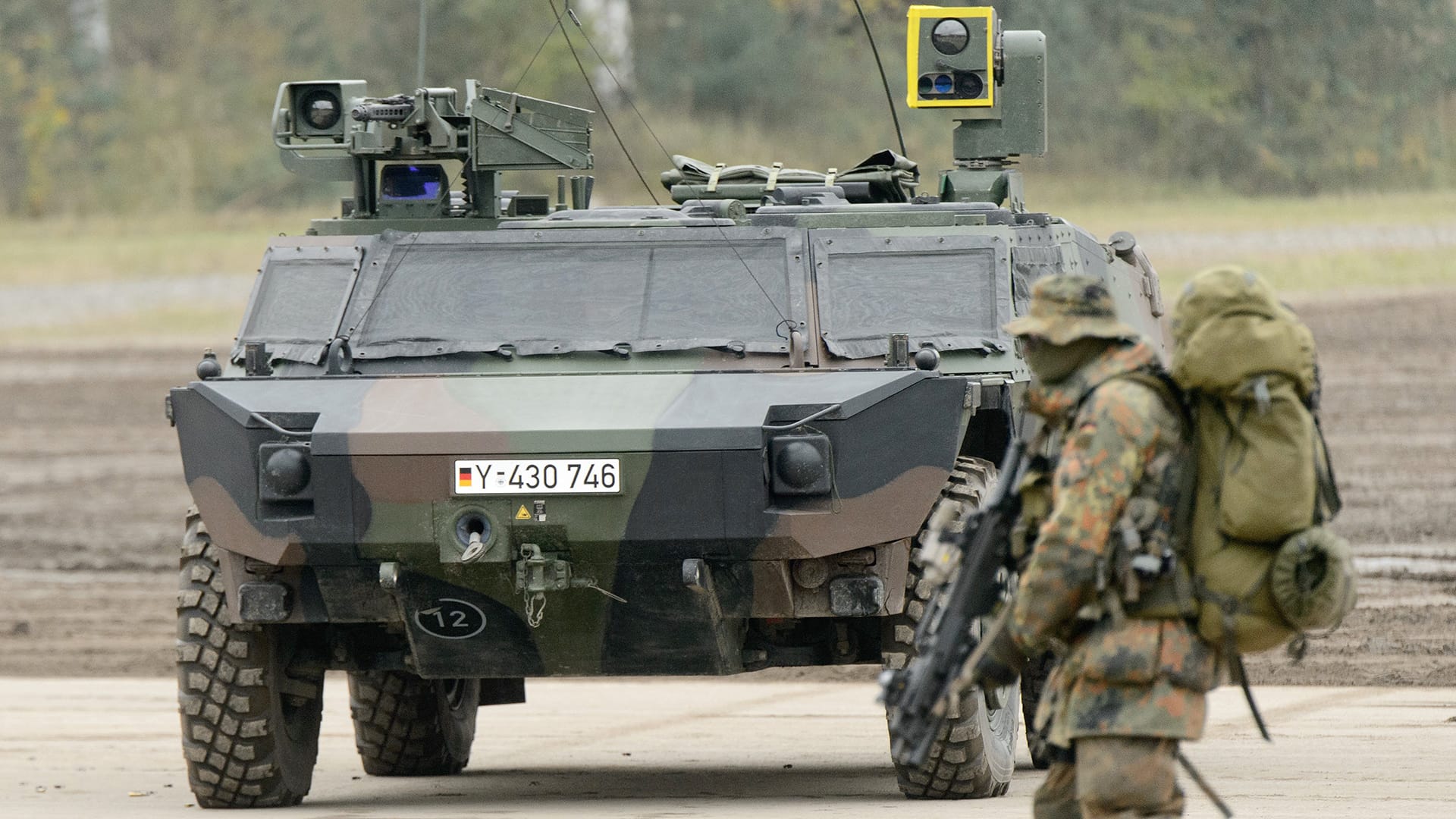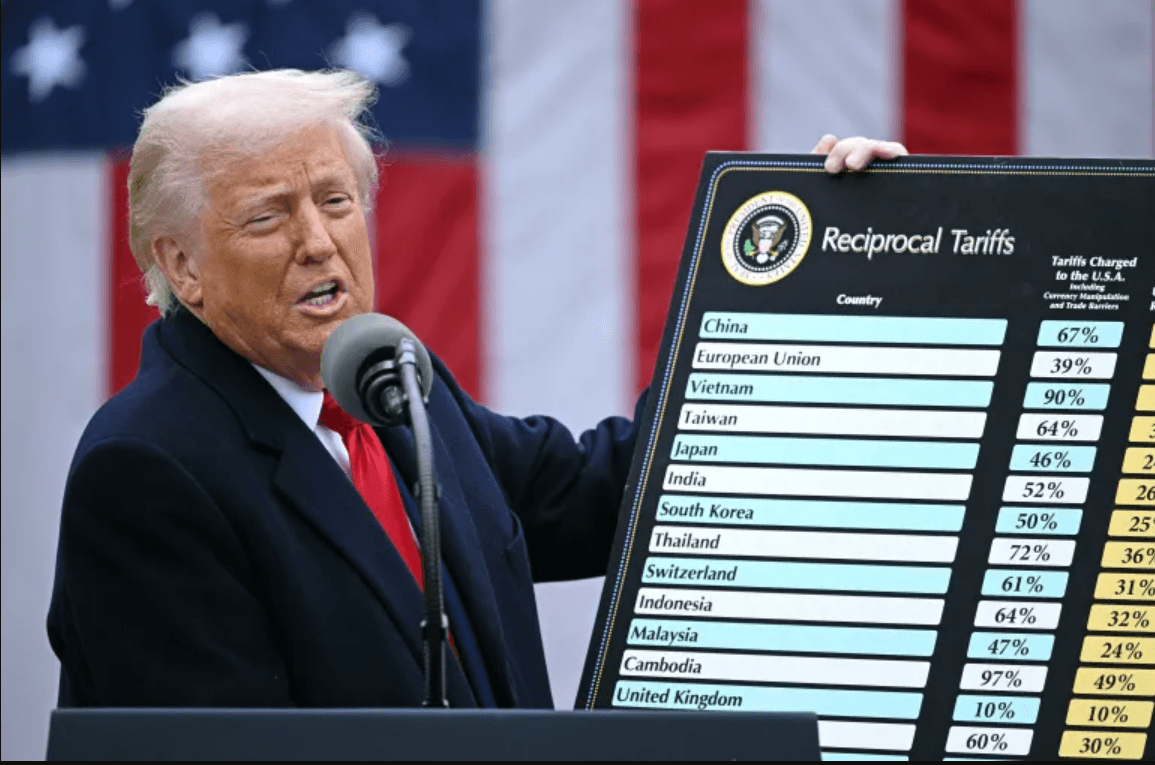
A quiet revolution is underway in Europe: import substitution in the defense sector. The EU intends to free itself from American technology so it can develop and sell weapons without having to seek Washington's approval. The shift has been driven by growing disagreements with the U.S. over a range of issues — aid to Ukraine, trade tariffs, and repeated American threats to withdraw from NATO. As a result, Europe has concluded that it must invest in its own security and strategic autonomy. But money alone will not be enough. The continent also needs to bring order to its fragmented defense industry, and that will not be easy given the wide range of weapons systems in use by its various national armies and the risk that populist politicians pose to long-term planning. Meanwhile, Poland and the Baltic states have demonstrated little faith in Europe's defense-industrial independence and continue to buy American weapons. However, Brussels' new rules will require them to give preference to European manufacturers.
The tyranny of U.S. export controls
Europe's strategic autonomy remains constrained due to the fact that it cannot independently manufacture, upgrade, or operate key weapons systems without political approval and technological support from the United States. The primary tool Washington uses to control Europe's defense industry is its International Traffic in Arms Regulations (ITAR). Originally intended to protect defense technologies, the regime has evolved into a tool for suppressing competition. Its key feature is the "see-through principle": if a weapon or military system contains even a minor American-made component, it falls under U.S. jurisdiction, meaning that exporting, upgrading, or even moving such equipment within a country requires approval from the U.S. State Department's Directorate of Defense Trade Controls (DDTC). Washington has used this domestic legislation to block (1, 2) the delivery of France's Falcon Eye satellites to the UAE and SCALP missiles for Egypt's Rafale fighter jets.
The U.S. system for supplying defense equipment and technology to other countries through the Foreign Military Sales (FMS) program has also become excessively politicized. By selling platforms such as F-35 fighter jets and Patriot air defense systems, Washington gains the ability to exert its influence over ongoing conflicts and to affect diplomatic disputes by depriving buyers of strategic flexibility.
Another U.S. law, the CLOUD Act, enacted in 2018, poses a direct challenge to data sovereignty by allowing U.S. authorities to access data stored on the servers of American companies even when those servers are physically located in Europe. Software such as the ODIN system used for the F-35 is contractually tied to updates provided from the United States. In theory, this means Washington could restrict the use of such weapons by suspending software support or halting the supply of spare parts.
As a result, Germany and other EU countries have begun developing their own regulatory frameworks. The EU's response to ITAR has taken the form of new defense regulations, which encourage European companies to eliminate American technology from their supply chains altogether. For the time being, however, European contractors seeking export licenses are still required to disclose detailed technical information about their systems to U.S. regulatory authorities, creating the risk that commercially sensitive information could be exposed (and potentially facilitating industrial espionage).
Still, not every problem stems from U.S. legislation or deliberate political pressure. Sometimes, the United States simply does not have enough munitions to meet both its own needs and those of its European allies. A case in point is the supply crisis involving Tomahawk cruise missiles. After expending more than 1,000 of them in the Middle East, Washington threatened to freeze Germany's order for 400 more before agreeing after negotiations to resume deliveries in August. As a result, Germany was left without the deterrent capability it had expected to acquire. Berlin had nowhere else to turn, however, as a European equivalent is not expected to become available until 2030.
Europe also lacks sufficient capabilities in space, where the continent’s militaries remain heavily dependent on U.S. navigation (GPS), communications (Starlink), and satellite intelligence systems. In logistics, they face an acute shortage of military transport aircraft and aerial refueling tankers, forcing them to rely on the United States here as well.
American-made weapons account for about 58% of all defense equipment purchased by European NATO members from suppliers outside the alliance. This dependence significantly weakens Europe's bargaining position, a fact that Washington has leveraged in trade negotiations. The dependence also has a financial cost: vast sums flow to American defense contractors instead of supporting Europe's own military industry.
Currently, EU member states spend as much as 78% of their defense procurement budgets on purchases from suppliers outside the bloc, and as a result of the rapid rearmament of recent years, the share of defense procurement sourced from within the EU has fallen from 62% to a historic low of around 44%. Even within that internal market, member states award as much as 75–80% of contracts to their own domestic manufacturers rather than to companies elsewhere in the EU. As a consequence, the United States — which accounts for roughly 63% of all European defense imports from outside the bloc (well ahead of suppliers from the UK and South Korea) — effectively delivers nearly half of Europe's overall arsenal. In response, Brussels has set itself the ambitious goal of bringing at least 50% of defense contracts back to the European market by 2030.
The battle for independence begins
ITAR-free status, indicating that a product contains no American-made components whatsoever, has ceased to be merely a marketing advantage — it has become a requirement in many defense programs. Both the European Defence Fund (EDF) and the ReArm Europe initiative take the absence of U.S. components into account when evaluating projects, and as a result, proposed systems that rely on American technology are far less likely to receive funding. Germany's Ministry of Defense imposed a strict requirement in its competition to replace the G36 rifle: the winning design must not contain any components subject to ITAR. Denmark, meanwhile, deliberately chose the European SAMP/T air defense system over the U.S.-made Patriot to avoid the risks associated with American export controls (and Trump's claims to Greenland).
The MICA guided missile, produced by the French defense giant MBDA, is already manufactured without any American-made components, giving the company complete freedom to export it on the global market. Similarly, Lithuania's Tactical Photonics has developed an ultra-light laser target designator for drones weighing less than two kilograms. According to the company, it outperforms the 15-kilogram system produced by U.S. firm L3Harris Wescam, costs half as much, and does not require authorization from the U.S. State Department.
The long-range ground-launched THUNDART missile system, developed by France's MBDA and Safran (and successfully demonstrated in April 2026) has likewise been built without American-made components. Similar ambitions underpin the Eurodrone program, the first major unmanned aircraft designed and built entirely by Germany, France, Italy, and Spain. Its first test launch, intended to validate the missile's design and propulsion system, took place on April 14. Particularly important to the project's independence is the Catalyst engine produced by Avio Aero, which was specifically designed to remain outside the scope of ITAR restrictions.
Finnish company Agate Sensors has won a contract from Sweden's defense procurement agency and is deploying software-defined spectral imaging chips. The technology reduces the EU defense sector's dependence on the U.S. and Taiwan for advanced microelectronics and optical sensors. Edgewing, a joint venture between the UK's BAE Systems, Italy's Leonardo, and Japan's Mitsubishi, has secured a $6.14 billion contract to develop a next-generation fighter aircraft by 2035. The funding will cover the first 18 months of work, during which the companies will complete the aircraft's concept assessment phase under the trilateral Global Combat Air Programme (GCAP) before moving on to detailed design and engineering.
If the ITAR-free standard becomes widespread, Europe's defense industry could become genuinely competitive, allowing the continent to build a security architecture insulated from political pressure from Washington. However, significant obstacles remain.
Fragmentation, capital flight, and industrial inertia
Europe's quest for military sovereignty is being held back by the fragmentation of defense procurement across the EU. The United States relies on a single standardized platform, and its defense market functions as a monopsony with the Pentagon functioning as the sole customer, setting standards and ensuring system integration. As a result, the U.S. concentrates its resources on a single tank platform — the M1 Abrams, in several variants such as the M1A1 and M1A2 — manufactured by the country's only remaining tank production line.
The EU, by contrast, consists of 27 separate national markets, each with its own budget, planning cycle, procurement requirements, and "national champions" that governments seek to support in order to preserve jobs, technological expertise, and tax revenues. Germany relies on the Leopard 2, manufactured by KNDS and Rheinmetall, while France has long backed production of its own Leclerc tank. Poland and other Eastern European countries continue to operate numerous variants of Soviet-designed platforms.
Europe has repeatedly attempted to develop a common main battle tank, but those efforts have foundered over disputes concerning intellectual property and technological constraints. The current flagship project, the Main Ground Combat System (MGCS), which is intended to replace both the Leopard and the Leclerc, is currently stalled due to competition between German and French defense companies.
In short, Europe's defense industry has become a “collection of boutiques” — a wide variety of equipment is produced in small batches, preventing manufacturers from achieving economies of scale. As the author of the article “Too Much Spending, Too Little Defense” argues, the real problem is not the overall size of the EU's defense budget but its excessive fragmentation. Europe spends more than €300 billion on defense each year — roughly on par with China and second only to the U.S.
Yet this volume of outlays does not translate into equivalent strategic capability due to the fact that each EU member state seeks to channel contracts to its own domestic manufacturers. In a recent report — “Why Consolidate the European Defence Industry?” — published by the Jacques Delors Institute, the authors argue that a "collection of isolated industrial bases" is incapable of meeting the demands of prolonged, high-intensity warfare. They call for the urgent consolidation of the European defense industry in order to create pan-European industrial champions. Under the current arrangement, the EU derives 30-40% less defense capability for every euro it spends than it would if it functioned as a genuinely unified state.
Europe’s financial sector is another weak link. Because of a shortage of venture capital, the bloc’s most promising deep-tech companies are often forced to seek funding from American investors, increasing the risk of losing control over strategically important assets. The pool of capital available to developers of advanced technologies is further constrained by stringent regulation and the conservative strategies of European financiers and pension funds.
Staff shortages and high electricity prices further undermine the competitiveness of Europe's defense industry. For many small and medium-sized enterprises, the gap between developing a prototype and launching mass production is impossible to bridge, while major defense contractors — including Germany's Rheinmetall, the Franco-German KNDS Group, the UK's BAE Systems, and the pan-European missile consortium MBDA — already have order books filled for the next six years. Unless Europe fundamentally reforms its procurement system and abandons overly demanding technical specifications, its defense industry risks being unprepared for a potential conflict with Russia — one that Germany's defense minister and the intelligence services of NATO's European members believe could erupt as soon as 2029.
This creates a fundamental dilemma: on the one hand, Europe needs to rearm immediately, pushing governments to buy off-the-shelf weapons from the United States. On the other, it must build up its own defense-industrial capabilities.
Governments often opt for off-the-shelf U.S. purchases as the least risky option, undermining investment in European projects
In France, President Emmanuel Macron remains the leading advocate of a unified European defense policy, but even he faces domestic constraints. The French military establishment firmly rejects any attempts by the European Commission to define the country's defense requirements, viewing the defense sphere as a matter of national sovereignty. And even more far-reaching changes could come if the National Rally (Rassemblement National, RN) comes to power. Because of its ideological opposition to transferring sovereign authority to Brussels, an RN government would, according to Marine Le Pen herself, "kill" joint European defense projects such as the MGCS tank program.
The countries of Eastern Europe and the Baltic states regard NATO (read: the United States) as the ultimate guarantor of their security against Russia, and they fear that "strategic autonomy" would weaken the transatlantic alliance. Poland is rearming more aggressively than any other European country, but it is doing so almost entirely through purchases from the United States and South Korea. This reflects not only a profound sense of existential threat but also the desire of right-wing political forces to prevent deeper European integration. If the Trump administration were to impose steep tariffs — for example, on semiconductors or similar technologies — or insist that higher European defense spending be directed exclusively toward American-made weapons, several EU member states could withdraw from initiatives aimed at strengthening European strategic autonomy in order to preserve access to the American "security umbrella," experts warn.
The result is another paradox. On the one hand, Trump's approach is pushing Europe toward greater strategic autonomy. On the other, it is driving some countries — especially those on NATO's eastern flank — toward a split with their European neighbors as they seek to appease Washington through large-scale purchases of American weapons lest the Pentagon cut back its troop presence in Europe.
The expert report “Achieving European Defence Autonomy,” produced by Germany’s Kiel Institute, identifies ten key technological and operational capability gaps that Europe must close in order to become a truly independent defense producer:
- Command and control systems
- Robotic systems
- Long-range precision strike capabilities and sixth-generation air combat systems
- Layered air and missile defense
- Satellite intelligence and communications
- Sovereign access to space
- Persistent intelligence, surveillance, and reconnaissance (ISR)
- Military cloud infrastructure, software, and artificial intelligence
- Strategic airlift and operational support
- Electronic warfare (EW) and suppression of enemy air defenses (SEAD)
According to the report's authors, achieving these objectives will require investment of approximately €500 billion over the next decade, as well as a complete overhaul of Europe's fragmented defense procurement market.
A new strategy and financial leverage
Europe's response to these challenges is the European Defence Industrial Strategy (EDIS) and the accompanying European Defence Industry Programme (EDIP). Together, they set an ambitious target: by 2030, at least 50% of defense procurement should come from manufacturers based within the EU. Their main financial instrument is the Security Action for Europe (SAFE) initiative — a €150 billion EU defense fund established in May 2025 to support large-scale rearmament. It provides member states with long-term, low-interest loans to invest in expanding defense production capacity. In return, it imposes a strict condition: components supplied by countries outside the EU may account for no more than 35% of any funded project.
Another important innovation is the shift to "capacity contracts" — a new procurement model under which governments pay not for the number of weapons delivered but for maintaining production lines that are ready for immediate expansion. The idea is to ensure that industry can rapidly increase output in the event of a crisis, moving the defense sector away from a "just-in-time" model toward a "just-in-case" one.
Public budgets alone will not be enough to provide the additional €800 billion required under the Readiness 2030 program (formerly ReArm Europe). Until recently, the defense sector was widely regarded as an undesirable destination for investment due to strict environmental, social, and governance (ESG) standards. Those rules effectively stigmatized arms manufacturing and discouraged investment funds from financing it. That approach is now changing, as investment in security is increasingly viewed as both legitimate and necessary.
In addition, the defense sector needs to accelerate the adoption of dual-use commercial technologies in fields such as artificial intelligence, quantum computing, and robotics, bypassing the traditionally slow certification process.
Finally, stronger institutional coordination is needed, with a clear division of responsibilities between the EU and NATO. The alliance would continue to define military requirements and interoperability standards, while the European Union would serve as the industrial and financial coordinator, taking responsibility for infrastructure, military mobility, and energy security. To speed up decision-making, Europe should rely on "coalitions of the willing" made up of leading member states — for example, with France leading work on long-range strike systems and Germany on air defense — rather than trying to involve all 27 EU countries in every project.
To speed up decision-making, Europe should rely on "coalitions of the willing" made up of leading member states instead of involving all 27 countries in every project
The adopted Readiness 2030 plan includes a requirement to establish such coalitions around key defense priorities. The goal is to avoid bureaucratic paralysis in Brussels and vetoes by individual member states. Analysts at European think tanks (for example, in BeHorizon's research on a "two-speed Europe") argue that the requirement for unanimity among all 27 member states has become one of the greatest threats to European security. They broadly agree that "multi-speed integration" is the only way to quickly expand defense production and coordinate procurement. Small groups of countries can make decisions several times faster, sign multi-billion-euro arms procurement contracts, and then extend those initiatives to the rest of the bloc after the product is ready.
Europe in space
Protecting space infrastructure is regarded as one of the EU's top priorities. Plans include developing sovereign communications systems, expanding space surveillance capabilities, and introducing active space defense mechanisms.
To end its critical dependence on U.S. systems such as Starlink and GPS, Europe is pursuing an ambitious strategy to build its own “space shield” replete with sovereign satellite constellations. Additionally, the IRIS² project, with a budget of more than €10.6 billion, is intended to provide highly secure communications for government institutions and the military. The EU also plans to further develop its Galileo navigation system and Copernicus Earth observation program while obtaining military certification for both. Germany, meanwhile, is investing approximately €10 billion in its own constellation of 100 low Earth orbit satellites under the SATCOM Stage 4 program, often described as Germany's "military Starlink."
But satellites alone are not enough. The EU is therefore developing a space situational awareness system capable of detecting threats and responding to them. This includes the Odin's Eye II project for early warning of missile launches and the TWISTER program, which is designed to intercept threats using space-based surveillance. The private sector is also playing an increasingly important role. For example, Digantara is building an independent space intelligence and monitoring infrastructure for the EU.
Experts argue that Europe must move beyond passive monitoring toward active space defense while making its orbital infrastructure more resilient. That means protecting it against cyberattacks and potential physical threats, as well as establishing clear operational, military, and legal mechanisms for mutual assistance in the event of an attack on a member state’s satellites. To extend operational lifespans and reduce vulnerability, Europe is also developing on-orbit servicing technologies like the OrbitAID project, which would enable satellites to be refueled in orbit and maneuvered to evade threats.
Finally, effective defense is impossible without the ability to rapidly replace lost assets. To that end, Europe is working to secure sovereign access to space. In the future, the Ariane 6 heavy-lift launch vehicle will be complemented by a fleet of privately operated commercial micro- and small launch vehicles. The initiative is still in its early stages, with large-scale deployment planned for 2028–2030. The strategy calls for a shift toward "responsive launch" capabilities through long-term contracts with innovative small-launch providers such as India's Agnikul Cosmos — not an EU technology, but also not an American one. This would allow Europe to rapidly put replacement satellites into orbit whenever damaged ones need to be replaced. Total investment in Europe's "space shield" and the associated communications and intelligence infrastructure is estimated at more than €50 billion over the next decade.
Ukraine as a laboratory
Ukraine is playing a particularly important role in accelerating innovation in at least three ways: as a battlefield testing ground for next-generation technologies, as a catalyst for the transformation of Europe's defense industry, and as a source of new standards for digitally enabled warfare.
The EU–Ukraine security commitments adopted in June 2024 formalized industrial cooperation, bringing Ukraine into the market as a "special partner" whose defense industry is being integrated into Europe's industrial base even before the country joins the EU. This integration is enshrined in the EU's foundational “White Paper for European Defence — Readiness 2030,” as well as in the official European Defence Industrial Strategy. A dedicated EU–Ukraine Task Force on Defence Industrial Cooperation under the European Commission is intended to transform the urgent requirements of the battlefield into long-term, large-scale European defense production.
Ukraine's combat experience has demonstrated that modern military technologies — including drones, electronic warfare systems, and artificial intelligence — become obsolete within weeks rather than decades after making first contact with the enemy. That means Europe's defense bureaucracy will have to move to software update cycles measured in weeks while significantly accelerating its own adoption of new technologies. Ukraine has become a "living laboratory," where Western startups test their new wares under the conditions of a real high-intensity war, helping to shorten development cycles from years to months. At the same time, the integration of Ukraine's defense industry into the European ecosystem provides access to unique battlefield data and operational experience in an environment dominated by intensive electronic warfare.
Ukraine's experience has shown that modern military systems—drones, electronic warfare capabilities, and AI—become obsolete within weeks rather than decades
Ukraine's Delta battlefield management system has become the architectural benchmark for new European C2 (Command and Control) standards. It has demonstrated that data from satellites, drones, and radar systems can be integrated into a single secure network capable of functioning even under heavy communications jamming.
Ukraine has also demonstrated the effectiveness of deploying inexpensive autonomous systems at scale, producing as many as 200,000 FPV drones per month. That experience has informed European plans to build the capacity to manufacture millions of drones and munitions annually.
Cooperation with Ukraine is also helping Europe overcome its own constraints in production speed and scale. European companies, including Germany's Quantum Systems and various Dutch drone manufacturers, have either already established joint drone production facilities in Ukraine or entered into close manufacturing partnerships with Ukrainian firms. These complex production and logistics arrangements illustrate the depth of the emerging industrial integration.
For example, the Czech company Czechoslovak Group manufactures fuzes and propellant charges for 155 mm artillery shells, while final assembly is carried out in Ukraine. This arrangement speeds up deliveries and reduces the burden on European production facilities.
Ukraine has also learned to replace critical components itself. One example is its use of lithium battery cells produced by South Korea's Samsung instead of Chinese-made varieties — a shift that aligns with the EU's own effort to reduce dependence on China. Ukrainian manufacturers assemble these individual cells into complete battery packs (for example, in 6S2P configurations), which are used in three key defense applications: drones, electronic warfare, and portable frontline power systems. Until recently, Chinese suppliers accounted for as much as 90% of the battery component market. However, Beijing has since imposed strict export controls on drone components.
Why not just wait for Trump to leave?
Many European policymakers hope that once Donald Trump leaves office, transatlantic relations will return to normalcy. However, experts argue that such expectations are both strategically risky and, most likely, unfounded. The changes in U.S. policy are not temporary but deeply structural. They reflect not only the preferences of a particular president but also broader shifts in Washington's overall priorities. Speaking at the European Defence Agency's annual conference, EU foreign policy chief Kaja Kallas stated that "Europe is no longer Washington's center of gravity, and this shift is structural rather than temporary." One of the fundamental drivers of this reality is the irreversible reorientation of U.S. strategic priorities toward the Indo-Pacific, geared towards long-term competition with China. Regardless of who occupies the White House, that shift will continue to divert American resources and attention away from Europe.
U.S. policy is also constrained by a growing budget deficit and record levels of national debt. Ironically, America's record defense budget is no longer being used primarily to sustain its long-established global military posture, but rather to fund a sweeping technological modernization in preparation for a possible future conflict with China. Maintaining a worldwide network of roughly 750 military bases across 80 countries costs the United States an estimated $55–80 billion each year. Against the backdrop of mounting fiscal pressures, that global footprint has become a prime target for cost-cutting. This raises doubts about Washington's ability to maintain its military presence around the world on its current scale. As a result, any U.S. administration is likely to demand a more robust sharing of the defense burden from its European allies.
America's record defense budget is being channeled into sweeping technological modernization in preparation for a possible future war with China
An equally important factor is the use of defense dependence as a political lever. American-made weapons account for more than 58% of all defense imports by European NATO members, giving Washington enormous leverage in trade negotiations for goods of all sorts — even a more friendly U.S. administration is unlikely to voluntarily give up such an advantage.
Long-term dependence is also built into contracts for highly sophisticated systems such as the F-35, locking customers into U.S. support well into the 2080s. That dependence is maintained through proprietary software, mandatory updates, and the supply of spare parts — all of which remain under American control. This mechanism is embedded in the architecture of modern weapons systems themselves and will not disappear regardless of who wins the next election. As a result, hopes for a simple return to the "good old days" are illusory, leaving Europe little choice but to accelerate the development of its own sovereign defense industry.
Several influential political forces nevertheless favor preserving the current model — strengthening ties with the United States rather than accelerating Europe's drive for defense independence. According to multiple sources, Berlin long regarded NATO as the cornerstone of European security and genuinely hoped that U.S. support for the alliance would return to normal after Trump's presidency. With the election of Chancellor Friedrich Merz, however, Germany has adopted a more hardline foreign policy approach that it describes as "new realism." Even so, Berlin continues to hedge its bets by maintaining close ties to the American defense complex.
This approach is shared across much of Eastern and Northern Europe, including in Poland, the Baltic states, Romania, and the Czech Republic. These countries regard the United States as the only viable guarantor of their security in the face of the Russian threat and genuinely fear that talk of "strategic autonomy" could ultimately trigger a real withdrawal of U.S. forces from the continent — a prospect they see as an existential threat.
The clearest example of a country pursuing a purely transactional relationship with the United States is Poland. Warsaw has purchased American Abrams tanks, HIMARS rocket systems, and F-35 fighter jets, largely bypassing joint European defense projects.
The defense industry as a driver of growth
Investment in defense sovereignty — €500 billion over the next decade, or about 0.25% of the EU's projected GDP during that period — is more than a security expenditure. It amounts to a comprehensive project of European reindustrialization. Its main engine will be the technologies developed for military purposes, ranging from sovereign AI (such as that developed by Mistral AI and Helsing) to quantum sensors and space launch systems like Ariane 6. These technologies are expected to spill over into the civilian economy. European policymakers hope that this will reduce the bloc's high-tech trade deficit with the U.S. and China while restoring the EU's position as a global industrial leader.
After SpaceX completed 170 launches in 2025, Europe has been forced to accelerate the development of its own launch vehicles to secure independent access to orbit. Hundreds of thousands of new jobs in the deep-tech sector, together with a shift toward modular microfactories for ammunition production (such as those being developed by the Dutch organization TNO), are expected to reduce dependence on unstable global supply chains for raw materials. Ideally, defense procurement will create guaranteed demand, enabling startups to scale up within the EU and enter global markets with products free from ITAR restrictions. In this way, investment in a European "innovation ecosystem" is intended to become the foundation of long-term economic prosperity and technological independence.
In principle, Europe already possesses all the prerequisites for genuine strategic autonomy: abundant capital, advanced technologies, and a deep industrial tradition. Trends emerging in 2026 suggest that technological sovereignty in military platforms, munitions, and software-defined systems is achievable within the next five to seven years. The real bottleneck is political will — the ability to consolidate fragmented national efforts and overcome national self-interest in the name of collective security. Without a unified decision-making system in times of crisis, even the most advanced weapons risk coming off as ineffective.
Building a sovereign European defense architecture is more than a military challenge. It is the European Union's ultimate test of maturity as a global power. The success of this transformation will determine not only the security of Europe's borders but also its long-term economic vitality.